
Why Guidimouni Lake stands out
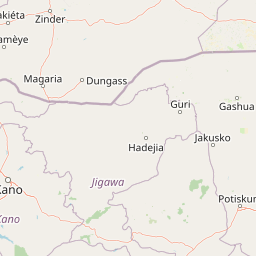
Guidimouni Lake is best known as one of the most important permanent wetlands in the Zinder Region and as a key Ramsar-listed site in southern Niger. Its mix of fresh and saline basins within a single endorheic depression, combined with a reed and water-lily fringe, creates habitats for cichlids, catfish, lungfish and Nile perch, as well as for the Nile crocodile and a wide community of waterbirds. The site is also known for its pioneering Nile crocodile reintroduction programme, begun in 1994, which has produced an established population of several hundred animals. Together with the nearby Mare de Lassouri, it anchors a network of seasonally vital waterbird habitats in one of the wetter microzones of the Nigerien Sahel.
Guidimouni Lake history and protected-area timeline
The wetlands of the Guidimouni basin have been used by local communities for generations, but the lake's history as a managed ecological and economic site began to take shape in the 1970s. In that decade, six or seven fish species were introduced and a fishing cooperative was established, marking the beginning of a more structured use of the basin's resources. Soda, or natron, has been extracted from the site since the same period.
From 1994 onward, the lake gained a new ecological role as the setting for a Nile crocodile reintroduction programme. By 2017 the population had grown to roughly 300 individuals, establishing Guidimouni as one of the more notable sites for crocodile recovery in the Sahel.
The lake's modern conservation identity was cemented on 18 December 2019, when it was designated a Wetland of International Importance under the Ramsar Convention, with the protected area covering approximately 338 hectares. This status reflected both the lake's biodiversity and its documented value for fisheries, water supply and traditional livelihoods.
Guidimouni Lake landscape and geographic character
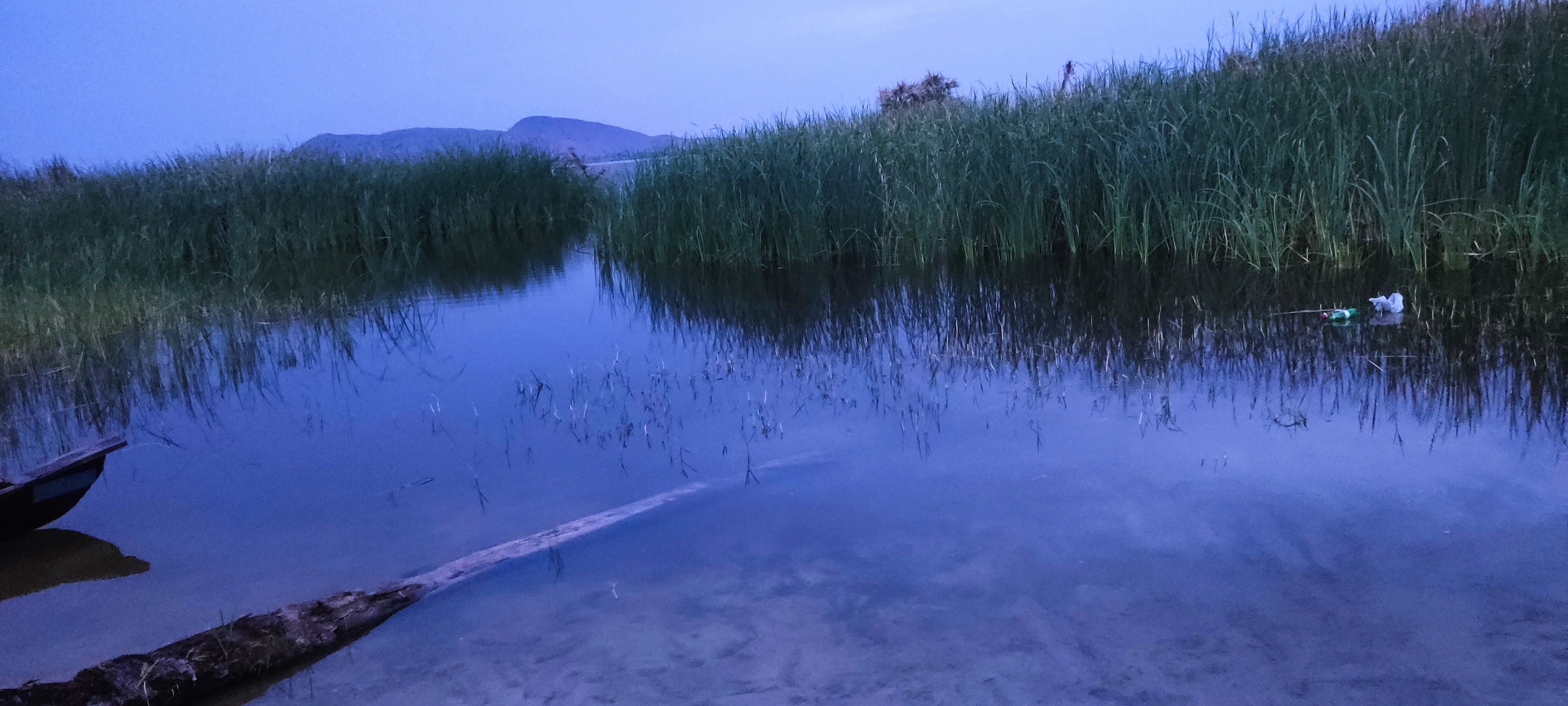
The landscape around Guidimouni Lake is shaped by its position in the Chad Basin within the southern Niger Sahel. The lake itself fills a long, narrow, southwest-to-northeast endorheic depression about three kilometres in length and around 700 metres wide. On its edges, gently undulating sandy plains lie between 390 and 395 metres above sea level, giving way to hills reaching up to roughly 590 metres in the wider surroundings.
Together, these elements form a subtle but ecologically important mosaic of open water, reed and water-lily beds, sandy shorelines and wooded fringe habitats. The National Road N1 traces the northern shore, placing the lake directly within the visible geography of the region. The basin's enclosed character, with no outflow, supports the coexistence of fresh and saline water within a single small system.
Guidimouni Lake ecosystems, habitats, and plant life
The lake functions as a permanent aquatic refuge within an otherwise semi-arid Sahel landscape. Its two basins, one fresh and one saline, are flanked by reed beds and water lilies that shelter spawning fish and invertebrates. Surrounding vegetation includes a mix of native trees such as date palm, baobab, dum palm, desert date and white raisin, alongside introduced species like neem, red eucalyptus and Prosopis juliflora.
Annual grasses such as Cenchrus biflorus, Eragrostis tremula and several Aristida species occupy the open sandy ground, while invasive cattail (Typha domingensis) and, in smaller amounts, tiger lotus (Nymphaea lotus) affect the aquatic margins. These habitat patterns combine to create a compact but ecologically rich wetland mosaic that draws both resident and migratory birds and supports a broad fish community.
Guidimouni Lake wildlife and species highlights
Guidimouni Lake harbours a diverse fish fauna that includes Nile tilapia, Zille's tilapia, African catfish, West African lungfish, African sharptooth catfish, Nile perch, African bonytongue and other native species, many spawning within the reed and water-lily beds. Mammals recorded in and around the wetland include the golden jackal, patas monkey, Cape hare and striped ground squirrel, together with three monitor lizard species and the white-throated monitor.
The most charismatic wildlife story at Guidimouni is the reintroduction of the Nile crocodile, begun in 1994, with a population of roughly 300 individuals counted by 2017.
The site is also a major hub for waterbirds, combining resident and migratory species. White storks, fulvous whistling ducks and white-faced whistling ducks are highlighted as particularly significant, while dozens of additional species have been recorded, including African jacana, shoveler, mallard, garganey, great, grey, black-headed and purple herons, cattle, squacco and little egrets, black-crowned night heron, sacred ibis, glossy ibis, knob-billed duck, ruff, black-tailed godwit, black-winged stilt, common snipe, common moorhen, lesser moorhen, grey-headed and Senegal kingfishers, red-billed hornbill, blue-naped mousebird, white-throated bee-eater, little tern, little grebe, black kite, pallid harrier, tawny pipit, yellow wagtail, crested lark, northern red bishop, quelea and village indigo bird. This mix makes the lake one of the most bird-rich permanent wetlands in the Zinder Region.
Guidimouni Lake conservation status and protection priorities
Guidimouni Lake was officially designated a Wetland of International Importance in December 2019, under the Ramsar Convention, with the protected area covering roughly 338 hectares. Its Ramsar recognition sits alongside long-running efforts to manage fish stocks and restore crocodiles, both of which have shaped the modern ecological character of the site.
From a conservation standpoint, the lake is significant because it remains a permanent water body, with mixed fresh and saline conditions, in one of the wetter microclimates of the Nigerien Sahel. It supports resident and migratory waterbirds, reestablished crocodiles, and a diverse fish fauna, making it an anchor for biodiversity in the surrounding semi-arid landscape. At the same time, over-use by the local population, alongside irregular rainfall and temperature extremes, are recognised as the main threats to water quality and biodiversity, and sustainable management of fishing, livestock watering and natron extraction remains a central conservation concern.
Guidimouni Lake cultural meaning and human context
The lake is deeply embedded in the rural life of the Guidimouni commune. It supports a fishing cooperative with roots in the 1970s and serves as a watering point for both resident livestock and transhumant herders moving through the Zinder Region. The surrounding fertile soils sustain mixed crop cultivation, while traditional natron or soda extraction has been practised at the site for decades. National Road N1 along the northern shore reflects the lake's longstanding role as a geographic and social landmark for the surrounding communities.
Top sights and standout views in Guidimouni Lake
The strongest features of Guidimouni Lake are its twin fresh and saline basins within an endorheic Sahel depression, its Ramsar designation in 2019, and its reintroduction of the Nile crocodile, which has produced a thriving population of about 300 animals. Add to this an unusually rich bird list, a productive fishery, traditional natron extraction and a strategic position beside the N1 national road, and the lake emerges as one of the most distinctive compact wetlands in Niger.
Best time to visit Guidimouni Lake
The character of a visit to Guidimouni Lake is shaped by the local version of the Sahel climate. The rainy season runs from mid-June to mid-October, when the lake and its reed beds are most vibrant and waterbird activity peaks. The dry season, from mid-October to mid-June, brings clearer skies, lower water levels and two months of cooling Harmattan winds, offering a quieter and more open atmosphere. Migratory waterbirds are typically most visible around the transitions between these seasons.