
Why Huron-Manistee National Forests stands out
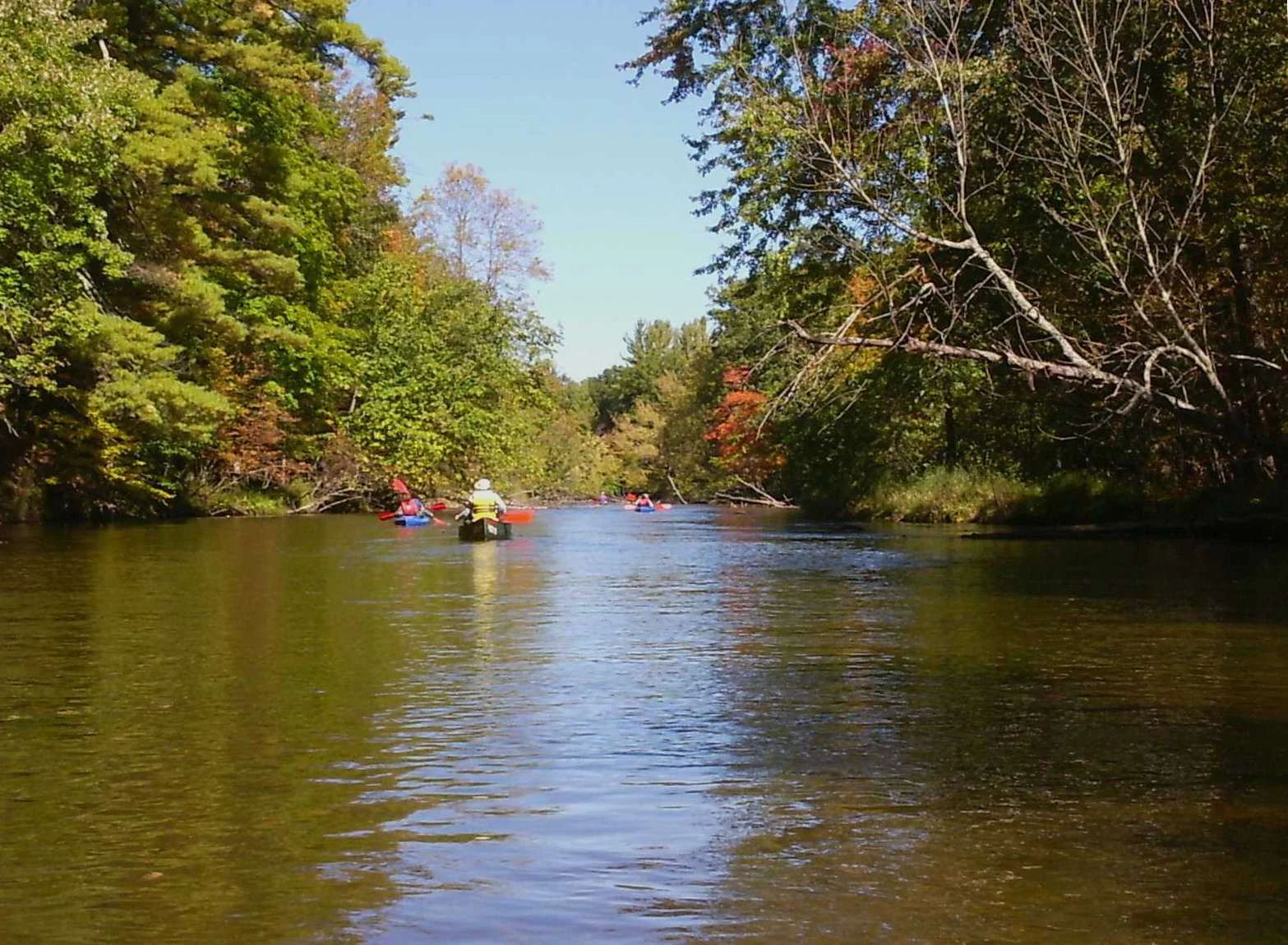
The Huron-Manistee National Forests are best known for the Pere Marquette and Au Sable rivers, which draw canoeists and anglers from across the Midwest. They are a destination for river-based recreation and trout fishing. The forests are equally associated with Great Lakes coastal dunes, jack pine barrens shaped by wildfire, and key habitat for the Kirtland's warbler. Nordhouse Dunes Wilderness, in particular, stands out as one of the few federally designated wilderness areas in the United States with an extensive lakeshore dune ecosystem.
Huron-Manistee National Forests history and protected-area timeline
The Huron National Forest was established in 1909, and the Manistee National Forest followed in 1938. In 1945, the two forests were administratively combined for management purposes, even though their boundaries remain separate on the landscape. The Manistee unit accounts for roughly 55 percent of the combined area, while Huron makes up the remaining 45 percent.
Much of the land in both forests had been logged heavily in earlier decades before being abandoned by timber companies. The national forest designation reflected an effort to stabilize watersheds, restore forest cover, and put the land back into long-term public use. Ecological management for the Kirtland's warbler, which depends on dense young jack pine stands for nesting, has shaped fire-prone sections of the Huron unit for decades.
Wildfire has been a recurring force in the forests' history. The sandy soils, the dominance of jack pine in some areas, and the deliberate creation of dense young jack pine stands for warbler habitat all contribute to high fire risk. In 2010, the Meridian Boundary Fire burned over 8,500 acres in and near the Huron District, destroying homes, outbuildings, and large areas of forest, underscoring the ongoing... [truncated]
Huron-Manistee National Forests landscape and geographic character
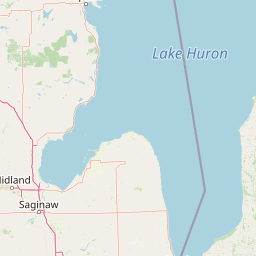
The Huron-Manistee National Forests occupy a landscape profoundly shaped by glaciation. Sandy outwash plains, glacial lake beds, and moraines combine to produce rolling forested terrain interspersed with lakes, rivers, and marshes. The Manistee unit is dominated by these sandy, largely forested conditions and includes frontage on Lake Michigan, while the Huron unit shares this character in the northeast.
Along the Lake Michigan shoreline, the Nordhouse Dunes Wilderness preserves a rare Great Lakes dune ecosystem. Most of these dunes are roughly three to four thousand years old, and some rise about 140 feet above the lake surface. They are interspersed with woody vegetation such as juniper, jack pine, and hemlock, with dune grass covering many slopes and small water holes and marshes scattered through the system. Between the lake and the inland forests, the landscape transitions from open beach and dune to denser mixed forest.
Inland, the forests host more than 1,800 miles of rivers and about 17,000 acres of lakes. Eight major river basins define the regional hydrology, in... [truncated]
Huron-Manistee National Forests ecosystems, habitats, and plant life
Ecologically, the Huron-Manistee National Forests are defined by the interplay between pine-dominated and mixed hardwood-conifer communities. Sandy soils support extensive jack pine forests, particularly in the Huron unit, where jack barrens are intentionally maintained as nesting habitat for the Kirtland's warbler. Other sections feature oak-pine forest, dense hemlock stands, and transitional northern hardwood communities typical of the Great Lakes region.
The forests also include a significant wetland component. Across the nearly one-million-acre combined area, a few thousand acres of wetlands are formally recognized, but the broader network of marshes, small water holes, bogs, and riparian zones along the extensive river systems contributes substantially to the region's hydrological and ecological character. The Au Sable and Pere Marquette watersheds, in particular, support coldwater conditions important for trout and other sensitive aquatic species.
The dune ecosystem at Nordhouse Dunes forms another distinct ecological zone. There, juniper, jack pine, hemlock, dune grass, and small interdunal wetlands and pools combine into a habitat type that is rare in... [truncated]
Huron-Manistee National Forests wildlife and species highlights
The forests support a varied fauna typical of Michigan's northern Lower Peninsula, with both resident and migratory species using the rivers, lakes, wetlands, and forest types available across the landscape. Among the most notable species is the Kirtland's warbler, a threatened songbird whose nesting cycle is closely tied to dense young jack pine, a habitat condition that has shaped management of parts of the Huron National Forest for decades.
Federally listed species also include the bald eagle, Indiana bat, Karner blue butterfly, and Pitcher's thistle, the latter associated with open dune environments along the Great Lakes shoreline. The combination of mature forest, regenerating jack pine, wetlands, and dune habitat creates the structural diversity needed to support these species alongside more common woodland wildlife.
The extensive river network provides habitat for fish and other aquatic life, with the Pere Marquette and Au Sable recognized regionally for their fishing quality. Coldwater species drawn to these rivers, along with warmwater fish in the inland lakes, form a recurring focus of the forests... [truncated]
Huron-Manistee National Forests conservation status and protection priorities
The conservation significance of the Huron-Manistee National Forests lies in their role as one of the largest blocks of publicly protected forest in the northern Lower Peninsula of Michigan. Their combined extent, watershed coverage, and ecological diversity allow for the protection of multiple habitat types, from jack pine barrens and northern hardwood forest to Great Lakes dune ecosystems and coldwater rivers.
A defining element of their conservation profile is active management for the Kirtland's warbler. Maintaining dense, young jack pine stands as nesting habitat has influenced both forestry practice and fire ecology in the Huron unit, even as those same conditions are associated with elevated risk of crown fires and wildfire events that have periodically affected the forest, as illustrated by the 2010 Meridian Boundary Fire.
Inclusion of the Nordhouse Dunes Wilderness strengthens the forests' conservation standing by formally protecting one of the few wilderness areas in the United States with an extensive Lake Michigan dune ecosystem. Together with protections for federally listed species such as the... [truncated]
Huron-Manistee National Forests cultural meaning and human context
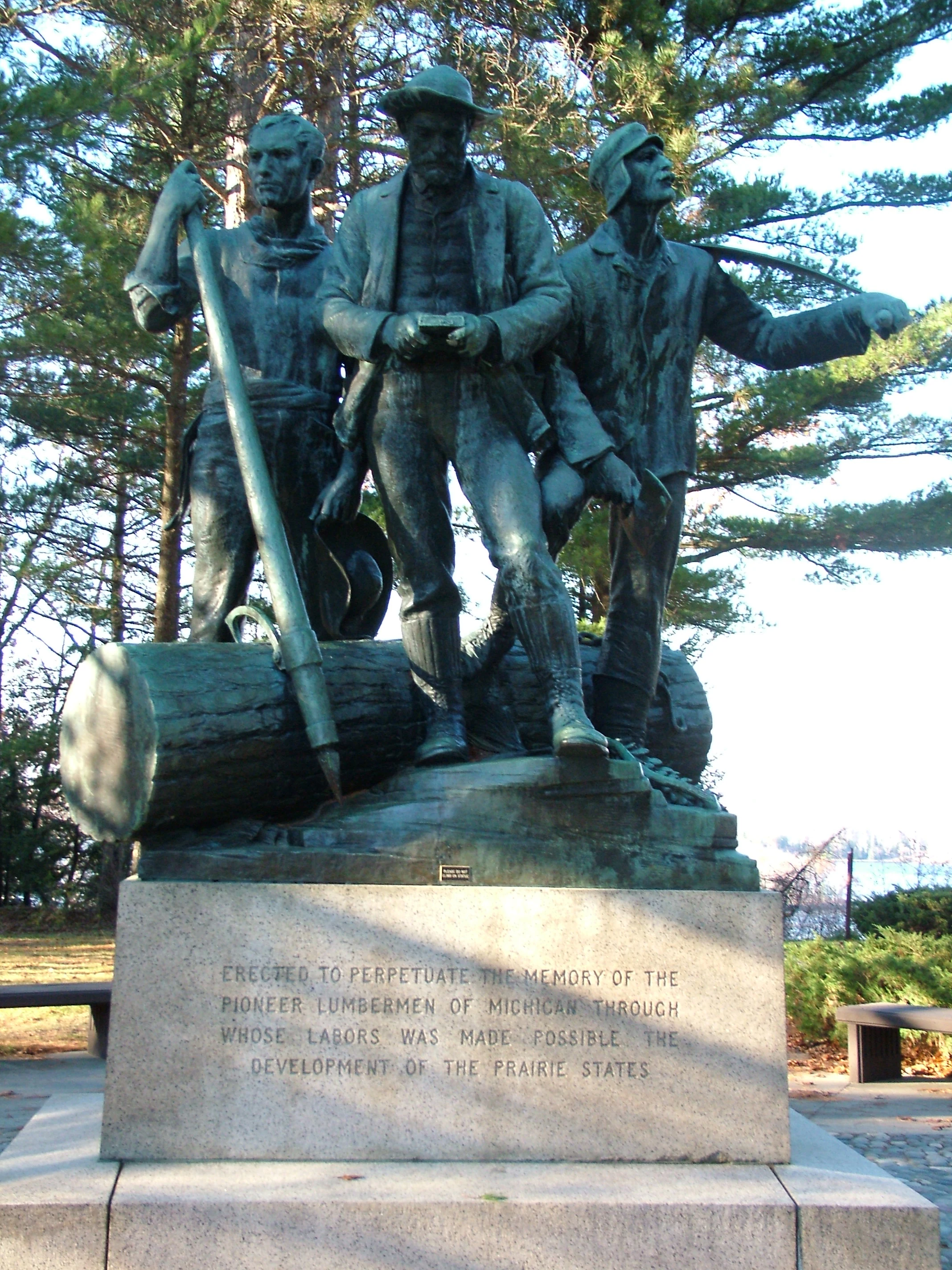
The cultural context of the Huron-Manistee National Forests is deeply rooted in the Great Lakes logging era. Large swaths of the forests were heavily logged in the nineteenth and early twentieth centuries and then abandoned as timber companies moved on, leaving behind cutover landscapes that were eventually reconstituted as national forests. The Lumberman's Monument, located near Oscoda in the eastern part of the forest, honors the workers of this early logging industry and remains a tangible reminder of the region's working-forest heritage.
Today, the forests support a continuing tradition of outdoor recreation in northern Michigan. Communities around Baldwin, Wellston, Cadillac, Mio, and Oscoda serve as gateways, and local ranger districts and visitor centers connect residents and visitors to the landscape. Events such as the Lumberjack 100, a 100-mile ultra-endurance mountain bike race held within the Manistee portion, reflect how the forests have evolved from an industrial timber base into a venue for endurance sport and backcountry recreation, while still supplying timber, minerals, and energy resources... [truncated]
Top sights and standout views in Huron-Manistee National Forests
Among the strongest standalone features of the Huron-Manistee National Forests are the Pere Marquette and Au Sable rivers, both nationally known for canoeing and trout fishing, and the more than 1,800 miles of rivers and 17,000 acres of lakes that together sustain one of the Midwest's most extensive inland paddling networks.
Equally distinctive are the Nordhouse Dunes Wilderness on the Lake Michigan shore, one of the few U.S. wilderness areas with an extensive lakeshore dune ecosystem, and the jack pine barrens of the Huron unit, where management for the Kirtland's warbler has shaped a unique fire-adapted forest landscape.
Best time to visit Huron-Manistee National Forests
Spring and early summer bring high water on rivers such as the Pere Marquette and Au Sable, making them well suited to canoeing and fishing, while warming temperatures open up inland lakes for boating and camping. Early mornings and evenings during this period are also good times to experience active wildlife along forest edges and waterways.
Late summer and early fall typically offer drier forest roads, comfortable hiking temperatures, and the beginning of color in hardwood stands. Winter transforms the forests into a snowmobile and cross-country skiing landscape, with frozen rivers, snow-covered dunes, and access to trail systems unavailable in other seasons.