
Why Jedediah Island Marine Provincial Park stands out
Jedediah Island Marine Provincial Park is best known for being one of the largest island parks in British Columbia and for its combination of forested Gulf Islands terrain with protected marine surroundings. The park's sheltered bays and accessible-by-boat-only character give it a quiet, self-reliant feel that sets it apart from more developed coastal parks. The island's history is also a defining part of its identity. Decades of family use by the Mattice and Palmer families, followed by a fast community fundraising campaign that raised more than four million dollars in the 1990s, gave the park a strong human story that sits alongside its natural setting. Its location within the broader Salish Sea also placed it at the edge of the well-documented series of human foot discoveries that began in 2007.
Jedediah Island Marine Provincial Park history and protected-area timeline
The modern history of Jedediah Island is closely tied to the Mattice and Palmer families and their long relationship with the island as a private retreat and homestead. Evan and Mary Mattice, originally from Seattle, purchased the island in 1949 as a summer vacation destination for their family. Over the following decades they continued visiting with hopes of one day making it a full-time home, and the island gradually evolved from a seasonal getaway into a more enduring family place.
In 1972, Mary and her second husband, Albert W. Palmer, moved to Jedediah Island as full-time residents, where they lived for the next twenty years. Evan Mattice continued to visit regularly after Mary's remarriage until his death in the early 1990s. Their eldest son eventually brought his own family from Kirkland, Washington to the island in 1979, settling at Long Bay and beginning to clear land for horticulture farming. As the family expanded into the next generation, with plans for grandchildren to remain on the island, Mary Palmer decided to sell, opening the door to a new chapter for Jedediah.
Concern on nearby Lasqueti Island that the property might be sold privately after an earlier land trust commitment fell through led, in 1994, to a community-led fundraising campaign to save the island. Within less than six months, supporters raised more than four million dollars, with a major donation from the family of Dan Culver and additional contributions arriving from across British Columbia. The province's Minister for the Environment ultimately supported the effort, and the campaign exceeded its target. The deal remained uncertain until Mary Palmer secured Class A provincial park status for the island, guaranteeing it could not be logged or mined. With that protection in place, she signed the island over to become a new Gulf Islands provincial park.
The park was formally established on July 13, 1995, and has been managed since by BC Parks. In the summer of 2007, visitors on the island discovered a human foot on the beach, the first in what became a well-documented series of Salish Sea human foot findings over subsequent years. The foot recovered at Jedediah Island was traced to a man missing since 2004, with no suspicion of foul play, and the event added a notable, if somber, chapter to the island's post-protection history.
Jedediah Island Marine Provincial Park landscape and geographic character
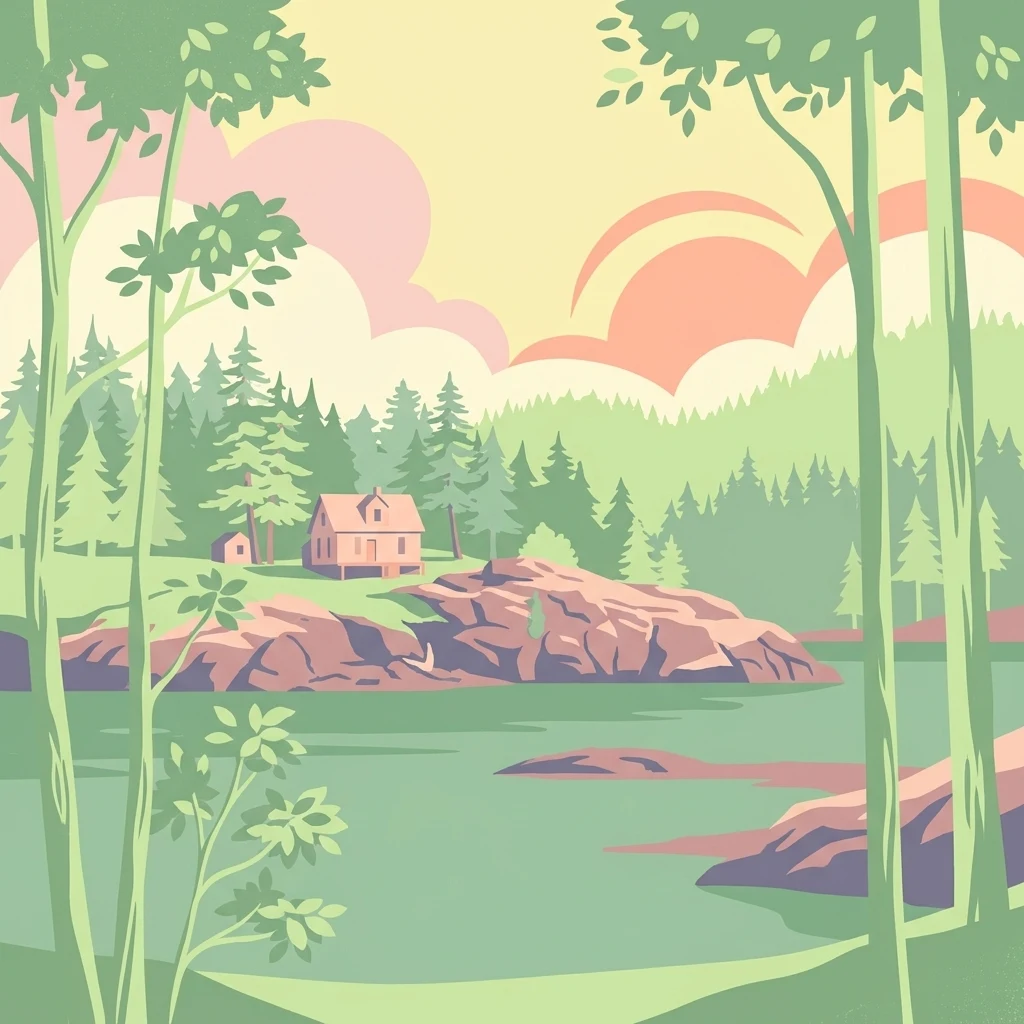
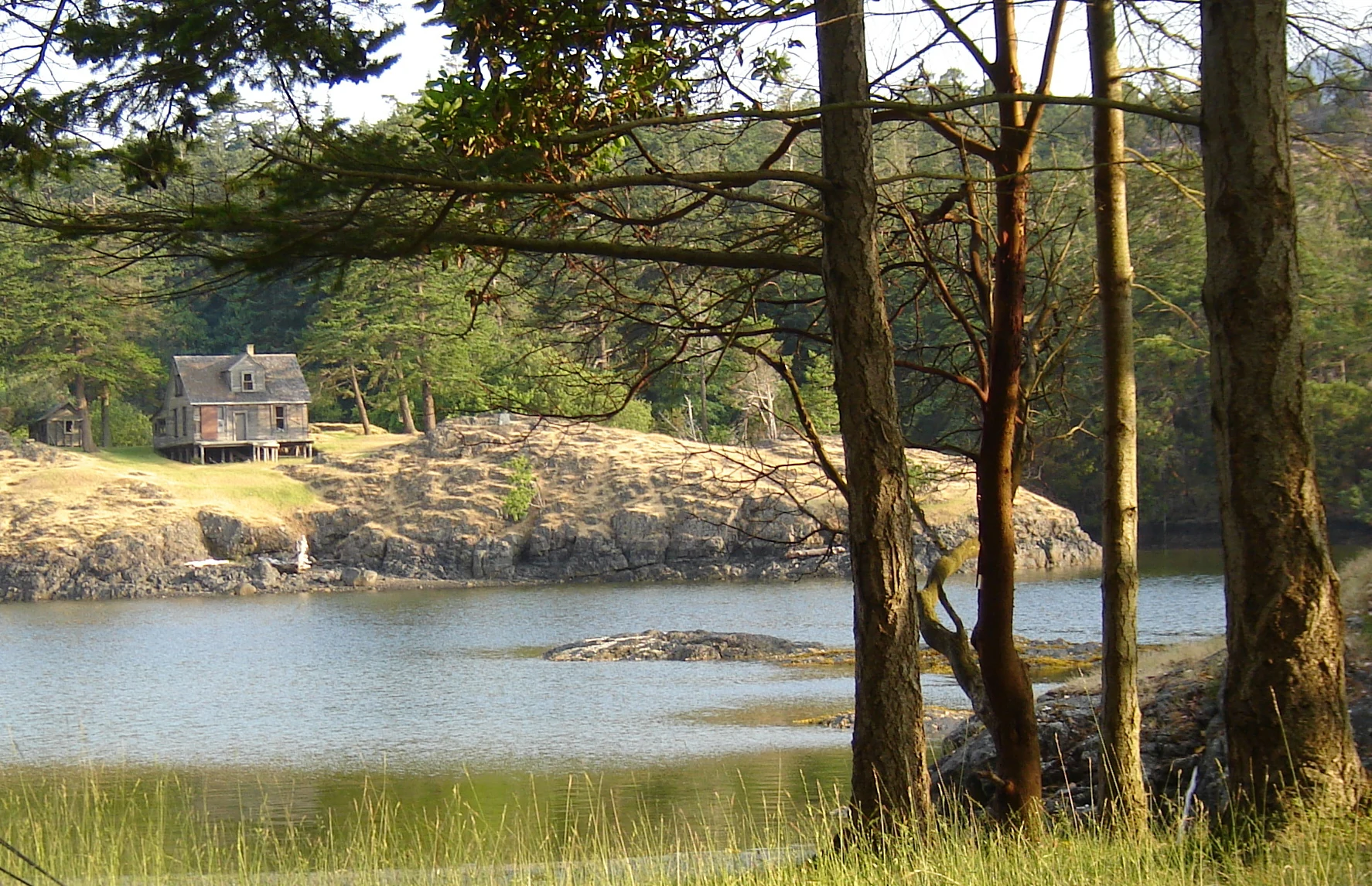
The landscape of Jedediah Island Marine Provincial Park reflects the classic character of the southern Gulf Islands. Forested terrain meets an irregular, deeply indented shoreline, producing a mosaic of small bays, rocky headlands, and pebble beaches rather than a single dominant landform. The island's interior is shaped by coastal forest typical of the region's dry, mild maritime climate, with stands that gradually thin toward the water and expose rocky edges along the shore.
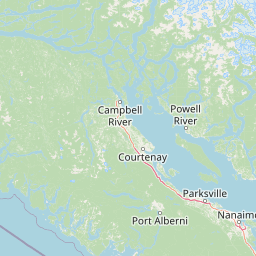
The marine setting is just as integral to the park's identity as the land itself. The surrounding waters of the Strait of Georgia, including channels and passages linking the island to Lasqueti Island and the mainland, frame the park's landmass and define the experience of arriving and moving around it. Sheltered coves and quiet bays, such as those visible from the island's interior elevations, give the park a varied coastal profile and shape how visitors encounter its scenery.
Because the park is reached only by boat and lacks road or ferry infrastructure, the landscape has remained relatively undisturbed compared with more accessible coastal areas. The resulting sense of space, combined with the small scale of the island, gives the park a contained, browseable landscape where forests, shoreline, and marine views are all within a short walk or paddle of one another.
Jedediah Island Marine Provincial Park ecosystems, habitats, and plant life
The natural character of Jedediah Island Marine Provincial Park is shaped by the meeting of southern Gulf Islands terrestrial ecosystems with protected marine waters. The island's forests are typical of the region's mild, relatively dry maritime climate, with a coastal woodland cover that has long coexisted with the island's small-scale human use. Openings from past land clearing and home sites blend into the broader forest matrix, producing a working and natural landscape that has gradually returned toward a wilder state under park management.
Along the shoreline, intertidal and shallow marine habitats form an important ecological transition between the forested land and the Strait of Georgia. The combined terrestrial and marine footprint of the park means that ecological processes on land and in the water are closely linked here, with nutrient exchange, wildlife movement, and shoreline dynamics shaping how the island functions ecologically.
The Class A status achieved before the park was established ensures that the island cannot be logged or mined, providing a strong baseline of protection for its terrestrial ecosystems. This long-term protection supports the gradual recovery of natural processes across the island and helps maintain the ecological character of the surrounding marine area as well.
Jedediah Island Marine Provincial Park wildlife and species highlights
Wildlife at Jedediah Island Marine Provincial Park reflects both the marine and terrestrial character of the southern Gulf Islands. Marine mammals are a defining presence, with Steller sea lions documented gathering on rocks within and around the park, adding a recognizable coastal wildlife signature. The wider Salish Sea context around the island supports an active marine mammal community that includes seals and other species typical of these protected coastal waters.
On land, the forested terrain supports the birdlife, small mammals, and shoreline species characteristic of Gulf Islands ecosystems. Intertidal zones around the island provide feeding areas for shorebirds and other water-associated species, while the island's interior forest provides cover for terrestrial wildlife adapted to coastal British Columbia conditions.
The combination of forested land and immediately adjacent marine habitat makes the park a place where marine and terrestrial wildlife experiences overlap. Visitors moving along the shore or between bays regularly encounter both land-based and sea-based wildlife, reinforcing the park's identity as a small but ecologically layered coastal protected area.
Jedediah Island Marine Provincial Park conservation status and protection priorities
Jedediah Island Marine Provincial Park holds real conservation significance because it protects roughly 240 hectares of southern Gulf Islands land together with a substantial surrounding marine area, in a region where coastal development pressure has historically been strong. The park's Class A designation, secured as a condition of the 1995 acquisition, guarantees that the island cannot be logged or mined, providing a durable level of protection that goes beyond ordinary provincial park status.
The park's establishment was itself a conservation milestone. A grassroots fundraising campaign that mobilized communities across British Columbia, supported by a major donation from the family of Dan Culver and provincial government backing, preserved an entire island from potential private sale and subdivision. This community-driven origin gives the park a strong conservation story that complements its ecological role.
Ecologically, the protected mix of forested island terrain and adjacent marine waters contributes to habitat connectivity within the Gulf Islands network. Maintaining this mosaic of land and sea in a protected state supports regional biodiversity, shoreline stability, and the long-term ecological health of one of the more populated coastal regions of British Columbia.
Jedediah Island Marine Provincial Park cultural meaning and human context
The cultural identity of Jedediah Island is closely tied to the Mattice and Palmer family history that preceded its protection. For several decades, the island served as a private retreat and eventually a homestead, with successive generations building homes, clearing land for horticultural farming, and establishing a multi-generational family presence at Long Bay and elsewhere on the island. This layered history of family use is part of what gives the park its strong sense of place.
The 1990s transition into a protected area also carries a cultural dimension. The community-led campaign that saved Jedediah Island drew support from across British Columbia and reflected a regional commitment to keeping sizeable islands out of private development. The role of Dan Culver's family as a major donor, alongside contributions from individuals across the province, marked the park as a product of community will as much as of government policy.
More widely, the island sits within the traditional waters and territory of the Indigenous peoples of the Salish Sea, a context it shares with the surrounding Gulf Islands. While the park's documented modern history centers on the Mattice and Palmer families and later community stewardship, its place in the broader coastal cultural landscape of British Columbia remains part of how the island is understood today.
Top sights and standout views in Jedediah Island Marine Provincial Park
Jedediah Island Marine Provincial Park stands out for its unusual combination of large-island status within the BC park system, boat-only access, and a strong story of community-driven protection. Its roughly 240-hectare land base, paired with significant surrounding marine waters, gives it a layered coastal character that distinguishes it from smaller, more fragmented Gulf Islands protected areas.
The park's history is itself one of its highlights: the rapid 1990s fundraising effort that raised more than four million dollars and the securing of Class A status before the island changed hands are uncommon chapters in the story of British Columbia provincial parks. Wildlife sightings such as Steller sea lions hauled out on local rocks, the quiet forested terrain, and the park's position within the Salish Sea all add to a distinctive visitor and conservation profile.
Best time to visit Jedediah Island Marine Provincial Park
The most comfortable periods to experience Jedediah Island Marine Provincial Park generally align with the late spring through early fall window that defines most southern Gulf Islands marine travel. During these months, calmer seas, longer daylight hours, and milder temperatures make boat access to the island more manageable and create the most inviting conditions for exploring its bays and shorelines.
Outside of this window, the park remains a destination but conditions become more demanding. Stronger winds, reduced daylight, and cooler temperatures in shoulder seasons and winter can limit how easily the island can be reached and how broadly the surrounding marine environment can be enjoyed. Wildlife viewing, shoreline exploration, and the quiet atmosphere of the park are typically most rewarding when conditions favor extended time on the water and along the island's varied coast.