
Why Morden Colliery Historic Provincial Park stands out
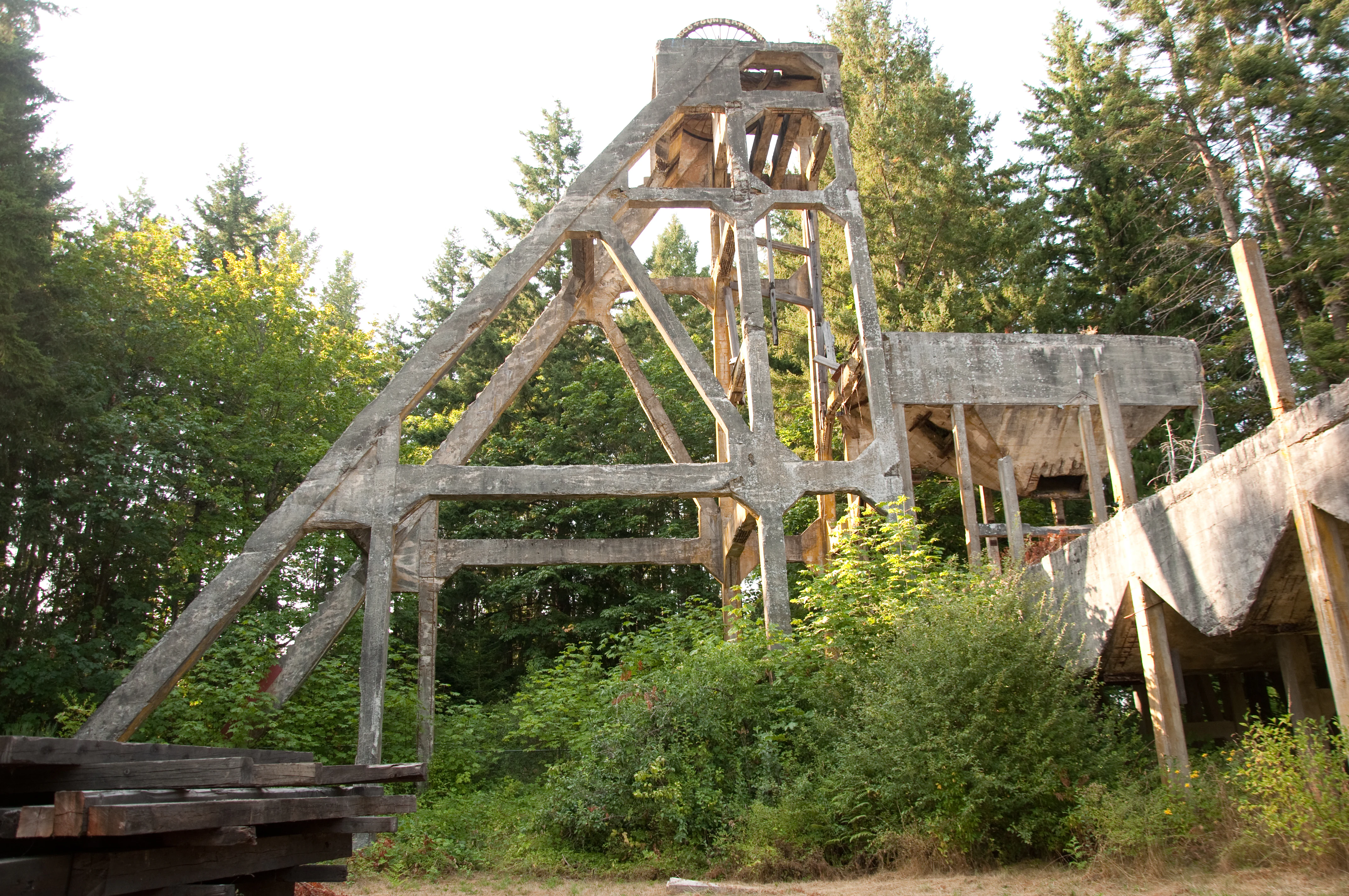
Morden Colliery Historic Provincial Park is best known for preserving the towering concrete headframe and tipple of the early 20th-century Morden Colliery, one of the most intact surviving examples of this kind of mining structure in North America. The site documents a critical chapter in Vancouver Island's coal mining history, from the opening of the Pacific Coast Coal Mining Company operations through the Fiddick mine disaster and the shift of production to Morden. The park also stands out for its rare industrial heritage value outside of the Muddy, Illinois example. After years of deterioration, the headframe received a major multi-year restoration effort supported by provincial funding and led by a community society, making the site an important case study in grassroots preservation of industrial structures.
Morden Colliery Historic Provincial Park history and protected-area timeline
The history of Morden Colliery Historic Provincial Park begins with the broader coal mining boom that shaped southern Vancouver Island in the late 19th and early 20th centuries. In 1909, the Pacific Coast Coal Mining Company (PCCM) opened a standard-gauge railway from Fiddick's Junction on the E&N Railway to Boat Harbour, creating a direct conduit for shipping coal from inland operations to coastal vessels. The line was extended the following year to the Fiddick Colliery, where mining quickly became a major activity for the surrounding community.
The trajectory of mining in the area changed sharply with the Fiddick mine disaster in early 1915, when 19 men drowned underground. Within a year of the disaster, operations at Fiddick ceased entirely, and the workforce shifted roughly 2.6 kilometres southeast to the new PCCM Morden Colliery. Work on the Morden mine shafts had already begun in 1912; the coal seam was reached by the following year, but a year-long strike in 1913–1914 allowed the new shafts to flood, and only after additional preparation did production formally commence in 1917. During this period, the 22.7-metre concrete headframe that defines the modern park was constructed, and worker housing, including cottages, residences, and a boarding house, was relocated from the abandoned Fiddick site.
Morden Colliery's productive years were substantial, with individual nine-hour shifts reportedly producing up to 1,500 tons of coal, moved from shaft to rail using a bull chain through the tipple. However, the mine closed in 1921, and PCCM entered bankruptcy the following year. A brief revival in 1930 under the Canadian Coal and Iron Co. ended the same year, and by 1935, the site's rolling stock, locomotives, and sawmill equipment had been sold for scrap. Although exploratory coal drilling on the broader Morden property occurred later in the 20th century, the colliery itself never reopened.
While the mine declined, the adjacent settlement remained intact. Through the 1940s and 1950s, logging became the dominant local industry, and the area gradually evolved into a small-holding bedroom community for nearby Nanaimo. The site's heritage significance was formally recognized when it was designated a National Historic Site and, on 10 January 1972, a Historic Provincial Park under BC Parks.
In the decades after designation, the park remained largely undeveloped, and the headframe steadily deteriorated behind a chain-link fence. In 2003, the Friends of Morden Mine (FOMM) formed to advocate for the structure's preservation, and by 2015 the society was on the verge of giving up. A turning point came in 2019, when a $1.4-million BC government grant enabled a major restoration project that used 16 shipping containers as temporary stabilization, a technique inspired by post-earthquake engineering in Christchurch. The restoration effort helped secure the structure as one of the very few surviving concrete headframe and tipple combinations of its kind in North America.
Morden Colliery Historic Provincial Park landscape and geographic character
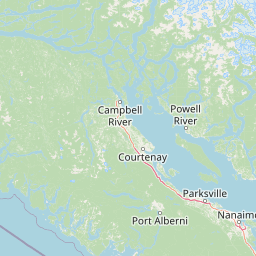
The landscape of Morden Colliery Historic Provincial Park is not defined by dramatic natural features but by the imprint of industrial history on a stretch of southern Vancouver Island. The park occupies a compact footprint near the island's east coast, set within a broader landscape shaped first by coal mining, then by logging, and eventually by the quiet residential development that surrounds Nanaimo. The terrain reflects the rolling, forested character typical of the island's southeastern lowlands, where coastal forest gives way to small-scale rural and semi-rural land uses.
A defining non-natural feature of the landscape is the surviving concrete headframe and tipple, roughly 22.7 metres tall, which towers above the surrounding forest and gives the site its distinctive vertical accent. Nearby, traces of the former Pacific Coast Coal Mining Company railway corridor have been adapted into a trail, threading eastward through the park toward the Nanaimo River. The river corridor itself forms part of the broader landscape context, offering a more natural contrast to the mining remains and connecting the park to plans for a regional trail system that would eventually reach Hemer Provincial Park.
The park's setting combines small-scale industrial heritage with a maturing coastal forest environment. Visitor experience is shaped less by sweeping scenic vistas and more by the juxtaposition of engineered structures with quiet forest, former rail alignments, and the memorial features that commemorate those who worked and died in Vancouver Island's coal mines.
Morden Colliery Historic Provincial Park ecosystems, habitats, and plant life
Morden Colliery Historic Provincial Park is fundamentally a heritage site rather than an ecological reserve, and its natural character is correspondingly modest. The park lies within the coastal forest zone typical of southeastern Vancouver Island, where second-growth woodlands, mixed coniferous and deciduous species, and small clearings form the everyday backdrop rather than protected interior wilderness.
The forested setting around the headframe and along the trail corridor provides habitat for the kinds of birdlife and small mammals common to coastal Vancouver Island residential and rural edge environments. Alders, firs, cedars, and various understory shrubs typical of recovering coastal land occupy the margins around former mining and railway disturbance zones.
Ecological interest at the park is closely tied to the broader Nanaimo River watershed, which the trail corridor approaches but does not yet fully cross. Regenerating forest, riparian margins, and edge effects from the surrounding community all shape the park's natural character, though the site is best understood as a small heritage-protected pocket within a working coastal landscape rather than as a dedicated ecological preserve.
Morden Colliery Historic Provincial Park wildlife and species highlights
Wildlife at Morden Colliery Historic Provincial Park reflects the species typical of coastal southeastern Vancouver Island rather than any rare or specialized fauna. Visitors are likely to encounter common resident birds associated with edge habitats, small forests, and nearby developed areas, including songbirds and corvids that frequent mixed woodland. The trail corridor toward the Nanaimo River adds the potential for observing riparian and water-associated species where the forest opens toward the riverbanks.
Small mammals typical of similar coastal woodland edges, such as rodents and shrews, are present in the understory, and the park's transitional setting between forest and light residential development supports a familiar suite of adaptable island wildlife. There is no documentation of the park hosting populations of large mammals or specially protected species; rather, its wildlife value lies in offering a representative slice of the regional fauna that has reclaimed former industrial land.
In this sense, the wildlife experience is incidental rather than central, complementing the heritage focus of the park rather than serving as a primary draw for visitors.
Morden Colliery Historic Provincial Park conservation status and protection priorities
Morden Colliery Historic Provincial Park's conservation significance is primarily cultural and industrial rather than ecological. Its central role in the BC Parks system is to preserve a tangible link to Vancouver Island's coal mining era, a defining industry of the island's late 19th and early 20th centuries, and to protect a structure that would otherwise have been lost to deterioration. The park is administered under BC Parks' Historic Provincial Park designation, a category that emphasizes heritage preservation over natural resource protection.
A critical conservation achievement at the park is the multi-year effort to stabilize and restore the concrete headframe and tipple. By 2015, the structure had deteriorated to the point where preservation advocates considered abandoning their efforts, but a $1.4-million grant in 2019 enabled a coordinated restoration that used shipping-container stabilization techniques adapted from post-earthquake engineering. The result is the survival of one of only a small number of comparable concrete headframe and tipple complexes in North America, with the Muddy, Illinois example often cited as the other principal comparable site.
At a broader scale, the park supports the conservation of an emerging regional trail corridor along the former PCCM railway right-of-way, linking the heritage site with the Nanaimo River ecosystem and, eventually, with Hemer Provincial Park. This trail-based approach extends the park's value beyond a single monument, weaving the industrial heritage into the island's natural and recreational landscape.
Morden Colliery Historic Provincial Park cultural meaning and human context
Morden Colliery Historic Provincial Park sits at the heart of one of Vancouver Island's most important coal mining regions, an industry that shaped not only the island's economy but also the makeup of its communities. Coal drew workers from across Canada and abroad to places like Nanaimo, and the deaths and labor struggles of those miners are foundational chapters in the island's industrial and social history. The park's interpretive plaques and its 2017 memorial cairn, which commemorates both the three men who died at Morden and the estimated 1,000 miners who lost their lives across Vancouver Island coal operations, reflect this enduring cultural weight.
The settlement that grew up around the mine illustrates the broader trajectory of Vancouver Island resource communities, transitioning from mining to logging and eventually into bedroom communities serving nearby urban centers. This layered social evolution is visible in the surviving residential fabric near the park and in the locally held memory of the colliery as both livelihood and loss.
The Friends of Morden Mine, the community organization that fought to save the headframe, is itself part of the park's cultural story, representing the grassroots effort required to preserve industrial heritage when funding and institutional interest are limited. Their success has helped cement the park as a touchstone for public memory of coal mining on Vancouver Island.
Top sights and standout views in Morden Colliery Historic Provincial Park
The defining highlight of Morden Colliery Historic Provincial Park is the seven-storey concrete headframe and tipple that still rises above the surrounding Vancouver Island forest. After more than a century of weathering and decades of neglect, this rare industrial survivor, with the Muddy, Illinois example often cited as its only comparable counterpart in North America, stands as a tangible monument to the island's coal mining past.
Equally compelling is the network of interpretive features along the former Pacific Coast Coal Mining Company railway corridor, including plaque-based interpretation and a memorial cairn that anchors the human story of mining loss. The park's location near Nanaimo, its day-use heritage focus, and the ambitious restoration project led by the Friends of Morden Mine together give the site a distinctive identity as both an industrial landmark and a community-led preservation success.
Best time to visit Morden Colliery Historic Provincial Park
Morden Colliery Historic Provincial Park can be visited at any time of year, as it is a heritage-focused day-use site rather than a seasonal natural attraction. Spring and summer typically offer the most comfortable conditions for walking the trail corridor, viewing the headframe at close range, and reading the interpretive plaques without weather constraints. The forested edges of the park also feel more inviting in warmer months, when secondary growth and trail access are most pleasant.
Fall adds a different atmosphere, with the surrounding coastal forest taking on autumn color, while winter visits tend to be quieter and more meditative, emphasizing the stark vertical silhouette of the headframe against winter skies. Because the park's draws are structural and interpretive rather than ecological, visitors interested primarily in coal mining heritage can plan a trip at any season without missing the site's central feature.