Why Jezioro Udzierz Nature Reserve stands out
The reserve is best known for its role as an important bird refuge within the Bory Tucholskie forest landscape, anchored on Lake Udzierz and surrounded by peatlands, reedbeds, and wet meadows. The combination of an open lake with extensive marsh and meadow habitats makes it a particularly rich site for waterbirds and breeding bird communities. It is also notable for the unusually high plant species count documented within its relatively compact area, highlighting how the meeting of aquatic, boggy, and meadow environments creates exceptional habitat diversity in this part of the Tuchola Forest region.
Jezioro Udzierz Nature Reserve history and protected-area timeline
Jezioro Udzierz Nature Reserve was formally established in 2000 through an order published in the official journal of the Pomeranian Voivodeship (Dziennik Urzędowy Województwa Pomorskiego, Nr 56, poz. 348). This creation came in a period of expanding Polish nature protection following the reorganization of the country's voivodeships and the renewed importance of protecting fauna-rich wetland systems.
The reserve was designated as a faunistic reserve, a category aimed primarily at protecting animal habitats and breeding populations, particularly those of birds, within otherwise forest-dominated landscapes. The decision reflects recognition that the lake and its surrounding peatlands, reedbeds, and meadows together formed an exceptionally important refuge for waterbirds and other wetland fauna within the Bory Tucholskie region of Kociewie.
Alongside the core protected area, a buffer zone was defined to extend the influence of the reserve into the surrounding landscape. This establishment marked the formal recognition of the site's long-standing ecological importance and embedded it within the broader Polish system of nature reserves.
Jezioro Udzierz Nature Reserve landscape and geographic character
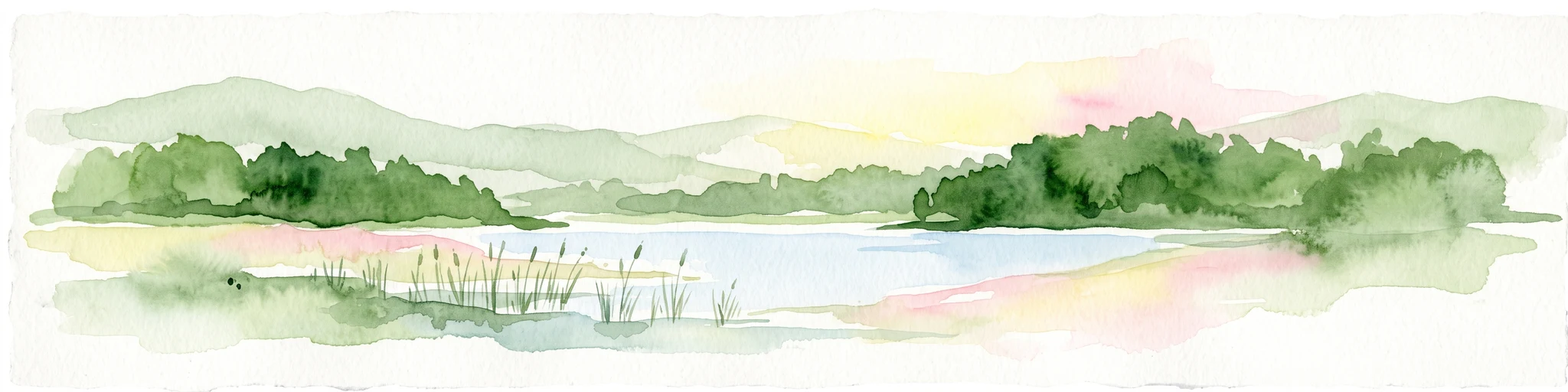
The landscape of Jezioro Udzierz Nature Reserve is defined by the transition between the open water of Lake Udzierz and the surrounding peatland, reedbed, and wet meadow habitats. Although the reserve sits within the vast Bory Tucholskie forest complex, its defining scenery is not dense forest but rather open, water-dominated terrain: lake surface, marshy shores, reed fringes, and waterlogged meadows that gradually merge into peat-forming mires.
The lake itself anchors the landscape, surrounded by a layered ring of habitats. Immediately along the shoreline, reed communities form dense belts that filter into the open water. Beyond the reeds, peatland areas dominate, locally saturated and shaped by organic accumulation, while wet meadows extend the habitat mosaic further outward in patches. This concentric pattern, from open water through reeds, peat, and meadow, gives the reserve a distinctive visual character that contrasts sharply with the closed forest that dominates the wider Bory Tucholskie.
The overall relief is low and gentle, typical of lowland glacial lake districts in northern Poland. The terrain appears flat to gently undulating, with subtle transitions shaped more by water levels and vegetation than by dramatic topography. Seen within the broader region, the reserve represents one of the characteristic openings in the Tuchola Forest, a small but clear interruption of the forested plain where lake and wetland come together in a single contiguous ecosystem.
Jezioro Udzierz Nature Reserve ecosystems, habitats, and plant life
Ecologically, the reserve is built around a continuous sequence of interconnected habitats: open lake water, reedbeds, peat-forming mires, and wet meadows. This sequence creates a diversity of microhabitats that supports a wide range of species in a relatively compact area. Each habitat type contributes differently, with the open lake supporting waterbirds and aquatic species, the reedbeds providing nesting cover and shelter, the peatlands preserving specialized plant communities adapted to waterlogged, nutrient-poor conditions, and the meadows offering additional foraging and breeding habitat.
The vegetation reflects this habitat diversity. More than five hundred vascular plant species have been recorded on the reserve, an unusually high figure that illustrates how the meeting of boggy, marshy, aquatic, and meadow environments generates distinctive botanical richness. Peatland specialists, reedbed plants, aquatic and shore vegetation, and meadow plant communities all contribute to this botanical diversity, creating layered plant communities that change across the reserve in response to hydrology and substrate.
The combination of these habitats also creates a particularly productive environment for invertebrate life and for amphibians, which depend on the transition between water and land. This in turn supports higher trophic levels, including the rich bird communities that gave the site its faunistic reserve status.
Jezioro Udzierz Nature Reserve wildlife and species highlights
Jezioro Udzierz's wildlife significance is strongly centered on its birdlife. Around seventy bird species have been recorded within the reserve, with approximately half of them breeding locally. This makes the reserve a particularly valuable refuge within the forest-dominated region, since many of these species depend on open water, marsh, or meadow habitats that are scarce within the broader Tuchola Forest.
The lake and reedbed habitats support waterbirds and marsh-breeding species, while the surrounding peatlands and meadows provide additional foraging and nesting opportunities for meadow-nesting and wetland-adjacent species. The combination of these habitats ensures a multi-layered bird community across the year, with breeding activity concentrated along the reedbeds, meadows, and lake margins.
In addition to birds, the reserve's mosaic of habitats supports the broader fauna typical of lowland lake and wetland systems in northern Poland, including amphibians that benefit from the aquatic and wet meadow transition, as well as invertebrates that underpin the wetland food web. The faunistic reserve designation reflects the broader value of this animal community, not only its bird component.
Jezioro Udzierz Nature Reserve conservation status and protection priorities
From a conservation perspective, Jezioro Udzierz represents a textbook case of why faunistic reserves matter within large forested regions. The Bory Tucholskie is dominated by closed forest cover, and without targeted protection, the lake and wetland mosaic that supports the reserve's bird and plant diversity would be vulnerable to drainage, peatland degradation, changes in water levels, and forest expansion into open wetland areas.
By formally protecting the lake ecosystem together with its surrounding peatland, reedbeds, and meadows, the reserve maintains the full habitat complex required by the species that depend on it. The presence of a designated buffer zone strengthens this protection by extending conservation influence outward from the strict core area, helping to maintain hydrological conditions and limit edge effects.
The reserve also has a broader conservation significance at the regional scale. It preserves a representative example of the wetland openings that occur within the Tuchola Forest, contributing to ecological diversity across the wider landscape. By protecting approximately seventy bird species and more than five hundred vascular plant species within a relatively compact area, Jezioro Udzierz helps maintain biodiversity in the Kociewie region of Pomeranian Voivodeship and supports ecological continuity within northern Poland's network of protected wetlands.
Jezioro Udzierz Nature Reserve cultural meaning and human context
The reserve is located in the historical Kociewie region, a culturally distinct subregion of northern Poland with its own local identity, dialects, and traditional rural landscape. The presence of nearby villages such as Blizawy and Udzierz reflects the long-standing relationship between small rural settlements and the forest and wetland landscape of the Bory Tucholskie.
Although the reserve is predominantly valued for its natural and ecological significance, its setting within Kociewie adds a regional cultural dimension. The lake and surrounding meadows have historically been part of the rural land-use mosaic that shaped the Kociewie plain, where small communities coexisted with extensive forest and scattered wetland clearings. Modern conservation efforts, including the 2000 establishment of the reserve, represent a new chapter in this longer relationship between people and landscape, focused on preserving ecological values that had been sustained over generations of traditional land use.
Top sights and standout views in Jezioro Udzierz Nature Reserve
Lake Udzierz anchors one of the most ecologically compact wetland mosaics within the Bory Tucholskie forest complex, combining open water, reedbeds, peatlands, and wet meadows in a single protected area. This habitat layering supports roughly seventy recorded bird species and more than five hundred vascular plant species, giving the reserve an unusually rich biodiversity profile for its size.
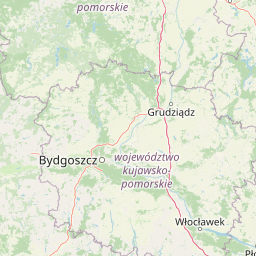
Protected as a faunistic reserve since 2000, the site also benefits from a buffer zone that extends conservation influence into the surrounding landscape. Its location within the historical Kociewie region, in the Osiek commune of Pomeranian Voivodeship, adds regional context to the ecological story, making the reserve a meaningful example of how targeted protection preserves wetland biodiversity within a much larger forested landscape.
Best time to visit Jezioro Udzierz Nature Reserve
As a wetland and lake reserve, Jezioro Udzierz offers a changing character across the seasons. Spring and early summer are typically the most rewarding periods for birdwatching, when breeding activity is at its peak and the reedbeds, meadows, and lake margins host nesting waterbirds and marshland species. During this season, wetland vegetation is fully active and the contrast between the open lake and the surrounding forest is most visible.
Late summer and early autumn bring ripening reedbeds and changing plant colors across the meadows, while wetland bird communities gradually shift toward migratory and wintering patterns. Winter tends to bring a quieter atmosphere, with frozen or partially frozen surfaces and reduced bird activity, although the open wetland structure of the reserve remains visible against the surrounding forest. Overall, the reserve's seasonal interest is strongest from spring through early autumn, when both bird activity and plant diversity are most evident.