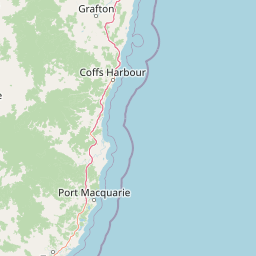
Why Kattang Nature Reserve stands out
Kattang is best known for the dramatic Perpendicular Point headland, where cliffs descend roughly 40 metres to the sea below, and for the reserve's unusual concentration of vegetation types. Within a very small footprint, it combines exposed coastal headlands, dry eucalyptus woodland, wet and dry heathland, and two surviving patches of littoral rainforest that mirror the better-known rainforest communities of nearby Sea Acres National Park. The reserve is also favored locally for wildflower displays in late winter and early spring, and it is considered a possible habitat for the extremely rare scented acronychia, a rainforest shrub of significant botanical interest.
Kattang Nature Reserve history and protected-area timeline
Kattang Nature Reserve was formally established in March 1984, bringing an important block of coastal land on the New South Wales Mid North Coast under formal conservation management by the NSW National Parks and Wildlife Service. The reserve's creation was part of the broader effort during that period to secure surviving patches of native vegetation along the heavily settled New South Wales coastline.
The protected status of the reserve reflects longstanding recognition that the headlands, heath, and forest patches around Laurieton hold botanical communities that have been extensively reduced elsewhere by agriculture and coastal development. By setting aside this compact area, the reserve preserves not only scenic headland but also remnants of local dry eucalyptus woodland and, importantly, two small patches of littoral rainforest that are floristically connected to the larger rainforest communities at nearby Sea Acres National Park.
Kattang Nature Reserve landscape and geographic character
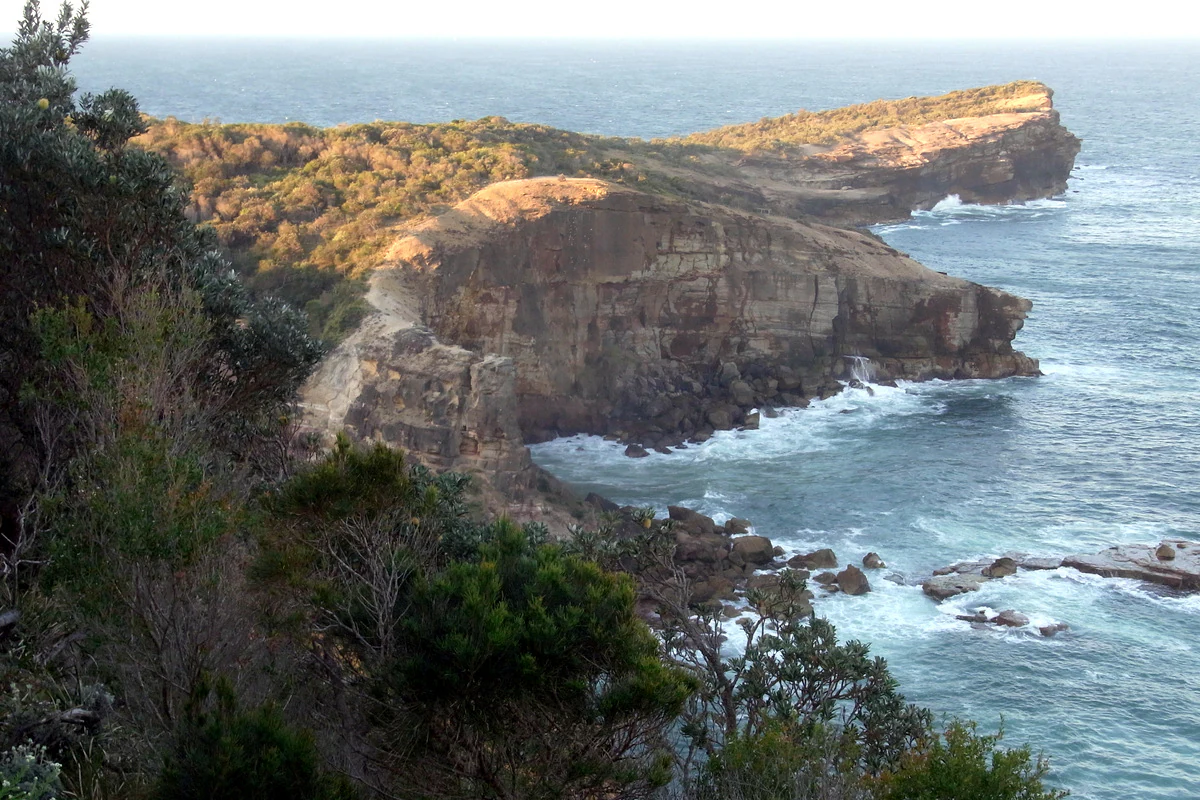
Kattang's landscape is defined by the meeting of land and sea along a deeply indented section of the New South Wales Mid North Coast. The reserve's centerpiece is Perpendicular Point, a bold headland where the land terminates in sheer cliffs rising roughly 40 metres above the Tasman Sea. These cliffs give the reserve its most memorable scenery, with steep drops, exposed rock faces, and the constant presence of ocean spray shaping the vegetation that clings to the cliffs and ledges.
Inland from the headlands, the terrain transitions into a mosaic of more sheltered environments. There are gentle ridgelines and slopes clothed in dry eucalyptus woodland, open expanses of heathland that turn vivid during the wildflower season, and sheltered pockets where moisture and protection allow small patches of littoral rainforest to persist. The compact size of the reserve means these very different landscapes are encountered in close succession, and short walks can move visitors from dramatic coastal cliffs into quiet enclosed forest within a small distance.
Kattang Nature Reserve ecosystems, habitats, and plant life
The natural significance of Kattang Nature Reserve lies in the unusual variety of ecological communities packed into its small area. The reserve protects examples of exposed coastal headland vegetation, dry eucalyptus woodland, wet heathland, dry heathland, and two surviving patches of littoral rainforest, giving it a suite of habitats that would typically be spread across a much larger landscape.
The two littoral rainforest patches at Kattang are particularly important. Although small, they are botanically similar to the rainforest communities at the larger and better-known Sea Acres National Park to the north, and they represent surviving fragments of a vegetation type that once extended more broadly along the New South Wales coast. Concerns about the future of these patches have given the reserve an outsized botanical interest beyond its size.
The heathlands and woodlands of Kattang also support a strong wildflower presence in the cooler months, with the heath communities in particular generating the seasonal floral displays that draw visitors to the reserve each year. There is also ongoing botanical interest in whether the extremely rare scented acronychia grows within the reserve, a possibility that has added to its conservation profile.
Kattang Nature Reserve wildlife and species highlights
The wildlife profile of Kattang Nature Reserve is closely tied to the variety of habitats it protects. The exposed headlands and cliffs provide nesting and perching sites for seabirds and coastal bird species, while the heathlands and eucalyptus woodlands offer habitat for smaller woodland birds, honeyeaters, and a range of insect life associated with the reserve's wildflower displays. The sheltered conditions of the littoral rainforest patches support a different community of birds and invertebrates more typical of moist forest environments.
The reserve is not primarily known as a wildlife-viewing destination in the way that larger Australian parks are, but the combination of coastal, heath, woodland, and rainforest habitats at Kattang creates opportunities to encounter a breadth of fauna well beyond what its small footprint would normally suggest. Local naturalists value the reserve as a place where multiple ecological communities and their associated wildlife can be observed within a single visit.
Kattang Nature Reserve conservation status and protection priorities
Kattang Nature Reserve is a key small-scale conservation holding on the New South Wales Mid North Coast, protecting a compact but unusually rich set of vegetation communities in a region where coastal development, agriculture, and past land clearing have significantly reduced natural habitat. Its formal establishment under the NSW National Parks and Wildlife Service in 1984 recognized the reserve's botanical and landscape values, and it continues to be managed as part of the state's network of coastal reserves.
From a conservation perspective, the reserve's significance is heightened by the presence of two small littoral rainforest patches. These fragments are floristically linked to the rainforest of Sea Acres National Park and represent a vegetation type that is increasingly rare along the New South Wales coast. Protecting these remnants, along with the surrounding heathland and eucalyptus woodland, gives Kattang a botanical conservation value that extends well beyond its modest size.
Top sights and standout views in Kattang Nature Reserve
Kattang Nature Reserve's standout features include the dramatic cliff scenery of Perpendicular Point, where the land drops roughly 40 metres to the Tasman Sea, and the rare presence of two small littoral rainforest patches, which link the reserve botanically to the larger rainforest communities of neighboring Sea Acres National Park. Equally distinctive is the reserve's compact mosaic of headland, eucalyptus woodland, and wet and dry heathland, which together create a layered natural experience usually associated with much larger parks.
The strong wildflower displays in late winter and early spring, combined with accessible bushwalking routes and proximity to Laurieton and Port Macquarie, give the reserve additional appeal as a coastal nature destination on the New South Wales Mid North Coast.
Best time to visit Kattang Nature Reserve
Late winter and early spring are widely regarded as the most rewarding times to experience Kattang Nature Reserve. During these months, the reserve's heathlands produce their strongest displays of wildflowers, the cooler weather makes walking the headland trails more comfortable, and the coastal scenery of Perpendicular Point is particularly clear.
Outside this peak floral season, the reserve remains attractive year-round for those interested in its cliffs, littoral rainforest patches, and varied vegetation communities, though conditions are generally warmer and drier through the summer months.