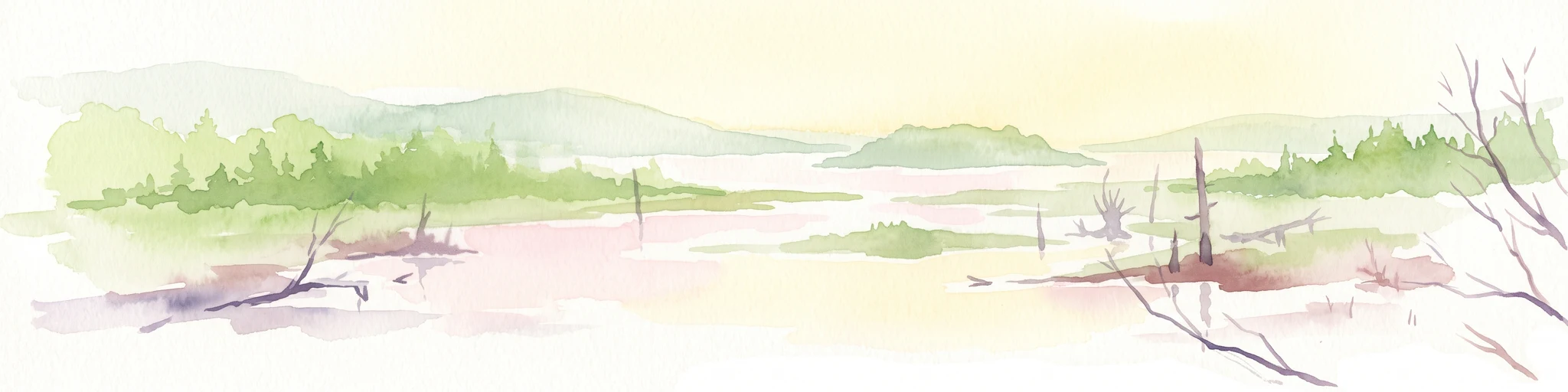
Why Kouchibouguac National Park stands out
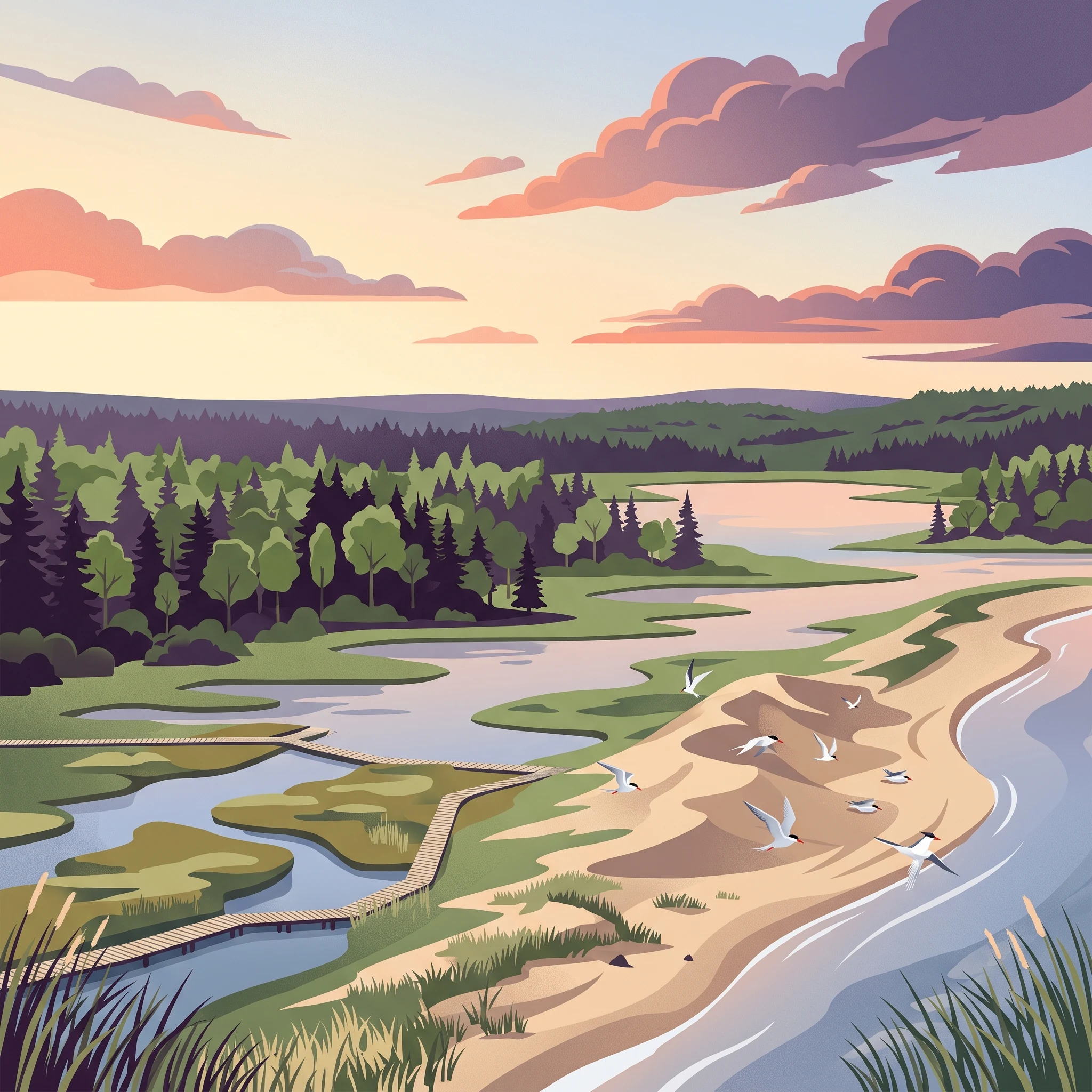
Kouchibouguac National Park is best known for its exceptional coastal landscape of barrier islands and extensive sand dune systems along the Gulf of St. Lawrence. The park protects one of the most significant dune complexes in eastern Canada, with 25 kilometres of sand dunes supporting diverse wildlife including harbour seal and grey seal colonies. It hosts the second largest tern colony in North America and provides crucial breeding habitat for the endangered piping plover. The park is also notable for its salt marsh ecosystems traversed by scenic boardwalks, and for the rare Gulf of St. Lawrence aster, a fragile plant species that once thrived in the park's coastal dunes before being largely eradicated by storms in 2006.
Kouchibouguac National Park history and protected-area timeline
Kouchibouguac National Park was founded by Parks Canada in 1969 with the primary purpose of setting aside sensitive sand dunes and bogs for protection. Before European settlement, the region was used by local Indigenous Peoples, particularly the Mi'kmaq, for hunting, fishing, plant harvest, trade, and habitation. The establishment of the park required the expropriation of land from approximately 215 families, comprising over 1,200 individuals, from seven nearby communities: Claire-Fontaine, Fontaine, Rivière au Portage, Kouchibouguac, Guimond Village, Cap St-Louis, and Saint-Olivier. These residents were predominantly descendants of the Mi'kmaq and Acadians whose ancestors had been deported during the Expulsion of the Acadians. The eviction process was deeply contentious, with residents resisting removal and shutting down the park on several occasions. The most notable figure was Jackie Vautour, whose decades-long resistance made him a folk hero; his home was bulldozed in 1976 but he returned and remained on the site until his death in 2021. The park's Mi'kmaq name, Kouchibouguac, derives from the Kouchibouguac River and means "river of the long tides." Many local Acadians preferred the name Claire-Fontaine after one of the displaced communities. The resistance to the park's creation prompted Parks Canada to change its policies to prevent future forced removals from protected areas.
Kouchibouguac National Park landscape and geographic character
Kouchibouguac National Park showcases a distinctive coastal landscape characterized by barrier islands, extensive sand dunes, lagoons, and salt marshes along the Gulf of St. Lawrence. The park's 25 kilometres of sand dunes represent one of the most significant dune systems on Canada's east coast, forming a dynamic and fragile landscape shaped by wind and tidal forces. Behind the coastal dunes, lagoons and tidal channels create sheltered aquatic environments, while extensive salt marshes provide transition zones between marine and terrestrial ecosystems. The interior of the park features forested areas and bog wetlands that add ecological diversity to the coastal plain setting. Several rivers flow through the park, including the Kouchibouguac River (meaning "river of the long tides" in Mi'kmaq), the Black River, Kouchibouguacis River, Fontaine River, and Polly's Creek, Rankin Brook, and Portage River. The landscape represents the Canadian Maritime Plain, a relatively flat coastal region that contrasts with the more mountainous terrain found elsewhere in New Brunswick.
Kouchibouguac National Park ecosystems, habitats, and plant life
The nature of Kouchibouguac National Park is defined by its coastal ecosystems that support exceptional biodiversity within a relatively compact area. The park's salt marshes represent highly productive tidal wetlands that serve as feeding and resting areas for migratory birds and support diverse invertebrate communities. The barrier islands and sand dunes provide specialized habitat for colonial nesting birds, including the second largest tern colony in North America and important breeding grounds for the endangered piping plover. The lagoons and shallow marine waters support harbour seal and grey seal colonies that haul out on the sandy shores. The park's bogs and forested areas add habitat diversity for terrestrial species. Approximately 50 species protected under Canada's Species at Risk Act find refuge within the park's boundaries, making it a significant conservation area for coastal biodiversity. The park was designated as a Dark-sky preserve in 2009, recognizing the importance of protecting nocturnal habitats and limiting light pollution across the coastal landscape.
Kouchibouguac National Park wildlife and species highlights
Kouchibouguac National Park supports a rich diversity of wildlife across its coastal and terrestrial habitats. The park's barrier islands host significant colonial bird nesting sites, including the second largest tern colony in North America, while the endangered piping plover relies on the sandy beaches for breeding. Harbour seals and grey seals form notable colonies along the 25 kilometres of sand dunes, using the beaches for hauling out and pupping. The park's mammal population includes diverse species such as raccoon, bobcat, moose, coyote, American black bear, North American beaver, river otter, North American porcupine, muskrat, and snowshoe hare. Seven species of bats, including the Little Brown Myotis, Northern Long-eared Myotis, and Tri-Colored Bat, inhabit the forested areas. Several species of birds of prey frequent the park, including bald eagle, various hawks, owls, falcons, osprey, and harriers. Recent reports have documented fisher marten sightings, making the park one of the few places in New Brunswick with this species. The extremely rare Gulf of St. Lawrence aster, a fragile plant species, once grew in the park's coastal dunes, though most colonies were destroyed by storms in 2006.
Kouchibouguac National Park conservation status and protection priorities
Kouchibouguac National Park serves as a critical conservation area for coastal ecosystems along the Gulf of St. Lawrence, protecting approximately 50 species listed under Canada's Species at Risk Act. The park's designation as an IUCN Category II national park reflects its primary mandate of preserving natural landscapes while allowing sustainable visitor use. The endangered piping plover benefits from habitat protection on the park's sandy beaches, while the extensive tern colony represents a significant breeding population of continental importance. Seal colonies on the barrier islands receive protection from human disturbance during sensitive pupping and hauling periods. The park was designated as a Dark-sky preserve in 2009 to protect nocturnal wildlife and limit light pollution. The 2010 management plan, updated with a 2017 review, identifies key conservation challenges including climate change impacts such as sea level rise, storm intensification, and dune erosion, as well as threats from terrestrial and marine invasive species. The management framework emphasizes ecosystem health, Indigenous partnerships, and cultural resource preservation.
Kouchibouguac National Park cultural meaning and human context
Kouchibouguac National Park exists within a landscape of profound cultural significance and painful historical memory. The region was traditionally used by the Mi'kmaq People for hunting, fishing, plant harvest, trade, and habitation long before European settlement. The park's name derives from the Mi'kmaq language, meaning "river of the long tides" in reference to the Kouchibouguac River. The establishment of the park in 1969 required the removal of seven communities comprising approximately 215 families, predominantly descendants of the Mi'kmaq and Acadians. Many Acadian residents wanted the park named Claire-Fontaine after one of the displaced communities. The expropriation and eviction process was deeply traumatic, with residents mounting sustained resistance. The story of the former residents is preserved in a permanent exhibit at the park's Visitor Centre, and a website provides access to video portraits of people removed from their land. The park now operates under a management framework that emphasizes relationship-building with Mi'kmaq partners and descendant communities, with over 30 Indigenous archaeological sites identified within the park boundaries.
Top sights and standout views in Kouchibouguac National Park
Kouchibouguac National Park offers exceptional coastal landscapes characterized by 25 kilometres of sand dunes, barrier islands, and salt marshes that provide critical habitat for diverse wildlife including seal colonies and the second largest tern colony in North America. Visitors can explore the park through eight hiking trails, a network of bicycle paths, boardwalk routes through salt marshes, and access to the popular Kelly's Beach. The park's significance extends to its role as a Dark-sky preserve and as protected habitat for approximately 50 species at risk, including the endangered piping plover. The park provides interpretation programs exploring both natural features and the difficult cultural history of the region's communities. The Cap-St-Louis fishing port offers additional visitor engagement with the park's maritime heritage.
Best time to visit Kouchibouguac National Park
Kouchibouguac National Park offers distinct experiences across seasons, with summer months providing the most popular time for beach activities and swimming at Kelly's Beach and along the dune-lined coastline. The warm season brings the greatest variety of interpretive programs and full trail accessibility for hiking and cycling. Spring and fall migrations bring exceptional birdwatching opportunities as terns, shorebirds, and waterfowl move through the coastal habitats. Winter offers a quieter experience with reduced services but the opportunity to observe seal colonies and appreciate the stark beauty of the dunes and marshes in their off-season state. The park's designation as a Dark-sky preserve makes any season suitable for night sky appreciation, though summer months typically offer the most comfortable conditions for evening viewing. Visitors seeking wildlife viewing should note that seal colonies are most accessible during pupping seasons when animals congregate on the barrier islands.