

Mori Atlas logo
National parkMananara Nord National Park

Explore the mapped boundaries and regional natural landscape of this unique national park.

Mananara Nord National Park: Protected Landscape and Geographic Context in Madagascar

Mananara Nord National Park stands as a significant protected area within Madagascar, offering a deep dive into its unique geography and landscape identity. This national park, situated on the world's fourth-largest island, provides a crucial focal point for understanding the regional context of conservation lands across the Indian Ocean nation. Users can investigate the park's mapped boundaries and its role within Madagascar's renowned biodiversity.

MadagascarNational ParkMarine Protected AreaCoastal EcosystemLowland ForestEndemic Species

Mananara Nord National Park

National park

Park overview

Structured park overview, official facts, and landscape profile for Mananara Nord National Park

Mananara Nord National Park park facts, protected area profile, and essential visitor context

Review the core facts for Mananara Nord National Park, including designation, size, terrain, visitor scale, habitats, and operating context in one park-focused overview.

About Mananara Nord National Park

Mananara Nord National Park represents a comprehensive approach to conservation in Madagascar, protecting both terrestrial forest ecosystems and coastal marine environments. The park's location in northeastern Madagascar places it within one of the island's most biologically diverse regions, where the combination of consistent rainfall, relatively intact forest cover, and proximity to the Indian Ocean has supported the evolution of numerous endemic species. The terrestrial portion of the park encompasses a range of habitat types from river floodplains through secondary forest to more mature lowland forest stands, while the marine component protects coral reef environments and island ecosystems that support seabird populations and marine turtles. The park's boundaries are defined by natural hydrological features, with the Mananara River forming a critical corridor that connects inland forest habitats with coastal ecosystems. Management by the Madagascar National Parks Association ensures that conservation activities balance ecological protection with sustainable use considerations appropriate to the region's environmental context.

Quick facts and research context for Mananara Nord National Park

Mananara Nord National Park is situated in northeastern Madagascar, with the nearest cities being Mananara Nord and Toamasina. The protected area spans 24,000 hectares of terrestrial land and includes an additional marine park zone of 1,000 hectares containing three islands: Nosy Antafana, Nosy Hely, and Nosy Rangontsy. The park is managed by the Madagascar National Parks Association. The ecosystem ranges from river corridors and lowland forests to coastal mangroves and coral reef environments, making it one of the more ecologically diverse protected areas along Madagascar's eastern coast.

Protection and recognition

Tracking global designation history and conservation frameworks across protected geographies.

Mananara Nord National Park Protection Status and International Recognition

National park datasets detail the official protection status of Mananara Nord National Park alongside its UNESCO Biosphere Reserve designation. Reviewing verified international framework listings helps geographers analyze regional conservation boundaries and compare protected areas across Madagascar.

International recognition

Protection details

Designated year
1990
Core area
240 km²
Buffer area
440.8 km²
Park context

Deeper park guide and search-rich context for Mananara Nord National Park

Mananara Nord National Park history, landscape, wildlife, and travel context

Explore Mananara Nord National Park through its history, landscape character, ecosystems, wildlife, conservation priorities, cultural context, and seasonal travel timing in a structured park guide built for atlas discovery and search intent.

Why Mananara Nord National Park stands out

Mananara Nord National Park is particularly notable for its remarkable plant endemism and unique primate populations. The park is home to Dypsis antanambensis, a critically endangered palm species found nowhere else on Earth, and Voanioala gerardii, an extremely rare coconut species. Perhaps most significantly, the park contains the only known population of Allocebus trichotis, commonly known as the hairy-eared dwarf lemur, which is found only along the Mananara River corridor. The marine component with its three offshore islands provides important nesting habitat and supports coastal marine ecosystems that complement the terrestrial protected area.

Mananara Nord National Park history and protected-area timeline

The establishment of Mananara Nord National Park reflects Madagascar's broader commitment to protecting its exceptional biodiversity through formal protected area designation. While the specific year of establishment is not detailed in the available source material, the park was created as part of Madagascar's national park system administered by the Madagascar National Parks Association, the primary governmental body responsible for managing the country's protected areas. The inclusion of a marine component in the park's designation represents an integrated approach to coastal zone management that recognizes the ecological connections between terrestrial and marine environments. The park's boundaries were delineated to encompass the Mananara River watershed and associated coastal ecosystems, incorporating both existing forest cover and areas requiring conservation intervention.

Mananara Nord National Park landscape and geographic character

The landscape of Mananara Nord National Park spans a dramatic transition from inland forest environments to coastal and marine settings. The terrestrial portion features a terrain shaped by the Mananara River and its tributaries, including the Sandrakatsy and Fotsialanana rivers, which have carved valleys through the coastal plain. The land rises gently from the coastal zone toward the interior, with elevations supporting diverse forest types. The marine component extends the protected area offshore to three islands situated approximately 3.5 kilometers from the village of Sahasoa: Nosy Antafana, Nosy Hely, and Nosy Rangontsy. These islands feature coastal vegetation and beach environments, with Nosy Antafana containing a campground near natural springs. The park's eastern boundary along the Indian Ocean incorporates coastal ecosystems including beach habitats and near-shore waters that support marine biodiversity.

Mananara Nord National Park ecosystems, habitats, and plant life

The ecological character of Mananara Nord National Park is defined by its position in northeastern Madagascar's humid forest zone and its integration of marine coastal environments. The park supports lowland forest ecosystems that, while subject to historical disturbance, retain significant biological value including populations of endemic species. The riparian corridors provided by the Mananara River and its tributaries serve as important pathways for species movement between inland and coastal habitats. The marine component protects coastal waters that support coral reef communities and associated fish populations, while the offshore islands provide nesting habitat for seabirds. The combination of terrestrial forest protection with marine conservation creates an integrated ecosystem approach that recognizes the connections between land and sea in this coastal region.

Mananara Nord National Park wildlife and species highlights

Mananara Nord National Park is distinguished by exceptional species endemism, particularly among flora. The park contains two particularly notable plant species: Dypsis antanambensis, a palm species endemic to this region of Madagascar and considered threatened due to its restricted range, and Voanioala gerardii, a rare coconut species representing an evolutionary lineage of significant botanical interest. Among fauna, the park is critical habitat for Allocebus trichotis, the hairy-eared dwarf lemur, which represents one of Madagascar's most range-restricted primate species and is found only in the Mananara River area. The marine islands provide habitat for seabird species and potential nesting sites for marine turtles, while coastal waters support reef-associated fish species and other marine organisms.

Mananara Nord National Park conservation status and protection priorities

The significance of Mananara Nord National Park lies in its protection of species with extremely limited distributions and ecosystems that face mounting pressure across Madagascar's eastern coast. The presence of Dypsis antanambensis and Voanioala gerardii, both with highly restricted ranges, makes the park globally important for plant conservation. The Allocebus trichotis population represents a conservation priority given the species' extremely limited geographic distribution. The integrated terrestrial and marine protected area approach demonstrates recognition of coastal ecosystem connectivity and provides protection for both forest-dwelling species and marine environments. Management by Madagascar National Parks Association connects the park to the nation's broader protected area network while addressing site-specific conservation needs.

Mananara Nord National Park cultural meaning and human context

Mananara Nord National Park is situated in a region where local communities maintain connections to the landscape through traditional land use practices. The park includes coastal areas near the village of Sahasoa, where fishing and other coastal activities form part of local livelihoods. The presence of campground facilities on Nosy Antafana indicates that visitor use is incorporated into the park's management framework, with infrastructure supporting access to the island environment. The park's proximity to Mananara Nord town provides a regional center with historical connections to the surrounding landscape.

Top sights and standout views in Mananara Nord National Park

Mananara Nord National Park offers a rare combination of endemic species protection and coastal-marine diversity within a single protected area. The park protects globally significant plant species including one of the world's rarest palms and a critically endangered coconut relative. The presence of Allocebus trichotis, found nowhere else on Earth, establishes the park as a critical site for lemur conservation. The marine component with three offshore islands provides ecosystem diversity uncommon among Madagascar's protected areas, supporting both marine biodiversity and visitor recreation opportunities. The park's location along the Mananara River creates scenic and ecological connections between inland forest and ocean environments.

Best time to visit Mananara Nord National Park

The optimal period for visiting Mananara Nord National Park corresponds to Madagascar's dry season from approximately April through October, when precipitation is reduced and trail conditions are more favorable for exploration. The cooler months of June through September typically offer more comfortable conditions for hiking and wildlife observation. Visitors interested in marine activities such as snorkeling around the offshore islands may find the period from September through November particularly suitable when ocean conditions are generally calm and visibility improves. The wet season from November through March brings higher rainfall that can affect access to some park areas and make forest trails more difficult to navigate, though this period also supports lusher vegetation throughout the protected area.
Monthly climate preview

Long-term temperature and precipitation records across representative coordinate sampling

Mananara Nord National Park Climate Normals and Monthly Weather Statistics

Representative coordinate records show measured monthly temperature and precipitation rhythms across the protected landscape from 1991 to 2020. Examining the complete twelve-month climatology profile reveals long-term average variations in regional warmth and moisture distribution.
Annual mean25 °C
22 °C27 °C
Jan27°
Feb27°
Mar26°
Apr26°
May25°
Jun24°
Jul23°
Aug22°
Sep23°
Oct24°
Nov25°
Dec26°
Warmest month
February

26.8 °C

Coolest month
August

22.3 °C

Wettest month
March

9.1 mm/day

Driest month
October

1.6 mm/day

Park location guide

Geography guide, regional context, and park location map for Mananara Nord National Park

Mananara Nord National Park park geography, regions, and map view in Madagascar

Understand where Mananara Nord National Park sits in Madagascar through a broader geographic reading of the surrounding landscape, nearby location context, and its mapped position within the national park landscape.

How Mananara Nord National Park fits into Madagascar

Madagascar is an island nation in the Indian Ocean, positioned off the southeastern coast of Africa. As the world's fourth-largest island and second-largest island country, it stands out for its exceptional biodiversity, over 90% of its wildlife is endemic, making it one of 17 megadiverse countries. The population is approximately 32 million, with Antananarivo as both the capital and largest city.

Wider geography shaping Mananara Nord National Park in Madagascar

Madagascar lies in the Indian Ocean off the southeastern coast of Africa, separated from the mainland by the Mozambique Channel. The island is situated approximately 400 km from the African continent. As the world's fourth-largest island, it also includes numerous smaller peripheral islands.

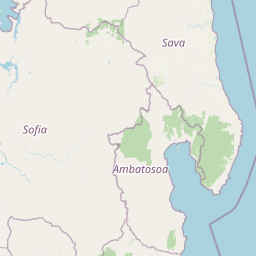
Map view of Mananara Nord National Park

Use this park location map to pinpoint Mananara Nord National Park in Madagascar, understand its exact geographic position, and read its mapped placement within the surrounding landscape more clearly.

Pigeon | © OpenStreetMap contributors
Park atlas

Browse a curated atlas of nearby protected areas, comparing their unique coastal ecosystems and lowland forest geography in northeastern Madagascar.

Explore Other National Parks Near Mananara Nord, Madagascar, and Discover Related Protected Landscapes

Continue your exploration from Mananara Nord National Park by mapping other protected areas and national parks across Madagascar's diverse northeastern region. Compare different coastal, riverine, and lowland forest environments, understanding the broader geographic context and conservation efforts that link these unique protected landscapes.
National parkSava Region
About 43 km away#1 closest

Northeast

Masoala National Park: Explore Madagascar's Largest Protected Landscape and Marine Ecosystems

Discover the unique geographic features and rich biodiversity of this Sava Region national park.

Masoala National Park represents a critical protected landscape in Madagascar's Sava Region, spanning the vast Masoala Peninsula. The park's protected territory covers a remarkable range of ecosystems, including lowland and montane rainforests, coastal habitats, and extensive marine areas with coral reefs. Understanding the geographic scope and ecological diversity of Masoala National Park provides essential context for appreciating Madagascar's unique natural heritage and the importance of its conservation efforts.

Area
2,400 km²
Established
1997
IUCN
II
Visitors
3K annual
Wildlife reserveAnalanjirofo
About 65 km away#2 closest

West

Réserve spéciale d'Ambatovaky: Protected Forest Landscape and Wildlife Reserve in Analanjirofo

Mapping rugged terrain and endemic forest ecosystems in northeastern Madagascar.

Réserve spéciale d'Ambatovaky spans a challenging, topographically complex area of northeastern Madagascar. This wildlife reserve consists of an unbroken canopy of humid lowland and hill forests, providing a critical refuge for rare raptors and diverse primate communities within the Analanjirofo region's mountainous terrain.

Area
600.5 km²
Established
1958
IUCN
IV
Relief
Upland
National parkAmbatosoa
About 74 km away#3 closest

North

Nosy Mangabe National Park: Atlas Overview of the Ambatosoa Island Forest Reserve

Coastal rainforests and protected lemur habitats in Antongil Bay.

Nosy Mangabe stands as a prominent protected island within the Ambatosoa region of Madagascar. The island is defined by its dense lowland rainforest, dramatic bay topography, and its essential role as a sanctuary for rare primates. This overview maps the park boundary and explores the terrain, historical maritime traces, and the connection between the island and the Masoala peninsula ecosystem.

Area
90.47 km²
Established
1965
IUCN
II
Visitors
3K annual
National parkMadagascar
About 86 km away#4 closest

North

Makira Natural Park: Exploring the Geography and Forested Terrain of Northeastern Madagascar

A vital protected landscape in the humid northeastern forest belt.

Makira Natural Park serves as a benchmark for integrated tropical conservation in Madagascar. Its humid evergreen forests provide a critical habitat for high lemur diversity and specialized botanical associations linked to unique geological substrates. This protected area connects to a larger regional landscape of community-managed forests, acting as a crucial buffer for the biodiversity of the northeastern coastal regions.

Area
3,724.7 km²
Established
2012
IUCN
II
Relief
Mountain
Wildlife reserveSofia region
About 161 km away#5 closest

West

Tampoketsa Analamaitso Reserve: Wildlife Reserve and Protected Forest Geography in Sofia Region

Ecological transition zone featuring humid and dry forest biomes

Tampoketsa Analamaitso Reserve provides a protected sanctuary for northern Madagascar's primate fauna, defined by its rare combination of humid mid-altitude and dense dry forest ecosystems. Managed for habitat conservation, the reserve remains a remote wilderness area with intact forest cover that stretches across the Sofia region. Its geographic importance lies in the ecological gradient that links distinct upland and lowland vegetation types, offering a comprehensive look at the island's diverse natural terrain.

Area
171.5 km²
Established
1958
IUCN
IV
Relief
Upland
Wildlife reserveSava
About 166 km away#6 closest

North

Réserve spéciale d'Anjanaharibe-Sud: Geography and Protected Area Landscape Overview

Deep forest terrain and mountain ridges in the Sava region

Situated in northeastern Madagascar, Réserve spéciale d'Anjanaharibe-Sud encompasses dense evergreen forests and steep mountain terrain. This protected area serves as a significant conservation landscape for rare endemic species, providing a high-elevation habitat that climbs dramatically from 500 meters to peaks above 2,000 meters across the Sava region.

Area
182.56 km²
Established
1958
IUCN
IV
Relief
Mountain
Watercolor painting of a mountainous landscape with green vegetation, a body of water, and distant peaks under a light sky
National parkMadagascar
About 190 km away#7 closest

North

Marojejy National Park: A Protected National Park within Madagascar's Unique Geography

Mapped landscape context and regional protected area significance.

Marojejy National Park is a distinct protected area offering rich insights into Madagascar's natural geography. As a national park, its mapped boundaries define a significant landscape that contributes to the island nation's reputation as a biodiversity hotspot. This entry provides essential context for understanding Marojejy National Park's role within the country's protected lands and its value for structured geographic atlas exploration.

Area
555 km²
Established
1998
IUCN
II
Relief
Mountain
Nature reserveAnalanjirofo
About 199 km away#8 closest

South

Réserve naturelle intégrale de Betampona: Atlas and Geographic Protected Area Profile

A vital lowland humid forest enclave in Analanjirofo

Delve into the mapped terrain of Réserve naturelle intégrale de Betampona, an integral nature reserve established in 1927 that protects a critical lowland humid evergreen forest fragment. The landscape is defined by its steep ridges and rapid stream networks, providing essential refuge for endemic lemurs and diverse plant life. This profile offers a clear view of the reserve's geographic setting and its status as a key conservation anchor for the eastern coastal ecosystems of Madagascar.

Area
29.18 km²
Established
1927
IUCN
Ia
Relief
Mountain

Common questions about visiting, size, designation, and location context for Mananara Nord National Park

Mananara Nord National Park FAQs for park facts, access, geography, and protected area context

Find quick answers about Mananara Nord National Park, including protected-area facts, park geography, trail and visitor context, and how the park fits into its surrounding country and regional landscape.
MoriAtlas Explorer

Continue Your Protected Areas Search Across the Global Atlas

Deepen your exploration by continuing the structured search for national parks and protected areas worldwide. Utilize the comprehensive filtering capabilities to compare different conservation landscapes and refine your understanding of global park geography. Discover more about the distribution and characteristics of protected natural areas.

Global natural geography