Why Meteoryt Morasko Nature Reserve stands out
Meteoryt Morasko is known above all for its cluster of impact craters, attributed to the Morasko meteorite fall about 5,000 years ago. The largest crater, designated A, measures roughly 90 meters across and 11.5 meters deep, and several others form a remarkable chain of water-filled and seasonally dry depressions within a protected forest. The reserve is also famous for the Morasko meteorites themselves, including the largest single meteorite ever found in Poland, weighing roughly 261 kilograms and recovered in 2012 by amateur meteorite hunters working with researchers from Adam Mickiewicz University in Poznań.
Meteoryt Morasko Nature Reserve history and protected-area timeline
The history of Meteoryt Morasko as a protected area began relatively recently, but the story of the meteorite and its craters goes back much further. The first documented meteorite fragment at Morasko was discovered in 1914 by a German soldier during the construction of military fortifications in the area, an event that revealed the area's extra-terrestrial significance to European science.
Throughout the twentieth century, additional finds continued to expand understanding of the fall. In 1956 a meteorite weighing 78 kilograms was recovered, and in September 2006 a search using metal detectors, commissioned by researchers at the Institute of Geology of Adam Mickiewicz University, led amateur meteorite hunter Krzysztof Socha to a 164-kilogram specimen, which at the time was the largest meteorite ever found in Poland. Later, in October 2012, two searchers from Opole uncovered a 261-kilogram meteorite at a depth of about 2.1 meters; this specimen now holds the record for the largest meteorite recovered in Poland and is housed at the Institute of Geology at Adam Mickiewicz University.
Formal protection came in the 1970s. The reserve was established by legal order on 24 May 1976 as both a landscape and forest reserve, with the founding decree citing 53.79 hectares, a figure later updated to roughly 54.28 hectares to reflect precise measurement. A buffer zone of about 101.66 hectares was designated around the core to limit development pressure from the expanding urban edge of Poznań.
Since 1994 the Polish Society for Nature Protection "Salamandra", based in Poznań, has played a leading role in the educational development of the reserve, supporting field activities, signage and public outreach. Educational planning intensified further in the early 2000s, and since 2024 the Ziemia i Kosmos Foundation has worked to popularize the site and to advance plans for a dedicated science center. Over time, the reserve has evolved from a purely scientific curiosity into a recognized natural and cultural landmark within the Greater Poland region.
Meteoryt Morasko Nature Reserve landscape and geographic character
The landscape of Meteoryt Morasko is unusual because it compresses several distinct geomorphological stories into a very small area. The reserve lies within the Poznańskie Lake District, a gently undulating post-glacial terrain, but its topography has been additionally shaped by the impact event that created the Morasko craters. The defining feature is Góra Moraska, the highest natural elevation within Poznań, rising above the surrounding lowlands and giving the reserve a clear vantage point over the region.
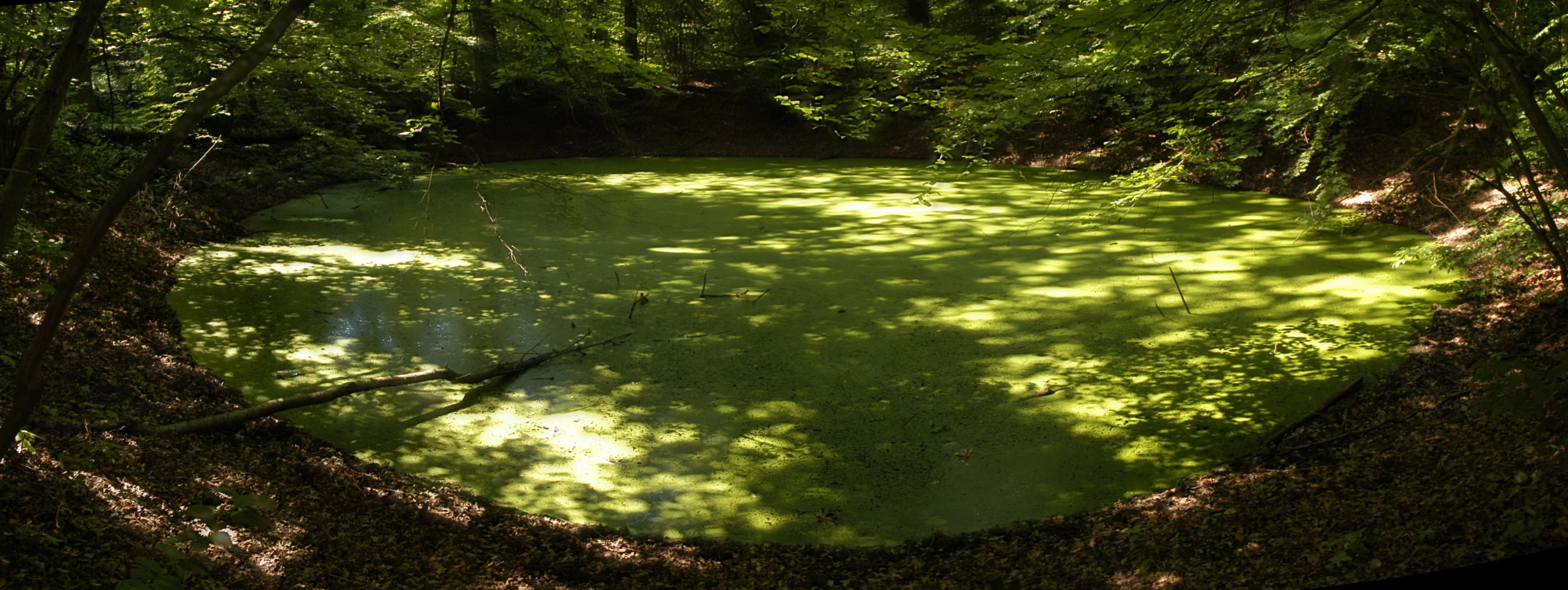
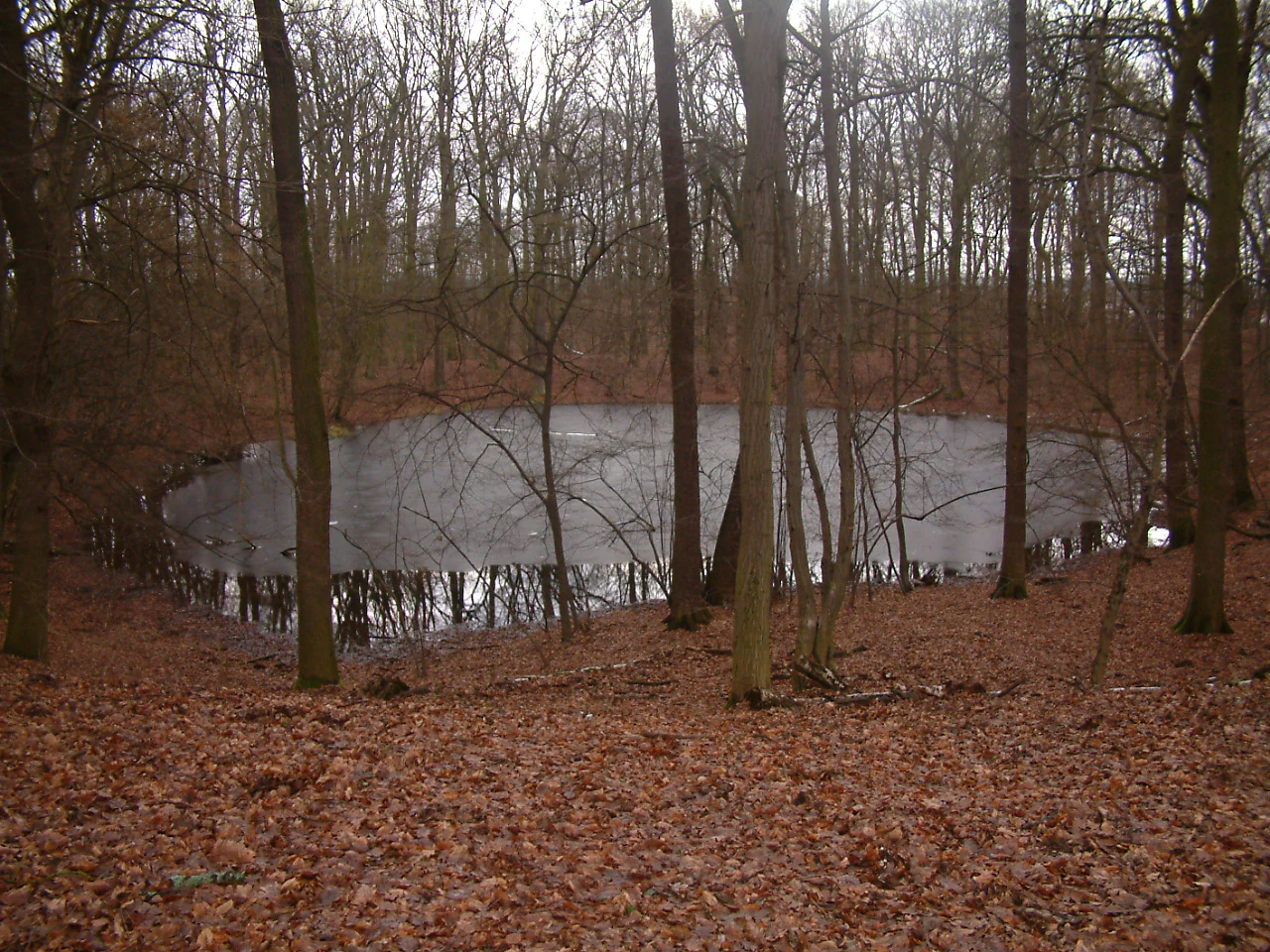
The most remarkable surface elements are the six impact craters designated A through F. They differ substantially in size, depth and water content. Crater A, the largest, has a diameter of about 90 meters and a depth of 11.5 meters, with organic sediment accumulating up to roughly 4 meters thick and water levels reaching 2.5 meters at times. Crater B is roughly 50 meters across and 9 meters deep, set in sandy substrate over clay, also holding standing water. Smaller craters such as C, D, E and F vary between about 20 and 35 meters across, with shallower depths, drier conditions and seasonal water levels that may only reach a few tens of centimeters.
The reserve also contains the small post-glacial lake Zimna Woda, roughly 0.2 square kilometers in area, surrounded by woodland. Together, the craters, the lake and the summit of Góra Moraska create a mosaic of pools, depressions, slopes and forested ridges within a landscape that is otherwise gentle and rolling. This combination of glacial inheritance and impact-modified relief gives Meteoryt Morasko a terrain that feels compact yet visually varied.
Meteoryt Morasko Nature Reserve ecosystems, habitats, and plant life
Ecologically, Meteoryt Morasko is dominated by oak-hornbeam woodland, a forest type locally known as grąd, which is considered among the most valuable lowland forest communities in Poland for its biodiversity and structural complexity. In wetter terrain the reserve protects fragments of elm-ash floodplain forest, a moisture-rich woodland type characterized by fertile soils and a distinct understory. The two forest types together give the reserve a layered vegetation structure, with mature canopy, dense understory and a rich ground layer of spring-flowering and shade-tolerant plants.
The wet depressions associated with the impact craters add a second important ecological dimension. The crater pools are colonized by dense masses of horned pondweed, while their margins support cattail and other marsh plants. In summer, the surface of these small crater lakes can be covered by a thick mat of duckweed, dramatically reducing oxygen levels and effectively preventing fish from surviving in the pools. This unusual condition creates refuges for amphibians that depend on fish-free waters for reproduction.
Around the reserve's edges and along trails, the forest understory features characteristic species such as European hazel and bird cherry, while the herb layer includes pink broomrape, yellow anemone and lesser celandine. The presence of the educational trail and frequent disturbance-tolerant species along paths is balanced by intact interior vegetation where sensitive woodland herbs thrive. The mosaic of dry forest, damp forest and open crater pools makes Meteoryt Morasko a small but disproportionately rich ecological refuge within the urban matrix of Poznań.
Meteoryt Morasko Nature Reserve wildlife and species highlights
The wildlife of Meteoryt Morasko reflects the reserve's combination of mature deciduous forest, wet depressions and small open waters. The dominant oak-hornbeam canopy supports cavity-nesting and forest-interior bird species, including the black woodpecker, an indicator of well-preserved broadleaf woodland. The wet elm-ash sections provide habitat for the golden oriole and the great spotted woodpecker, both species that favor structurally diverse, moist forest.
Among the most distinctive wildlife values are the amphibians associated with the crater pools. Because the duckweed mats and oxygen-poor conditions effectively exclude fish, the waters are ideal for several frog and toad species that would otherwise struggle to breed in fish-bearing ponds. The reserve supports fire-bellied toads, common spadefoot toads, pool frogs, common frogs and moor frogs, with amphibians concentrated particularly around the water-filled impact depressions.
The bird community also includes the Eurasian nightjar, a species associated with open, dry forest edges and clearings, which benefits from the mosaic of closed canopy and the more disturbed margins of the reserve. The presence of nightjars, woodpeckers, orioles and a healthy amphibian population, all within a small urban-adjacent reserve, underscores how strongly local topography and habitat structure shape wildlife diversity here.
Meteoryt Morasko Nature Reserve conservation status and protection priorities
Meteoryt Morasko is a conservation site of unusual character because it protects geological, hydrological and ecological values simultaneously. The craters themselves are a classic example of a small impact crater field preserved within a temperate forest landscape, and the surrounding buffer zone was specifically defined to shield them from industrial and residential development encroaching from north Poznań. The reserve is recognized in international databases of impact structures and has been studied repeatedly by geologists from Adam Mickiewicz University.
Ecologically, the conservation role of the reserve is significant because it anchors a block of mature oak-hornbeam and elm-ash forest inside a rapidly urbanizing area. Protecting this woodland helps maintain habitat continuity for forest-interior bird species, supports populations of amphibians tied to fish-free crater pools, and preserves understory plants such as Martagon lily and wild ginger that are uncommon elsewhere in the surrounding lowlands. The reserve also protects small-scale hydrological features, including the seasonally fluctuating crater pools and the margins of Zimna Woda lake.
Educational and community-based conservation is another pillar of the reserve's significance. Since 1994 the Polish Society for Nature Protection "Salamandra" has worked to expand public understanding of the site, while the more recent Ziemia i Kosmos Foundation has been working since 2024 to develop a science communication and outreach platform around it. The combination of formal protection, active scientific research and grassroots public engagement makes Meteoryt Morasko a model of how a small, urban-adjacent reserve can deliver outsized conservation value.
Meteoryt Morasko Nature Reserve cultural meaning and human context
Meteoryt Morasko is a place where landscape, science and city identity come together. Although the reserve itself is a relatively recent protective designation, the Morasko meteorite and its craters have been part of regional scientific and local identity for more than a century, since the first documented find by a German soldier in 1914. Over time, Morasko has become a recognizable symbol of the natural heritage of Poznań and the Greater Poland region, even appearing in regional educational publications and local cultural media.
The reserve also carries a tangible human story through the large erratic boulder found on the site. Known as the Morasko erratic, this roughly 70-ton glacial boulder was unearthed by a farmer named Szeszuła during plowing in the village of Łęki Wielkie in the Grodzisk district. Its presence in the reserve connects the cold geological history of the Pleistocene glaciations with the more recent agricultural history of the surrounding countryside, creating a tangible link between rural land use and the geological heritage that the reserve now protects.
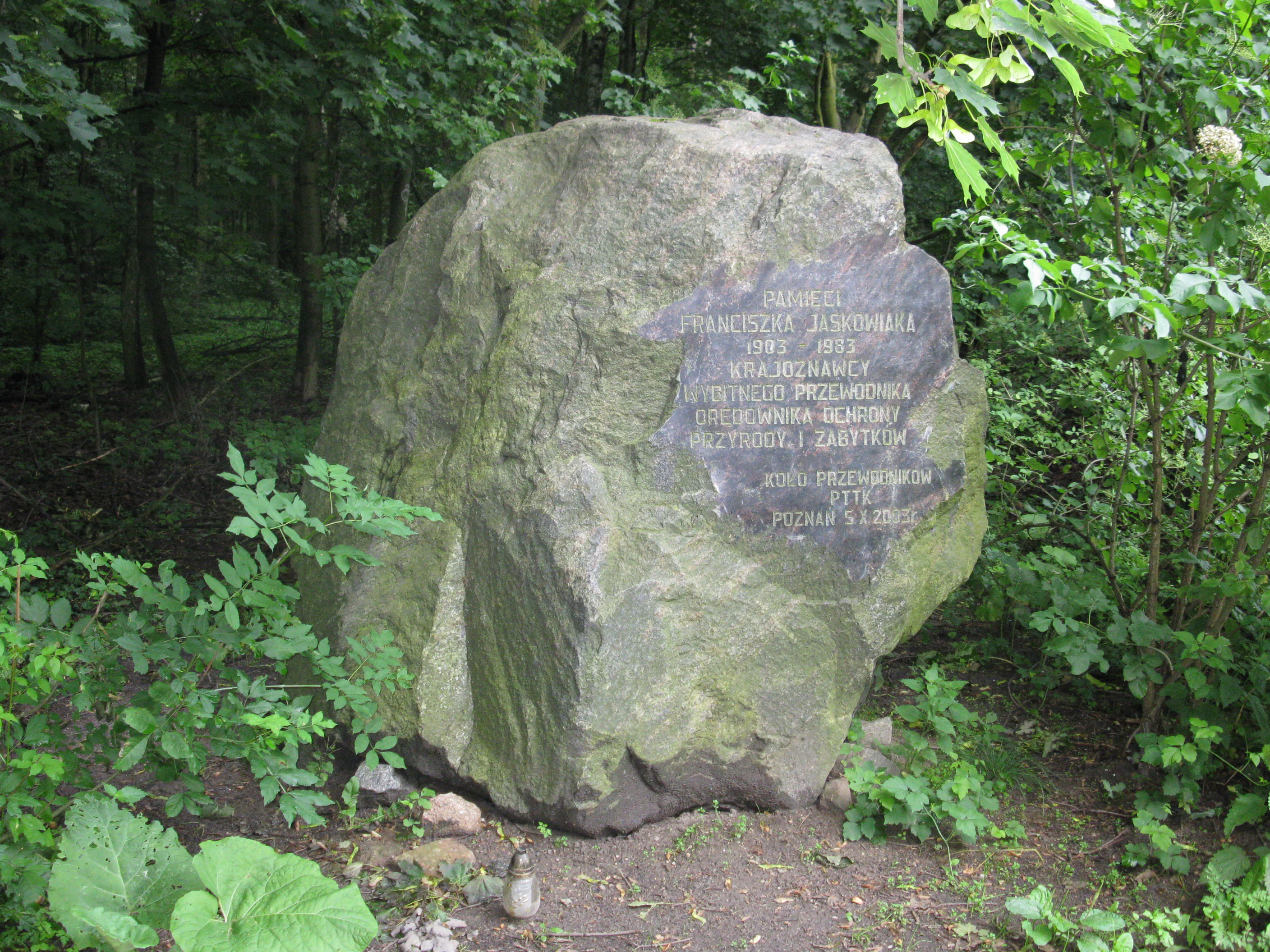
A commemorative boulder dedicated to Franciszek Jaśkowiak, a notable figure associated with the reserve's history, can be found in the area, reinforcing the sense of place that has developed around Meteoryt Morasko. The combination of meteorite finds, glacial landscape, local commemoration and ongoing grassroots engagement gives the reserve a distinctive cultural identity within Polish nature protection.
Top sights and standout views in Meteoryt Morasko Nature Reserve
Meteoryt Morasko's standout quality is the dense cluster of impact craters set within an otherwise ordinary-looking post-glacial forest, an unusual and visually striking feature. The largest crater, roughly 90 meters wide and 11.5 meters deep, is arresting in scale and is easily approached along the reserve's trail network.
Beyond the craters, the reserve's meteorite finds, including the 261-kilogram meteorite recovered in 2012, the largest ever documented in Poland, give the site enduring scientific importance. The combination of mature oak-hornbeam woodland, fragments of wet elm-ash forest, amphibian-rich crater pools and the highest natural hill in Poznań creates a surprisingly varied protected area in a compact footprint. Easy access from the city, a strong educational trail system and the long involvement of the "Salamandra" society and the Ziemia i Kosmos Foundation make Meteoryt Morasko a notable example of urban-adjacent nature conservation in Poland.
Best time to visit Meteoryt Morasko Nature Reserve
Meteoryt Morasko can be visited comfortably across much of the year, with the experience changing substantially with the seasons. Spring and early summer are particularly rewarding for appreciating the woodland flora, when species such as yellow anemone, lesser celandine and pink broomrape develop in the forest understory, and the crater pools and small lake are at their most reflective and biologically active. The dense vegetation also provides good conditions for observing forest-interior bird species.
Late summer and early autumn bring the duckweed mats on the crater pools to their fullest extent, creating a striking green surface layer that has ecological as well as visual interest. Wooded paths are still shaded and the highest hill in Poznań offers a pleasant vantage point over the reserve. Winter visits are also feasible and reveal the crater morphology much more clearly, as the bare trees and occasional snow cover expose the geometry of the impact structures that are otherwise hidden by summer foliage. Visitors interested in amphibians should aim for warm spring evenings, and those curious about birds may prefer the dawn chorus of late spring.