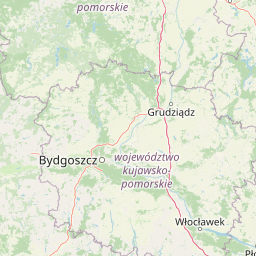
Why Mięcierzyn Nature Reserve stands out
Mięcierzyn is best known for preserving a stand of fertile lowland beech forest (żyzna buczyna niżowa) growing on non-calcareous parent material. This makes it a notable example of a regionally characteristic beech woodland community that has adapted to soils without the limestone base often associated with similar forest types elsewhere in Poland. Its compact protected status combines strict conservation over the majority of the area with a smaller zone of active protection, reflecting the scientific, educational, and landscape values for which it was established.
Mięcierzyn Nature Reserve history and protected-area timeline
The reserve was established on 14 June 1996 through an act published in the official Polish legal gazette. Its designation was driven by the recognition that a fragment of fertile lowland beech forest growing on non-calcareous soils in this part of the Kuyavian-Pomeranian Voivodeship warranted dedicated protection for scientific, educational, and landscape reasons.
As a relatively young Polish nature reserve, Mięcierzyn reflects the late twentieth-century expansion of the country's network of forest reserves focused on preserving specific woodland community types rather than individual species. Since its establishment it has been administered through the Gołąbki Forest District and managed under a combined strict and active protection regime, a structure that allows the core woodland to develop with minimal interference while permitting targeted management in the smaller active zone.
Mięcierzyn Nature Reserve landscape and geographic character
The reserve sits within the Gnieźno Lakeland, a physical-geographical mesoregion shaped by the Pleistocene glaciations that left behind rolling moraines, kettle hollows, and a network of lakes across much of north-central Poland. The Mięcierzyn area fits into this broader pattern as a wooded, gently undulating terrain typical of the central Polish lowlands.
The local landscape is dominated by forest cover rather than open landforms or water features, with the reserve forming a contiguous block of deciduous woodland within the surrounding managed forests of the Gołąbki Forest District. Soils in the reserve are notably non-calcareous, which is the key landscape feature that defines the ecological interest of the site and separates it from many other beech woodland locations in the region that are tied to richer, limy substrates.
Mięcierzyn Nature Reserve ecosystems, habitats, and plant life
Ecologically, Mięcierzyn is defined by its forest community. The reserve protects a stand of fertile lowland beech forest, a woodland type of considerable botanical interest in the Polish lowlands. What distinguishes the Mięcierzyn example is that the beech community is growing on non-calcareous soils, an uncommon situation for this community type, which more typically occurs on richer, limy substrates elsewhere in Poland.
This combination of forest type and substrate makes the reserve a useful reference site for studying soil-vegetation relationships, tree species composition, and understory development in lowland beech woodlands. The mixed strict and active protection regime further allows comparison of how different intensities of human intervention affect forest structure, regeneration, and ground flora within the same woodland type.
Mięcierzyn Nature Reserve wildlife and species highlights
The source material does not provide detailed species inventories for Mięcierzyn, and the reserve's profile is primarily botanical and forest-community based rather than defined by charismatic fauna. Its ecological value is tied to the structure and continuity of the beech forest habitat itself rather than to a specific list of animal species.
Typical lowland beech forest in this part of Poland would generally support woodland breeding birds, small forest mammals, and a range of invertebrates associated with mature deciduous canopy and deadwood environments, but the available source content does not document specific wildlife records for the reserve.
Mięcierzyn Nature Reserve conservation status and protection priorities
Mięcierzyn's conservation significance is rooted in its role as a protected example of fertile lowland beech forest on non-calcareous soils. This makes it valuable for scientific study of forest community composition and soil-vegetation dynamics, and for educational purposes related to forest ecology and habitat preservation.
The reserve is managed under two regimes: strict protection, covering the majority of the area, and active protection, applied to a smaller portion. This structure preserves a core zone where natural forest processes can unfold with minimal interference, while allowing targeted management where conservation objectives require it. The reserve's designation explicitly balances scientific, didactic, and landscape values, positioning it as a small but specialized component of Poland's network of forest nature reserves.
Mięcierzyn Nature Reserve cultural meaning and human context
The reserve lies in a rural part of the Kuyavian-Pomeranian Voivodeship, within Gmina Rogowo in Żnin County, an area shaped by agriculture and long-established forestry traditions. The surrounding landscape of the Gołąbki Forest District reflects this balance between working forest and protected woodland.
There is no specific cultural or indigenous heritage dimension documented for the reserve itself in the available source material, and its identity is defined primarily by its ecological and scientific role rather than by cultural or historical associations.
Top sights and standout views in Mięcierzyn Nature Reserve
Mięcierzyn stands out for protecting a rare example of fertile lowland beech forest growing on non-calcareous soils within the Gnieźno Lakeland. Its combination of strict and active protection zones demonstrates a deliberate mix of preservation and managed conservation.
Despite its modest size, the reserve holds strong scientific and educational value as a reference site for lowland beech woodland ecology in Poland, and it contributes meaningfully to the regional network of forest nature reserves in the Kuyavian-Pomeranian Voivodeship.
Best time to visit Mięcierzyn Nature Reserve
The source material does not provide seasonal visitation guidance specific to Mięcierzyn. As a small lowland forest reserve focused on scientific and educational protection rather than tourism, the site does not have a widely documented seasonal character.
In general, deciduous lowland beech forests in this part of Poland are most visually striking in late spring when the canopy is fully leafed and in autumn when the beech foliage turns color, but these observations are general ecological context rather than site-specific source information.