Mori Atlas logo
Nature reserveMięcierzyn Nature Reserve

A scientific reference site within the Gnieźno Lakeland preserving rare deciduous woodland ecosystems.

Mięcierzyn Nature Reserve: Mapping Protected Lowland Beech Forest Landscapes in Poland

(Rezerwat przyrody Mięcierzyn)

Located in the Gnieźno Lakeland of north-central Poland, Mięcierzyn Nature Reserve functions as an essential protected area for the study of fertile lowland beech forests. The reserve is uniquely characterized by its non-calcareous soil base, which distinguishes the forest community from similar woodland types typically associated with limy substrates in the region. Through a mix of strict and active conservation zones, the area maintains a contiguous block of deciduous woodland that serves as a critical reference for understanding ecological dynamics in the Polish lowlands.

forest reservelowland beech forestfertile beech woodlandnon-calcareous soilsstrict protectionactive protection

Mięcierzyn Nature Reserve

Nature reserve

Park overview

Structured park overview, official facts, and landscape profile for Mięcierzyn Nature Reserve

Mięcierzyn Nature Reserve park facts, protected area profile, and essential visitor context

Review the core facts for Mięcierzyn Nature Reserve, including designation, size, terrain, visitor scale, habitats, and operating context in one park-focused overview.

About Mięcierzyn Nature Reserve

Mięcierzyn Nature Reserve is a small but ecologically focused protected area in the Kuyavian-Pomeranian Voivodeship of north-central Poland. Although it covers only about 53 hectares, its significance lies in what it preserves rather than in its size. The reserve was created specifically to protect a fragment of fertile lowland beech forest on non-calcareous soils, a formulation that signals both its botanical identity and its conservation rationale.

The reserve is situated in the Gnieźno Lakeland mesoregion, a post-glacial landscape of moraines, lakes, and mixed woodland that is characteristic of much of northern and central Poland. Within this broader landscape, Mięcierzyn occupies a parcel managed by the Gołąbki Forest District and lies in the administrative area of Gmina Rogowo in Żnin County.

Its protection framework combines strict conservation, applied to the bulk of the territory, with active conservation covering a smaller portion. This dual regime reflects the reserve's stated aims of scientific research, environmental education, and landscape preservation, allowing controlled interventions where necessary while maintaining core forest processes in the strict-protection zone.

While Mięcierzyn is not a major tourist destination, it serves as a reference site for understanding how lowland beech communities function outside their classic calcareous soil range, and as a quiet example of how small targeted reserves can play an outsized role in regional habitat conservation.

Quick facts and research context for Mięcierzyn Nature Reserve

Mięcierzyn is a forest nature reserve located in the Kuyavian-Pomeranian Voivodeship of Poland, within the Gnieźno Lakeland physical-geographical mesoregion.

It was established on 14 June 1996 through a regulation published in the Polish official journal and covers roughly 53 hectares. Most of the area is under strict protection, with a smaller portion managed under active conservation.

The reserve lies within the administrative boundaries of Gmina Rogowo in Żnin County and is administered through the Gołąbki Forest District.

Protection and recognition

Documented terrestrial protection scope, designation history, and governance data

Mięcierzyn Nature Reserve Protection Status and International Recognition Facts

Terrestrial protection status, management scope, and documented designation history for Mięcierzyn Nature Reserve appear alongside available international recognition data. Official conservation frameworks and administrative records provide structured context for exploring protected area governance.

Protection details

Protection scope
Terrestrial
Transboundary protection
No
Park context

Deeper park guide and search-rich context for Mięcierzyn Nature Reserve

Mięcierzyn Nature Reserve history, landscape, wildlife, and travel context

Explore Mięcierzyn Nature Reserve through its history, landscape character, ecosystems, wildlife, conservation priorities, cultural context, and seasonal travel timing in a structured park guide built for atlas discovery and search intent.

Why Mięcierzyn Nature Reserve stands out

Mięcierzyn is best known for preserving a stand of fertile lowland beech forest (żyzna buczyna niżowa) growing on non-calcareous parent material. This makes it a notable example of a regionally characteristic beech woodland community that has adapted to soils without the limestone base often associated with similar forest types elsewhere in Poland. Its compact protected status combines strict conservation over the majority of the area with a smaller zone of active protection, reflecting the scientific, educational, and landscape values for which it was established.

Mięcierzyn Nature Reserve history and protected-area timeline

The reserve was established on 14 June 1996 through an act published in the official Polish legal gazette. Its designation was driven by the recognition that a fragment of fertile lowland beech forest growing on non-calcareous soils in this part of the Kuyavian-Pomeranian Voivodeship warranted dedicated protection for scientific, educational, and landscape reasons.

As a relatively young Polish nature reserve, Mięcierzyn reflects the late twentieth-century expansion of the country's network of forest reserves focused on preserving specific woodland community types rather than individual species. Since its establishment it has been administered through the Gołąbki Forest District and managed under a combined strict and active protection regime, a structure that allows the core woodland to develop with minimal interference while permitting targeted management in the smaller active zone.

Mięcierzyn Nature Reserve landscape and geographic character

The reserve sits within the Gnieźno Lakeland, a physical-geographical mesoregion shaped by the Pleistocene glaciations that left behind rolling moraines, kettle hollows, and a network of lakes across much of north-central Poland. The Mięcierzyn area fits into this broader pattern as a wooded, gently undulating terrain typical of the central Polish lowlands.

The local landscape is dominated by forest cover rather than open landforms or water features, with the reserve forming a contiguous block of deciduous woodland within the surrounding managed forests of the Gołąbki Forest District. Soils in the reserve are notably non-calcareous, which is the key landscape feature that defines the ecological interest of the site and separates it from many other beech woodland locations in the region that are tied to richer, limy substrates.

Mięcierzyn Nature Reserve ecosystems, habitats, and plant life

Ecologically, Mięcierzyn is defined by its forest community. The reserve protects a stand of fertile lowland beech forest, a woodland type of considerable botanical interest in the Polish lowlands. What distinguishes the Mięcierzyn example is that the beech community is growing on non-calcareous soils, an uncommon situation for this community type, which more typically occurs on richer, limy substrates elsewhere in Poland.

This combination of forest type and substrate makes the reserve a useful reference site for studying soil-vegetation relationships, tree species composition, and understory development in lowland beech woodlands. The mixed strict and active protection regime further allows comparison of how different intensities of human intervention affect forest structure, regeneration, and ground flora within the same woodland type.

Mięcierzyn Nature Reserve wildlife and species highlights

The source material does not provide detailed species inventories for Mięcierzyn, and the reserve's profile is primarily botanical and forest-community based rather than defined by charismatic fauna. Its ecological value is tied to the structure and continuity of the beech forest habitat itself rather than to a specific list of animal species.

Typical lowland beech forest in this part of Poland would generally support woodland breeding birds, small forest mammals, and a range of invertebrates associated with mature deciduous canopy and deadwood environments, but the available source content does not document specific wildlife records for the reserve.

Mięcierzyn Nature Reserve conservation status and protection priorities

Mięcierzyn's conservation significance is rooted in its role as a protected example of fertile lowland beech forest on non-calcareous soils. This makes it valuable for scientific study of forest community composition and soil-vegetation dynamics, and for educational purposes related to forest ecology and habitat preservation.

The reserve is managed under two regimes: strict protection, covering the majority of the area, and active protection, applied to a smaller portion. This structure preserves a core zone where natural forest processes can unfold with minimal interference, while allowing targeted management where conservation objectives require it. The reserve's designation explicitly balances scientific, didactic, and landscape values, positioning it as a small but specialized component of Poland's network of forest nature reserves.

Mięcierzyn Nature Reserve cultural meaning and human context

The reserve lies in a rural part of the Kuyavian-Pomeranian Voivodeship, within Gmina Rogowo in Żnin County, an area shaped by agriculture and long-established forestry traditions. The surrounding landscape of the Gołąbki Forest District reflects this balance between working forest and protected woodland.

There is no specific cultural or indigenous heritage dimension documented for the reserve itself in the available source material, and its identity is defined primarily by its ecological and scientific role rather than by cultural or historical associations.

Top sights and standout views in Mięcierzyn Nature Reserve

Mięcierzyn stands out for protecting a rare example of fertile lowland beech forest growing on non-calcareous soils within the Gnieźno Lakeland. Its combination of strict and active protection zones demonstrates a deliberate mix of preservation and managed conservation.

Despite its modest size, the reserve holds strong scientific and educational value as a reference site for lowland beech woodland ecology in Poland, and it contributes meaningfully to the regional network of forest nature reserves in the Kuyavian-Pomeranian Voivodeship.

Best time to visit Mięcierzyn Nature Reserve

The source material does not provide seasonal visitation guidance specific to Mięcierzyn. As a small lowland forest reserve focused on scientific and educational protection rather than tourism, the site does not have a widely documented seasonal character.

In general, deciduous lowland beech forests in this part of Poland are most visually striking in late spring when the canopy is fully leafed and in autumn when the beech foliage turns color, but these observations are general ecological context rather than site-specific source information.
Monthly climate preview

Long-term representative measurements of monthly average temperatures and precipitation

Mięcierzyn Nature Reserve Climate Normals and Annual Temperature Rhythm

Representative point records for Mięcierzyn Nature Reserve capture a wide annual temperature span from sub-zero winter minimums to warm summer peaks alongside steady monthly precipitation. Detailed twelve-month climate tables provide deeper insight into long-term averages for analyzing regional environmental patterns.
Annual mean9 °C
-2 °C20 °C
Jan-2°
Feb-1°
Mar
Apr
May14°
Jun17°
Jul20°
Aug20°
Sep15°
Oct
Nov
Dec-1°
Warmest month
July

19.8 °C

Coolest month
January

-2.5 °C

Wettest month
July

2.5 mm/day

Driest month
April

1.1 mm/day

Park location guide

Geography guide, regional context, and park location map for Mięcierzyn Nature Reserve

Mięcierzyn Nature Reserve park geography, regions, and map view in Poland

Understand where Mięcierzyn Nature Reserve sits in Poland through a broader geographic reading of the surrounding landscape, nearby location context, and its mapped position within the national park landscape.

How Mięcierzyn Nature Reserve fits into Poland

Poland, officially the Republic of Poland, is a Central European country spanning from the Baltic Sea in the north to the Carpathian Mountains in the south. It borders Germany, Czech Republic, Slovakia, Ukraine, Belarus, Lithuania, and Kaliningrad Oblast. The country has a temperate climate, diverse landscapes, and is known for its rich history, cultural heritage, and strong economic position within the EU.

Wider geography shaping Mięcierzyn Nature Reserve in Poland

Poland occupies 312,696 km2 in Central Europe, extending from the Baltic Sea coast in the north to the Sudetes and Carpathian Mountains in the south. It borders Germany to the west, Czech Republic and Slovakia to the south, Ukraine and Belarus to the east, and Lithuania and Kaliningrad Oblast to the northeast. The landscape includes lowland plains, uplands, and mountain ranges.

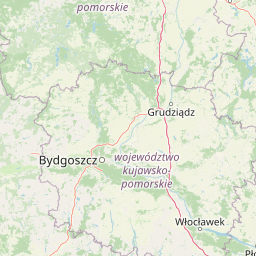
Map view of Mięcierzyn Nature Reserve

Use this park location map to pinpoint Mięcierzyn Nature Reserve in Poland, understand its exact geographic position, and read its mapped placement within the surrounding landscape more clearly.

Pigeon | © OpenStreetMap contributors
Park atlas

Compare regional forest reserves and connected lowland landscapes across the local terrain

Explore Parks Near Mięcierzyn Nature Reserve and Surrounding Protected Areas

Browse other parks near Mięcierzyn Nature Reserve to examine similar lowland beech woodland communities and forest conservation areas. Regional comparison mapping reveals broader ecological patterns across the surrounding Kuyavian-Pomeranian terrain.
Nature reserveGreater Poland Voivodeship
About 22 km away#1 closest

West

Stawy Kiszkowskie Nature Reserve: Mapped Geography and Protected Wetland Boundaries

Wetland ecosystems in Greater Poland Voivodeship

Located in the Mała Wełna river valley, Stawy Kiszkowskie acts as a sanctuary for migratory waterbirds and geese populations. This detailed geographic entry highlights the complex mosaic of shallow ponds, reedbeds, and xerothermic dike grasslands that define this protected area within the Polish landscape.

Area
4.775 km²
Established
2022
Relief
Lowland
Water
Major water bodies
Nature reserveKuyavian-Pomeranian Voivodeship
About 26 km away#2 closest

East

Rezerwat przyrody Mierucinek: Protected Oak Forest and Regional Landscape Context

A strictly protected reserve in the Kuyavian-Pomeranian Voivodeship

Explore the geographic footprint of Rezerwat przyrody Mierucinek, a 29.53-hectare nature reserve known for its mature oak forest community. This strictly protected area offers a clear look at the fertile deciduous woodland habitats characteristic of the Gniezno Lake District's undulating post-glacial landscape.

Area
0.295 km²
Established
1995
Relief
Lowland
Climate
Temperate
Nature reserveGreater Poland Voivodeship
About 34 km away#3 closest

Southwest

Rezerwat przyrody Modrzew Polski w Noskowie: Protected Landscape and Regional Atlas

Floristic nature reserve in Greater Poland Voivodeship

Rezerwat przyrody Modrzew Polski w Noskowie stands as a landmark for botanical conservation in central Europe. The reserve protects a population of Polish larch within the lowland pine forests of the Wrzesnia Plain, providing a critical example of regional ecological protection efforts that have expanded significantly since the mid-twentieth century.

Area
0.01 km²
Established
1954
Relief
Lowland
Scope
Terrestrial
A soft, abstract watercolor painting showing rolling green hills, distant mountains, and a field under a white sky.
Protected areaGreater Poland Voivodeship
About 34 km away#4 closest

Southwest

Ostoja koło Promna Protected Area: Geography, Lakes, and Forest Habitat Map

A detailed look at the postglacial lowland landscape of Wielkopolska

Ostoja koło Promna serves as a primary example of protected lowland hydrology and broadleaf woodland in the Greater Poland Voivodeship. Integrating three distinct nature reserves, the site preserves essential aquatic and forest-interior habitats for rare amphibians and waterbirds. This overview provides a structured geographic analysis of the terrain and ecological boundaries forming this significant protected zone.

Area
13.99 km²
Established
2011
Relief
Lowland
Scope
Terrestrial
Watercolor painting of a tranquil, light-toned landscape featuring trees, grassy plains, a small stream, and rolling hills in the background.
Nature reserveGreater Poland Voivodeship
About 38 km away#5 closest

West

Rezerwat przyrody Dębina: A Protected Oak-Hornbeam Nature Reserve in Greater Poland

Ancient woodland and fluvial terrace geography

Rezerwat przyrody Dębina serves as a core protected reference site for natural lowland forest in western Poland. The reserve features a unique concentration of monumental three-hundred-year-old oaks, diverse fungal assemblages, and established grey heron colonies, set against the distinctive sandy-gravelly backdrop of the Wełna River terrace.

Area
0.313 km²
Established
1957
Relief
Lowland
Scope
Terrestrial
Nature reserveGreater Poland Voivodeship
About 38 km away#6 closest

West

Uroczyska Puszczy Zielonki: Protected Nature Reserve and Glacial Landscape Context

Key protected area in the Poznan Lake District, Poland

Uroczyska Puszczy Zielonki consists of four distinct enclaves that safeguard diverse aquatic and forest ecosystems. The geography is shaped by the Poznan Lake District, featuring a mix of calcareous fens, acidophilous oak woods, and eutrophic lake basins. This site serves as a critical conservation corridor, offering valuable insight into the glacial origins and hydrologic patterns of west-central Poland.

Area
14.96 km²
Established
2011
Relief
Lowland
Climate
Temperate
Watercolor painting of a green and pink wetland landscape with soft, abstract horizontal washes and tall grasses in the foreground.
Protected areaKuyavian-Pomeranian Voivodeship
About 39 km away#7 closest

North

Równina Szubińsko-Łabiszyńska: Protected Area and Noteć River Valley Geography

Natura 2000 habitat mosaic in the Kuyavian-Pomeranian Voivodeship

Równina Szubińsko-Łabiszyńska functions as a crucial ecological corridor in Poland, protecting rare lowland habitats including floodplain meadows and oak-hornbeam woodlands. This site showcases the intricate relationship between the meandering Noteć river and nineteenth-century canal infrastructure, providing a unique lens into the protected wetland terrain of the region.

Area
28.259 km²
Established
2011
Relief
Lowland
Climate
Temperate
A pale, delicate watercolor painting showing a quiet lake scene with marsh grasses in the foreground and a line of soft-colored trees along the horizon.
Nature reserveGreater Poland Voivodeship
About 43 km away#8 closest

Southwest

Rezerwat przyrody Jezioro Pławno: Glacial Lake and Wetland Reserve Mapping

Protected botanical landscapes in Greater Poland Voivodeship

Examine the mapped boundaries and natural terrain of Rezerwat przyrody Jezioro Pławno. This nature reserve protects distinctive peatland and aquatic habitats within the Gniezno Lake District, integrating seamlessly into the broader forest complex of the Puszcza Zielonka Landscape Park in west-central Poland.

Area
0.167 km²
Established
1978

Common questions about visiting, size, designation, and location context for Mięcierzyn Nature Reserve

Mięcierzyn Nature Reserve FAQs for park facts, access, geography, and protected area context

Find quick answers about Mięcierzyn Nature Reserve, including protected-area facts, park geography, trail and visitor context, and how the park fits into its surrounding country and regional landscape.
MoriAtlas Explorer

Continue Your Protected Areas Search Across the Global Atlas

Deepen your exploration by continuing the structured search for national parks and protected areas worldwide. Utilize the comprehensive filtering capabilities to compare different conservation landscapes and refine your understanding of global park geography. Discover more about the distribution and characteristics of protected natural areas.

Global natural geography