

Why Mornington Sanctuary stands out
Mornington Sanctuary is known for protecting a vast and largely intact swath of the Central Kimberley's tropical savanna, including sandstone gorges, mesa landscapes, and the upper Fitzroy River catchment. It is particularly recognised for its importance to threatened birds, with the Gouldian finch and red goshawk among its flagship species. The reserve's combination of rugged ranges, expansive wetland systems, and fire-maintained woodland gives it a strong identity in Australian private conservation.
Mornington Sanctuary history and protected-area timeline
Mornington began its modern history as a pastoral lease in the Kimberley, running primarily as a beef cattle station for most of the twentieth century. The property was named after Victoria's Mornington Peninsula by Bob Maxted, reflecting the broader Australian pattern of settlers applying familiar southern names to remote northern holdings. As a working cattle property, the land was managed for grazing rather than ecological values, though the underlying tropical savanna and river systems of the Central Kimberley remained relatively undeveloped.
In 2001 the property was acquired by the Australian Wildlife Conservancy, marking a decisive shift from pastoral use to biodiversity conservation. The transformation from Mornington Station to Mornington Sanctuary reflected the growing role of private conservation organisations in protecting large tracts of Australian bush, particularly in regions where public reserve networks did not yet cover ecologically important country. Since acquisition, the reserve has been managed as a site for landscape-scale conservation, with active programs in fire management, wildlife monitoring, and feral animal control supporting the sanctuary's role as a refuge for threatened Kimberley species.
Mornington Sanctuary landscape and geographic character
The landscape of Mornington Sanctuary is defined by the dramatic geological contrasts of the Central Kimberley. In the south, a section of the Wunaamin-Miliwundi Ranges runs through the reserve, with vertically walled gorges such as Dimond Gorge cut by tributaries of the Fitzroy River. These deeply incised valleys create sheltered microhabitats and striking sandstone scenery that contrasts sharply with the open country elsewhere in the property.
To the north, the terrain flattens and rises again into the mesa formations of the Baulk Face Range and Fitzroy Bluff, with their characteristic flat-topped profiles. Lake Gladstone, the largest wetland in the Kimberley, occupies the north-western part of the reserve, adding expansive seasonal waterland to an otherwise rocky and savanna-dominated landscape. The upper catchment of the Fitzroy River ties these features together, channelling wet-season flows through gorges and across floodplains.
Vegetation cover is dominated by tropical savanna woodland and grassland, kept in a dynamic mosaic by frequent wildfires. Within sheltered gullies and rocky pockets protected from fire, small rainforest communities persist, including stands of Livistona palms. The interplay of sandstone country, mesas, river gorges, savanna, and seasonal wetlands gives Mornington a landscape profile that captures much of what makes the Kimberley distinctive.
Mornington Sanctuary ecosystems, habitats, and plant life
Mornington's ecological identity rests on its tropical savanna systems, shaped by climate and fire. The reserve is covered predominantly by various forms of tropical savanna woodland and grassland, maintained in a shifting mosaic by frequent wildfires that prevent encroachment by denser vegetation. This fire-driven pattern is central to the ecology of the Central Kimberley and supports the bird and mammal communities that depend on a mix of open grassland, scattered trees, and rocky refuge areas.
In fire-protected niches within gorges and sheltered gullies, fragments of more fire-sensitive vegetation persist, with Livistona palm forests among the most distinctive. These patches provide a glimpse into the more mesic plant communities that survive where fire intensity is reduced, adding botanical diversity to an otherwise savanna-dominated reserve. The combination of open woodland, palm-filled gorges, mesa slopes, and the seasonal wetland of Lake Gladstone gives the sanctuary a layered habitat structure.
The climate is tropical and monsoonal, with a distinct wet season from November to April and a dry season from May to October, bringing average annual rainfall of roughly 700 mm. This seasonality drives pulses of growth and flowering in the savanna, fills Lake Gladstone and other wetlands during the wet, and concentrates wildlife activity around remaining water during the dry. The climatic rhythm is integral to the functioning of the reserve's ecosystems.
Mornington Sanctuary wildlife and species highlights
Mornington Sanctuary has been recognised by BirdLife International as an Important Bird Area because of its significance for a suite of threatened and range-restricted species. The reserve supports important populations of red goshawks and Gouldian finches, the latter among the most visually striking and conservation-significant finches of northern Australia. Globally important populations of grey falcons, Australian bustards, chestnut-backed buttonquails, and bush stone-curlews also occur here, alongside rock-dwelling birds such as white-quilled rock-pigeons and sandstone shrike-thrushes.
A broad community of woodland and savanna birds thrives across the reserve, including varied lorikeets, northern rosellas, purple-crowned fairywrens, silver-crowned friarbirds, white-gaped, yellow-tinted, bar-breasted and banded honeyeaters, white-browed robins, spinifexbirds, painted firetails, masked finches and long-tailed finches. This diversity reflects the range of habitats available, from open grassland and woodland through to gorge country and seasonal wetland margins.
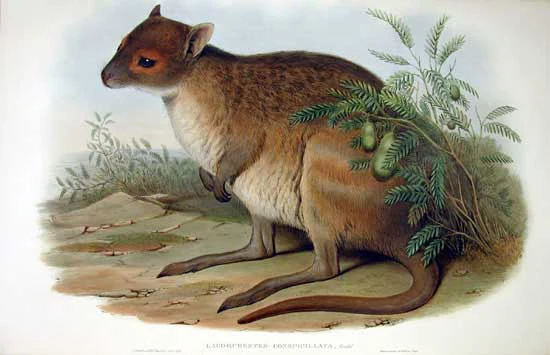
The sanctuary also provides habitat for mammals and reptiles of conservation concern. Freshwater crocodiles and northern quolls are among the threatened animals recorded from the reserve, while spectacled hare-wallabies, ghost bats, and orange leaf-nosed bats are considered likely to occur. The combination of rugged gorge refuge, expansive savanna, and large wetland habitat underpins the sanctuary's importance as a refuge for Kimberley wildlife.
Top sights and standout views in Mornington Sanctuary
Mornington combines the Wunaamin-Miliwundi Ranges and gorge systems with open tropical savanna and the Kimberley's largest wetland, Lake Gladstone. BirdLife International recognises it as an Important Bird Area, particularly for Gouldian finches and red goshawks. Active fire management and large-scale conservation by the Australian Wildlife Conservancy shape a landscape that protects both ecological processes and threatened species over a very large, contiguous estate.
Best time to visit Mornington Sanctuary
The tropical monsoonal climate strongly shapes when and how Mornington can be visited. The dry season, from May to October, is the practical window for overland access, when the rough four-wheel-drive roads off the Gibb River Road are typically open and Mornington Road is negotiable. During this period, water recedes from Lake Gladstone and the floodplains, concentrating wildlife around remaining water sources and making conditions more comfortable for visitors.
The wet season, from November to April, brings heavy rains that fill rivers, wetlands, and Lake Gladstone, transforming the savanna into a lush green landscape. However, this is also when roads are most likely to be closed and access becomes difficult or impossible for conventional travel. For visitors, the dry season generally provides both more reliable access and richer concentrations of terrestrial wildlife, while the wet season offers the most dramatic landscape transformation but limited practical access.
