Mori Atlas logo
Nature reserveNa Plachtě

A compact mosaic of wetland habitats, peat meadows, and open sand flats within the Czech landscape.

Na Plachtě Nature Reserve: Mapped Protected Landscapes and Biodiversity in Eastern Bohemia

Na Plachtě is a protected nature reserve located on the southeastern urban outskirts of Hradec Králové, Czechia. Spanning approximately 39 hectares, this diverse conservation area combines ponds, periodic pools, and marshlands with open sandy stretches. Recognized for its exceptionally dense concentration of rare flora and fauna, the site serves as an important refuge within the regional geography, actively managed through conservation grazing and habitat restoration.

urban-edge nature reservewetland mosaicpeat meadowspondsperiodic poolsheath and open sand
Vector illustration showing a pond with ducks in the foreground, a winding path leading through a meadow, coniferous trees, and tall mountains with a waterfall in the background.

Na Plachtě

Nature reserve

Park overview

Structured park overview, official facts, and landscape profile for Na Plachtě

Na Plachtě park facts, protected area profile, and essential visitor context

Review the core facts for Na Plachtě, including designation, size, terrain, visitor scale, habitats, and operating context in one park-focused overview.

About Na Plachtě

Na Plachtě is a protected nature monument on the southeastern edge of Hradec Králové, combining ponds, peat meadows, periodic pools, marshes, and patches of open sand into one compact, ecologically dense site. Although it borders active housing development and the city's municipal forests, the reserve functions as a living reminder that intense biodiversity can thrive in fragmented urban-edge landscapes when disturbance regimes and open habitats are kept in balance.

The mosaic of wet and dry habitats at Plachtě is the foundation of its importance. The two main water bodies, the Plachta pond and the Jáma pond, sit at the centre of the system and are surrounded by peat meadows, a chain of temporary pools that fills and dries with the seasons, marshland hollows, and open sandy stretches where heather and sun-loving plants take hold. This patchwork supports a remarkable variety of amphibians, dragonflies, butterflies, reptiles, and specialized wetland plants, and is the reason the site has been surveyed so intensively.

Beyond its habitats, Na Plachtě is a tightly managed conservation landscape. Volunteers, NGOs, and the Nature Conservation Agency of the Czech Republic carry out maintenance work, Exmoor ponies and water buffalo have been introduced for conservation grazing, and ongoing projects remove invasive woody growth to keep the open habitats intact. The reserve sits within the Natura 2000 network, and although it is small and surrounded by urban pressures, it has become a regional reference point for urban-edge biodiversity protection.

Quick facts and research context for Na Plachtě

Přírodní památka (IUCN Category III nature monument) on the southeastern edge of Hradec Králové, Královéhradecký kraj. Declared 28 December 2013 by the Regional Authority of the Hradec Králové Region from the earlier monuments Na Plachtě 1 and Na Plachtě 2. Area of 38.79 hectares, around 235 to 248 meters above sea level. Together with neighbouring Na Plachtě 3, designated as a Site of Community Importance under the European Natura 2000 network. Habitat mosaic of ponds, peat meadows, periodic pools, wetlands, and exposed sandy heaths. Records include over 3,500 plant and animal species and more than 100 legally protected species.

Protection and recognition

Terrestrial protected area classification, management scope, and designation records

Na Plachtě Protection Status and International Recognition Framework

Terrestrial conservation records for Na Plachtě outline the formal protection status and management scope established for the natural area. Official designation details clarify the governing framework and international recognition data associated with the terrain.

Protection details

Protection scope
Terrestrial
Transboundary protection
No
Park context

Deeper park guide and search-rich context for Na Plachtě

Na Plachtě history, landscape, wildlife, and travel context

Explore Na Plachtě through its history, landscape character, ecosystems, wildlife, conservation priorities, cultural context, and seasonal travel timing in a structured park guide built for atlas discovery and search intent.

Why Na Plachtě stands out

Na Plachtě is best known as an unusually diverse wetland-and-meadow sanctuary within an urban periphery, including the ponds Plachta and Jáma, peat meadows, periodic pools, and sand exposures with heather. It is a stronghold in the Czech Republic for the great crested newt, the scarce large blue butterfly (Maculinea teleius), and the dragonfly Leucorrhinia pectoralis, with several species found nowhere else domestically outside Plachtě and its immediate surroundings. The reserve is also recognized for its recovery story: an old sand pit and former military training ground that, after army use ended, was reclaimed by wildlife and is now actively shaped through volunteer management, conservation grazing with Exmoor ponies and water buffalo, and removal of encroaching woody vegetation.
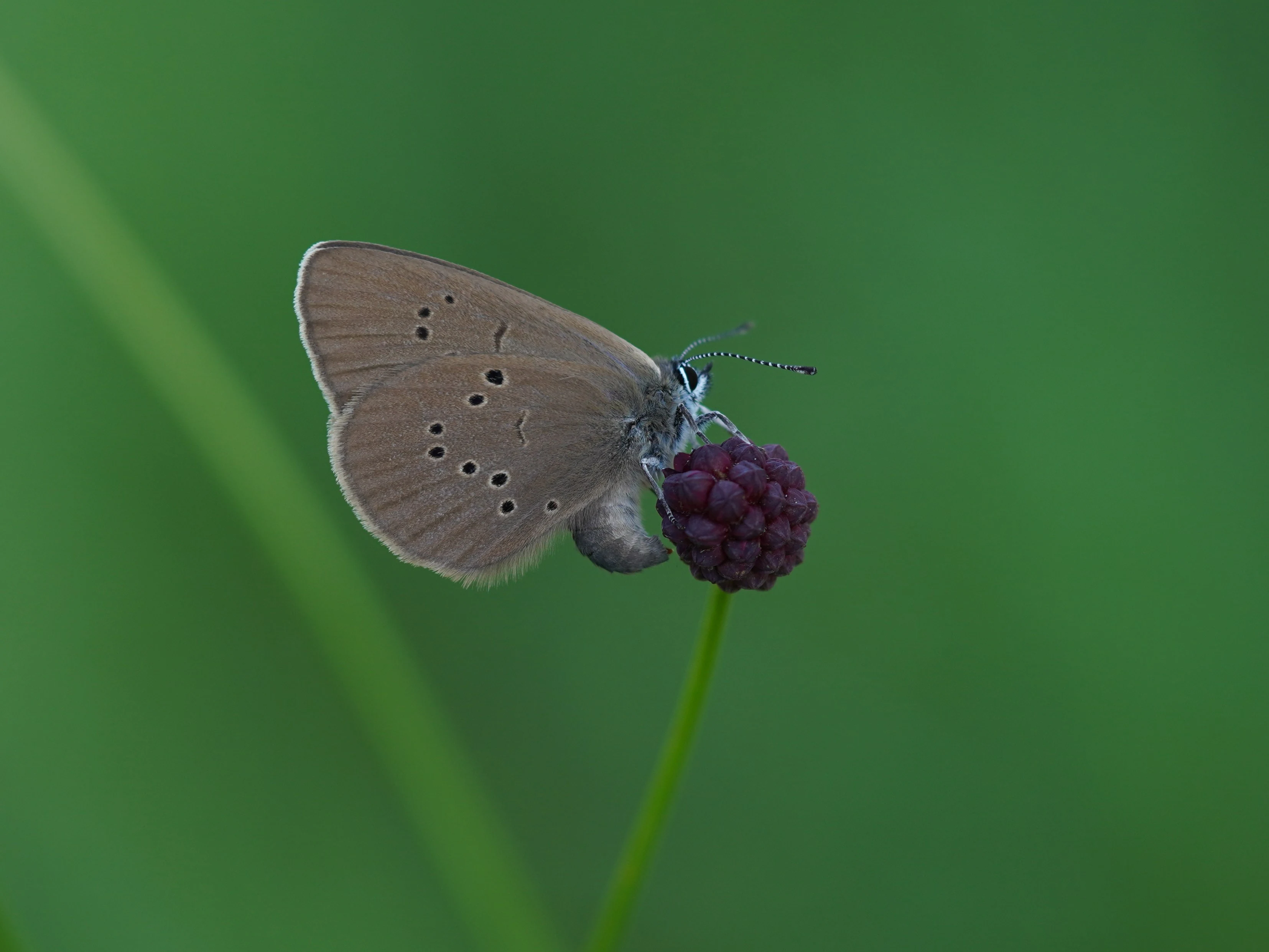
A close-up side view of a brown dusky large blue butterfly resting on a small round purple flower against a blurred green background.
A dusky large blue butterfly perched on a plant in the Na Plachtě nature monument.

Na Plachtě history and protected-area timeline

The landscape of today's Na Plachtě has been shaped by centuries of human activity. From the 15th century onward, the area belonged to the town as common land, used primarily as communal pasture known locally as občina. From the late 19th century, the site, called Plachta, served as a military training ground traversed by heavy vehicles, and between 1918 and 1939 it doubled as a military airfield for the First Republic army.

During the Second World War the area was used by an aero club, and Soviet aircraft landed here in 1945. Sand was quarried on site in 1945 and 1946, producing what is now known as the central pond. From the 1960s onward, as the army reduced its permanent activity, illegal dumps of household and construction waste appeared on the edges of the site. After the military fully withdrew, most of the area came under the administration of the Czech Republic's Nature Conservation Agency, and volunteer groups became increasingly important in maintaining the locality.

By the late 2000s, Plachtě was caught up in local development debates. In August 2008, ecologists and residents petitioned the Ministry of the Environment to repair the boundaries of the proposed European site; in 2009, the Czech Environmental Inspectorate blocked a planned ornamental pond in a nearby residential project over concerns about its impact on the reserve. On 28 December 2013, the nature monument Na Plachtě was formally declared by the Hradec Králové Regional Authority, replacing the earlier monuments Na Plachtě 1 and Na Plachtě 2.

In January 2018, ten Exmoor pony stallions, originally from the former military training area at Milovice, were released on the site for conservation grazing. By December 2022, a pair of water buffalo had also been introduced near the Jáma pond. In 2025, a larger removal of invasive woody vegetation (around 3.3 hectares) was underway to restore open habitats and to support a risk analysis of the buried waste legacy from the 1970s and 1980s.

Na Plachtě landscape and geographic character

Na Plachtě sits on gently undulating ground at roughly 235 to 248 meters above sea level, at the southeastern margin of Hradec Králové. Its terrain blends low-lying, waterlogged hollows around its ponds with slightly higher, drier sandy stretches, producing a small but clear habitat mosaic within easy walking distance of the city.

The two focal landscape elements are the pond Plachta and the pond Jáma, which together anchor the wetland system. Around them lie slatinné louky, or peat meadows, fed by groundwater, and a network of periodic pools that swell in wetter seasons and shrink in drier ones. Open sandy areas with heather, formed partly from the former sand quarry, break up the otherwise wet landscape and provide exposed, sun-warmed substrates. The result is a compact patchwork of ponds, meadows, marshes, temporary pools, and sand flats, all squeezed between the urban outskirts and the municipal forests.
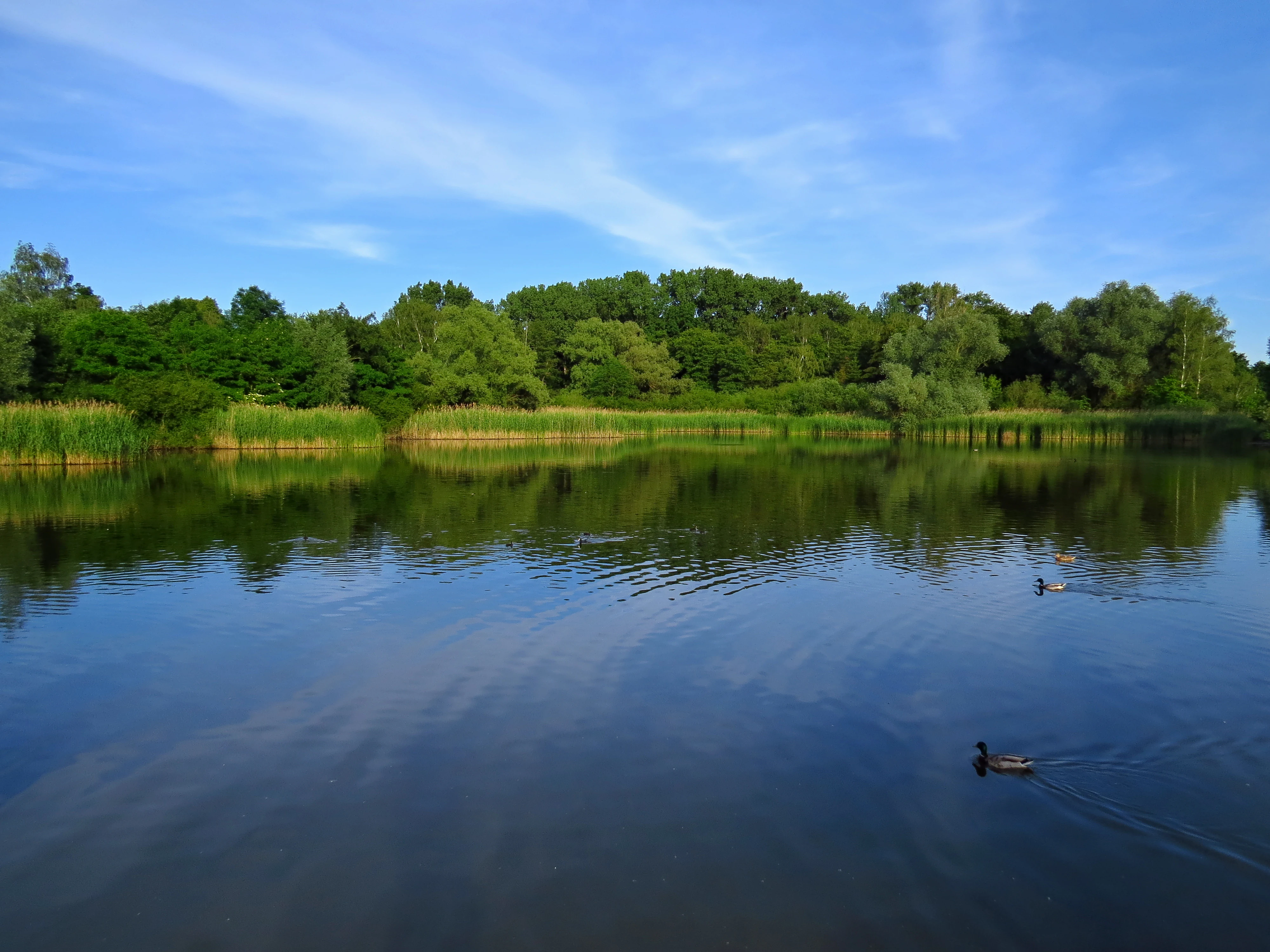
A calm pond surrounded by dense green trees and reeds under a blue sky, with a duck swimming in the foreground.
A peaceful view of a pond within the Na Plachtě Natural Monument.

Na Plachtě ecosystems, habitats, and plant life

The ecological identity of Na Plachtě is defined by its concentration of open, sun-exposed wetlands and dry sandy habitats in a single small area. The ponds, peat meadows, periodic pools, and heath-like sandy patches each support distinct communities of plants and invertebrates, and their close proximity is what gives the site its unusually high species density.

The ponds and their connected pools host a rich amphibian fauna, including the great crested newt, smooth newt, alpine newt, common toad, green toad, natterjack toad, European tree frog, and several brown and water frog species, alongside the spotted spadefoot toad. Reptiles such as the grass snake, sand lizard, viviparous lizard, slow worm, and common viper are also recorded. In summer, the open water and emergent vegetation support dragonfly populations of conservation interest.

The meadows and sandy clearings carry a second conservation layer. Specialized wet-meadow plants such as marsh helleborine, early marsh orchid, common spotted orchid, and Siberian iris grow alongside carnivorous sundews, marsh lousewort, large pink Dianthus superbus, and adder's tongue fern. On drier, exposed sand with heather, certain species depend on the open, mineral substrate to persist.
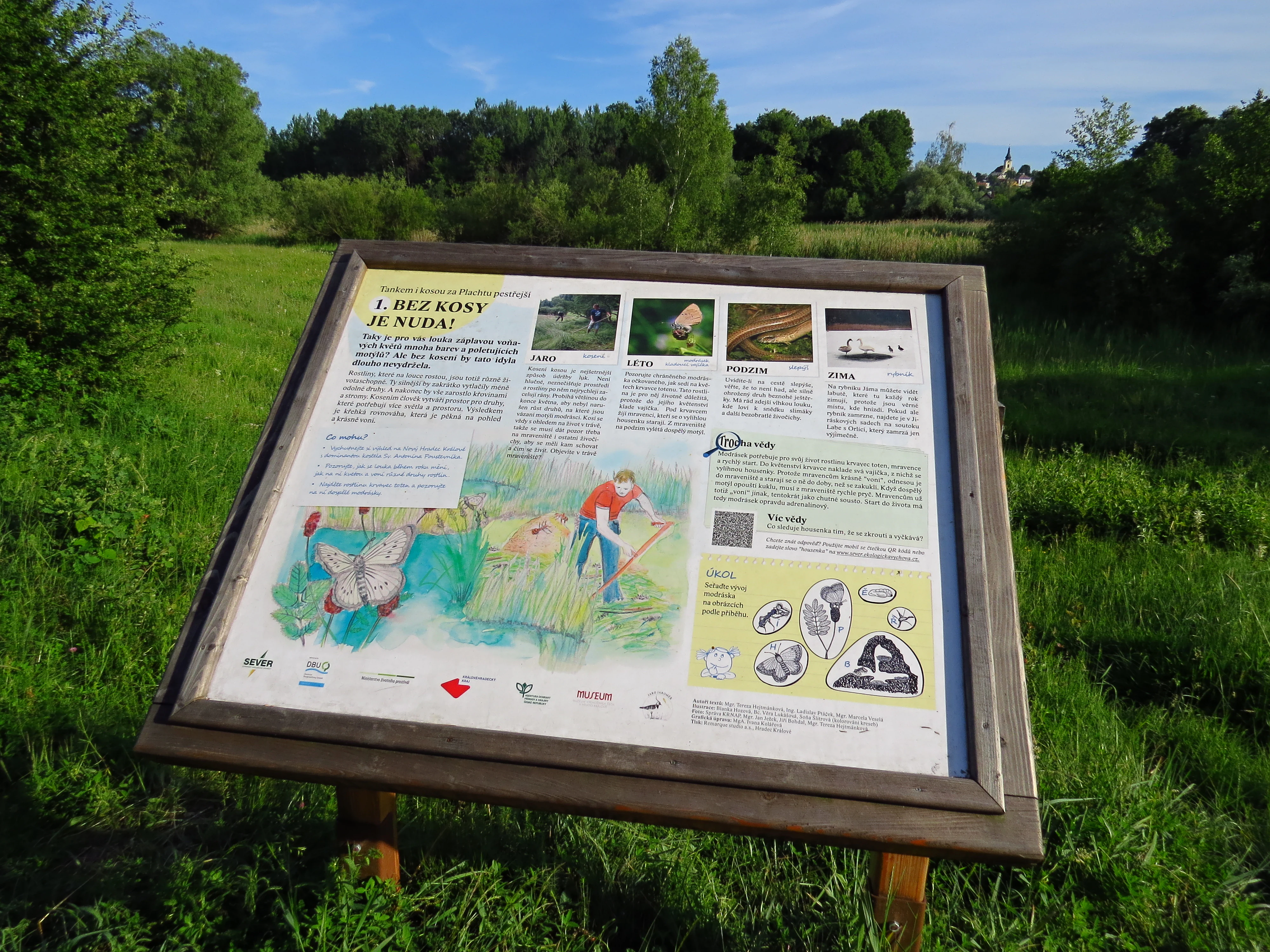
An eye-level view of a wooden-framed interpretive sign standing in a grassy meadow, featuring illustrations and text about local conservation efforts.
Educational information board at the Na Plachtě nature monument.

Na Plachtě wildlife and species highlights

Wildlife at Na Plachtě is anchored by amphibians and invertebrates, particularly the species for which the site carries its formal conservation status. The great crested newt, the scarce large blue butterfly (Maculinea teleius), and the dragonfly Leucorrhinia pectoralis are the headline protected species, with the butterfly Maculinea nausithous, the large copper butterfly (Lycaena dispar), and several further dragonflies also present.

The ponds and seasonal pools are the heart of the amphibian community, supporting smooth newts, alpine newts, the spotted spadefoot toad, common and green toads, the natterjack toad, the European tree frog, and a range of brown and water frogs. Reptiles recorded here include the grass snake, sand lizard, viviparous lizard, slow worm, and common European viper.

On drier ground, the rare crustaceans Triops cancriformis and Branchipus schaefferi inhabit ephemeral pools and disturbed sandy areas. Surveys across the whole site have catalogued over 3,500 plant and animal species, of which more than 100 are legally protected in the Czech Republic, and a number of these species are not found in any other Czech locality besides Na Plachtě and its immediate surroundings.
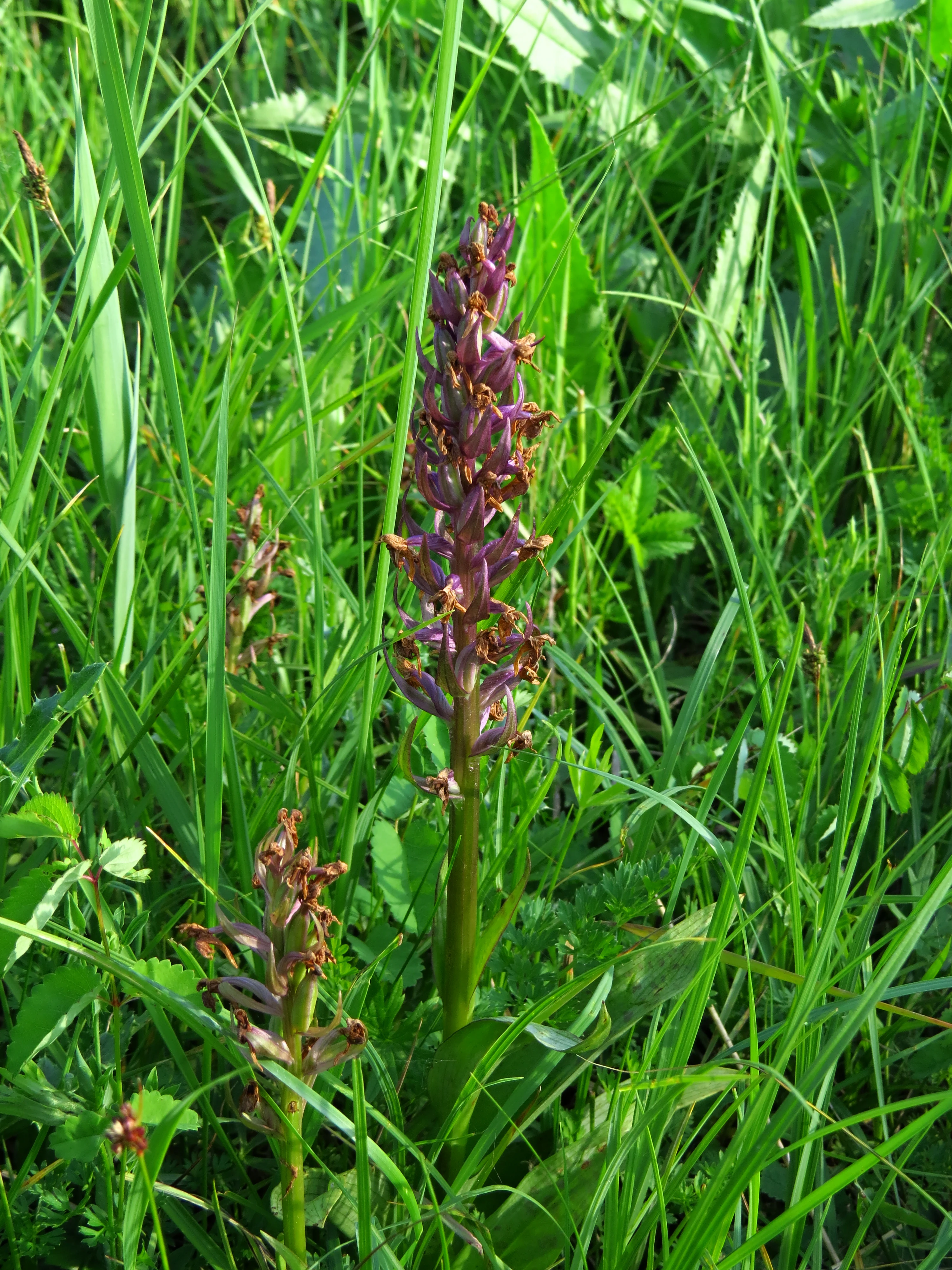
A close up view of two purple orchids emerging from tall green grass in a field.
A rare orchid blooming in the protected meadows of Na Plachtě nature monument.

Na Plachtě conservation status and protection priorities

Na Plachtě holds the status of přírodní památka (nature monument) under Czech law, corresponding to IUCN Category III, and together with its neighbouring unit Na Plachtě 3 forms part of a European Site of Community Importance under the Natura 2000 network. The site's conservation value rests on the survival of its mosaic of ponds, peat meadows, periodic pools, and sandy heaths, habitats that are scarce and increasingly fragmented in the Czech lowlands.

Management is shared between the Hradec Králové Regional Authority, the Nature Conservation Agency of the Czech Republic, and an unusually active community of volunteers and NGOs. Conservation grazing with Exmoor ponies and water buffalo is used to keep meadows open, and large-scale removal of encroaching woody vegetation is periodically undertaken to restore bare-ground and early-succession habitats.

Underlying the site's ecological recovery is a serious environmental burden. Tens of thousands of tonnes of household and construction waste, dumped mainly in the 1970s and 1980s, still lie buried within the protected area, and a long-term risk analysis is underway to evaluate options for their eventual removal.

Na Plachtě cultural meaning and human context

Plachtě has long been a place where local life and military activity intersect the natural landscape. For centuries the area was common pasture used by the citizens of Hradec Králové, a piece of everyday rural Bohemia at the city's edge well before modern borders were drawn between town and countryside.

The 20th century left a more complex legacy. Plachta served as a military training ground from the late 19th century and as an airfield between the world wars, was used briefly by an aero club during the Second World War, and hosted Soviet landings in 1945. Sand extraction in the mid-1940s created a central hollow that became the reserve's signature pond, and decades of military use ended only in the later 20th century.

Today the reserve is also a focal point of civic environmental engagement in the region. Local residents, NGOs, and scientists have repeatedly mobilized around Plachtě, including petitions, blocked development plans, and ongoing volunteer restoration, making the site a marker of the city's relationship with its peri-urban nature.
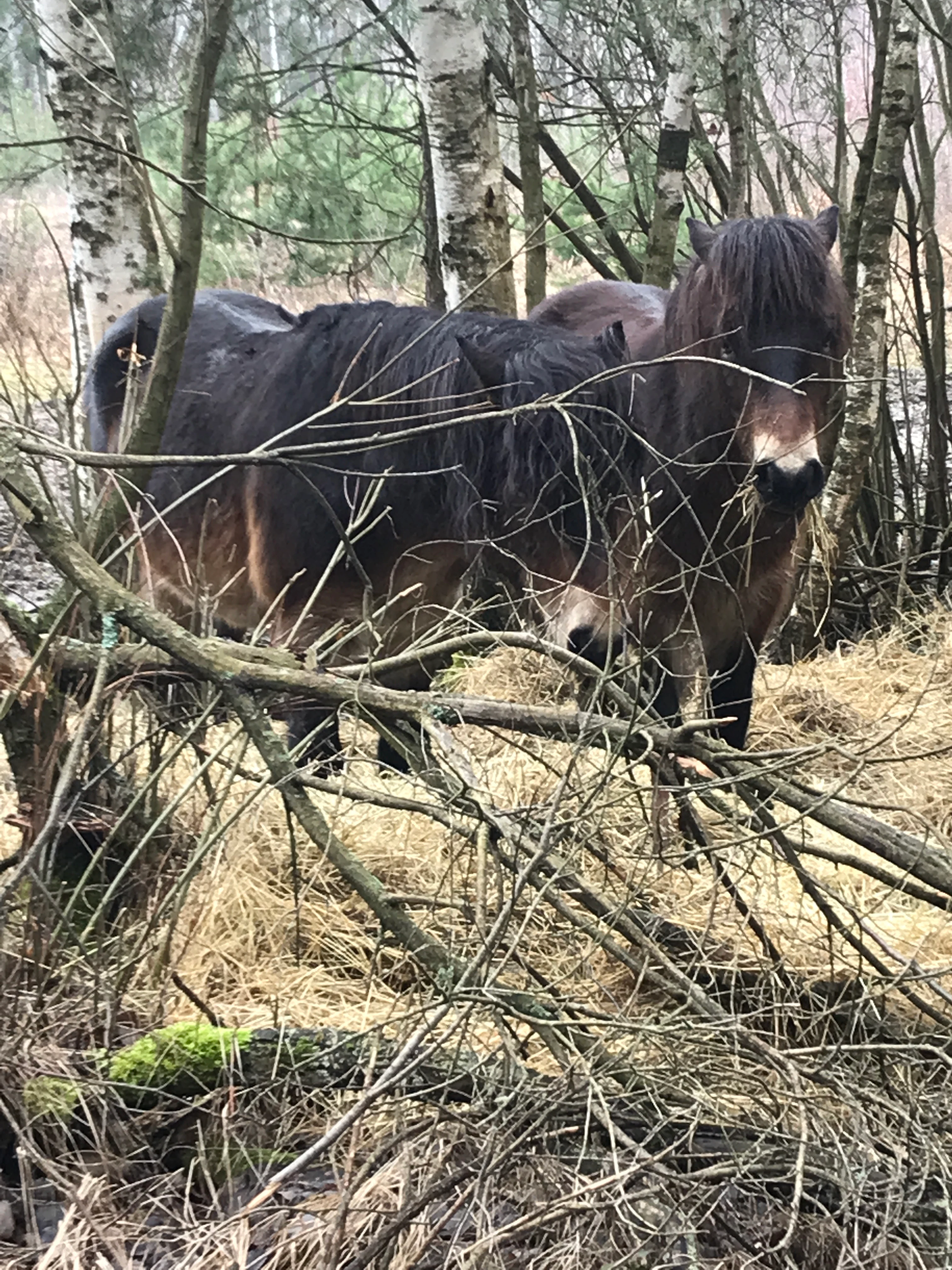
Two dark brown Exmoor ponies standing among birch trees and dry winter vegetation.
Exmoor ponies grazing in the Na Plachtě nature reserve.

Top sights and standout views in Na Plachtě

Na Plachtě trades size for intensity. Within roughly 39 hectares it compresses ponds, peat meadows, periodic pools, marshes, and sandy heaths into a network that supports more than 3,500 recorded species.

It is one of the most important Czech localities for the great crested newt, the large blue butterfly (Maculinea teleius), the scarce dragonfly Leucorrhinia pectoralis, and the rare crustaceans Triops and Branchipus. Conservation grazing with Exmoor ponies and water buffalo, active volunteer management, and Natura 2000 status make Plachtě a model of urban-edge biodiversity recovery.
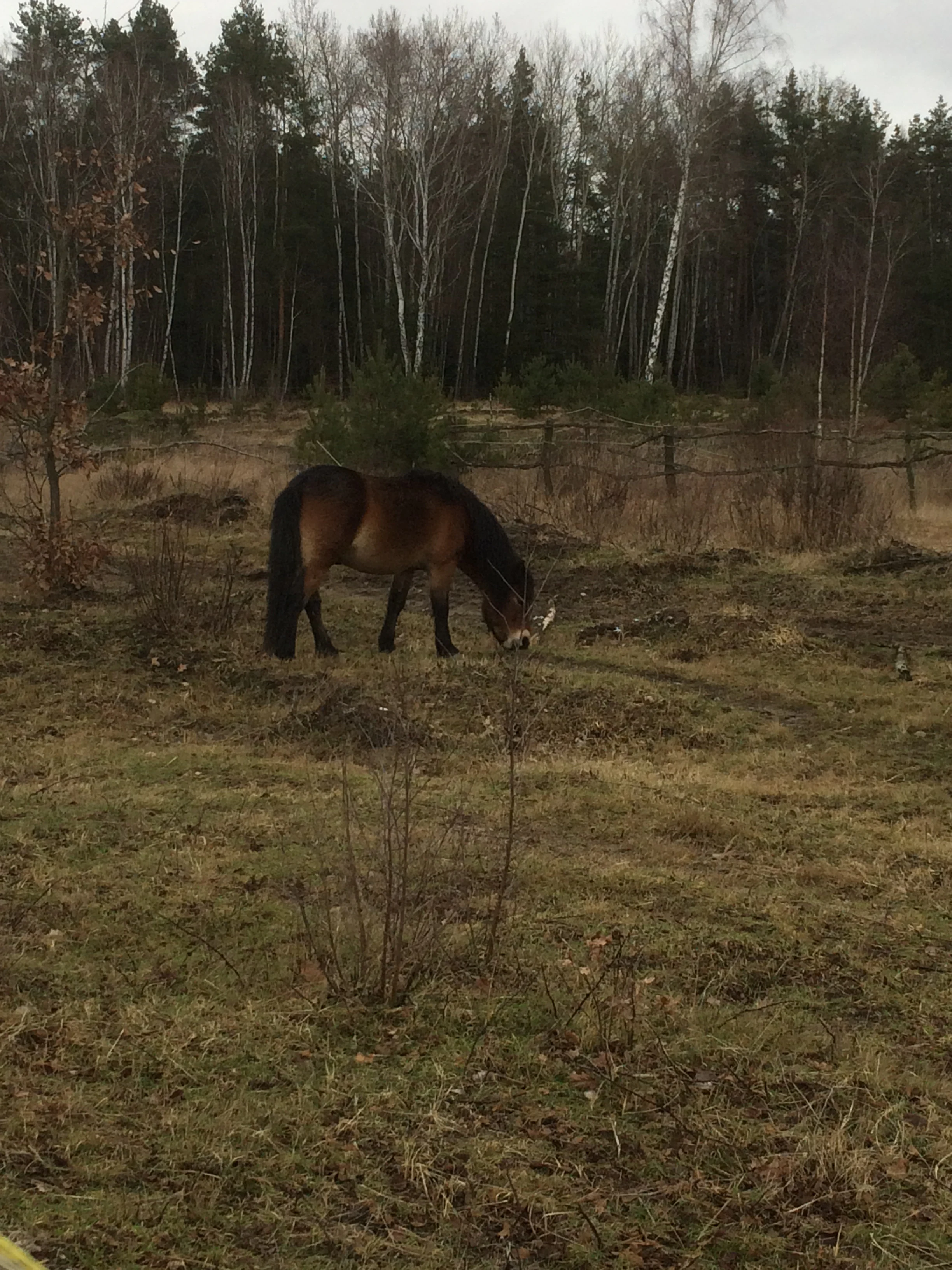
A dark-coated pony grazing on a grassy field in front of a forest with bare trees under an overcast sky.
An Exmoor pony grazing in the Na Plachtě nature reserve during winter.

Best time to visit Na Plachtě

Late spring and early summer are the most rewarding time to experience Na Plachtě. By then the periodic pools and ponds are full, amphibians are active around the water margins, dragonflies are on the wing, and the wet meadows carry their richest display of orchids and other wetland plants.

Drier, open sandy stretches with heather and warm-loving invertebrates are easiest to observe on calm, sunny days. Hot, high-summer periods can be uncomfortable for walking the open sandy ground and may temporarily reduce grazing animals on site, while colder months limit reptile and amphibian visibility but still offer a quieter view of the reserve's underlying landscape mosaic.
Monthly climate preview

Long-term representative monthly averages and temperature ranges for Na Plachtě

Na Plachtě Climate Normals, Annual Temperature and Precipitation Patterns

Representative coordinates for Na Plachtě record measurable annual temperature swings alongside steady monthly precipitation distribution. Detailed monthly records trace long-term temperature averages and precipitation totals across the full annual cycle.
Annual mean8 °C
-3 °C20 °C
Jan-3°
Feb-1°
Mar
Apr
May13°
Jun17°
Jul20°
Aug19°
Sep14°
Oct
Nov
Dec-1°
Warmest month
July

19.6 °C

Coolest month
January

-2.8 °C

Wettest month
July

2.8 mm/day

Driest month
April

1.2 mm/day

Park location guide

Geography guide, regional context, and park location map for Na Plachtě

Na Plachtě park geography, regions, and map view in Czechia

Understand where Na Plachtě sits in Czechia through a broader geographic reading of the surrounding landscape, nearby location context, and its mapped position within the national park landscape.

How Na Plachtě fits into Czechia

Czech Republic is a landlocked Central European country with a population of approximately 10.9 million people. The nation was established as an independent state on January 1, 1993, following the dissolution of Czechoslovakia. Its capital and largest city is Prague, with other major urban centers including Brno, Ostrava, Plzeň, and Liberec.

Wider geography shaping Na Plachtě in Czechia

The Czech Republic is a landlocked country in Central Europe. It is bordered by Germany to the west, Austria to the south, Poland to the northeast, and Slovakia to the southeast. The landscape is predominantly hilly, with the territory covering 78,871 square kilometers.

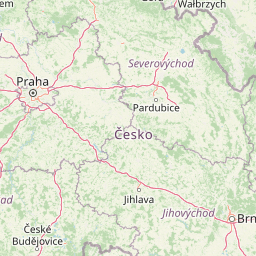
Map view of Na Plachtě

Use this park location map to pinpoint Na Plachtě in Czechia, understand its exact geographic position, and read its mapped placement within the surrounding landscape more clearly.

Pigeon | © OpenStreetMap contributors

Visual reference of wetland habitats, ponds, and sandy terrain in eastern Bohemia

Na Plachtě Photos, Scenery, and Protected Landscape Views

Visual records illustrate the complex wetland mosaic, peat meadows, and open sand exposures that define the protected nature reserve. Examining actual terrain photos helps researchers understand the environmental contrast between urban margins and high biodiversity habitats.

A close-up side view of a brown dusky large blue butterfly resting on a small round purple flower against a blurred green background.

A group of tall, mature pine trees with reddish-brown bark and green needles standing in a grassy meadow under a clear blue sky.

A calm pond surrounded by dense green trees and reeds under a blue sky, with a duck swimming in the foreground.

An eye-level view of a wooden-framed interpretive sign standing in a grassy meadow, featuring illustrations and text about local conservation efforts.

A close up view of two purple orchids emerging from tall green grass in a field.

A close-up view of a blue and black dragonfly perched on a thin, dry blade of grass with a blurred gray water background.

Two dark brown Exmoor ponies standing among birch trees and dry winter vegetation.

A dark-coated pony grazing on a grassy field in front of a forest with bare trees under an overcast sky.

A large, dark water buffalo stands in a grassy area with light snow patches, viewed behind a thin wire fence near a tree.

A dirt trail winds through a bright green, grassy meadow toward a treeline under a clear blue sky.

A black domestic water buffalo standing behind a thin wire fence, browsing on low-hanging pine branches in a grassy, partially snow-covered field.

Park atlas

Compare regional protected landscapes and wetland habitats across eastern Bohemia

Explore Other Parks Near Na Plachtě And Related Protected Areas

Visitors leaving Na Plachtě can browse adjacent protected areas and surrounding regional wetland reserves for broader geographic comparison. Examining these neighboring natural landscapes reveals wider patterns in lowland biodiversity conservation and regional terrain.
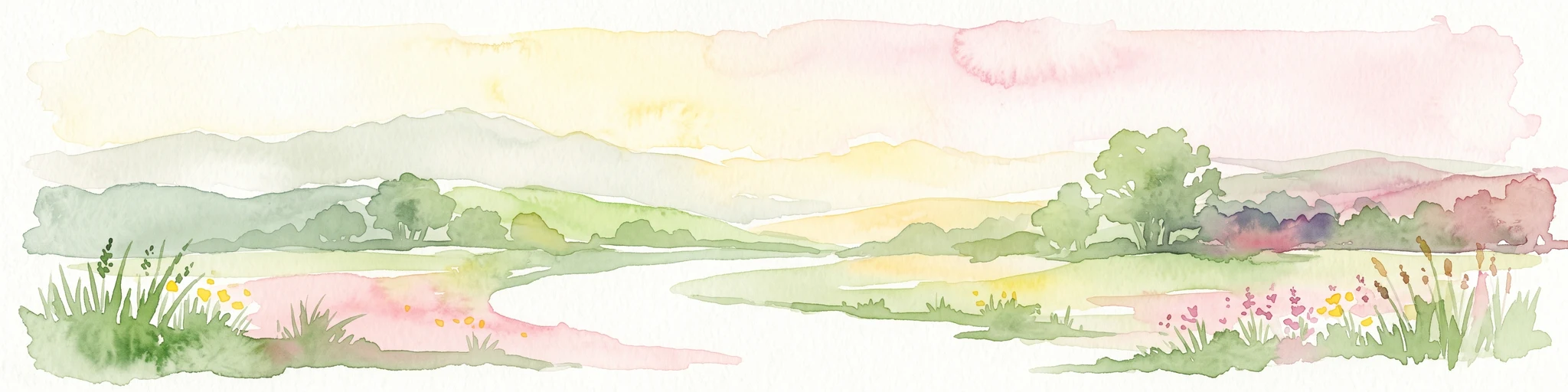
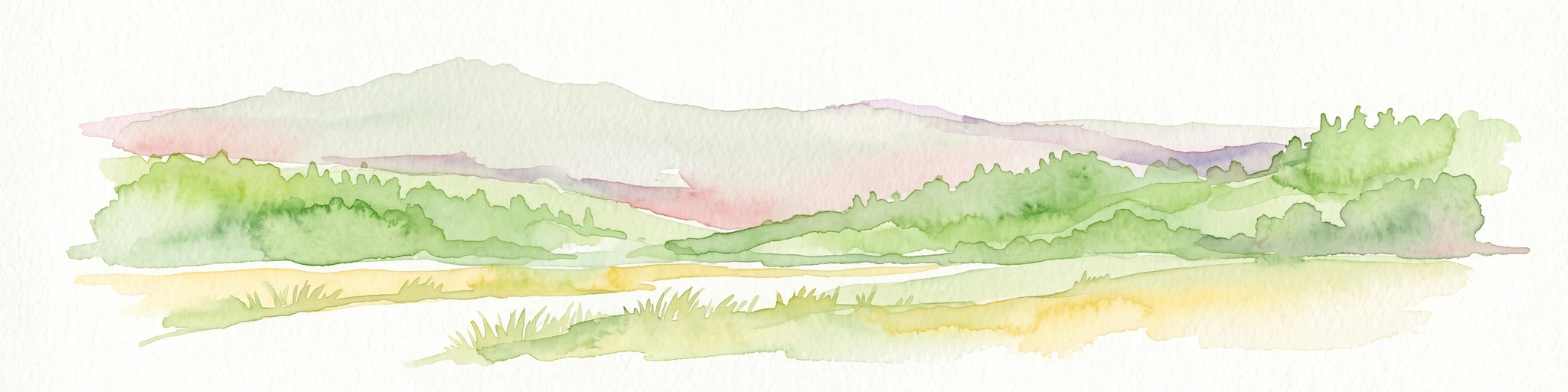
Watercolor painting of a landscape featuring soft green hills, coniferous trees, and low-lying wetland vegetation in shades of pink and green.
Nature reserveKrálovéhradecký kraj
About 0 km away#1 closest

Southeast

Na Plachtě 3 Nature Reserve: Mapped Protected Landscapes in the Královéhradecký kraj

Explore the diverse sandy habitats and protected terrain of this Czech natural monument

Na Plachtě 3 represents a critical protected enclave in the Královéhradecký kraj, characterized by its mosaic of dry heaths, open sand patches, and peat meadows. This lowland site provides essential hibernation grounds for amphibians and invertebrates, maintaining a rich biological profile that contrasts with the urban-adjacent geography of Hradec Králové. Analyze its protected boundaries, geological history, and early successional landscape character through detailed mapping.

Area
0.17 km²
Established
2012
IUCN
IV
Relief
Lowland
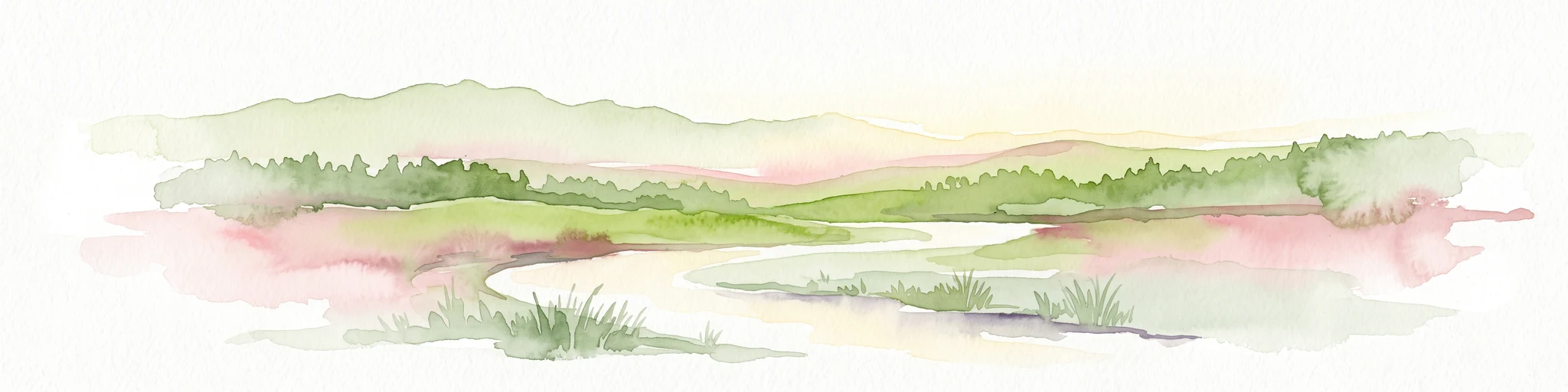
Watercolor painting of a peaceful wetland landscape with a winding stream, soft rolling hills in the background, and wild meadow vegetation in the foreground.
Natural monumentKrálovéhradecký kraj
About 2.4 km away#2 closest

Southwest

Roudnička a Datlík Natural Monument: Wetland Geography and Protected Landscape Context

A vital ecological refuge within the Královéhradecký landscape.

Roudnička a Datlík protects a rare wetland mosaic of fishponds, reedbeds, and purple moor-grass meadows on the edge of the East Bohemian table. This natural monument remains a key site for regional conservation management, supporting a variety of orchids and waterbirds within an urban-fringe environment. Explore the site's mapped boundaries and its role in protecting lowland biodiversity.

Area
0.297 km²
Established
1988
IUCN
IV
Relief
Lowland
Natural monumentKrálovéhradecký kraj
About 16 km away#3 closest

North

Vražba Natural Monument: Botanical Geography and Protected Lands in Královéhradecký Kraj

A rare habitat for critically endangered Central European flora.

Vražba is a specialized protected area located in the Královéhradecký region, designated primarily to stabilize populations of the critically endangered ladybells. Its landscape consists of managed woodland edges and semi-open grassland patches, creating a highly specific environment for rare botanical communities. This site stands as a prime example of targeted habitat management within the broader Czech protected-area network.

Area
0.078 km²
Established
2011
IUCN
III
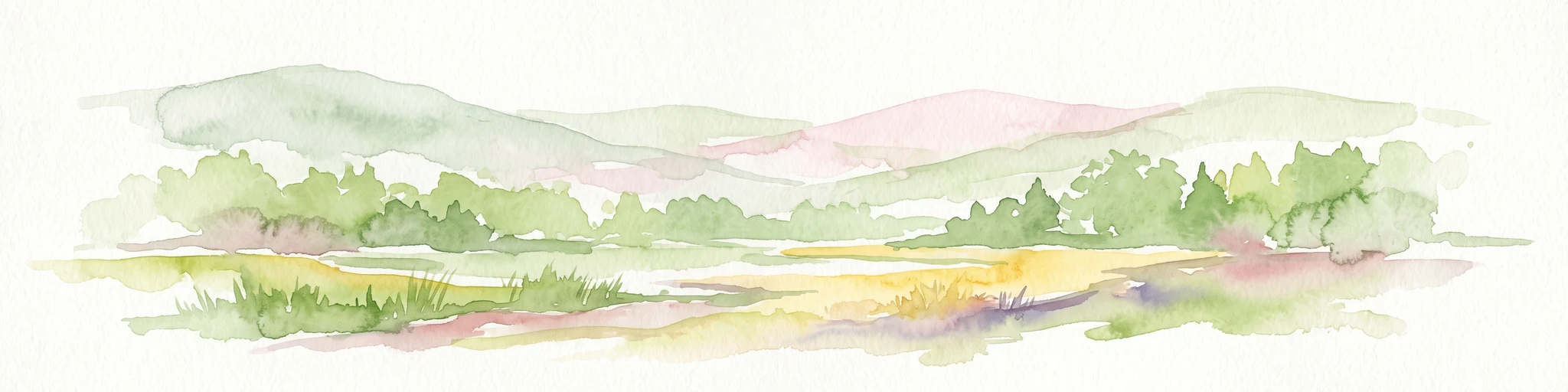
A soft watercolor illustration of a winding stream flowing through green meadows and trees with distant low hills in the background.
Natural monumentPardubice Region
About 25 km away#4 closest

Southwest

Meandry Struhy Natural Monument: A Case Study in Elbe Lowland Stream Geography

Riparian forests and winding stream channels in Pardubice Region.

Meandry Struhy stands as a significant natural monument in the Pardubice Region, protecting the unique geomorphology of a freely meandering stream. The area provides a rare look at undisturbed riparian galleries, floodplain forests, and vital nesting habitats for lowland bird species. This protected landscape offers a clear view into the ecological processes of the Elbe lowlands, where natural watercourse behavior continues to shape the local environment.

Area
0.402 km²
Established
1980
IUCN
IV
Relief
Lowland
Natural monumentKrálovéhradecký kraj
About 29 km away#5 closest

Northwest

Veselský háj Natural Monument: Geographic Boundaries and Protected Landscape Context

Lowland forest and wetland mosaic in the Czech Republic

Veselský háj stands as a key natural monument in the Královéhradecký kraj region; characterized by its well-preserved oak-hornbeam woodland and diverse botanical assemblages. The site offers a window into the structure of Bohemian lowland ecosystems, where rare species like the Siberian iris and violet helleborine thrive within a matrix of ancient forest and open water. Explore the boundaries and topographic features of this significant protected terrain.

Area
442.71 km²
Established
1998
IUCN
III
Relief
Lowland
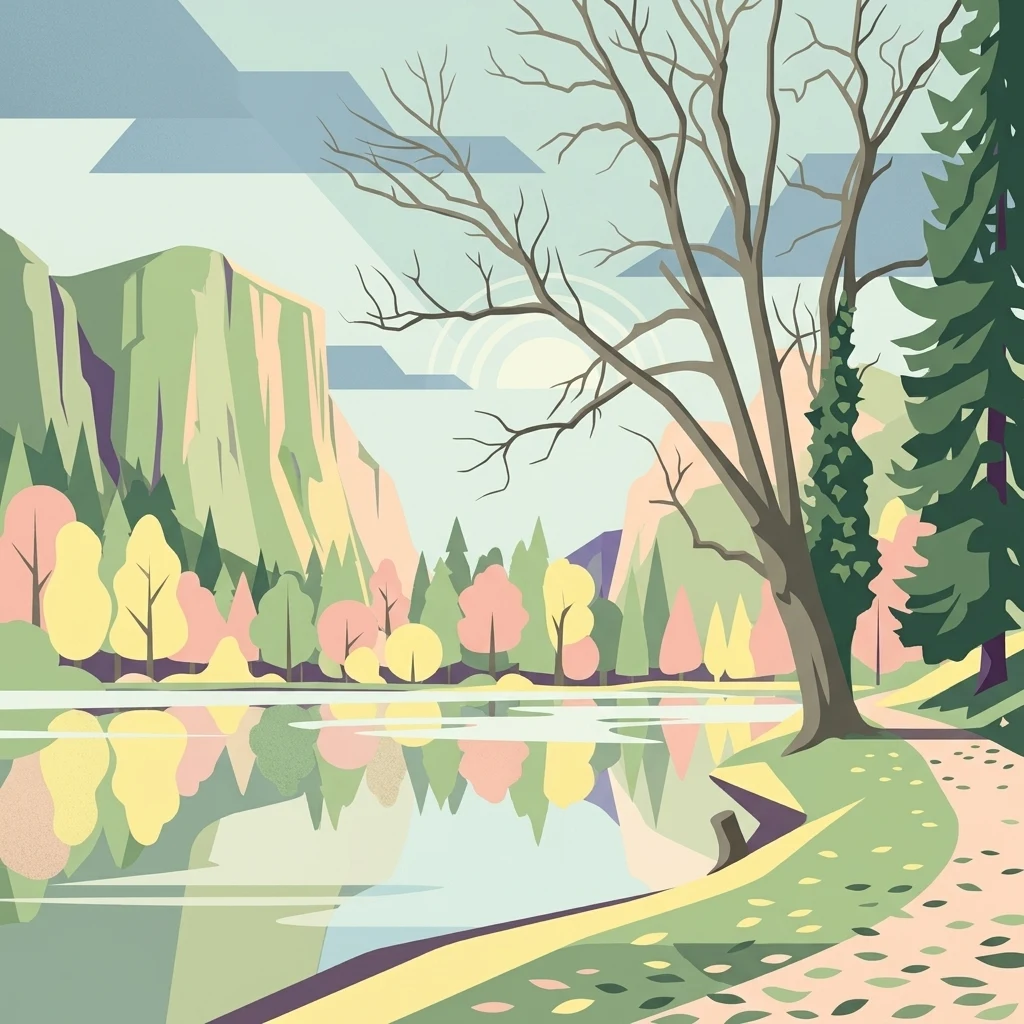
An illustrative style digital painting of a tranquil park scene with a lake in the foreground, a path along the bank, and mountains in the distance, depicted with a muted, pastel-toned color palette.
Protected landscapeChrudim District
About 31 km away#6 closest

Southwest

Přírodní park Heřmanův Městec: Geographic Profile and Protected Landscape Boundaries

Tracing the elevation transitions of the Chrudim District foothills

This protected landscape in the Chrudim District merges man-made baroque vistas with natural oak woodlands. The park terrain rises over 100 metres from water-side flats to forested ridges, providing a distinct study in regional geology and calcareous soil habitats that support rare beetle and bat populations.

Area
3.41 km²
Established
1996
Relief
Mixed relief
Climate
Temperate
Natural monumentKrálovéhradecký kraj
About 32 km away#7 closest

West

Víno Natural Monument: Mapped Protected Landscapes and Geographic Overview

Protected oak and hornbeam forest in eastern Bohemia

Víno Natural Monument is a significant protected area within the Královéhradecký kraj region, focused on the conservation of century-old broadleaf woodland. This location preserves essential deadwood microhabitats and diverse plant species, offering a clear example of lowland forest ecology integrated into the cultivated landscape of eastern Bohemia.

Area
0.725 km²
Established
2013
IUCN
III
Relief
Lowland
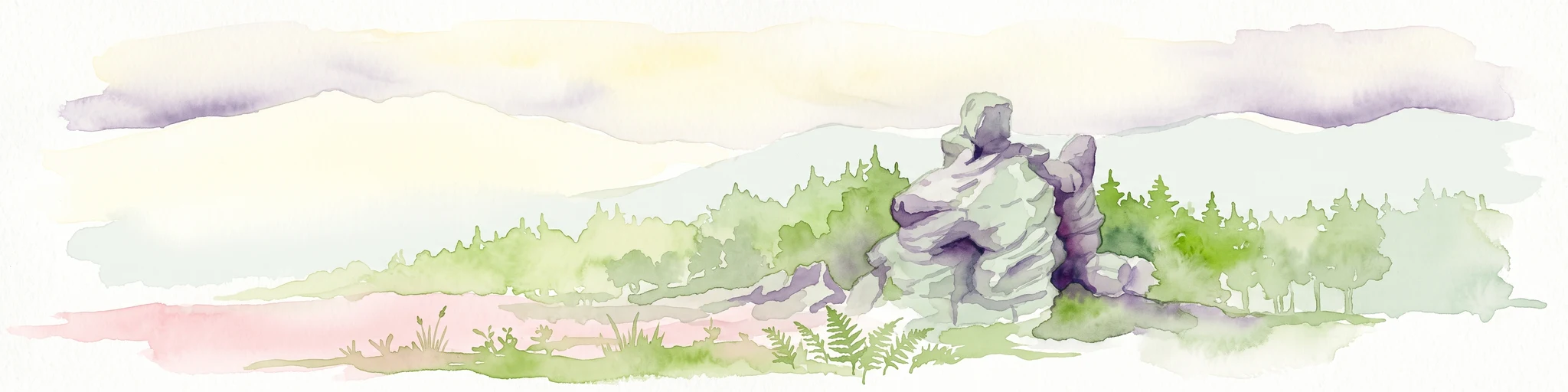
A horizontal watercolor illustration depicting a prominent weathered sandstone rock formation surrounded by forest, set against a soft, light-filled sky.
National parkDolnośląskie
About 41 km away#8 closest

Northeast

Park Narodowy Gór Stołowych: A Geologic Atlas of Table Mountains in Lower Silesia

Mapping sandstone labyrinths and protected forest plateaus in the Sudetes

Explore the definitive map and geographic profile of Park Narodowy Gór Stołowych, a protected area characterized by its horizontal sandstone layers and dramatic rock towers. This atlas entry provides insight into the park's sedimentary landscape, covering iconic summit plateaus, dense forest environments, and the contrasting igneous geology of the surrounding terrain.

Area
63.402 km²
Established
1993
Visitors
1.3M annual
Relief
Mountain

Common questions about visiting, size, designation, and location context for Na Plachtě

Na Plachtě FAQs for park facts, access, geography, and protected area context

Find quick answers about Na Plachtě, including protected-area facts, park geography, trail and visitor context, and how the park fits into its surrounding country and regional landscape.
MoriAtlas Explorer

Continue Your Protected Areas Search Across the Global Atlas

Deepen your exploration by continuing the structured search for national parks and protected areas worldwide. Utilize the comprehensive filtering capabilities to compare different conservation landscapes and refine your understanding of global park geography. Discover more about the distribution and characteristics of protected natural areas.

Global natural geography