
Why Na Vápenici stands out
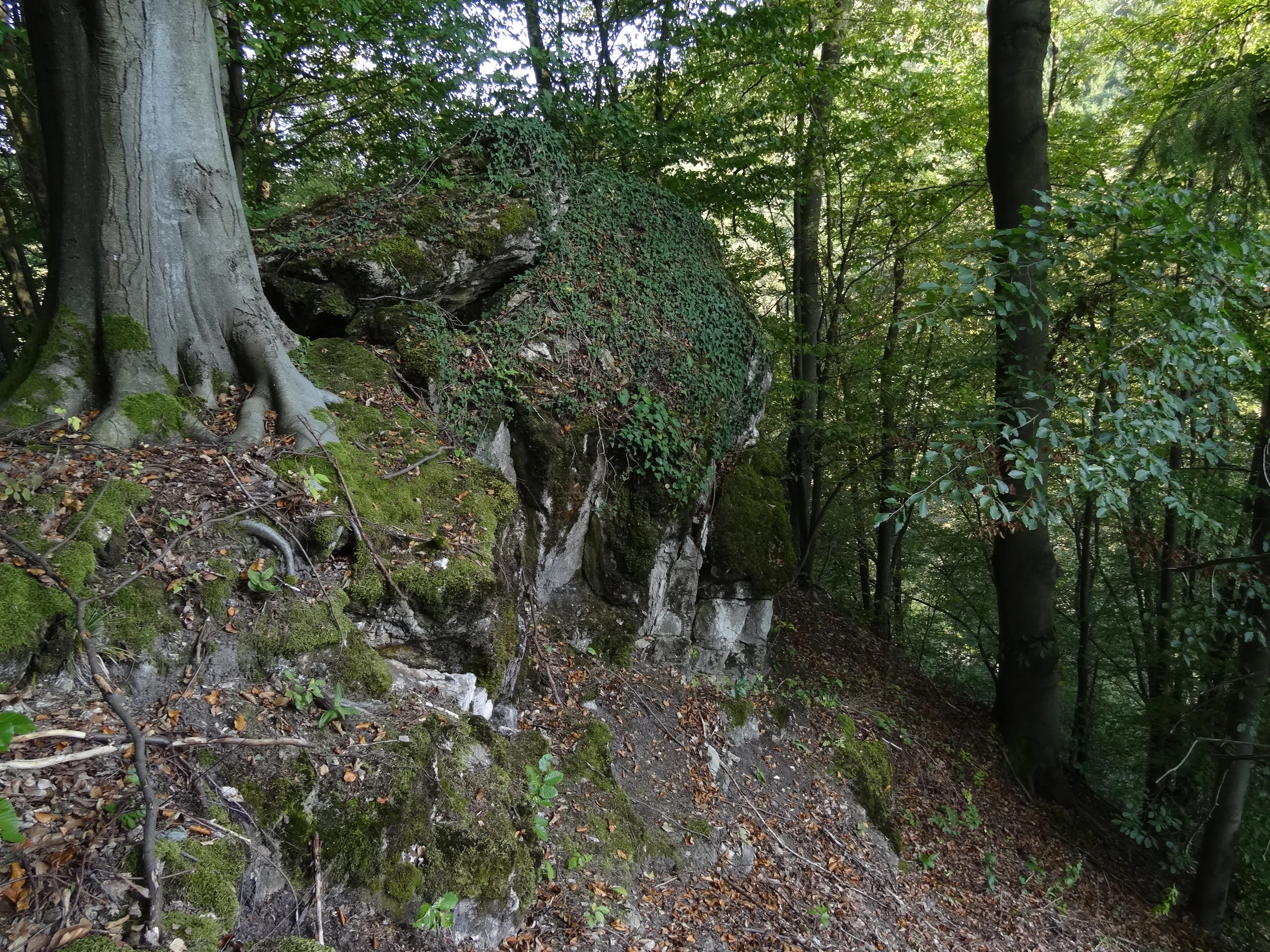
Na Vápenici is best known for its isolated limestone outcrop that supports calcareous and herb-rich beech forests unusual for the surrounding region. It is also notable for hosting what appears to be the only known population of a critically endangered fern in the area. In addition, the outcrop contains stratigraphically significant paleontological material, making it valuable both ecologically and geologically within the broader Český ráj Protected Landscape Area.
Na Vápenici history and protected-area timeline
Na Vápenici was formally designated as a přírodní památka, a natural monument under Czech nature conservation law, on 16 April 2008. The protection was proclaimed by the Administration of the CHKO Český ráj, the authority responsible for managing the surrounding Protected Landscape Area, reflecting how the site's significance was understood in the context of the broader regional conservation framework.
The decision to protect the area was driven by the discovery that its small limestone outcrop hosted regionally important calcareous beech forest stands, a single known population of a critically endangered fern, and paleontologically valuable rock exposures. By placing the site under official protection, authorities aimed to preserve both the living forest community and the geological record associated with the outcrop. Since its establishment, the site has remained under the stewardship of the Czech Nature Conservation Agency's Liberec regional office.
Na Vápenici landscape and geographic character
The defining landscape feature of Na Vápenici is a small limestone ostroh, or rocky outcrop, that rises from the surrounding terrain of the Český ráj region. This compact elevation change is enough to create a clearly different surface character within a relatively short distance, with the calcareous rock contrasting with the broader geological setting of the area.
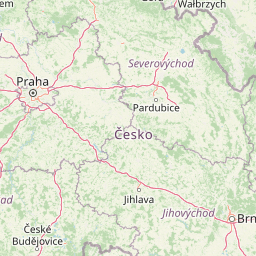
The outcrop sits within a narrow elevation band roughly between 325 and 415 meters above sea level, perched on slopes near the settlement of Propastný between Železný Brod and Koberovy. Although the relief is subtle by regional standards, the limestone structure is distinct enough to influence soil chemistry, drainage, and exposure, producing microhabitats that differ sharply from the surrounding forest land. The combination of rocky outcrops, thin calcareous soils, and adjacent woodland gives the monument a layered visual identity centered on this geological anomaly within the protected landscape.
Na Vápenici ecosystems, habitats, and plant life
Ecologically, Na Vápenici is defined above all by its calcareous substrate. The limestone bedrock supports stands of vápnomilné a květnaté bučiny, calciphilous and floristically rich beech forests, that are regionally significant within the Český ráj Protected Landscape Area. These forest stands are characterized by beech as a dominant canopy species, combined with a more diverse herbaceous understory than is typical on the more acidic substrates that dominate the surrounding region.
The unusual soil chemistry created by the limestone allows plants adapted to lime-rich conditions to coexist alongside species more typical of the broader Bohemian forest landscape. This ecological contrast makes the site function as a small refuge for calcareous forest flora within an extensive protected landscape otherwise shaped by different geological conditions. The site is also recognized for hosting what is described as the only known population of a critically endangered fern species in the area, adding a rare and highly localized element to its natural value. The combination of rare forest type, unusual substrate, and isolated plant population gives the monument a focused but ecologically meaningful character.
Na Vápenici wildlife and species highlights
Because the available sources for Na Vápenici emphasize its forest vegetation and a single critically endangered fern population, the wildlife profile of this small monument is closely tied to its plant communities rather than to large or conspicuous fauna. The calcareous beech forests provide habitat for forest-floor invertebrates and other species associated with mature deciduous woodland on lime-rich soils, and the fern population itself represents a rare and protected element of the local biota.
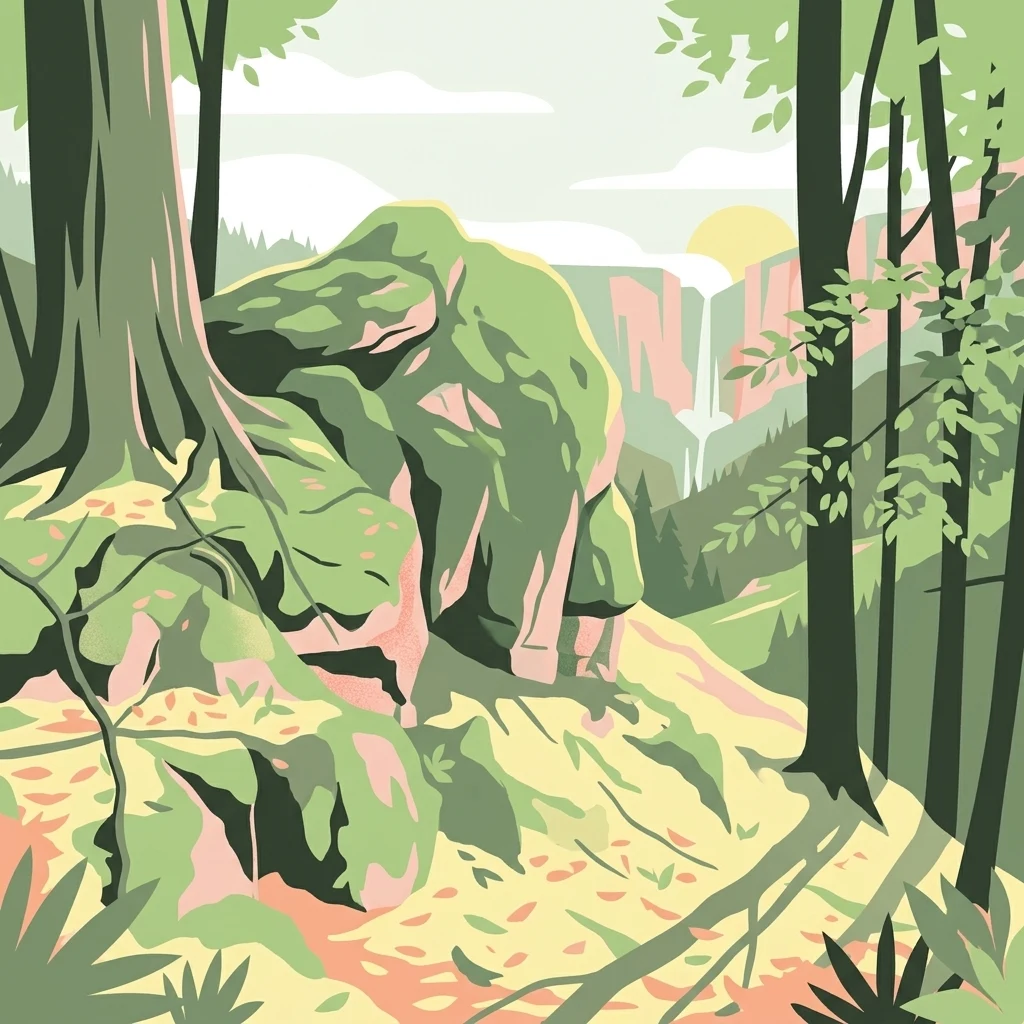
The steep, rocky outcrop and its mosaic of exposed limestone, leaf litter, and herb-rich undergrowth create microhabitats that contrast with the surrounding forest and are likely to support a distinct community of small forest species. However, the public record available for this site concentrates on floristic and paleontological significance rather than on detailed faunal inventories, so broader wildlife claims are not well supported.
Na Vápenici conservation status and protection priorities
Na Vápenici is protected primarily because its small limestone outcrop supports a combination of features that are individually rare and collectively unique within the region. The calcareous and herb-rich beech forests are considered regionally significant, the outcrop hosts the only known local population of a critically endangered fern, and the rock exposures contain stratigraphically important paleontological material. Together these qualities justify the site's designation as a přírodní památka under Czech law and its classification in IUCN Category IV, which recognizes areas managed primarily for particular species or habitats.
The monument is administered by the Czech Nature Conservation Agency through its Liberec regional office and falls within the larger Český ráj Protected Landscape Area, which provides additional landscape-level protection around the small core site. Conservation management therefore operates at two scales, with the protected landscape area providing broader buffering and the natural monument providing site-specific safeguards for the calcareous forests, the rare fern, and the geologically important outcrop.
Top sights and standout views in Na Vápenici
The standout qualities of Na Vápenici are concentrated in a remarkably small area. A single limestone outcrop supports rare calcareous beech forest, hosts a critically endangered fern found nowhere else nearby, and exposes paleontologically significant rock. Together these features make the site a compact but unusually rich node of natural heritage within the Český ráj Protected Landscape Area.
Best time to visit Na Vápenici
Na Vápenici is a small protected natural monument rather than a developed visitor destination, and seasonal guidance is best framed around the character of the forest rather than tourism infrastructure. Late spring and early summer are particularly worthwhile for observing the herb-rich beech understory in bloom, while autumn highlights the color of the beech canopy against the pale limestone outcrop. In winter, the exposed rock and bare forest structure can make the underlying geology easier to see, though access may be affected by weather and the terrain typical of hillside forest in the Bohemian uplands.