Why Nameri National Park stands out
Nameri National Park is best known for its tiger population and status as a designated Tiger Reserve, supporting breeding populations of Bengal tigers within its diverse Himalayan foothill ecosystem. The park is equally renowned for its exceptional avifauna, particularly the white-winged wood duck, which is among the rarest waterfowl in Asia, along with multiple species of hornbills including the great pied hornbill, wreathed hornbill, and rufous-necked hornbill. The Jia-Bharali River historically supported golden mahseer fishing, a tradition dating to British colonial times, though angling was officially banned in 2011. The park's location along a major bird migration route and its diverse habitats ranging from semi-evergreen forests to riverine grasslands make it a significant destination for wildlife enthusiasts and researchers alike.
Nameri National Park history and protected-area timeline
Nameri National Park's journey to protected status began in 1978 when the area was declared a reserve forest on October 17 of that year. Prior to formal protection, the forest was subject to significant logging activity that altered its composition and density. The area was formally established as the Nameri Sanctuary on September 18, 1985, with an initial area of 137 square kilometers as part of the larger Naduar Forest Reserve. This designation provided the first formal wildlife protection framework for the region. A significant expansion occurred on November 15, 1998, when an additional 75 square kilometers were incorporated, formally establishing Nameri as a National Park. The year 2000 marked a pivotal moment in the park's conservation history when it was declared the second Tiger Reserve in Assam, following Manas Tiger Reserve, elevating its conservation status and bringing additional resources for habitat protection and species monitoring. The park operates under the governance of the Ministry of Environment and Forests and the Government of India.
Nameri National Park landscape and geographic character
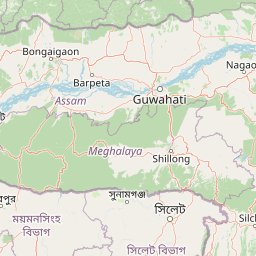
The physical landscape of Nameri National Park reflects its position at the interface between the Himalayan mountain system and the alluvial plains of the Brahmaputra valley. The terrain consists primarily of gentle slopes and undulating hills that transition into flat river valleys, with elevations varying across the park's extent. The Jia-Bharali River, flowing from northwest to southeast along the southern boundary, forms the most significant watercourse and has carved a broad valley that supports distinct riparian ecosystems. In the eastern sections, the Bor-Dikorai River and its tributaries drain the landscape, adding complexity to the hydrological system. The river corridors are flanked by extensive semi-evergreen and moist deciduous forests, while the flatter areas support grasslands and marshy zones that provide critical habitat for multiple species. The overall landscape character is one of moderate relief with dense vegetation cover, though forest coverage has declined to between 30 and 40 percent in recent decades due to various pressures.
Nameri National Park ecosystems, habitats, and plant life
The ecological character of Nameri National Park is defined by its position within the Himalayan biogeographic zone, supporting a blend of species from both Himalayan and Indo-Burmese regions. The park's flora encompasses over 600 species, including valuable timber species such as Gmelina arborea and Michelia champaca, as well as culturally significant plants like agarwood and Rudraksha. The forest composition varies from semi-evergreen to moist deciduous, with bamboo groves interspersed throughout. Orchids represent a particularly notable floral group, with species from genera including Dendrobium, Cymbidium, and Cypripedioideae documented within the park boundaries. The river systems support aquatic vegetation and provide critical habitat for fish species, while the riparian zones host distinct plant communities adapted to seasonal flooding. The diverse habitat mosaic, combining forest, grassland, and wetland ecosystems, creates the conditions for remarkable biodiversity at multiple trophic levels.
Nameri National Park wildlife and species highlights
Nameri National Park supports a remarkable assemblage of mammalian species, with the Bengal tiger and Indian elephant representing the most iconic inhabitants. The predator community includes the Bengal tiger, Indian leopard, clouded leopard, marbled cat, and leopard cat, reflecting the park's importance as a carnivore stronghold in northeastern India. Ungulate species such as sambar, hog deer, barking deer, and gaur form important prey bases and are commonly observed throughout the park. The park also supports significant populations of primates, including the capped langur, and arboreal mammals such as the Indian giant squirrel. Herbivores including wild boar and bears such as sloth bear and Himalayan black bear complete the mammalian community. The avifauna is particularly diverse, with 374 bird species recorded in 2005 including the endangered white-winged wood duck, multiple hornbill species, black stork, and ibisbill. The river systems historically supported golden mahseer, a prized game fish, though populations have declined following the 2011 fishing ban.
Nameri National Park conservation status and protection priorities
Nameri National Park occupies a critical position in India's conservation framework, particularly as a designated Tiger Reserve that contributes to the country's goal of maintaining viable tiger populations across connected habitats. The park's transboundary designation as part of a larger ecological unit with Pakhui Wildlife Sanctuary in Arunachal Pradesh enables species movement across state boundaries, which is essential for maintaining genetic connectivity in a region where habitat fragmentation is an increasing concern. However, the park faces significant conservation challenges. Ongoing official logging activities in the Sonitpur region continue to place pressure on the ecosystem, while forest cover decline to below 30-40 percent has intensified human-wildlife conflict. Elephant populations periodically raid crops and damage property, leading to retaliatory actions that threaten both human and animal lives. The presence of approximately 3,000 cattle grazing within the park boundaries further degrades habitat quality and creates disease transmission risks to wild populations. Conservation efforts must balance these competing pressures while maintaining the park's critical role in protecting Himalayan foothill biodiversity.
Nameri National Park cultural meaning and human context
The landscape surrounding Nameri National Park has been inhabited by local communities for generations, with the park boundary lying approximately 9 kilometers from Chariduar, the nearest village. Traditional land use practices including grazing, collection of forest products, and small-scale agriculture have shaped the human-environment relationship in this region. The cultural landscape includes references to indigenous communities who have historically relied on the forest for livelihood resources including timber, non-timber forest products, and traditional medicines. The park's proximity to Tezpur, the nearest major city approximately 35 kilometers away, means that the local economy is influenced by both agricultural activities and the potential for nature-based tourism. The continuing presence of cattle grazing within park boundaries reflects the complex relationship between local livelihoods and conservation objectives, a challenge common to many Indian protected areas.
Top sights and standout views in Nameri National Park
Nameri National Park offers exceptional wildlife viewing opportunities within its role as Assam's second Tiger Reserve, where visitors may encounter Bengal tigers, leopards, and clouded leopards in the dense forest habitats. The white-winged wood duck, among Asia's rarest waterfowl, inhabits the park's wetland areas and represents a major draw for ornithologists. The great pied hornbill and other hornbill species can be observed in the canopy, particularly during the breeding season when their loud calls echo through the forest. River-based activities along the Jia-Bharali provide opportunities to experience the aquatic dimension of the ecosystem, though fishing is now restricted. The park's position at the edge of the Himalayas provides a scenic backdrop of forested slopes and river valleys that distinguishes it from the more lowland protected areas of Assam.
Best time to visit Nameri National Park
The optimal period for visiting Nameri National Park spans from November through April, when the post-monsoon weather brings clearer skies and reduced humidity to the Himalayan foothills. This season corresponds with the dry period when wildlife becomes more concentrated around remaining water sources, improving sighting opportunities for large mammals including elephants and tigers. The winter months from December to February can bring foggy conditions in early mornings, though this atmospheric quality creates distinctive photographic opportunities in the river valleys. The summer months from May to June offer warm conditions but may provide good wildlife viewing as animals seek water along the rivers. The monsoon season from July to October brings heavy rainfall that can restrict park access and make certain areas difficult to traverse, though the lush green landscapes and full river flow showcase the ecosystem at its most vibrant.