Why National Park of American Samoa stands out
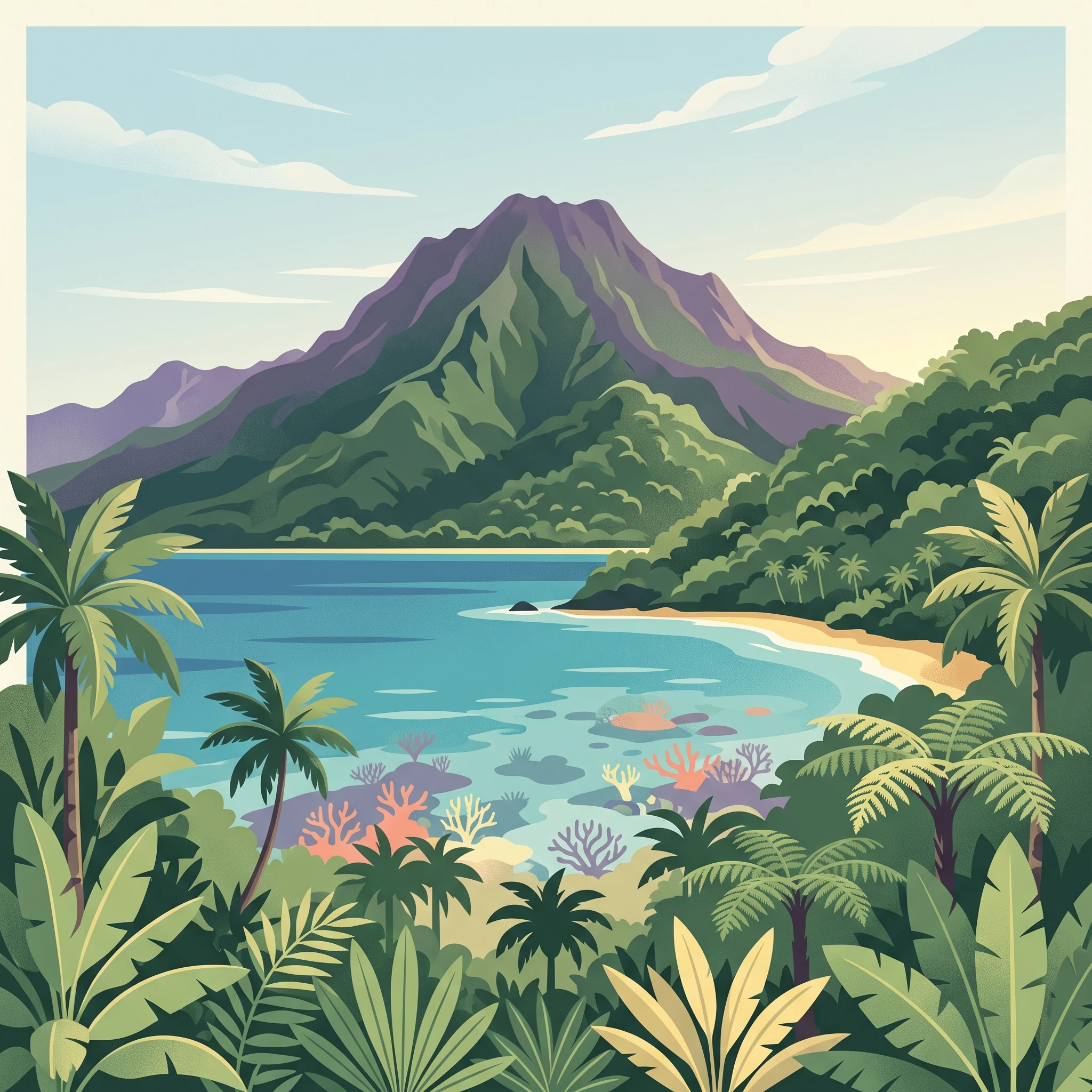
The park is distinguished by its exceptional marine biodiversity, protecting coral reef systems that contain some of the largest living coral colonies on Earth. It serves as critical habitat for three native bat species, including the Samoa flying fox, which plays an essential role in pollinating the island's vegetation. The park encompasses the only tropical rainforest in the U.S. National Park System, featuring cloud forest on Ta'ū and lowland ridge forest on Tutuila. Its geological significance includes dramatic sea cliffs exceeding 3,000 feet on Ta'ū, among the highest in the world. The park also preserves World War II historical sites and provides a living connection to Samoan cultural traditions.
National Park of American Samoa history and protected-area timeline
The creation of the National Park of American Samoa emerged from recognition of the unique ecological and cultural value of these remote Pacific islands. Delegate Fofō Iosefa Fiti Sunia introduced legislation in 1984 at the request of the Bat Preservers Association and Dr. Paul Cox, with the initial purpose of protecting flying fox habitat and preserving old-growth rainforest through the Federal Fish and Wildlife Restoration Act. This legislative effort marked American Samoa's entry into the U.S. National Park System. The National Park Service began formal establishment work in July 1988, and the park was officially created on October 31, 1988, through Public Law 100-571. A significant challenge arose from the traditional Samoan communal land system, which prevented the NPS from acquiring land in the conventional manner. This obstacle was resolved on September 10, 1993, when the National Park Service secured 50-year lease agreements for the park land from Samoan village councils, establishing a unique model for park management that respects traditional land ownership. In 2002, Congress approved a thirty percent expansion of the park on Olosega and Ofu islands. The park faced a major natural disaster on September 29, 2009, when a powerful earthquake and tsunami struck American Samoa, resulting in 34 confirmed deaths and destroying approximately 200 homes and businesses. The park suffered extensive damage, with the visitor center and main office destroyed, though there was only one reported injury among NPS staff and volunteers.
National Park of American Samoa landscape and geographic character
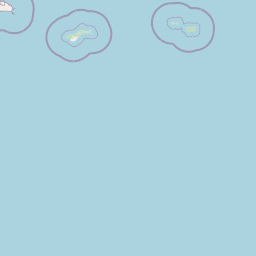
The National Park of American Samoa encompasses dramatic volcanic landscapes formed by shield volcanoes emerging from the Pacific Plate at the Samoa hotspot. Tutuila, the largest and oldest island in the park, dates from the Pliocene Epoch approximately 1.24 to 1.4 million years ago. The island's terrain features steep northern slopes, ridgelines, and deep valleys carved by ancient volcanic activity and subsequent erosion. Mount Alava rises to 1,610 feet, providing panoramic views of the surrounding landscape. The Ofu and Olosega islands represent the remains of a single basaltic volcano, with steep cliffs reaching 600 feet along the north coast. Ta'ū Island, the youngest of the three, preserves the dramatic collapse of a shield volcano, producing sea cliffs over 3,000 feet high on the north side, among the highest such escarpments anywhere in the world. The geological history includes the formation of trachyte plugs, exposed volcanic tuff, and extensive basalt flows. Evidence of past landslides and mass wasting events, including the Liu Bench escarpment on Ta'ū, continues to shape the landscape. The surrounding marine environment features a submarine shelf formed from erosional runoff, allowing coral reef development that now forms a major component of the park's protected areas.
National Park of American Samoa ecosystems, habitats, and plant life
The park protects extraordinary biodiversity across terrestrial, wetland, and marine environments. The islands are predominantly covered in tropical rainforest, with cloud forest dominating the higher elevations of Ta'ū and lowland ridge forest characterizing Tutuila's slopes. Approximately 343 flowering plants and 135 fern species have been recorded, with about 30% being endemic to the archipelago. Most plant species arrived by chance from Southeast Asia, making the park's flora a remarkable example of long-distance dispersal and adaptation. The surrounding marine waters contain exceptional diversity, with over 950 fish species and more than 250 coral species. Some of the world's largest living coral colonies, particularly Porites species, are found at Ta'ū Island. The marine environment also supports sea turtles and humpback whales, making the waters important for marine mammal and reptile conservation. The park's location south of the equator places it in a unique position within the U.S. National Park System, protecting ecosystems more commonly associated with Polynesian and Southeast Asian regions.
National Park of American Samoa wildlife and species highlights
The park's terrestrial fauna is characterized by limited native mammal diversity, with three bat species being the only native mammals. Two large fruit bats, the Samoa flying fox and the white-naped flying fox, along with the small Pacific sheath-tailed bat, serve critical ecological roles as pollinators and seed dispersers. The Pacific sheath-tailed bat was nearly eliminated by Cyclone Val in 1991 and may now be locally extinct. Native reptiles include the Oceania gecko and three skink species, while additional reptile species were introduced with Polynesian settlement and in more recent times. The avian community features the Saman starling as an endemic species, alongside the wattled honeyeater, Pacific pigeon, and the distinctive many-colored fruit dove. The park also hosts unusual species including the Tahiti petrel and spotless crake. Invasive species, particularly feral pigs, pose significant threats to native ecosystems, and the park undertakes ongoing efforts to control and eradicate these harmful intruders. The marine environment supports diverse wildlife including sea turtles and humpback whales, with the coral reef systems providing critical habitat for numerous fish species.
National Park of American Samoa conservation status and protection priorities
The National Park of American Samoa faces significant conservation challenges, particularly regarding its marine ecosystems. Climate change poses an existential threat to the coral reefs, with rising ocean temperatures and increasing carbon dioxide concentrations projected to cause coral loss by mid-century if current trends continue. Sea level rise further compounds these pressures on coastal and marine habitats. On land, invasive species including feral pigs threaten native ecosystems through habitat destruction and competition with indigenous species. The park's unique land tenure arrangement, with traditional communal lands managed through lease agreements, presents both opportunities and challenges for conservation, requiring ongoing collaboration between the National Park Service and Samoan village councils. Conservation efforts include habitat restoration, invasive species management, and research partnerships to better understand and protect the park's exceptional biodiversity. The park's designation as an IUCN Category V protected landscape/seascape reflects its role in balancing natural protection with sustainable use and cultural preservation.
National Park of American Samoa cultural meaning and human context
The National Park of American Samoa exists within a living cultural landscape where traditional Samoan customs and land management practices remain central to daily life. Unlike most national parks in the United States, the land within the park boundaries remains under traditional communal ownership, with village councils serving as the custodians of these ancestral territories. The 50-year lease agreement between the National Park Service and Samoan village councils represents an innovative approach to protected area management that respects indigenous land rights while enabling federal conservation. The park's cultural significance extends to the preservation of traditional practices related to fishing, agriculture, and resource management that have sustained Samoan communities for generations. The Manu'a Islands hold particular cultural importance as the traditional center of Samoan civilization. Historical features within the park include World War II remnants, reflecting the territory's strategic significance during the conflict. The park also appears on cultural currency, with the Samoa flying fox featured on the 2020 American Samoa quarter as a symbol of the species' threatened status and the broader connection between conservation and Samoan cultural values.
Top sights and standout views in National Park of American Samoa
The park offers exceptional experiences across its three island units, from the accessible rainforest trails of Tutuila to the remote beaches and volcanic peaks of Ofu and Ta'ū. The marine environment is perhaps the park's most spectacular feature, with coral reefs containing some of the world's largest coral colonies and supporting over 950 fish species. Hiking to the top of Mount Alava provides panoramic views of Tutuila's northern coast, while the World War II Heritage Trail reveals historical gun emplacements and encampment remains. The Samoa flying fox, featured prominently on the 2020 American Samoa quarter, represents the park's critical role in protecting these endangered fruit bats that are essential to forest ecosystem health. The Ta'ū unit's Lata Mountain, at 3,170 feet the highest point in American Samoa, offers access to some of the most dramatic volcanic terrain in the Pacific. Snorkeling and diving in the park's protected waters reveal vibrant coral gardens and diverse marine life, while the cloud forest of Ta'ū provides a glimpse into one of the rarest forest types within the U.S. National Park System.
Best time to visit National Park of American Samoa
The park can be visited year-round given American Samoa's tropical climate, though conditions vary across the islands. The dry season from May to October generally offers more stable weather and calmer seas, particularly favorable for boat travel between islands and marine activities like snorkeling. The wet season from November to April brings more frequent rainfall and higher humidity, though precipitation is typically brief and followed by sunshine. Temperature remains consistently warm throughout the year, ranging from the 70s to 80s Fahrenheit. Visitors to the Manu'a Islands should be aware that inter-island boat service is weather-dependent and flights from Pago Pago are limited to roughly twice weekly. The park's remote location means that visitor numbers are modest, with approximately 12,135 visitors in 2022, offering a more secluded experience than many other national parks. Those interested in wildlife viewing may find the dry season slightly more favorable for forest hiking, while marine conditions are generally good year-round.