Why Naturpark Nossentiner/Schwinzer Heide stands out
The park is especially known for its glacial sanders, broad sandy outwash landscapes coated in pine and mixed forest, dotted with kettle lakes and moors. These rough, sandy, often sparsely vegetated surfaces give the park a distinctive open character despite being heavily forested overall. It is also known for thriving populations of white-tailed eagles, ospreys, and bitterns, and for the rare European bison herd kept at Damerower Werder. The combination of forest, water, and postglacial landforms is what sets the Naturpark Nossentiner/Schwinzer Heide apart from many other lowland parks in Germany.
Naturpark Nossentiner/Schwinzer Heide history and protected-area timeline
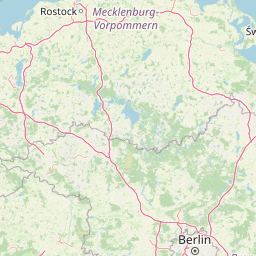
The Naturpark Nossentiner/Schwinzer Heide grew out of conservation initiatives that emerged in January 1990, as citizens and conservationists pushed for a large protected area around the Krakower See to be included in the Nationalpark program of the GDR government, announced on 16 March 1990.
Following reunification, the Schwerin regional authority prepared the planning documents for the area together with the Neubrandenburg district and the former counties of Lübz, Güstrow, and Waren. On 24 September 1990, the government envoys Martin Brick and Dr. Georg Diederich formally established the area as a protected zone. In the period that followed, this designation was recognized as a provisional safeguarding order while work continued to formally establish the park under the new state law.
During this process, a new governance model was developed in which the state of Mecklenburg-Vorpommern and the surrounding counties shared responsibility for running the park. That model was later written into the state's nature conservation law and continues to apply to all naturparks in Mecklenburg-Vorpommern today. The park received its final, definitive designation on 14 July 1994, making it the first nature park formally established in the new state of Mecklenburg-Vorpommern. The detailed responsibilities between the state and the counties were set out in an administrative agreement signed on 7 February 1995 and remain essentially valid. The conservationist Wolfgang Mewes, who had been involved from the beginning, became the first director of the park.
Naturpark Nossentiner/Schwinzer Heide landscape and geographic character
The landscape of the Naturpark Nossentiner/Schwinzer Heide is shaped primarily by glacial processes. Broad stretches of sandy outwash plain, the sanders, dominate large parts of the park, representing the sandy and gravelly sediments left behind by meltwater streams at the end of the last Ice Age. These flat or gently undulating sandy areas, often dry and nutrient-poor, form the foundation for pine forest, heather, and open sandy clearings.
Interspersed with these sandy flats are kettle lakes and basins where meltwater was left behind as ice blocks melted slowly into the newly exposed terrain. Today, sixty lakes of varying size are scattered through the park, paired with the upper courses of the Nebel and Mildenitz rivers, both of which rise within the park area. The lakes, often fringed by reed beds, alder swamps, and wet meadows, contrast with the dry pine-dominated uplands and give the park a continuously shifting scenery of forest and water views.
Moors and boggy areas form a third principal element of the park's landscape. These developed in the wetter depressions between sand ridges and lake margins, and they remain a defining and ecologically valuable feature. Together, the sanders, lakes, and moors create an inland landscape typical of the southwestern Mecklenburg Lake District, distinguished from neighboring regions by the scale of its open sandy forest and the quietness of its lakes.
Naturpark Nossentiner/Schwinzer Heide ecosystems, habitats, and plant life
Ecologically, the park is dominated by forest, water, and bog, with farmland and grassland forming transitional cultural landscapes between these core habitats. Roughly 56 percent of the area is forested, supporting a mix of pine on the sandy soils and birch, willow, alder, and maple in wetter or richer locations. Beneath the canopy, the understory supports a wide range of wildflowers, grasses, ferns, and wetland plants in damper areas.
The moors and heaths occupy around 4 percent of the park and are among the most ecologically sensitive zones. Rarer species such as clubmoss and round-leaved sundew have been documented, along with aquatic plants like Krebsschere, a distinctive floating water plant typical of nutrient-poor lake margins. The park also hosts more than 600 recorded species of fungi, reflecting the rich microhabitats created by its mosaic of forest and bog.
The water-rich character is reinforced by the park's 60 lakes and the headwaters of the Nebel and Mildenitz rivers, with associated wetlands, reeds, and floating mats forming important habitat for invertebrates, amphibians, and waterbirds. The juxtaposition of dry pine forest, wet moor, and open water on a relatively compact glacial surface makes the park's ecological identity unusually diverse for an inland protected landscape in northern Germany.
Naturpark Nossentiner/Schwinzer Heide wildlife and species highlights
Wildlife is a strong element of the park's identity. Birdlife in particular is exceptionally rich: 154 breeding bird species and 79 species recorded as migrants or passage visitors have been documented. Notable breeding species include white-tailed eagles, with around 16 breeding pairs in and around the park, ospreys, bitterns, and black woodpeckers, all of which favor the combination of mature forest and open water.
Further north, the northern lakes and forest fringes provide nesting and hunting habitat for peregrine falcons, with at least two pairs considered significant for the region. Among mammals, the Eurasian otter is a particularly important resident, reflecting the integrity of the wetland network, and ten different bat species have been recorded. The park's invertebrate fauna includes 42 dragonfly species as well as woodland ants and their associated specialist predators such as ant lions and rhinoceros beetles.
The most distinctive wildlife feature, however, is the European bison herd kept at Damerower Werder. European bison, once native to parts of Central Europe but driven to extinction in the wild, are being raised here as a contribution to the conservation of this rare and historic wild cattle species.
Naturpark Nossentiner/Schwinzer Heide conservation status and protection priorities
The Naturpark Nossentiner/Schwinzer Heide holds real conservation significance beyond its protected-area label. It safeguards an interconnected postglacial landscape of sanders, kettle lakes, moors, and mature forest, one that functions as a coherent ecological unit rather than a scattered set of protected sites. Roughly 18.9 percent of the park's area, about 6,834 hectares, lies within 15 formally designated nature reserves, including larger sites such as Damerower Werder, Drewitzer See mit Lübowsee und Dreiersee, Krakower Obersee, and Paschensee.
The park is also important for the conservation of large predator and raptor populations, including its breeding white-tailed eagles and ospreys, both species typically vulnerable to disturbance but here finding sufficient quiet forest and water habitat. The presence of otters and a diverse bat community reinforces the value of the wetland and forest networks for mammals sensitive to habitat fragmentation.
A further contribution comes from the European bison breeding project at Damerower Werder, which adds a living conservation and rewilding dimension to the park. Two major partners support the park's work: a local sponsorship association and the Stiftung Reepsholt für Naturschutz und umweltgerechte Ressourcennutzung, a private foundation dedicated to nature conservation and environmentally sound use of natural resources. In addition, the park shares governance between the state and three counties, making it one of the earliest and most influential examples of jointly managed nature parks in the new federal states of Germany.
Naturpark Nossentiner/Schwinzer Heide cultural meaning and human context
The park's landscape is intertwined with the cultural history of Mecklenburg-Vorpommern. The four small towns that frame it, Plau am See, Goldberg, Krakow am See, and Malchow, are historic centers of regional trade, fishing, and manor culture, and the surrounding countryside preserves a pattern of villages, manor estates, estate parks, and village churches that are typical of rural Mecklenburg.
Within the park itself, the Dobbertin Monastery stands out as a major historic landmark nearby, with centuries of monastic land management having shaped parts of the surrounding forests and farmland. The Naturpark Nossentiner/Schwinzer Heide itself has published a series of booklets documenting the forest history, settlement history, manor villages, manor houses, estate parks, village churches, and working-class and forestry villages of the park and its surroundings, reflecting the importance given to cultural heritage alongside natural heritage in the park's identity.
Top sights and standout views in Naturpark Nossentiner/Schwinzer Heide
The most distinctive feature of the Naturpark Nossentiner/Schwinzer Heide is its glacial landscape: broad sandy outwash plains carrying pine forest and heath, interrupted by sixty lakes and the headwaters of the Nebel and Mildenitz rivers, with moors strung between forest and water. Together these elements form a quietly layered inland scenery that is typical of the western Mecklenburg Lake District.
For visitors and naturalists, highlights include the breeding white-tailed eagle and osprey populations, the protected lake reserves such as Krakower Obersee and Drewitzer See mit Lübowsee und Dreiersee, the European bison herd at Damerower Werder, and the Dobbertin Monastery area on the northern edge. The park also stands out as the first nature park formally established in the new state of Mecklenburg-Vorpommern, and as the founding example of the state's shared sponsorship model for naturparks.
Best time to visit Naturpark Nossentiner/Schwinzer Heide
The park's character shifts with the seasons in ways typical of northern German lake and forest country. Spring brings returning waterbirds and the gradual greening of mixed forest, with bird activity around lakes and moors peaking. Summer offers the warmest lake-side conditions for water-based recreation, while the sandy tracks through the pine forests remain pleasant even in hotter weather.
Autumn is the most visually expressive season across the park, with heaths and moors changing color, mushrooms appearing in the forests, and migrating birds adding to the birdwatching interest. Winter brings a quieter atmosphere, with frozen lake margins, frost on open heathland, and improved chances of observing large raptors and quieter wildlife activity. The park is generally accessible year-round via the A19 motorway at the Malchow exit.