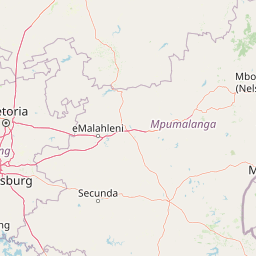
Why Nylsvley Nature Reserve stands out
Nylsvley is best known as one of South Africa's most important inland wetland bird sanctuaries, recognized internationally through its Ramsar designation. The reserve's defining feature is a large, shallow floodplain that fills seasonally and supports enormous concentrations of waterbirds, with more than 100 waterfowl species recorded and tens of thousands of birds present during peak floods. It is also recognized for hosting the only wild rice (Oryza longistaminata) populations in South Africa and for the presence of roan antelope and tsessebe on the surrounding bushveld.
Nylsvley Nature Reserve history and protected-area timeline
The name Nylsvley reflects the landscape itself, combining the Afrikaans word vlei, meaning a pan or seasonally flooded area, with a reference to the Nile. In the 1860s, a group of Voortrekker farmers, encountering a vast flooded plain with a river flowing northward, legendarily associated it with the great Nile River of Africa, and the name Nylrivier, or Nile River, took hold locally.
The modern history of the site began with its formal protected-area establishment on 7 July 1998, when Nylsvley was designated as an official nature reserve and simultaneously recognized as a Ramsar wetland site of international importance. The reserve is administered through the Limpopo Department of Economic Development, Environment and Tourism, and since that founding designation it has functioned as a key reference site for floodplain management and waterbird conservation in South Africa's interior.
Nylsvley Nature Reserve landscape and geographic character
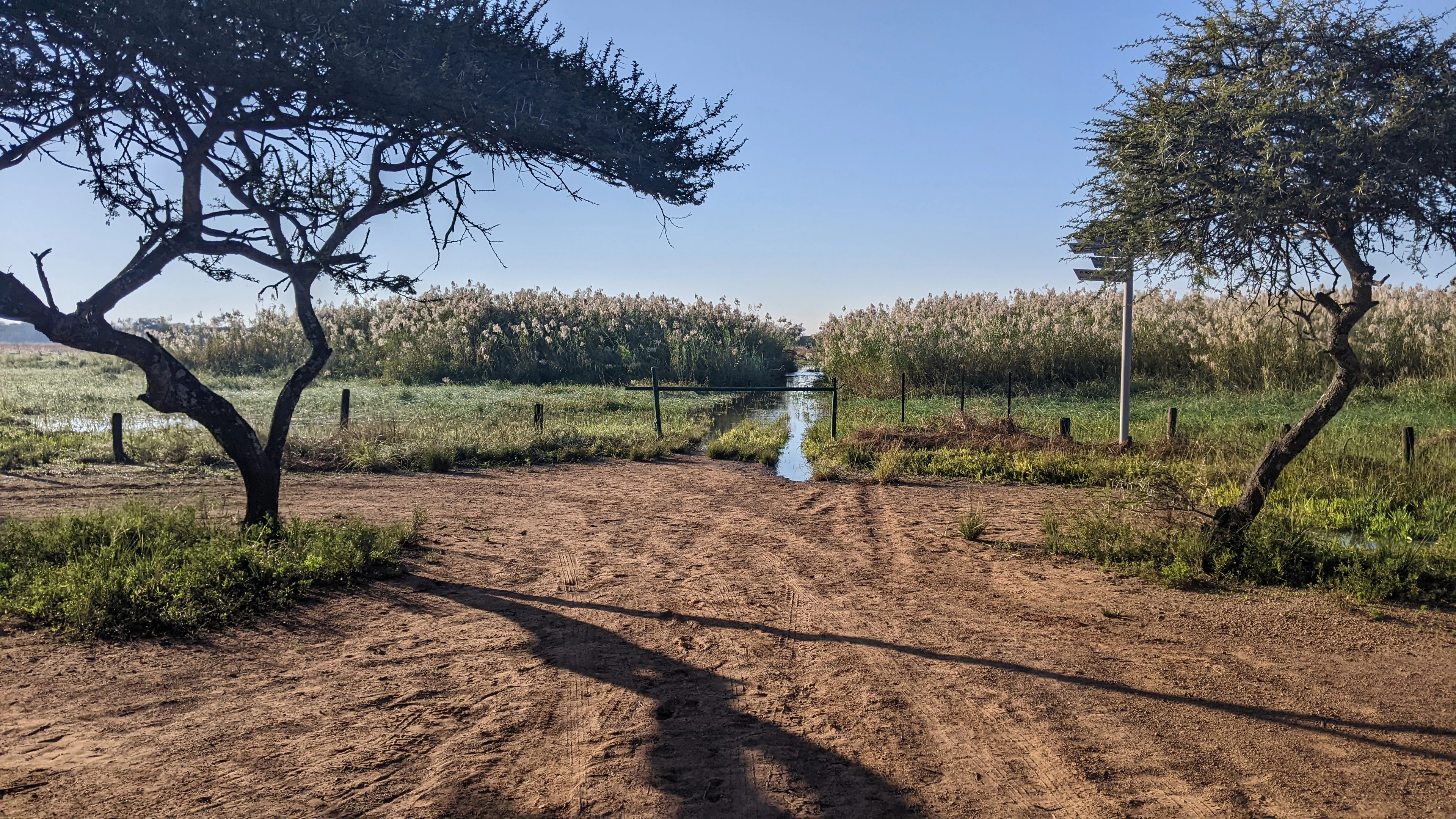
The landscape of Nylsvley is defined by flatness and water. The Nyl River, the uppermost stretch of the Mogalakwena, has an extremely shallow gradient, which causes floodwaters to spread out across a broad plain rather than carving deep channels. The result is a wide, seasonally inundated floodplain fringed and broken by patches of reedbed and surrounded by open woodland on the slightly higher ground beyond.
During the flood season, the plain becomes a vast, shallow sheet of water interspersed with reedbeds and grassy hummocks. The reedbeds themselves form extensive stands of common reed (Phragmites australis), giving parts of the floodplain a tall, dense, marshy character. As the water withdraws, these same areas transition into moist grassveld and then into progressively drier conditions, before grading into the open woodland that surrounds the floodplain. This shifting mosaic of water, marsh, grassland, and savanna bushveld is the defining physical character of the reserve.
Nylsvley Nature Reserve ecosystems, habitats, and plant life
Nylsvley's ecological identity is built around the interaction between its floodplain and the surrounding bushveld. The wetland core, dominated by reedbeds and seasonally flooded grasslands, supports a dense and diverse aquatic and waterside community, while the open woodland on the better-drained margins adds a savanna ecological layer. This combination of wetland and bushveld habitats within a relatively small area produces a notably high level of habitat diversity.
The floodplain's hydrology is central to the reserve's ecology. Because the gradient is so shallow, even modest seasonal rainfall can produce extensive flooding, creating temporary habitat for waterfowl, waders, and other wetland-dependent species. As conditions dry, the same ground supports grassveld vegetation adapted to alternating wet and dry cycles. On the edges, open woodland transitions into the surrounding regional landscape, providing habitat for terrestrial species and connecting the wetland to the broader Limpopo bushveld environment.
Nylsvley Nature Reserve wildlife and species highlights
Wildlife is one of the strongest draws of Nylsvley, and the reserve's birdlife is its defining feature. More than 370 bird species have been recorded, including over 100 waterfowl species, and during peak flood conditions the floodplain can hold over 80,000 birds at once. This makes the reserve one of the most significant inland bird concentrations in South Africa, with seasonal aggregations of ducks, geese, herons, storks, waders, and other waterbirds drawn by the flooded conditions.
Beyond birds, the reserve supports mammal populations typical of the surrounding bushveld region. Roan antelope and tsessebe are among the notable larger species present, both of which are characteristic of well-managed bushveld conservation areas in the northern interior. The combination of wetland-supported birdlife and bushveld mammal fauna gives Nylsvley an unusually broad wildlife profile for a reserve of its size.
Nylsvley Nature Reserve conservation status and protection priorities
Nylsvley holds formal recognition as a Ramsar Wetland of International Importance, designated on 7 July 1998, the same date as the reserve's formal establishment. This designation places it within a global framework for the protection of wetlands and reflects the international standing of its floodplain habitat for migratory and resident waterbirds.
The conservation value of the reserve lies in the ecological integrity of its floodplain and in the diversity supported by the interaction between wetland and woodland. By maintaining the natural hydrology of the upper Nyl River, the reserve sustains the seasonal flooding pattern that drives its biodiversity, particularly its exceptional birdlife. The presence of the only known South African populations of wild rice further raises its botanical conservation significance.
Nylsvley Nature Reserve cultural meaning and human context
The cultural context of Nylsvley is closely tied to its evocative name. In the 1860s, Voortrekker settlers moving through the region encountered a wide, flooded plain with a river that flowed toward the north and, by legend, associated it with the Nile River. The resulting name, Nylrivier or Nile River, combined with the Afrikaans term vlei, a pan or seasonal wetland, gave rise to the name Nylsvley, which continues to define the site's identity today.
Top sights and standout views in Nylsvley Nature Reserve
Nylsvley's strongest points of distinction lie in the convergence of wetland, birdlife, and regional landscape. The reserve anchors one of South Africa's most important inland bird concentrations on a seasonal floodplain that supports more than 370 recorded bird species and tens of thousands of individual birds at flood peak. It also protects a unique botanical feature in the country's only known stands of wild rice.
Equally distinctive is the reserve's physical character: a vast, shallow, reed-filled floodplain transitioning into open bushveld woodland. This combination of habitats, compressed into a relatively small area and recognized internationally through Ramsar status, makes Nylsvley a compact but unusually rich conservation landscape in the Limpopo Province.
Best time to visit Nylsvley Nature Reserve
The character of a visit to Nylsvley is closely tied to the seasonal flooding cycle of the Nyl River. Peak flood conditions bring the floodplain alive with waterbirds, concentrating ducks, waders, herons, and other waterfowl into dense, visible flocks and at times producing aggregations in the tens of thousands. This is the period when the reserve's signature bird spectacle is most pronounced.
In drier months, the floodplain transitions to moist grasslands and eventually to drier grassveld and open woodland, with wildlife viewing shifting toward mammals such as roan antelope and tsessebe in the surrounding bushveld. Travellers interested in the reserve's defining bird concentrations will find the flood season the most rewarding period to visit.