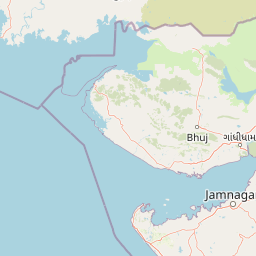
Why Rann of Kutch Wildlife Sanctuary stands out
The Rann of Kutch Wildlife Sanctuary is best known for being the largest Ramsar wetland in Sindh and for its concentration of waterbird life in the middle of an arid desert landscape. The sanctuary's flat, seasonally inundated salt flats are widely recognized as a breeding ground for flamingos and a staging area for migratory pelicans, cranes, storks, and ducks. Because the site's ecosystem sits at the interface of the Thar desert and the Indus delta wetlands, it supports an unusual combination of dryland and aquatic species that is increasingly rare in the region. The sanctuary is also valued for sustaining several globally and locally threatened species, including the great Indian bustard, houbara bustard, sarus crane, and striped hyena. Its sheer size, its Ramsar status, and the breadth of habitat types that it preserves make it one of the most significant desert wetland protected areas in Pakistan.
Rann of Kutch Wildlife Sanctuary history and protected-area timeline
The Rann of Kutch Wildlife Sanctuary was first declared a wildlife sanctuary by the Government of Sindh in 1980, formally bringing the vast salt flats and seasonal marshes of the Rann of Kutch under legal protection. At that time, the area still supported the only known population of the Indian wild ass in Pakistan, a population that has since been lost.
In November 2002, the sanctuary was designated as a Ramsar wetland of international importance under the Ramsar Convention, becoming the largest Ramsar site in Sindh and increasing its recognition as a globally significant habitat. WWF-Pakistan became actively involved in the site through its Pakistan Wetlands Programme, conducting ecological baseline studies and monitoring migratory waterfowl at related sites such as Jubho Lagoon, Nurri Lagoon, and the broader Rann of Kutch complex.
Conservation planning for the sanctuary has continued with the support of international partners, including GEF-funded work in collaboration with WWF-Pakistan and Sindh authorities. Even as the area faces growing pressure from infrastructure, grazing, and water diversion, its formal recognition as a Ramsar site has remained a turning point in the region's conservation history.
Rann of Kutch Wildlife Sanctuary landscape and geographic character
The landscape of the Rann of Kutch Wildlife Sanctuary is defined by vast, flat salt flats and seasonally inundated marshlands that extend across southern Sindh near the border with India. These marshy flats sit within the broader Rann of Kutch, a low-lying basin where evaporation leaves behind extensive salt deposits and where seasonal flooding creates temporary shallow wetlands. The terrain is overwhelmingly horizontal, broken mostly by cracked clay pans, saline crusts, and shallow standing water during the wet season.
Beyond the salt flats themselves, the sanctuary extends into the surrounding Thar desert, where dry thorny scrub and sparse tree cover become dominant. Tree species such as Prosopis juliflora, Prosopis cineraria, Capparis decidua, Ziziphus nummularia, Acacia senegal, and Salvadora oleoides appear in scattered stands across the desert edge, while grasses and thorn scrub form a low ground layer. The contrast between the gleaming white salt flats and the parched desert vegetation creates a stark and distinctive scenery unique to this part of South Asia.
Streams, drainage channels, and remnants of the Indus Delta ecosystem influence the hydrology of the sanctuary. The interplay of freshwater inflow, evaporation, and salinity determines how wet the flats become in any given year and shapes the seasonal patterns of habitat availability. The result is a shifting landscape that may appear overwhelmingly arid at one moment and waterlogged at another.
Rann of Kutch Wildlife Sanctuary ecosystems, habitats, and plant life
The sanctuary protects a major ecosystem that transitions from desert to wetland, supporting both dryland vegetation and seasonal aquatic habitats. Its ecological value rests on this unusual combination: salt flats, marshy Rann, and surrounding Thar desert create a mosaic of conditions that sustain a wide range of wildlife. The marshy portion in particular provides food and shelter for numerous migratory and resident species that depend on open, shallow water in an otherwise arid region.
Vegetation in the sanctuary is dominated by dry grasses and thorny scrub typical of the Thar desert, with species such as Apluda aristata, Dichanthium annulatum, Panicum antidotale, Cenchrus, Pennisetum, Cymbopogon, and Elionurus forming much of the ground cover. On slightly higher ground around the Rann, scattered large trees of Prosopis, Capparis, Ziziphus, Acacia, and Salvadora grow in the drier desert portion, providing structural habitat in an otherwise open landscape.
Ecologically, the seasonal flooding of the Rann is the defining process that supports the sanctuary's wildlife. As the flats fill and later dry, they generate pulses of food availability that support breeding flamingos, large flocks of waterfowl, and a variety of wading birds and raptors. This seasonal rhythm is central to the ecological identity of the site.
Rann of Kutch Wildlife Sanctuary wildlife and species highlights
The Rann of Kutch Wildlife Sanctuary is especially significant for its birdlife, particularly the waterfowl and wading birds that depend on its seasonal marshes. The area is known as a breeding ground for flamingos and a staging area for pelicans, cranes, storks, and a diversity of waterfowl passing through the Indus system during migration. The site also regularly hosts ducks such as common teal, shell duck, mallard, and pochard.
Beyond waterbirds, the sanctuary supports a wider wildlife community that includes peafowl, sarus cranes, and globally threatened species such as the houbara bustard and the great Indian bustard. Raptors recorded around the site include the peregrine falcon and the saker falcon, both of which find prey-rich habitat along edges where desert and marsh meet. Larger mammals documented in the broader Rann area include the striped hyena, while the site has historically supported a population of Indian wild ass that is now considered to have been lost.
One of the sanctuary's most important attributes from a biodiversity perspective is its ability to support more than one percent of the biogeographical population of flamingos. Combined with its resident populations of bustards, cranes, and hyenas, this makes the sanctuary a key site for conservation of both common and threatened species at the desert-wetland interface.
Rann of Kutch Wildlife Sanctuary conservation status and protection priorities
The Rann of Kutch Wildlife Sanctuary is significant from a conservation perspective because it preserves one of the largest remaining tracts of desert wetland habitat in Pakistan, recognized under the Ramsar Convention since 2002. Its protected status, combined with its Ramsar designation, has made it a focal point for wetland conservation in Sindh and within the broader lower Indus ecosystem. Despite this recognition, the sanctuary is considered ecologically vulnerable, and much of its importance lies in the conservation opportunities that remain untapped.
Conservation work at the site has involved WWF-Pakistan and Sindh authorities, supported by GEF funding, with ongoing efforts to develop a formal management plan. Earlier baseline ecological studies and migratory waterfowl monitoring through the Pakistan Wetlands Programme have laid the groundwork for future protection. Despite these efforts, the sanctuary has already experienced major ecological losses, including the apparent disappearance of the Indian wild ass from Pakistan and large-scale degradation of nearby Indus Delta habitat through logging, grazing, and fuel wood collection.
The most pressing threats to the sanctuary include cattle grazing, tree cutting, vehicular traffic, water scarcity, and the proposed expansion of salt extraction operations, which would especially disturb bustards, flamingos, and pelicans. Construction projects and water diversions also pose risks. Because the area is large and largely intact, conservation decisions made now will determine whether the Rann continues to function as a stronghold for desert wetlands or becomes another eroded landscape in a vulnerable region.
Top sights and standout views in Rann of Kutch Wildlife Sanctuary
Among its most distinctive highlights, the sanctuary combines vast salt flats, seasonal marshes, and Thar desert vegetation into one of Pakistan's largest protected wetland complexes. Its Ramsar designation since November 2002 places it among the most significant wetland protected areas in Sindh, and its scale makes it the largest Ramsar site in the province.
The site is a major breeding ground for flamingos and a critical stopover for pelicans, cranes, storks, and waterfowl, hosting more than one percent of the biogeographical flamingo population. It also shelters several globally threatened species, including the great Indian bustard, houbara bustard, sarus crane, and striped hyena, giving it substantial conservation value beyond its sheer size.
Best time to visit Rann of Kutch Wildlife Sanctuary
The character of the Rann of Kutch Wildlife Sanctuary changes with the seasonal water cycle of southern Sindh. When the rains and Indus flows fill the flats, the marshlands support their largest concentrations of waterbirds, making the flooded season a key period for observing flamingos, pelicans, cranes, and other migratory species.
In the dry months, the landscape shifts toward exposed salt crusts and empty flats, when the surrounding desert scrub and thorn trees dominate the scenery. Although operational visitor logistics are limited, the seasonal contrast between the flood-driven wetland phase and the arid salt-encrusted phase remains an essential feature of any meaningful engagement with the sanctuary.