
Why Reifenberger Wiesen stands out
Reifenberger Wiesen is best known for its species-rich, nutrient-poor hillside meadows that host a notable concentration of specialized plants, including the very rare Lanzettblättrige Glockenblume (lance-leaved bellflower), whose main distribution in the Taunus lies here. The reserve illustrates how centuries of marginal mountain grazing produced a delicate botanical diversity that would otherwise be lost to woodland encroachment.
Reifenberger Wiesen history and protected-area timeline
The landscape of Reifenberger Wiesen is the product of centuries of rural land use in an unusually demanding mountain environment. The villages around the Feldberg were historically very poor, and their residents cultivated the few relatively accessible slopes where farming was even possible. On the steep, high-elevation terrain of what is now the reserve, only grazing was viable, and through repeated clearing and ongoing pasturing, open meadows were maintained.
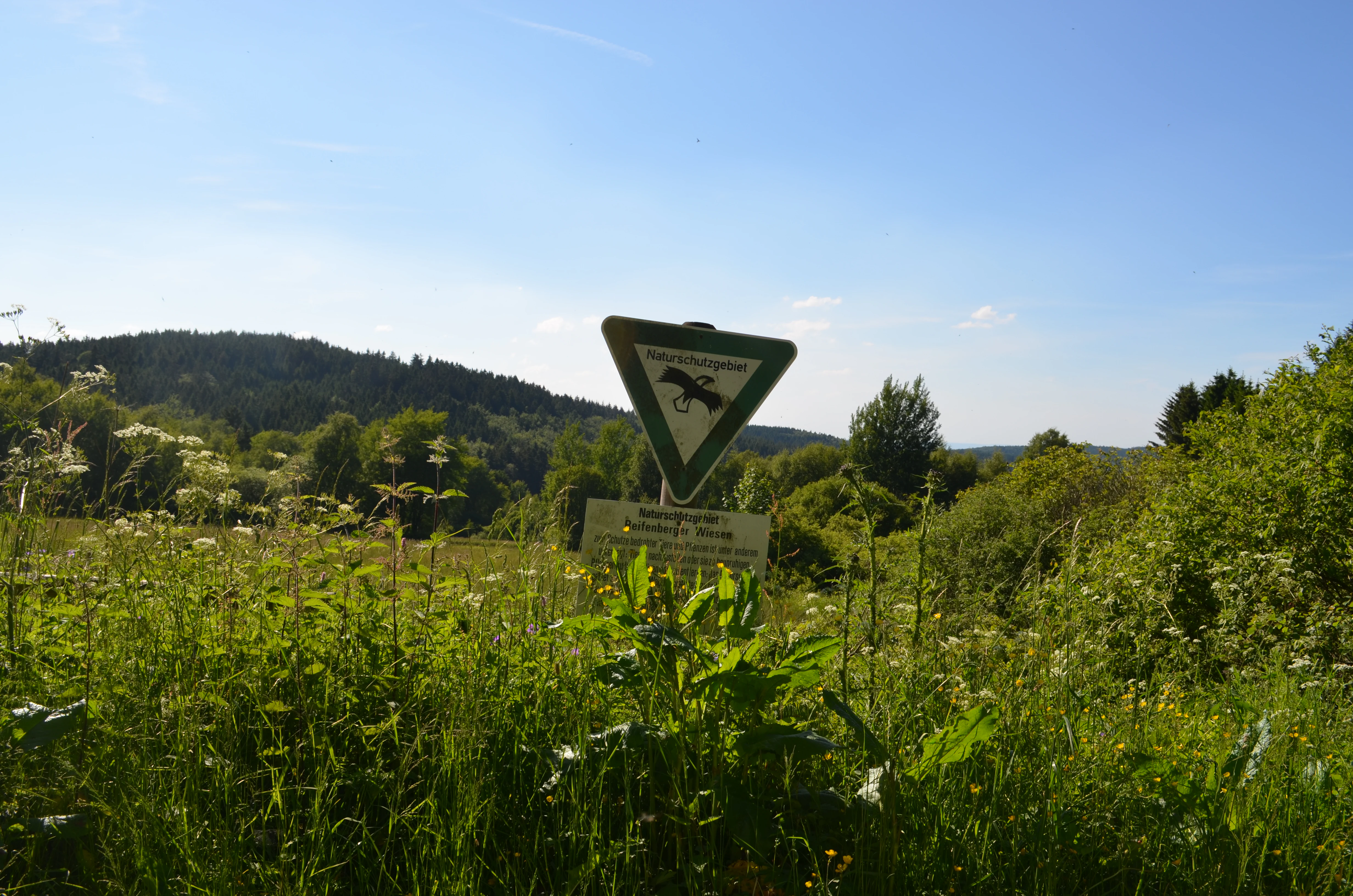
In the twentieth century, the character of this land use changed dramatically. After the Second World War, the mechanization of agriculture made continued extensive grazing on marginal sites like the Reifenberger Wiesen economically unviable. Fields were abandoned, and the meadows began developing largely on their own, producing a botanical diversity that conservationists soon recognized as worthy of protection. The area was formally designated as a Naturschutzgebiet on 17 October 1983, securing its legal protection under Hessian nature conservation law.
In subsequent decades, the site was also recognized at the European level as FFH-Gebiet 5716-304, integrating it into the Natura 2000 network and tying its management to EU habitat conservation obligations. By the early 2010s, conservation managers faced the visible reality that, although abandonment had initially benefited species diversity, continued lack of intervention would allow shrubs and trees to reclaim the slopes. In early 2012, a partial area of 10 hectares was cleared to counteract this encroachment and preserve the open meadow character on which the reserve's most specialized species depend.
Reifenberger Wiesen landscape and geographic character
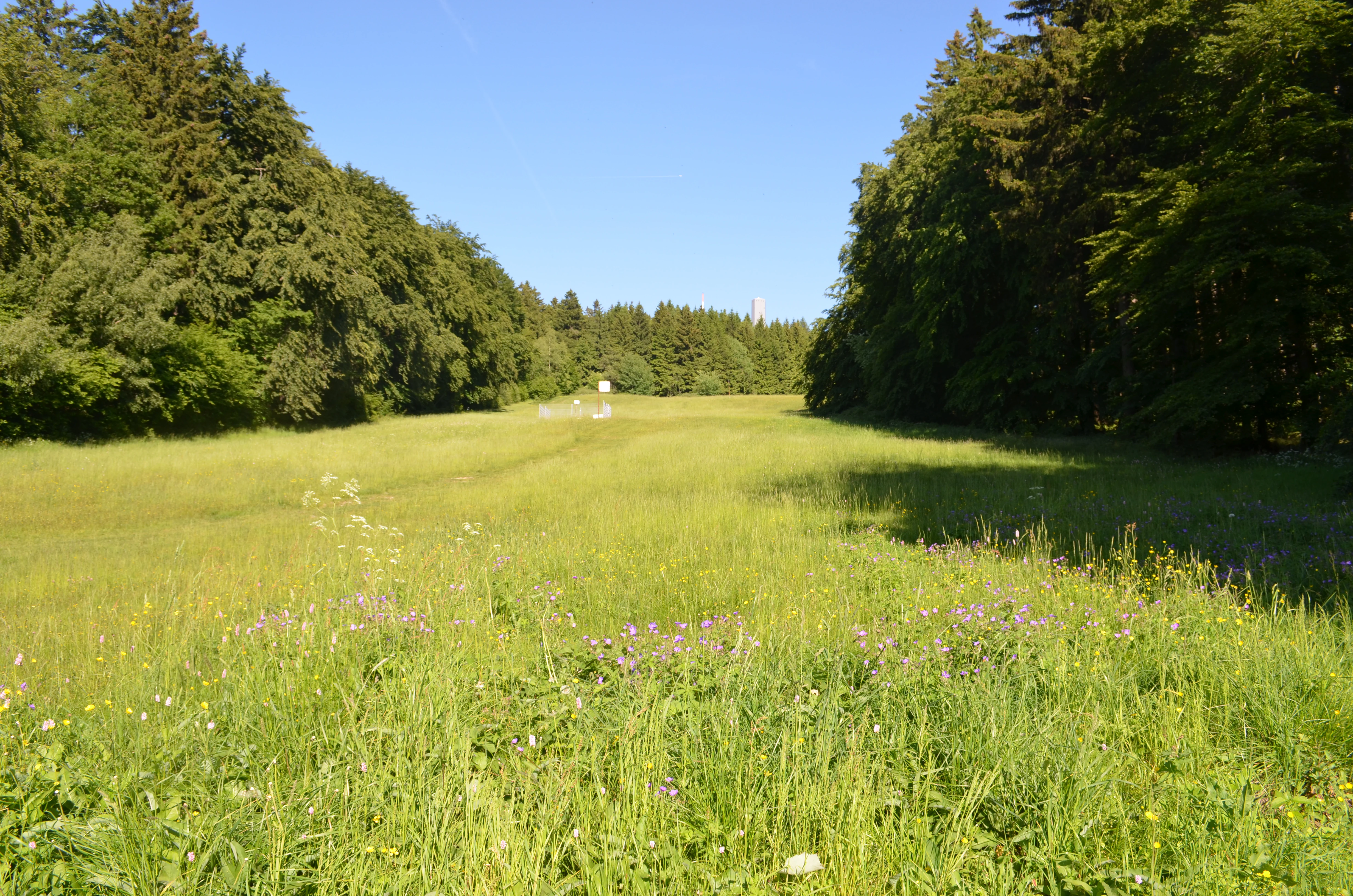
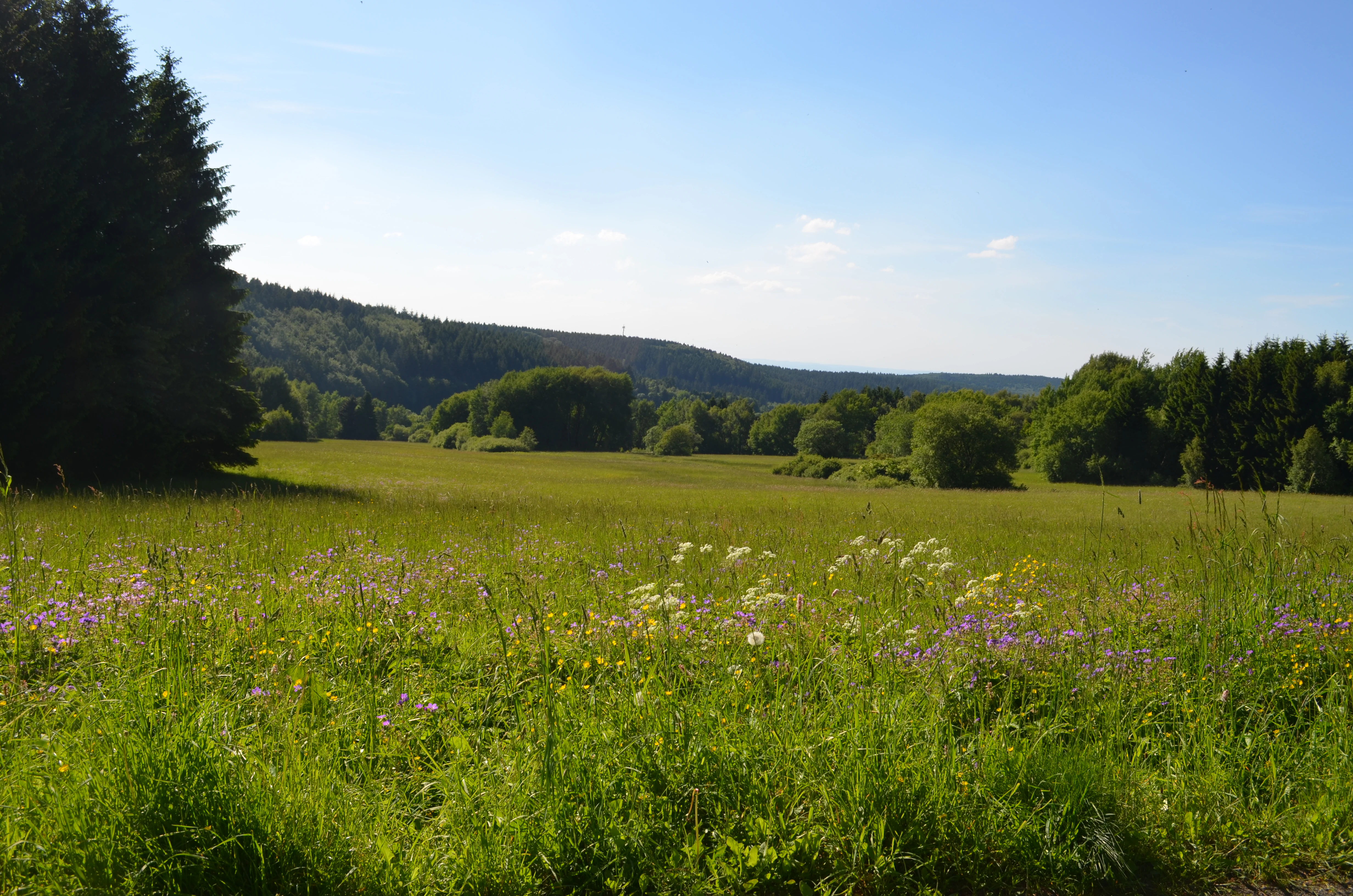
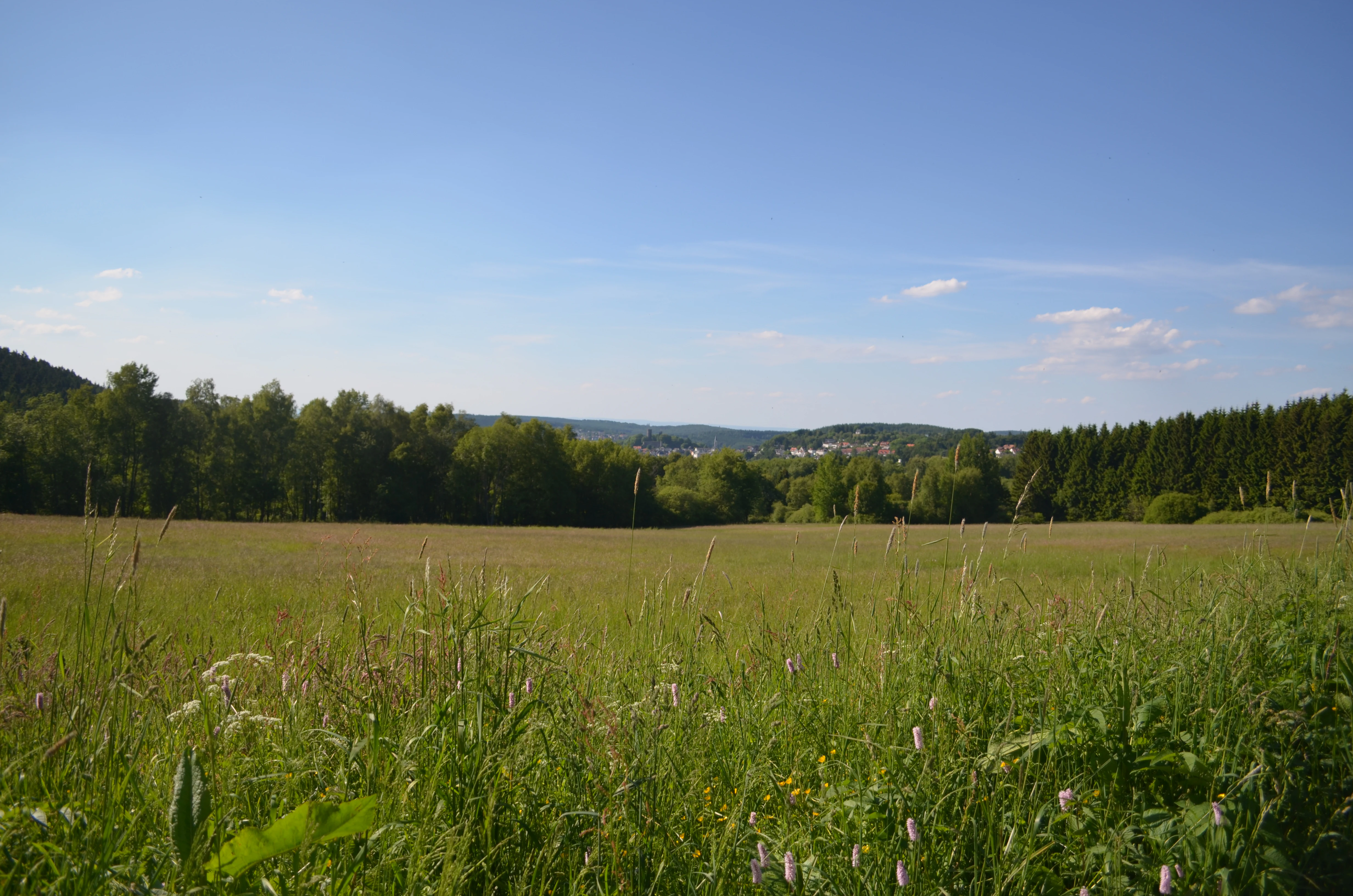
Reifenberger Wiesen is defined by its position on the north-facing slope of the Großer Feldberg and by the clear contrast between the open meadows within the reserve and the surrounding forested highland. The terrain is a pronounced hillside, inclined from higher elevations at the uphill boundary under the summit ridge of the Feldberg down toward the valley. Elevations within the reserve lie roughly between 650 and 700 meters, giving the meadows an upland feel even within the relatively low Taunus range.
The boundaries of the site are shaped as much by human infrastructure as by natural features. The Limesstraße runs along the uphill edge, while the L 3025 and its continuation along the forest margin define the western limit. On the valley side, the formerly built-up settlement edge, including the old Bildungs- und Familienstätte Oberreifenberg, marks where meadow gives way to village. This creates a contained bowl-like meadow landscape bordered by road, forest, and settlement.
Water plays a quiet but defining role. The Weil river flows through the meadows, having risen only a few hundred meters above the reserve near the Roman-era Kastell Kleiner Feldberg. Its valley gives the meadows a moist, low-nutrient soil character that distinguishes them from drier upland habitats nearby. A smaller meadow area within the reserve known as the Heimliche Wiese adds to the topographic variety, and in winter this slope is shaped by use as a ski piste.
Reifenberger Wiesen ecosystems, habitats, and plant life
Ecologically, Reifenberger Wiesen is a refuge of nutrient-poor, species-rich grassland in a region where such habitats have become increasingly rare. The base communities are Magerwiesen, lean meadows whose botanical richness depends on shallow, low-fertility soils. These soils developed partly because of the elevation, gradient, and past grazing history of the site, and they support plant communities that disappear quickly under more intensive land use.
Vegetation in the reserve is characterized by plants typical of traditionally managed grassland, including the Türkenbundlilie (turban lily), Flattergras (wood melick grass), and various Stendelwurz orchids (Epipactis species). The botanical value of the site is closely tied to its historical cultivation as pasture; modern conservation therefore works to maintain that open, semi-managed character. Maintaining the open landscape is an active ecological task, as the hillside would otherwise succeed to shrubs and eventually forest.
The reserve is recognized at the European level through its inclusion in the Natura 2000 network as FFH-Gebiet 5716-304, confirming its significance for habitat types and species of EU-wide conservation concern. The combination of high-elevation meadow, low-nutrient substrates, and historical continuity gives Reifenberger Wiesen a habitat profile that is both regionally characteristic and ecologically distinctive within the Taunus.
Reifenberger Wiesen wildlife and species highlights
The reserve functions as an important breeding and retreat area for birds and other small fauna in an otherwise heavily forested highland region. By offering open meadow habitat directly adjacent to woodland, it provides a gradient of structural environments that supports a mix of meadow-nesting birds and forest-edge species.
Animals benefit from the mosaic of dry slopes, moist margins near the Weil river, and the transition zones between meadow and forest edge. The continued presence of meadows, sustained by clearing work such as the 2012 partial deforestation of overgrown areas, ensures that habitat conditions for typical meadow-associated fauna are preserved. Because the reserve is relatively small and surrounded by human settlement and roads, it also serves as a refugium where wildlife can find undisturbed breeding space amid a used landscape.
Reifenberger Wiesen conservation status and protection priorities
Reifenberger Wiesen has formal nature protection at both the Hessian state level and the European Union level. It was placed under protection as a Naturschutzgebiet in 1983, the standard Hessian designation for site-level nature protection, and has since been recognized as part of the EU Natura 2000 network under the FFH (Flora Fauna Habitat) directive, designated as FFH-Gebiet 5716-304.
The core conservation message of the site is that its current biodiversity depends on maintaining a culturally created landscape. Without continued human intervention in the form of grazing, clearing, or mechanical maintenance, the open meadows of the reserve would gradually be reclaimed by shrubs and trees and convert into forest, with a corresponding loss of the plant species and habitat structures for which the area was protected. This is why, in early 2012, a partial area of about 10 hectares was cleared as an active management measure to preserve open meadow conditions and the species associated with them.
A detailed Bewirtschaftungsplan (management plan) for the FFH area has been drawn up by the Regierungspräsidium Darmstadt, guiding how grazing regimes, timing of interventions, and habitat protection should be coordinated. The reserve thus stands as an example of modern German nature conservation strategy, where legal protection, EU-level habitat policy, and practical landscape management work together to maintain a small but ecologically rich site.
Reifenberger Wiesen cultural meaning and human context
Reifenberger Wiesen is fundamentally a product of rural cultural history rather than untouched nature. The visible mosaic of meadows, settlement edges, and the Limesstraße running along the slope reflects centuries of interaction between Hochtaunus villagers and a difficult upland environment. The local communities of Oberreifenberg and Niederreifenberg once depended on the limited grazing here, and the very existence of the meadows is a legacy of that hardship.
The area also carries more recent cultural layers. The former Bildungs- und Familienstätte Oberreifenberg marks the downhill edge of the reserve, while the nearby Jugendherberge Oberreifenberg and the Naturparkhotel Weilquelle underline the modern role of this part of the Taunus as a recreational and educational landscape. In winter, the Heimliche Wiese within the reserve continues a different kind of cultural use as a ski piste, showing how the same slopes serve conservation, education, and outdoor recreation simultaneously.
Top sights and standout views in Reifenberger Wiesen
The most distinctive highlight of Reifenberger Wiesen is the concentration of botanically rare, nutrient-poor meadow habitat on a north-facing Taunus mountainside. The reserve is a recognized stronghold for the Lanzettblättrige Glockenblume and hosts a recognizable orchid community alongside other specialist meadow plants. Its combination of formal Hessian Naturschutz status and EU Natura 2000 FFH recognition, small protected size, and very specific management history makes it a tight, focused site whose identity is closely tied to the cultural and ecological history of the Feldberg villages.
Best time to visit Reifenberger Wiesen
Reifenberger Wiesen is best appreciated in late spring and early summer, when meadow plants typical of nutrient-poor grassland, including orchids and the Lanzettblättrige Glockenblume, are in bloom and the visual contrast between the open slopes and the forested Großer Feldberg above is most pronounced. The hillside is accessible year-round via local footpaths near the Großer Feldberg summit, but visitors interested in the floral diversity will find the flowering season offers the most rewarding view of what makes the reserve special. In winter, much of the slope is used as ski terrain.