Mori Atlas logo
Nature reserveRezerwat przyrody Jezioro Trzebidzkie

Geographic analysis of a postglacial lake, marshland refuge, and integrated forest habitat structure

Rezerwat przyrody Jezioro Trzebidzkie Nature Reserve: Protected Wetland and Moraine Landscape in Poland

Rezerwat przyrody Jezioro Trzebidzkie stands as a critical faunistic nature reserve within the Sławskie Lake District of Greater Poland. The site encompasses a shallow eutrophic lake, extensive reedbed zones, and adjacent old growth forest stands situated on undulating glacial moraine ridges. This protected landscape preserves vital wetland and riparian ecosystems that serve as essential breeding grounds for diverse waterbird populations.

wetlandlake reserveeutrophic lakereedbedmixed forestalder swamp

Rezerwat przyrody Jezioro Trzebidzkie

Nature reserve

Park overview

Structured park overview, official facts, and landscape profile for Jezioro Trzebidzkie Nature Reserve

Jezioro Trzebidzkie Nature Reserve park facts, protected area profile, and essential visitor context

Review the core facts for Jezioro Trzebidzkie Nature Reserve, including designation, size, terrain, visitor scale, habitats, and operating context in one park-focused overview.

About Jezioro Trzebidzkie Nature Reserve

Jezioro Trzebidzkie Nature Reserve sits within a gently undulating section of the Sławskie Lake District, a postglacial mesoregion in western Poland dotted with lakes and interlaced with moraine ridges. Within this broader setting, the reserve occupies a transitional zone where aquatic, wetland, and forest habitats meet along the shore of a shallow lake formed in a former glacial basin.

Lake Trzebidzkie itself is a small, eutrophic waterbody that has for many years been progressively overgrown, with extensive reed fringes and emergent vegetation. This natural process of shallowing and choking with aquatic plants, usually considered unfavorable for many lake uses, is precisely what creates the structural complexity that supports rich waterbird communities. Open water patches persist between dense stands of reeds and sedges, offering feeding and nesting sites for grebes, ducks, coots, bitterns, and a wide range of associated marsh species.

Beyond the lake and its immediate marshland, the reserve extends onto an adjacent moraine ridge. The slopes here support a mixed forest community that includes vigorous mature beech trees and old pines, creating a diverse canopy that contrasts with the wet lowland community at the lake edge. The reserve also includes a stand of ribbed alder forest, dominated by black alder with an overmature canopy, representing the typical moist floodplain forest element of the region's postglacial landscape.

Together, these three interlinked habitats form a protected mosaic that is unusually intact for this part of Poland, where surrounding farmland has simplified much of the natural environment. The reserve's compact size belies its ecological importance, as it concentrates a high diversity of breeding birds and other wildlife in a landscape where such refuges are increasingly rare.

Quick facts and research context for Jezioro Trzebidzkie Nature Reserve

Jezioro Trzebidzkie Nature Reserve is a faunistic nature reserve located in Greater Poland Voivodeship, in the commune of Przemęt within Wolsztyn County. It occupies roughly 90 hectares and was legally designated in June 2000 by order of the provincial governor.

The protected landscape combines a shallow, overgrowing postglacial lake with fringing reed beds, a slope of moraine hills carrying mixed deciduous and coniferous tree stands, and patches of alder swamp forest dominated by black alder. Together these elements support a rich waterbird breeding community and serve as habitat for wetland-dependent mammals.

Protection and recognition

Terrestrial protected area conservation scope and official designation overview

Rezerwat przyrody Jezioro Trzebidzkie Protection Status and Designation Records

Rezerwat przyrody Jezioro Trzebidzkie maintains a documented terrestrial protection status within the regional conservation framework. Official records compile available management scope and designation details for the protected landscape.

Protection details

Protection scope
Terrestrial
Transboundary protection
No
Park context

Deeper park guide and search-rich context for Jezioro Trzebidzkie Nature Reserve

Jezioro Trzebidzkie Nature Reserve history, landscape, wildlife, and travel context

Explore Jezioro Trzebidzkie Nature Reserve through its history, landscape character, ecosystems, wildlife, conservation priorities, cultural context, and seasonal travel timing in a structured park guide built for atlas discovery and search intent.

Why Jezioro Trzebidzkie Nature Reserve stands out

The reserve is best known for its shallow eutrophic lake, which functions as a key breeding and sheltering site for waterfowl and marshland birds within the broader Greater Poland lake landscape. It is equally valued for the continuity of habitat between open water, extensive reed beds, and the adjacent deciduous woodland that climbs the glacial moraine. This juxtaposition of lake, marsh, and forest creates the conditions that allow sensitive species such as grebes, bearded reedlings, and bitterns to thrive alongside raptors, cranes, and mammals adapted to riparian environments. The reserve therefore stands out as a compact example of integrated lake-and-forest protection in an intensively used agricultural region.

Jezioro Trzebidzkie Nature Reserve history and protected-area timeline

The reserve was formally established in 2000 by order of the provincial governor of Greater Poland, responding to the recognised ecological value of Lake Trzebidzkie and its surrounding forest stands. The designation specifically targeted the lake's waterbird and marshland communities and the adjacent deciduous forest ecosystems as complementary protected objects.

Following its initial establishment, the reserve's legal framework was refined in 2001 through a further governor's order, and in 2011 the Regional Director of Environmental Protection in Poznań issued an updated management order confirming and reorganising protection arrangements. The later instruments reflect the gradual transfer of nature reserve oversight in Poland from provincial governors to regional environmental protection directorates, while leaving the reserve's boundaries and conservation objectives essentially intact.

Jezioro Trzebidzkie Nature Reserve landscape and geographic character

The landscape of the reserve is shaped by glacial processes typical of the wider Greater Poland lakeland. Lake Trzebidzkie occupies a shallow basin within an undulating terrain of moraine ridges and gently sloping uplands, with the lake itself sitting in a downstream position relative to much of the surrounding farmland.

The lake is shallow and gradually filling with sediment and plant growth, conditions that have produced wide belts of emergent reed vegetation along much of its shoreline. These reeds, together with patches of open water, define the wetland character of the site. Beyond the marshy margin, the land rises into a moraine embankment whose slopes carry mixed forest and provide an important visual and ecological contrast to the flat, watery lake basin.

In the lowest and wettest zones where the lake margins meet the forest, the terrain is soft and waterlogged, supporting a distinctive swamp forest community. Higher on the moraine slope, well-drained soils support larger and more varied trees, contributing to a layered landscape structure visible from the surrounding countryside.

Jezioro Trzebidzkie Nature Reserve ecosystems, habitats, and plant life

Ecologically, the reserve unites three classical habitat types characteristic of postglacial lowlands in this part of Poland: a polymictic eutrophic lake with rich aquatic vegetation, a broad marshland belt dominated by common reed, and a complex of forest communities ranging from moist alder swamp to mesic mixed deciduous woodland.

The lake is the ecological heart of the reserve, its eutrophic waters supporting dense beds of submerged and floating aquatic plants interspersed with more open sections where waterbirds can forage. Surrounding reeds form an expansive habitat structure that supports nesting bitterns, coots, grebes, ducks, and bearded reedlings, while the transition to deeper water provides feeding areas for fish-eating birds.

The forest component includes a moraine slope community with mature beech and old pines, representing a relict of the more diverse forest vegetation that once covered this region. Below the slope, the alder-dominated swamp forest thrives on saturated organic soils, its high water table maintained by the lake's overflow and groundwater seepage. The interaction of these habitats defines the reserve's ecological identity: each habitat type supports species that depend on the narrow interfaces between water, marsh, and forest.

Jezioro Trzebidzkie Nature Reserve wildlife and species highlights

The reserve's wildlife value rests primarily on its bird community, particularly the species closely tied to overgrown lakes and their reedbeds. Among regularly recorded breeding or visiting birds are greylag geese, common cranes, hen harriers, bearded reedlings, bitterns, coots, and various ducks and grebes that exploit both the open water and the dense emergent vegetation.

The lake's fish population supports fish-dependent birds, while the aquatic invertebrate community sustains many of the smaller marshland species. Mammals typical of wet woodland and lake margins are also present, with European otters regularly recorded in the lake and its fringing habitats. Beavers have established a family territory within the reserve, taking advantage of the wet forest edges and low shoreline where their engineering activities shape the shoreline vegetation.

Beyond these flagship species, the mix of marsh, swamp forest, and moraine woodland provides habitat for a broader spectrum of forest birds, small mammals, amphibians specialised in wetland breeding, and invertebrates associated with both aquatic and terrestrial environments. The reserve thus functions as a relatively compact but ecologically rich refuge within an intensively farmed regional landscape.

Jezioro Trzebidzkie Nature Reserve conservation status and protection priorities

The conservation significance of Jezioro Trzebidzkie Nature Reserve lies in its protection of a closely integrated lake-marsh-forest complex in a region where most natural habitat has been converted to agricultural use. By safeguarding the overgrown lake and its fringing wetlands, the reserve helps maintain breeding and staging habitat for many waterbird species whose numbers have declined across much of Poland and the broader European farmland belt.

Its alder swamp forest represents a habitat type that has been heavily reduced across lowland Poland through drainage and conversion, while the moraine-slope mixed forest retains features, including mature beech and old pines, that are increasingly rare in the intensively managed forest landscapes that surround it. The reserve therefore plays an important role in maintaining habitat connectivity at a local scale, providing a refuge from which species can recolonise suitable habitats in the surrounding area when conditions allow.

The site's recognition as a faunistic reserve underscores the overlap between biodiversity conservation and the protection of natural ecological processes, particularly the ongoing natural shallowing and overgrowth of the lake. This process, rather than being treated as degradation, is explicitly recognised as a defining feature of the protected landscape.

Top sights and standout views in Jezioro Trzebidzkie Nature Reserve

Jezioro Trzebidzkie Nature Reserve combines three defining features that together give it strong identity: a shallow, naturally overgrowing lake with exceptional waterbird value, an extensive reedbed belt forming one of the most productive marshland habitats in the region, and an adjacent old-growth-feel mixed forest on a moraine ridge.

The presence of otter and beaver families alongside sensitive marshland birds such as bitterns and bearded reedlings reinforces the reserve's standing as a working example of integrated wetland and forest protection. These qualities, set within an otherwise agricultural Polish landscape, make it a particularly high-value node for regional biodiversity conservation.

Best time to visit Jezioro Trzebidzkie Nature Reserve

The reserve is most rewarding during the spring and early summer breeding season, when waterfowl, grebes, and marshland passerines are actively nesting in the reeds and displaying around the lake edges. At this time, the chorus of wetland birds is at its peak and chances of observing characteristic species such as bitterns, grebes, and bearded reedlings along the reed edges are highest.

Late spring and early summer also coincide with the period when beavers and otters are most active along the lake's shoreline and adjacent swamp forest. Autumn brings migratory waterfowl and cranes passing through or staging on the lake, offering a different but equally rewarding character for visitors interested in seasonal movement of waterbirds.
Monthly climate preview

Long-term temperature ranges and monthly precipitation patterns sampled at park coordinates

Rezerwat przyrody Jezioro Trzebidzkie Climate Normals and Annual Weather Rhythm

Representative coordinate records show measured monthly temperature variations and consistent precipitation averages across the long-term observation period. Examining the complete twelve-month climate profile reveals deeper baseline trends for annual weather rhythms across the protected area.
Annual mean9 °C
-2 °C20 °C
Jan-2°
Feb
Mar
Apr
May14°
Jun18°
Jul20°
Aug20°
Sep15°
Oct
Nov
Dec
Warmest month
July

20.2 °C

Coolest month
January

-1.7 °C

Wettest month
July

2.6 mm/day

Driest month
April

1.1 mm/day

Park location guide

Geography guide, regional context, and park location map for Jezioro Trzebidzkie Nature Reserve

Jezioro Trzebidzkie Nature Reserve park geography, regions, and map view in Poland

Understand where Jezioro Trzebidzkie Nature Reserve sits in Poland through a broader geographic reading of the surrounding landscape, nearby location context, and its mapped position within the national park landscape.

How Jezioro Trzebidzkie Nature Reserve fits into Poland

Poland, officially the Republic of Poland, is a Central European country spanning from the Baltic Sea in the north to the Carpathian Mountains in the south. It borders Germany, Czech Republic, Slovakia, Ukraine, Belarus, Lithuania, and Kaliningrad Oblast. The country has a temperate climate, diverse landscapes, and is known for its rich history, cultural heritage, and strong economic position within the EU.

Wider geography shaping Jezioro Trzebidzkie Nature Reserve in Poland

Poland occupies 312,696 km2 in Central Europe, extending from the Baltic Sea coast in the north to the Sudetes and Carpathian Mountains in the south. It borders Germany to the west, Czech Republic and Slovakia to the south, Ukraine and Belarus to the east, and Lithuania and Kaliningrad Oblast to the northeast. The landscape includes lowland plains, uplands, and mountain ranges.

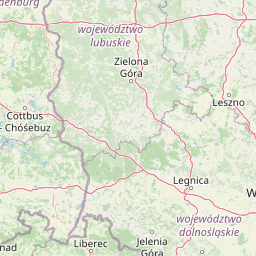
Map view of Jezioro Trzebidzkie Nature Reserve

Use this park location map to pinpoint Jezioro Trzebidzkie Nature Reserve in Poland, understand its exact geographic position, and read its mapped placement within the surrounding landscape more clearly.

Pigeon | © OpenStreetMap contributors
Park atlas

Compare nearby wetland reserves and postglacial landscapes across the surrounding region

Other Parks Near Rezerwat Przyrody Jezioro Trzebidzkie and Regional Protected Areas

Discover other protected areas near Rezerwat przyrody Jezioro Trzebidzkie sharing similar wetland and lake geography. Comparing adjacent regional reserves helps trace the broader ecological patterns of the surrounding postglacial terrain.
Nature reserveGreater Poland Voivodeship
About 18 km away#1 closest

Southeast

Rezerwat przyrody Dolinka: Protected Nature Reserve and Botanical Site in Greater Poland

A focused study of wet meadow conservation in western Poland

Rezerwat przyrody Dolinka is a key protected area in Greater Poland, dedicated to maintaining delicate molinia meadow habitats and native globeflower populations. This site highlights the importance of small-scale nature reserves in preserving botanical diversity within the post-glacial landscapes of the Krzywińskie Lakeland, offering a clear look at local environmental protection in action.

Area
0.018 km²
Established
1974
Relief
Lowland
Climate
Temperate
Protected areaGreater Poland Voivodeship
About 22 km away#2 closest

East

Wonieść Lake Protected Area: Geography, Wetland Habitats, and Regional Landscape Context

Postglacial water management and bird refuge in Greater Poland

Examine the geographic character of Wonieść Lake, a segmented retention reservoir reflecting the classic postglacial lowlands of western Poland. This protected area provides a significant wetland habitat within the Krzywińskie Lake District, blending historic hydraulic infrastructure with rich bird populations and forest-fringed shorelines that span across the rural Wielkopolska countryside.

Area
7.77 km²
Established
1974
Relief
Lowland
Climate
Temperate
Nature reservePoland
About 31 km away#3 closest

West

Rezerwat przyrody Jezioro Święte: Protected Lake Ecosystems and Glacial Geography

A strictly protected nature reserve in western Poland

Located in the Lubuskie region, Rezerwat przyrody Jezioro Święte serves as a vital safeguard for rare aquatic plant assemblages within a glacial channel lake. The area features unique floating mats and stonewort stands set within a sandy outwash landscape, showcasing the complex environmental history of Polish water systems and long-term natural conservation.

Area
0.194 km²
Established
1983
Water
Water-dominated
Watercolor painting depicting a gentle river winding through green meadows and groves of trees with a soft, hazy background.
Protected areaLower Silesian Voivodeship
About 32 km away#4 closest

South

Łęgi Odrzańskie: Protected Riverine Corridor in Lower Silesian Voivodeship

A 101-kilometer valley mosaic of forest and wetland habitats.

Traversing the Pradolina Wrocławska and beyond, Łęgi Odrzańskie serves as a critical protected landscape preserving remnant floodplain forests and oxbow lakes. The area functions as a premier riverine sanctuary in Central Europe, documented through its unique combination of alder swamps, peatlands, and diverse avian populations maintained along the middle Oder.

Area
21,350.5 km²
Established
2007
Relief
Lowland
Scope
Mixed
Nature reserveLubusz Voivodeship
About 32 km away#5 closest

West

Rezerwat przyrody Mesze Nature Reserve: Geographic Analysis of Protected Polish Lands

Post-glacial lake and peatland geography in Lubusz Voivodeship.

Rezerwat przyrody Mesze preserves an essential slice of Polish lowlands geography, showcasing the interaction between post-glacial water-laid sands and lake-driven peat formation. Within this protected valley, the transition from open water to bog communities provides a significant example of natural succession, offering high value for those mapping the diverse terrain of the Sławskie Lakeland region.

Area
0.199 km²
Established
1983
Relief
Lowland
Climate
Temperate
A horizontal watercolor painting depicting a wide river flowing through a lush landscape with distant rolling hills and a soft pink sky.
Nature reserveWielkopolska Voivodeship
About 36 km away#6 closest

Northeast

Ostoja Rogalińska: Protected Nature Reserve and Glacial Terrain in Wielkopolska Voivodeship

Mapped riparian corridors, moraine ridges, and bird habitats.

Ostoja Rogalińska offers a detailed look at lowland glacial morphology, featuring twelve mapped lakes, wandering inland dunes, and the extensive Warta River floodplain. This protected area within Wielkopolska Voivodeship preserves ancient pedunculate oaks alongside diverse wetland and forest ecosystems, providing a clear geographic view of one of the region's most important Natura 2000 bird sanctuaries.

Area
217.63 km²
Established
2007
Relief
Lowland
Climate
Temperate
National parkWielkopolska Voivodeship
About 38 km away#7 closest

Northeast

Wielkopolski Park Narodowy: Protected Glacial Landscapes and Regional Geography in Poland

Post-glacial moraine systems and lake basins

Wielkopolski Park Narodowy captures a dense collection of post-glacial landforms, from rolling moraine uplands to clear kettle lakes and esker ridges. This protected area offers a deep look into the geomorphological history of the Wielkopolska region through its varied forest habitats and preserved terrain.

Area
75.84 km²
Established
1957
Visitors
1.2M annual
Relief
Lowland
Watercolor painting of a landscape with hills, a lake, and forested areas
National parkPoland
About 42 km away#8 closest

Northeast

Wielkopolska National Park: Poland's Glacial Landscape and Lake District Protected Area

Explore the mapped terrain and protected landscape.

Wielkopolska National Park is a vital protected landscape in western Poland, notable for its characteristic post-glacial terrain. Featuring a landscape defined by numerous kettle lakes nestled within mixed forests and gently rolling hills, this national park offers a representative sample of the Greater Poland lake district's natural heritage. Its mapped boundaries delineate an area of ecological importance, providing valuable context for understanding regional geography and protected area distribution through structured atlas exploration.

IUCN
II

Common questions about visiting, size, designation, and location context for Jezioro Trzebidzkie Nature Reserve

Jezioro Trzebidzkie Nature Reserve FAQs for park facts, access, geography, and protected area context

Find quick answers about Jezioro Trzebidzkie Nature Reserve, including protected-area facts, park geography, trail and visitor context, and how the park fits into its surrounding country and regional landscape.
MoriAtlas Explorer

Continue Your Protected Areas Search Across the Global Atlas

Deepen your exploration by continuing the structured search for national parks and protected areas worldwide. Utilize the comprehensive filtering capabilities to compare different conservation landscapes and refine your understanding of global park geography. Discover more about the distribution and characteristics of protected natural areas.

Global natural geography