


Mori Atlas logo
National parkSai Yok National Park

Trace the geographic boundaries and landscape context of this significant national park.

Sai Yok National Park: Mapped Protected Area and Regional Geography in Kanchanaburi Province

Sai Yok National Park represents a key protected landscape within Thailand's Kanchanaburi Province. This page provides an atlas-oriented view, focusing on the park's geographic identity and its mapped boundaries. Understand its place within the regional geography and explore the foundational elements that define this national park for structured discovery.

Limestone MountainsWaterfallsCave SystemsRiver KwaiTenasserim RangeWestern Forest Complex
An illustrated landscape featuring a river flowing through a valley with limestone cliffs and forested hills.

Sai Yok National Park

National park

Park overview

Structured park overview, official facts, and landscape profile for Sai Yok National Park

Sai Yok National Park park facts, protected area profile, and essential visitor context
Review the core facts for Sai Yok National Park, including designation, size, terrain, visitor scale, habitats, and operating context in one park-focused overview.

About Sai Yok National Park

Sai Yok National Park occupies a significant position in Thailand's western forest corridor, protecting a landscape of exceptional geological and ecological value. The park's terrain is dominated by the steep limestone formations of the Tenasserim Range, with elevations ranging from the river valley floors to Khao Ro Rae at 1,132 meters. These mountains have been shaped over millions of years, creating the dramatic cliffs, karst formations, and cave systems that define the park's character. The Khwae Noi River serves as the lifeblood of the ecosystem, its waters winding through the valley and providing habitat for numerous species while also supporting the park's popularity among visitors who can experience the river from traditional long-tail boats. The park's location adjacent to the historic Death Railway adds a layer of historical significance, as the construction of this railway during World War II resulted in the deaths of thousands of prisoners of war and forced laborers, with the landscape still bearing traces of this dark chapter. Today, the park balances its role as a conservation area with its function as a recreational destination, offering visitors the opportunity to explore waterfalls, caves, and forest trails while learning about both natural and human history.

Quick facts and research context for Sai Yok National Park

Sai Yok National Park covers 500 square kilometers in Sai Yok District, Kanchanaburi Province, western Thailand. The park's highest peak is Khao Ro Rae at 1,132 meters elevation. The Khwae Noi River flows through the park, connecting it to the historic Death Railway built during World War II. The park contains significant World War II heritage sites including remains of the Burma Railway bridge and prisoner-of-war camps. The park receives approximately 67,698 visitors annually and is governed by Thailand's Department of National Parks, Wildlife and Plant Conservation.

Park context

Deeper park guide and search-rich context for Sai Yok National Park

Sai Yok National Park history, landscape, wildlife, and travel context
Explore Sai Yok National Park through its history, landscape character, ecosystems, wildlife, conservation priorities, cultural context, and seasonal travel timing in a structured park guide built for atlas discovery and search intent.

Why Sai Yok National Park stands out

Sai Yok National Park is best known for its dramatic limestone landscape of the Tenasserim Range, which features numerous waterfalls cascading from cliff faces into the Khwae Noi River valley. The park contains the famous Sai Yok Noi waterfall, also called Khao Phang Waterfall, which is the most visited attraction in the park and sits alongside the historic Death Railway tracks. The park is also renowned for its cave systems, particularly Tham Lawa with its five large caverns containing impressive stalactite and stalagmite formations, and Tham Dao Wadueng with eight chambers discovered in 1972. Additionally, the park is famous as the location where scenes from the 1978 film The Deer Hunter were filmed, adding cultural significance to its natural landscape.
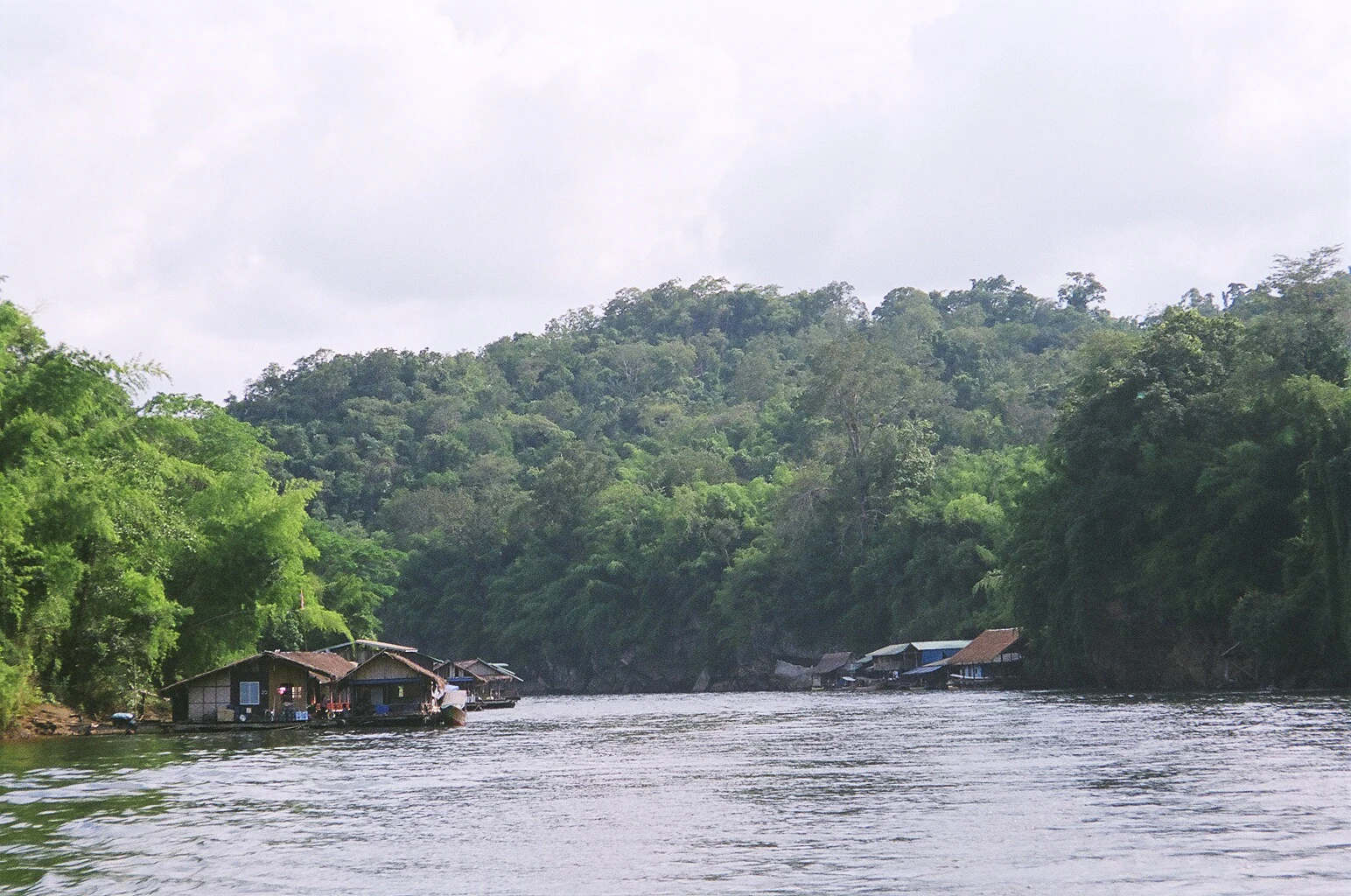
A wide river with calm water bordered by dense green forests and small riverfront structures under a partly cloudy sky.
River Khwae flowing through Sai Yok National Park with forested banks and riverfront structures.

Sai Yok National Park history and protected-area timeline

Sai Yok National Park was officially established on 27 October 1980 when its declaration was published in the Royal Gazette, making it Thailand's 19th national park. However, the region has a much longer and more complex human history. During World War II, the area was the site of intense activity as Japanese forces constructed the Burma Railway, also known as the Death Railway, connecting Thailand and Myanmar. Remains of bridges along this railway and traces of prisoner-of-war camps still exist within the park boundaries, serving as somber reminders of this period. In 1978, the park gained international cultural recognition when filmmakers for the Academy Award-winning movie The Deer Hunter chose locations within Sai Yok to film the controversial Russian roulette sequences, though this claim requires citation verification. The establishment of the national park represented Thailand's growing commitment to conserving its natural heritage, recognizing that the unique limestone forests and river valleys of the Sai Yok region required formal protection to ensure their survival for future generations.

Sai Yok National Park landscape and geographic character

The landscape of Sai Yok National Park is defined by the dramatic geological features of the Tenasserim Range, a mountain system that extends southward from Myanmar into western Thailand. The park's terrain is characterized by steep limestone cliffs and rugged peaks, with the highest point being Khao Ro Rae at 1,132 meters. These karst formations have created an intricate landscape of gorges, ridges, and valleys through which the Khwae Noi River flows. The river has carved its way through the limestone over millennia, creating the valley that today provides access to the park's interior. The combination of vertical limestone cliffs and the meandering river creates visually stunning scenery, particularly where waterfalls cascade from the cliff faces. The park's elevation gradient from the river valley up to the mountain peaks supports diverse habitats, while the limestone geology has produced numerous cave systems including the extensive Tham Lawa complex, which extends 500 meters underground with five major caverns. The landscape varies from dense forest-covered slopes to exposed cliff faces and rocky outcrops, creating a mosaic of terrain types that defines Sai Yok's distinctive character.
Orange-bellied Flowerpecker bird with blue-gray back and orange belly perched on a branch holding a small berry, surrounded by green leaves
Orange-bellied Flowerpecker perched on a branch with a berry in its beak

Sai Yok National Park ecosystems, habitats, and plant life

The ecological character of Sai Yok National Park reflects the transitional nature of its location between tropical and subtropical zones within the Tenasserim region. The forest composition is dominated by mixed deciduous forest, which covers approximately 85 percent of the park's area and includes species such as Pterocarpus macrocarpus, Lagerstroemia tomentosa, and Schleichera oleosa. Dry evergreen forest accounts for about 13 percent of the area, featuring species like Dipterocarpus alatus, Castanopsis, and Schima wallichii. The remaining 2 percent consists of dry dipterocarp forest with species including Dipterocarpus tuberculatus and Quercus kerrii. This forest diversity supports a remarkable range of biodiversity, with the park providing habitat for at least 24 mammal species, 209 bird species, numerous reptiles, amphibians, and fish. The limestone caves create unique microhabitats, particularly for bat species including Kitti's hog-nosed bat, which at around 2 grams is considered the world's smallest mammal and was first documented in the park in 1973. The Khwae Noi River and its tributaries support aquatic ecosystems and provide important water resources for the broader landscape.
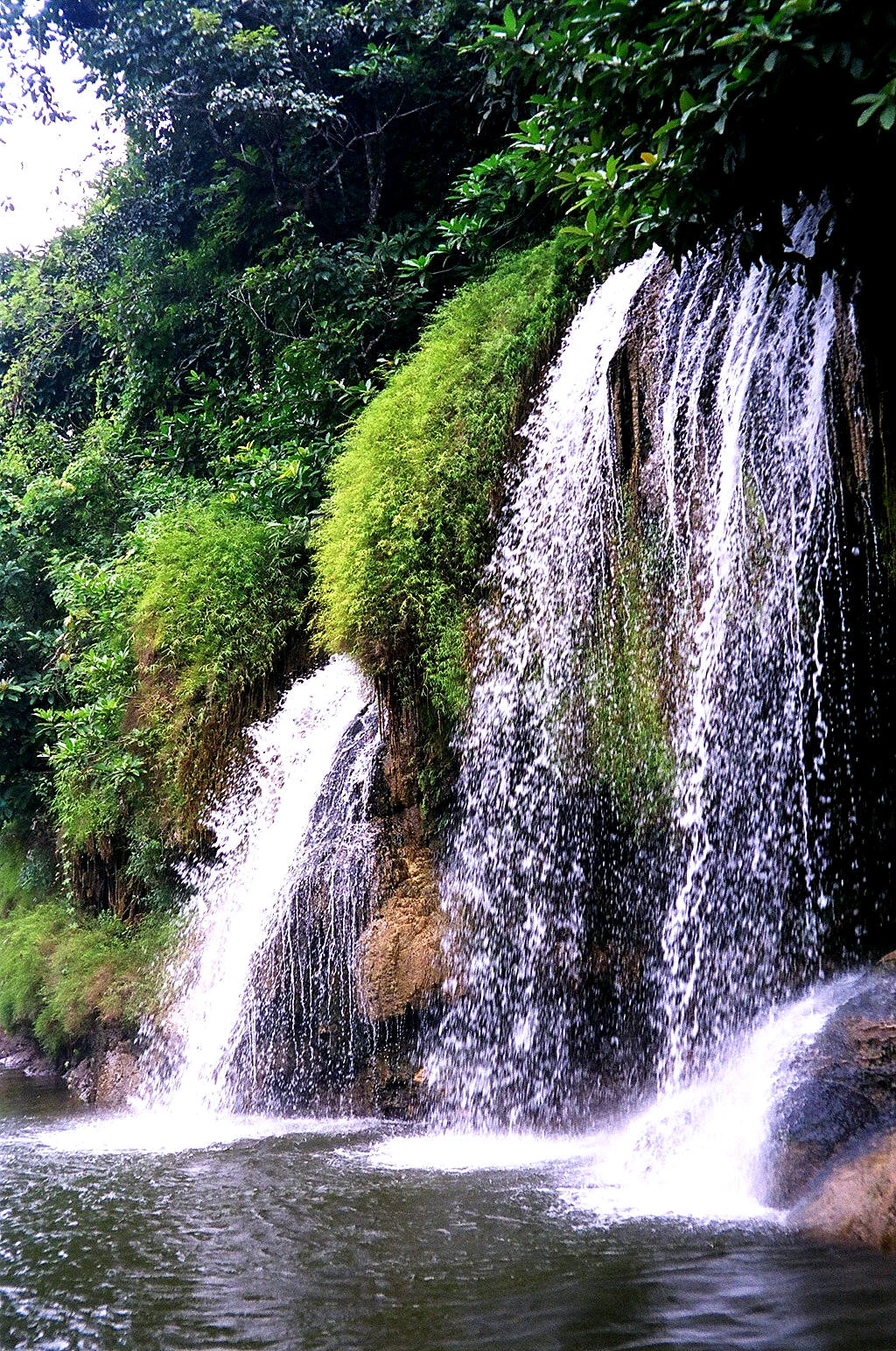
A waterfall with multiple streams cascading over moss-covered rocks into a pool, surrounded by lush green vegetation.
Sai Yok Yai Lek Waterfall in Sai Yok National Park, Kanchanaburi, Thailand.

Sai Yok National Park wildlife and species highlights

Sai Yok National Park supports a remarkable diversity of wildlife despite its relatively moderate size. The park's mammal population includes several large and charismatic species, with Bengal tigers and Indochinese leopards representing apex predators in the ecosystem. Asian elephants roam the forest in search of food, while clouded leopards, sun bears, and Asian black bears occupy the more remote mountain areas. Herbivores including gaur, banteng, sambar deer, and Malayan tapir are regularly recorded within the park boundaries. Primates are represented by white-handed gibbons and various Presbytis species. The park is particularly notable for Kitti's hog-nosed bat, discovered in 1973 and found only in specific limestone caves including Tham Kang Kao within the park and adjacent areas in Kanchanaburi Province and Myanmar. Bird diversity is exceptional, with 209 species from 61 families documented, including the great slaty woodpecker, oriental pied-hornbill, and mountain imperial-pigeon among the notable non-passerine species. The park's rivers and wetlands support reptile species including the Asian narrow-headed softshell turtle and big-headed turtle, while amphibians include the giant Asian river frog and Malayan flying frog.

Sai Yok National Park conservation status and protection priorities

Sai Yok National Park plays a crucial role in Thailand's conservation network as part of the Western Forest Complex, a coordinated system of protected areas spanning the border region with Myanmar. This complex represents one of Southeast Asia's most important areas for biodiversity conservation, providing corridors that allow wildlife to move between protected zones and maintain genetic connectivity across the landscape. The park's designation as an IUCN Category II protected area reflects its primary purpose of preserving natural ecosystems while allowing for sustainable visitor use. The protection of the Khwae Noi River watershed is particularly important, as the river supports both wildlife habitat and human communities downstream. Conservation challenges include managing visitor impact at popular attractions like Sai Yok Noi waterfall while maintaining habitat integrity for sensitive species. The presence of endangered mammals including tigers, leopards, and elephants requires ongoing monitoring and anti-poaching efforts, while the protection of Kitti's hog-nosed bat populations in specific cave sites represents a specialized conservation priority requiring careful management of human access to these sensitive habitats.

Sai Yok National Park cultural meaning and human context

Sai Yok National Park contains significant cultural and historical elements beyond its natural value. The most prominent is the legacy of the Burma Railway, constructed during World War II by forced labor under Japanese occupation. Remains of bridges and camp structures provide physical evidence of this历史 within the park boundaries. The nearby Hellfire Pass Memorial, located about 35 kilometers west of Sai Yok Noi waterfall, serves as a museum and tribute to those who died during the railway's construction and has become an important site for historical reflection and education. The park also contains the Krasae Cave, a small Buddhist shrine located next to a section of the original Death Railway tracks, representing the intersection of natural landscape with religious and historical significance. The Khwae Noi River itself carries cultural weight, being intimately associated with the WWII history and the famous Bridge over the River Kwai. Local communities in the surrounding area maintain connections to the park through tourism employment and traditional land uses that predate the protected area designation.

Top sights and standout views in Sai Yok National Park

Sai Yok National Park offers visitors a compelling combination of natural beauty, geological wonders, and historical significance. The Sai Yok Noi waterfall stands as the park's signature attraction, where limestone cliffs collapse to form a 15-meter cascade that has become a beloved destination for both Thai and international visitors. The cave systems, particularly Tham Lawa with its five interconnected caverns featuring impressive stalactite and stalagmite formations extending 500 meters underground, offer exploration opportunities for adventurous visitors. The Khwae Noi River provides a scenic backdrop for boat trips and photography, with the surrounding limestone cliffs creating a distinctive landscape unlike other Thai national parks. The park's wildlife viewing opportunities, particularly for birds with over 200 species documented, attract nature enthusiasts. The historical dimension adds depth to a visit, with the proximity to Death Railway sites and the Hellfire Pass Memorial allowing visitors to connect with the region's wartime history while enjoying the natural environment. The park's location within the Western Forest Complex also offers the possibility of combining a visit with other nearby protected areas for those seeking a broader exploration of Thailand's western forest region.

Best time to visit Sai Yok National Park

The optimal time to visit Sai Yok National Park depends on what visitors hope to experience. The cool season from November through mid-February offers the most comfortable temperatures for hiking and outdoor exploration, with average lows around 15.4°C making daytime activities pleasant. This period coincides with the dry season, when trails are easier to navigate and waterfall flow may be reduced but still present. The hot season from April to mid-May brings higher temperatures, with April being the warmest month, which can make physical activities challenging during midday but offers the advantage of fewer visitors at popular sites. The rainy season from mid-May through October brings increased water flow to waterfalls, making them more spectacular, though afternoon thunderstorms are common and some trails may become slippery or inaccessible. The wet season also corresponds with the park's lushest vegetation and the best conditions for birdwatching as migratory species arrive. For those interested in wildlife viewing, the transition periods between seasons often offer good opportunities as animals become more active near water sources.
Park location guide

Geography guide, regional context, and park location map for Sai Yok National Park

Sai Yok National Park park geography, regions, and map view in Thailand
Understand where Sai Yok National Park sits in Thailand through a broader geographic reading of the surrounding landscape, nearby location context, and its mapped position within the national park landscape.

How Sai Yok National Park fits into Thailand

Thailand is a Southeast Asian nation formerly called Siam, located in mainland Southeast Asia. It operates as a unitary parliamentary constitutional monarchy under King Vajiralongkorn. The country borders Myanmar, Laos, Cambodia, and Malaysia, with maritime boundaries involving Vietnam, Indonesia, and India. Thailand has a population of nearly 66 million and covers approximately 513,120 km². Historically, the Sukhothai Kingdom marks the beginning of Thai history, followed by the powerful Ayutthaya Kingdom.

Wider geography shaping Sai Yok National Park in Thailand

Thailand occupies mainland Southeast Asia with borders to Myanmar (west/northwest), Laos (east/northeast), Cambodia (southeast), and Malaysia (south). The country has coastline along the Gulf of Thailand to the southeast and the Andaman Sea to the southwest. The territory covers approximately 513,120 km².

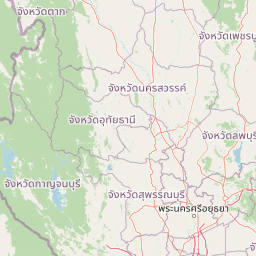
Map view of Sai Yok National Park

Use this park location map to pinpoint Sai Yok National Park in Thailand, understand its exact geographic position, and read its mapped placement within the surrounding landscape more clearly.

Pigeon | © OpenStreetMap contributors

Location context for Sai Yok National Park

Kanchanaburi Province

Visual Atlas of Sai Yok's Limestone Peaks, River Kwai Environment, and Forest Habitats

Sai Yok National Park Photos: Explore Landscapes, Waterfalls, and Cave Scenery
Explore images of Sai Yok National Park, visually discovering its dramatic limestone peaks, cascading waterfalls, and the unique environment of the Khwae Noi River valley. These protected area photos offer essential visual context to understand the park's diverse terrain, dense forests, and extensive cave systems, providing a deeper sense of its natural character.

A wide river with calm water bordered by dense green forests and small riverfront structures under a partly cloudy sky.

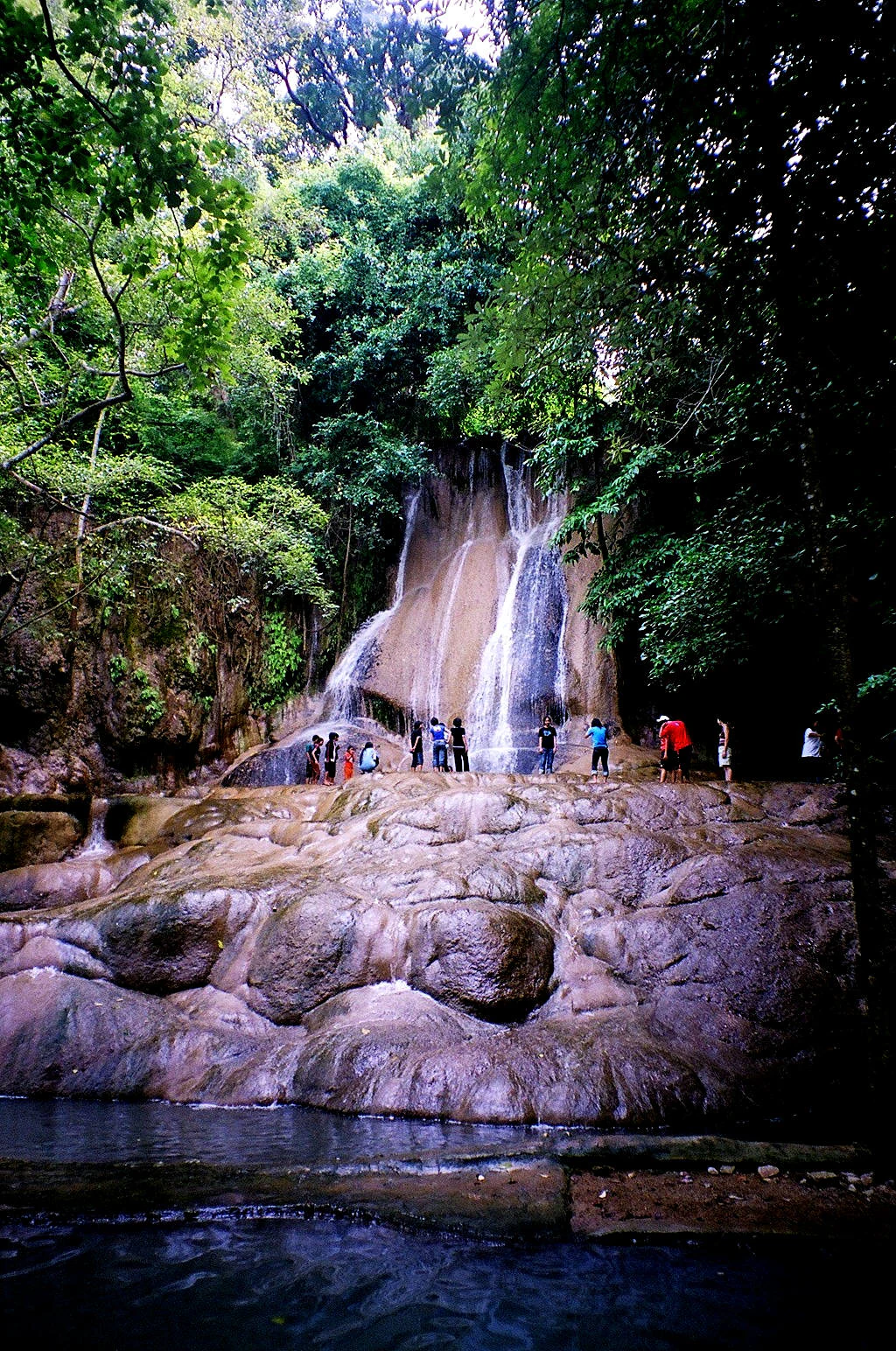
Waterfall cascading over rocky terrain with lush green forest surrounding it and people standing at the base near a pool of water

Orange-bellied Flowerpecker bird with blue-gray back and orange belly perched on a branch holding a small berry, surrounded by green leaves

A waterfall with multiple streams cascading over moss-covered rocks into a pool, surrounded by lush green vegetation.

Park atlas

Trace the regional geography of protected areas within the Tenasserim Range and the Western Forest Complex.

Explore Nearby National Parks and Protected Areas Around Sai Yok National Park in Western Thailand
Discover other national parks and protected areas located near Sai Yok National Park, extending your geographic view across Thailand's Western Forest Complex and its distinctive limestone terrains. Compare these adjacent protected landscapes to understand regional conservation efforts, tracing the spread of karst formations and river valleys throughout the broader Tenasserim Range.
National parkKanchanaburi Province

Thong Pha Phum National Park: A Protected Landscape in Kanchanaburi Province, Thailand

National park mapped geography and regional context.

Thong Pha Phum National Park is a significant national park in Thailand, situated within Kanchanaburi Province. This page details its protected area status and provides essential geographic context, enabling users to explore its mapped boundaries and understand its role within the regional landscape. Focus on discovery of its natural terrain and atlas-relevant characteristics.

Area
1,236 km²
Established
2009
IUCN
II
Visitors
123.3K annual
National parkKanchanaburi Province

Khuean Srinagarindra National Park: A Protected Landscape in Kanchanaburi Province's Geography

Explore the mapped terrain and natural context of this national park.

Khuean Srinagarindra National Park stands as a distinct protected landscape within Kanchanaburi Province. This page provides a gateway to understanding its geographic identity, mapped boundaries, and natural terrain characteristics. As a national park, it offers rich opportunities for those seeking to explore the regional geography and protected areas of Thailand through a structured, atlas-focused lens.

Area
1,532 km²
Established
1981
IUCN
II
Visitors
71K annual
National parkKanchanaburi Province

Lam Khlong Ngu National Park: A Protected National Park in Kanchanaburi Province

Explore mapped boundaries and regional geography.

Lam Khlong Ngu National Park offers a distinct protected landscape within Kanchanaburi Province. As a national park, it contributes to the understanding of Thailand's diverse geography and conservation areas. Users can explore its mapped features and discover its place within the broader regional context of protected lands.

Area
673 km²
Established
2009
Relief
Mountain
Climate
Tropical
National parkKanchanaburi Province

Chaloem Rattanakosin National Park: National Park Status and Geographic Exploration

Mapped protected area in Kanchanaburi Province, Thailand.

Chaloem Rattanakosin National Park represents a crucial protected landscape within Kanchanaburi Province, identified as a national park. This entry offers a foundation for understanding its geographic boundaries and regional context, providing essential detail for atlas-based exploration of Thailand's natural protected areas and their mapped distribution across the landscape.

Area
59 km²
Established
1980
IUCN
II
Visitors
31.5K annual
National parkKanchanaburi Province

Khao Laem National Park: Kanchanaburi Province Protected Landscape Atlas

Discover mapped terrain and regional geographic context.

Investigate Khao Laem National Park as a distinct protected landscape situated in Thailand's Kanchanaburi Province. This entry provides detailed geographic insights, focusing on mapped boundaries and the park's position within the region's natural atlas. It's designed for users seeking specific protected-area data and landscape context rather than general visitor information.

Area
1,497 km²
Established
1991
IUCN
II
Visitors
48.6K annual
National parkSuphan Buri Province

Phu Toei National Park: National Park Atlas and Mapped Landscape Exploration in Suphan Buri Province

Discover the protected area's geographic context and natural terrain.

Phu Toei National Park is a designated national park offering a unique perspective on protected landscapes within Suphan Buri Province, Thailand. This park serves as a crucial entity for atlas-based geographic discovery, highlighting its specific mapped boundaries and the surrounding natural terrain. Users can explore the park's inherent geographic character and its role within Thailand's network of conservation areas.

Area
317 km²
Established
1998
IUCN
II
Visitors
8.8K annual
National parkRatchaburi Province

Chaloem Phrakiat Thai Prachan National Park: Protected Landscape Identity and Geographic Atlas Context

Mapped park boundaries and regional natural terrain discovery.

Chaloem Phrakiat Thai Prachan National Park serves as a key national park entity for structured geographic discovery. This page focuses on its protected landscape, mapped boundaries, and integration within the natural geography of Ratchaburi Province. Explore the park's specific atlas contribution and its place within regional conservation land patterns, providing a factual foundation for landscape context.

Area
328.05 km²
Established
2012
IUCN
II
Climate
Tropical
National parkNakhon Sawan Province

Mae Wong National Park: National Park Protected Area and Geographic Setting

Mapped boundaries and regional landscape of Mae Wong.

Investigate Mae Wong National Park, a designated national park offering insights into its protected landscape identity. This entry provides structured geographic data, focusing on the park's mapped boundaries and its position within the broader regional context of Nakhon Sawan Province. Examine its role as a significant protected area for atlas-based discovery and geographic understanding.

Area
894 km²
Established
1987
IUCN
II
Visitors
51.8K annual

Common questions about visiting, size, designation, and location context for Sai Yok National Park

Sai Yok National Park FAQs for park facts, access, geography, and protected area context
Find quick answers about Sai Yok National Park, including protected-area facts, park geography, trail and visitor context, and how the park fits into its surrounding country and regional landscape.
MoriAtlas Explorer

Continue Your Protected Areas Search Across the Global Atlas

Deepen your exploration by continuing the structured search for national parks and protected areas worldwide. Utilize the comprehensive filtering capabilities to compare different conservation landscapes and refine your understanding of global park geography. Discover more about the distribution and characteristics of protected natural areas.

Global natural geography