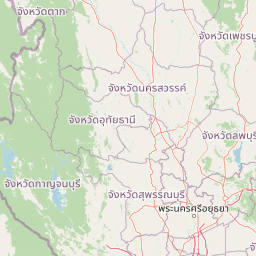
Why Khuean Srinagarindra National Park stands out
The park is best known for its dramatic reservoir-based landscape centered on the Srinagarind Reservoir, a large impoundment of the Khwae Yai River that creates extensive wetland and aquatic habitats within the protected area. The Huai Mae Khamin Waterfall, a seven-tiered cascade flowing from the eastern mountains toward the Khwae Yai River, represents the park's most visited attraction. The park also contains significant cave systems including Tham Sawan with prehistoric cave paintings and Tham Phra Prang, which houses a Buddha image and served as a hiding place for Thai soldiers during the 18th-century Burmese-Siamese wars. The combination of reservoir recreation, forest-covered mountains, and cultural-historical cave sites distinguishes this park within Thailand's protected area system.
Khuean Srinagarindra National Park history and protected-area timeline
The establishment of Khuean Srinagarindra National Park in 1981 marked the formal protection of a region with deeper historical significance. The park's cave systems, particularly Tham Phra Prang, served as strategic hiding locations for Thai soldiers during the Burmese-Siamese wars of the 18th century, when military forces sought refuge in the region's natural formations. The modern history of the area is closely tied to the construction of the Srinagarind Dam on the Khwae Yai River, completed in 1980, which created the reservoir that now defines the park's central geography. Following dam completion, the Thai government designated the surrounding watershed and forest areas as a national park in December 1981, making it the 39th such protected area in Thailand's national park system. This designation formalized protection for a landscape that had long served as a historical refuge and ecological repository.
Khuean Srinagarindra National Park landscape and geographic character
The physical landscape of Khuean Srinagarindra National Park is characterized by mountainous terrain supporting tropical forest ecosystems, with the Srinagarind Reservoir as the dominant aquatic feature. The park's elevation reaches approximately 1,100 meters at its highest points, with the terrain descending toward the reservoir basin. Multiple streams and tributaries flow into the reservoir, including Huai Mae Khamin, Huai Kha Khaeng, Huai Mae Wong, Huai Kriankrai, and Huai Mae Phlu. The surrounding hills create a rain shadow effect that distinguishes the local climate from surrounding regions, resulting in lower precipitation despite the tropical latitude. The landscape supports three primary forest types: mixed deciduous forest, dry dipterocarp forest, and dry evergreen forest, each dominating different elevational zones and aspects within the park.
Khuean Srinagarindra National Park ecosystems, habitats, and plant life
The ecological character of Khuean Srinagarindra National Park is defined by the intersection of terrestrial forest ecosystems with the extensive reservoir and riparian environments. The park supports three distinct forest types that reflect the rain shadow conditions: mixed deciduous forest, dry dipterocarp forest, and dry evergreen forest. These forest formations host diverse plant communities adapted to seasonal variation and the relatively drier conditions compared to eastern Thailand. The reservoir and its tributaries create aquatic and wetland habitats that supplement the terrestrial forest environments, supporting species dependent on water sources throughout the year. The park forms part of the Western Forest Complex, a network of protected areas that maintains ecological connectivity across the Thai-Burmese border region, allowing for wildlife movement and genetic exchange across a broader landscape than any single protected area could provide.
Khuean Srinagarindra National Park wildlife and species highlights
Khuean Srinagarindra National Park supports substantial wildlife populations across multiple taxonomic groups. Mammal species documented in the park include Asian elephant, Bengal tiger, gaur, sambar deer, Asian wild dog, and various primates including Phayre's leaf monkey and white-handed gibbon. The park records 142 bird species across 52 families, representing both passerine and non-passerine species including the greater racket-tailed drongo, orange-breasted trogon, and wreathed hornbill. Reptile diversity includes species such as the reticulated python, water monitor, and various pit vipers. Amphibian and fish species are documented in the park's freshwater systems, with the reservoir and tributaries supporting fish communities including the giant snakehead fish and greater brook carp. The combination of forest habitats, riparian corridors, and reservoir environments creates diverse ecological niches supporting this biodiversity.
Khuean Srinagarindra National Park conservation status and protection priorities
Khuean Srinagarindra National Park plays an important role in Thailand's protected area network as a component of the Western Forest Complex, a coordinated system of national parks, wildlife sanctuaries, and other protected areas spanning the country's western regions. The park's large contiguous forest area provides watershed protection for the Srinagarind Reservoir and downstream water users, while maintaining wildlife corridors connecting to neighboring protected areas including Thung Yai Naresuan Wildlife Sanctuary and several other national parks. The designation of this area as a national park in 1981 recognized its ecological significance within Thailand's western forest biome, which supports species of conservation concern including large mammals such as elephants and tigers. The park's management under the Department of National Parks, Wildlife and Plant Conservation integrates protection of both terrestrial and aquatic ecosystems within a single protected area framework.
Khuean Srinagarindra National Park cultural meaning and human context
The region now within Khuean Srinagarindra National Park carries historical significance dating to the Burmese-Siamese wars of the 18th century. The park's cave systems, particularly Tham Phra Prang, served as hiding places for Thai soldiers during periods of conflict with neighboring Burma. These caves retain cultural relevance, with Tham Phra Prang continuing to house a Buddha image, combining natural formations with religious significance. The landscape has supported human communities over extended periods, with the establishment of the Srinagarind Dam in 1980 fundamentally altering the hydrology of the region by creating the reservoir that now forms the park's central feature. This relatively recent hydrological transformation coexists with older patterns of human interaction with the forest and cave environments.
Top sights and standout views in Khuean Srinagarindra National Park
The park's primary attraction is Huai Mae Khamin Waterfall, a seven-tiered cascade descending from the eastern mountain source to join the Khwae Yai River. The cave systems represent another significant highlight, with Tham Sawan containing prehistoric cave paintings within its 150-meter length, Tham Neramit featuring impressive stalactite and stalagmite formations, and Tham Phra Prang combining geological formations with a Buddha image. The Srinagarind Reservoir itself offers recreational opportunities on Thailand's larger artificial lakes, with the surrounding forested mountains providing scenic backdrops and hiking potential. The diversity of forest types within a single protected area, combined with the reservoir's aquatic environments, creates ecological variety that supports the park's wildlife populations.
Best time to visit Khuean Srinagarindra National Park
The park can be visited throughout the year, though the cool season from November to February offers the most comfortable temperatures for outdoor activities, with minimum temperatures around 8°C. The hot season from March to April brings peak temperatures reaching 44°C, which may limit daytime outdoor activities. The rainy season from mid-April to mid-October brings higher precipitation but also greener landscapes and potentially reduced visitor numbers. The rain shadow effect means the park receives less annual rainfall than other parts of Thailand, approximately 1,600mm annually, making it relatively less affected by monsoonal conditions than some neighboring protected areas. Visitors seeking waterfall viewing may find the post-rainy season period offers the most reliable water flow at Huai Mae Khamin.