

Mori Atlas logo
Wildlife reserveSaskatoon Lake Migratory Bird Sanctuary

Explore the wetland complex and boreal parkland transition zone defining this critical sanctuary.

Saskatoon Lake Migratory Bird Sanctuary: Mapped Landscapes and Protected Area Geography in Alberta

Saskatoon Lake Migratory Bird Sanctuary forms a distinct wetland node within the Boreal Parkland ecoregion of northwestern Alberta. This protected area centers on shallow water bodies surrounded by a mosaic of marshland, shrub thickets, and mixed boreal forest. By analyzing the geography of these closed-basin lakes and the adjacent upland habitat, users can understand the sanctuary's regional significance for nesting and migratory waterfowl conservation.

migratory bird sanctuarywetlandlakemarshlandboreal parklandwaterfowl

Saskatoon Lake Migratory Bird Sanctuary

Wildlife reserve

Park overview

Structured park overview, official facts, and landscape profile for Saskatoon Lake Migratory Bird Sanctuary

Saskatoon Lake Migratory Bird Sanctuary park facts, protected area profile, and essential visitor context

Review the core facts for Saskatoon Lake Migratory Bird Sanctuary, including designation, size, terrain, visitor scale, habitats, and operating context in one park-focused overview.

About Saskatoon Lake Migratory Bird Sanctuary

Saskatoon Lake Migratory Bird Sanctuary is a small but ecologically important protected wetland in the Peace River Country of northwestern Alberta. Positioned near Grande Prairie, it protects the paired lake system of Saskatoon Lake and Little Lake, which together provide habitat for waterfowl, marsh birds, and shorebirds against a backdrop of boreal parkland vegetation.

The sanctuary's shallow lake environments, combined with surrounding muskeg, shrub thickets, and aspen forest, create a mosaic of nesting and feeding habitats. The area sits within the Saskatoon Island Provincial Park on its upland portions, while the lakes and marshland are managed for wildlife conservation. This overlap of provincial recreation land and federal migratory bird protection reflects the site's dual identity as both a cultural-recreational landscape and a nationally important bird habitat.

Established in 1948, the sanctuary is part of Canada's longstanding migratory bird protection framework. Its recognition within the Grande Prairie — Trumpeter Swan Important Bird Area network underscores its role not just locally, but within Continental bird conservation priorities. Visitors traveling through the Grande Prairie region often encounter this protected wetland as part of the broader Peace River Country landscape, where prairie, boreal forest, and wetland merge.

The combined lake and marsh system is especially valuable because of its relative stability. Without significant inflow or outflow, water levels in the lakes fluctuate mostly with precipitation, producing consistent conditions for emergent vegetation, waterfowl nesting, and seasonal staging of migratory flocks.

Quick facts and research context for Saskatoon Lake Migratory Bird Sanctuary

The sanctuary covers roughly 11.5 square kilometers and was established in 1948 as part of Canada's national network of migratory bird sanctuaries. Approximately 60 percent of its area is open water, 32 percent is marshland, and the remaining 8 percent consists of grassland, shrub vegetation, and forest. Saskatoon Lake itself averages about 2.5 meters in depth, and neither lake has significant inlets or outlets, making them relatively stable, closed wetland systems.

Protection and recognition

Examine the verified protected area records and international database indexing for this sanctuary.

Saskatoon Lake Migratory Bird Sanctuary Protection Status and Administrative Records

Review the documented protection status and official database references associated with Saskatoon Lake Migratory Bird Sanctuary. Structured administrative records provide transparent insight into the conservation framework governing this protected habitat.

Protection details

WDPA ID
18697
Park context

Deeper park guide and search-rich context for Saskatoon Lake Migratory Bird Sanctuary

Saskatoon Lake Migratory Bird Sanctuary history, landscape, wildlife, and travel context

Explore Saskatoon Lake Migratory Bird Sanctuary through its history, landscape character, ecosystems, wildlife, conservation priorities, cultural context, and seasonal travel timing in a structured park guide built for atlas discovery and search intent.

Why Saskatoon Lake Migratory Bird Sanctuary stands out

The sanctuary is especially known for its importance to trumpeter swans, a species that was once extremely rare in the region and has since recovered, now returning to the sanctuary during migration and breeding. The area is also significant for tundra swans and a wide variety of breeding ducks, as well as for its inclusion in the Grande Prairie, Trumpeter Swan Important Bird Area, which highlights the site's regional value for waterbird conservation.
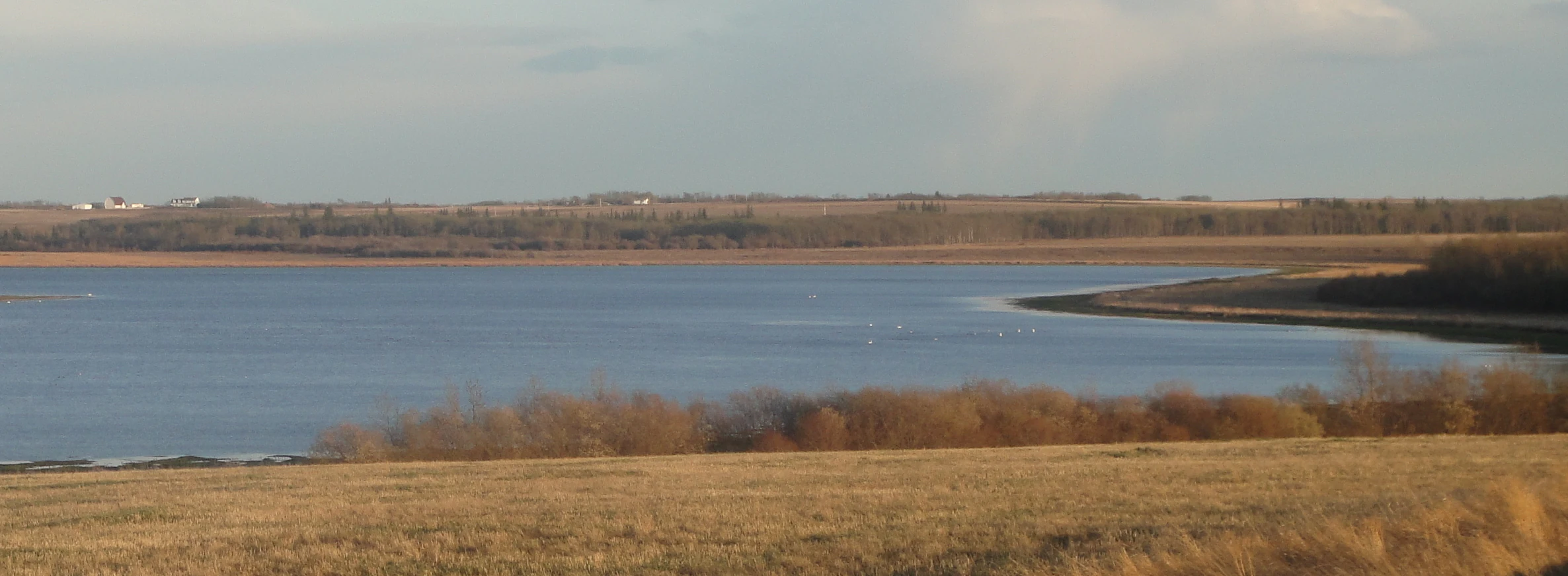
A wide view of Saskatoon Lake with a flat, golden-hued shoreline in the foreground and distant rolling fields under a cloudy sky.
Saskatoon Lake in Alberta, Canada.

Saskatoon Lake Migratory Bird Sanctuary history and protected-area timeline

Saskatoon Lake Migratory Bird Sanctuary was established in 1948 by the Canadian Wildlife Service, joining Canada's national system of migratory bird sanctuaries developed during the mid-20th century. At the time of its designation, the trumpeter swan was a species of serious conservation concern in much of its range, and the protection of its breeding and migratory habitat was a key motivation behind the sanctuary's creation.

Over subsequent decades, the sanctuary became one of several protected wetlands linked through the Grande Prairie — Trumpeter Swan Important Bird Area, reflecting its enduring relevance to bird conservation in the Peace River region. The co-location with Saskatoon Island Provincial Park has shaped how the surrounding landscape is managed, with upland areas continuing to support recreation while lakes and marsh remain oriented toward wildlife protection.

Saskatoon Lake Migratory Bird Sanctuary landscape and geographic character

The sanctuary's landscape is defined by two shallow lakes and the wetland and upland habitat that surrounds them. Saskatoon Lake is the larger of the two water bodies and features an average depth of about 2.5 meters, while Little Lake lies just to its south. Both lakes lack significant inlets or outlets, producing calm, relatively still waters bordered by emergent marsh vegetation.

Around the lakes, marsh dominates the low-lying margins, giving way to a mix of grassland, shrub thickets, and patches of boreal forest on drier ground. This mosaic places the sanctuary firmly within the Boreal Parkland ecoregion, a transitional zone where prairie and northern forest intermingle. The result is a soft, open landscape of reflective water, reed beds, hummocky shores, and mixed woodland that contrasts with the surrounding agricultural land near Grande Prairie.

Saskatoon Lake Migratory Bird Sanctuary ecosystems, habitats, and plant life

Ecologically, the sanctuary functions as a closed-basin wetland complex, where lake, marsh, shrub, and forest habitats sit in close proximity. About 60 percent of the protected area is open water, with marshland making up roughly 32 percent and the remaining area a combination of grassland, shrub, and forest. This composition provides a continuous gradient from aquatic to terrestrial habitats within a relatively small footprint.

The Boreal Parkland setting means the sanctuary carries both northern wetland and prairie-edge plant communities. Emergent and aquatic vegetation thrives in the shallow lake margins, while surrounding lowlands support willows, sedges, and typical parkland shrubs. The mixture of habitats is what allows the area to function as both a nesting ground and a staging area during spring and fall migration for a wide range of bird species.

Saskatoon Lake Migratory Bird Sanctuary wildlife and species highlights

The sanctuary's wildlife significance is overwhelmingly avian. Trumpeter swans are the sanctuary's flagship species, originally a rare visitor that has since become a regular breeder and migrant, with most nesting occurring around Little Lake. Tundra swans are also important breeders in the area.

The lakes and marshes support a rich community of breeding ducks, including mallard, northern pintail, gadwall, American wigeon, canvasback, redhead, lesser scaup, ring-necked duck, and ruddy duck. Other waterbirds and marsh-nesting species recorded or suspected as breeders include Canada goose, eared grebe, horned grebe, common tern, black tern, Franklin's gull, American bittern, sora, red-winged blackbird, yellow-headed blackbird, rusty blackbird, killdeer, American golden-plover, and spotted sandpiper.

Surrounding woodland and shrub habitat adds a secondary layer of bird diversity. Species observed around the lakes include northern flicker, yellow-bellied sapsucker, downy woodpecker, olive-sided flycatcher, tree swallow, barn swallow, black-capped chickadee, warbling vireo, yellow-rumped warbler, western meadowlark, pine siskin, and ruffed grouse, illustrating how the parkland setting extends the sanctuary's bird value beyond its open water.

Saskatoon Lake Migratory Bird Sanctuary conservation status and protection priorities

The sanctuary's primary conservation role is the protection of migratory bird habitat under Canada's Migratory Bird Sanctuary program, which provides strict habitat safeguards. By shielding both lakes and the surrounding marsh from major disturbance, the sanctuary preserves a stable nesting and migratory refuge within a region where wetlands face pressure from agriculture, urban expansion, and resource development around Grande Prairie.

Its inclusion in the Grande Prairie — Trumpeter Swan Important Bird Area reinforces its regional conservation importance, tying its protection to broader flyway-level efforts coordinated by BirdLife International partners. The trumpeter swan's recovery story is closely linked to this protected area, which offered a safe haven for the species during a vulnerable period in its population history and continues to support both breeding and migration.

Saskatoon Lake Migratory Bird Sanctuary cultural meaning and human context

The sanctuary's land sits at the interface between federal wildlife protection and the provincial Saskatoon Island Provincial Park, reflecting a layered Canadian approach to landscape management in the Peace River Country. The shared footprint means that local communities and visitors to the Grande Prairie region have historically engaged with this landscape both as a recreational destination and as a respected bird habitat.

Indigenous presence in the broader Peace River region long predates the sanctuary's establishment, and the wetland systems around Saskatoon Lake would have been known to traditional land users for fish, waterfowl, and plant resources. While the source material does not detail specific First Nations cultural associations with the sanctuary itself, the broader regional context situates this landscape within a long pre-parc history of human use of northwestern Alberta wetlands.

Top sights and standout views in Saskatoon Lake Migratory Bird Sanctuary

Saskatoon Lake Migratory Bird Sanctuary stands out for its combination of shallow, closed-basin lakes, surrounding boreal parkland marsh, and a long history of protecting trumpeter swans during a critical period in their recovery. The sanctuary's relatively small footprint masks a disproportionately rich habitat mosaic that supports breeding ducks, shorebirds, and marshland songbirds in addition to its signature swans. Recognized within the Grande Prairie — Trumpeter Swan Important Bird Area, it remains a small but meaningful node in North America's migratory bird conservation network.

Best time to visit Saskatoon Lake Migratory Bird Sanctuary

Like much of northwestern Alberta's parkland, the sanctuary is most rewarding for bird-focused visits during spring and fall, when waterfowl move through the region and trumpeter and tundra swans are most conspicuous. Summer brings peak breeding activity, with many duck species, marsh-nesting songbirds, and shorebirds using the lake margins. Winter cold generally freezes the shallow lakes and limits waterbird presence, though the surrounding boreal parkland can still support hardy resident species.

Monthly climate preview

Long-term representative point measurements tracking monthly temperature and precipitation cycles

Saskatoon Lake Migratory Bird Sanctuary Climate Normals and Annual Temperature Patterns

Saskatoon Lake Migratory Bird Sanctuary records measured monthly temperatures ranging from sub-zero winter minimums to warm summer maximums alongside varying daily precipitation rates. Examining the full twelve-month profile reveals precise long-term climate normals across the representative coordinate elevation.
Annual mean2 °C
-11 °C16 °C
Jan-11°
Feb-9°
Mar-5°
Apr
May
Jun13°
Jul16°
Aug15°
Sep10°
Oct
Nov-5°
Dec-10°
Warmest month
July

15.7 °C

Coolest month
January

-11.4 °C

Wettest month
June

3 mm/day

Driest month
February

1 mm/day

Park location guide

Geography guide, regional context, and park location map for Saskatoon Lake Migratory Bird Sanctuary

Saskatoon Lake Migratory Bird Sanctuary park geography, regions, and map view in Canada

Understand where Saskatoon Lake Migratory Bird Sanctuary sits in Canada through a broader geographic reading of the surrounding landscape, nearby location context, and its mapped position within the national park landscape.

How Saskatoon Lake Migratory Bird Sanctuary fits into Canada

Canada is a federal parliamentary constitutional monarchy spanning North America from the Atlantic to the Pacific and Arctic Oceans. With a population of over 41 million, it is officially bilingual in English and French at the federal level. The country gained independence from the United Kingdom through a gradual process culminating in 1982.

Wider geography shaping Saskatoon Lake Migratory Bird Sanctuary in Canada

Canada occupies the northern portion of North America, sharing its longest international border with the United States. The country extends from the Atlantic Ocean to the Pacific Ocean and northward into the Arctic Ocean, giving it the longest coastline of any nation.

Map view of Saskatoon Lake Migratory Bird Sanctuary

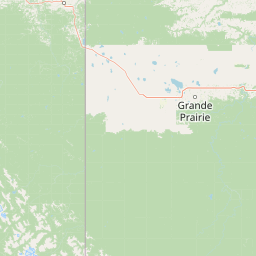
Use this park location map to pinpoint Saskatoon Lake Migratory Bird Sanctuary in Canada, understand its exact geographic position, and read its mapped placement within the surrounding landscape more clearly.

Pigeon | © OpenStreetMap contributors

Location context for Saskatoon Lake Migratory Bird Sanctuary

Alberta
Recorded earthquake history

Browse the Seismic History of Saskatoon Lake Migratory Bird Sanctuary

Examine the historical catalogue of recorded seismic activity occurring near Saskatoon Lake Migratory Bird Sanctuary. This structured database allows for the exploration of event data, including magnitudes and epicentre locations, to provide a factual view of the seismic history surrounding this protected wetland landscape.

Saskatoon Lake Migratory Bird Sanctuary Earthquakes

Catalogued events

1 event

Strongest magnitude

Magnitude 4.5

Most recent event

Oct 24, 2024

This history includes earthquakes recorded inside the park or within 50 km of its borders

Visual reference of wetland habitats, shallow lakes, and boreal parkland terrain

Saskatoon Lake Migratory Bird Sanctuary Landscape and Scenery Photography

Visual records capture the distinctive shallow lakes, emergent reed beds, and surrounding boreal parkland habitat of Saskatoon Lake Migratory Bird Sanctuary. Photographic documentation reveals the open water environments and nesting grounds utilized by migratory waterfowl and trumpeter swans.

A wide view of Saskatoon Lake with a flat, golden-hued shoreline in the foreground and distant rolling fields under a cloudy sky.

Park atlas

Compare adjacent wetland reserves and regional wildlife habitats across northwestern Alberta.

Parks Near Saskatoon Lake Migratory Bird Sanctuary and Surrounding Boreal Protected Areas

Browse other protected areas and wetland reserves situated near Saskatoon Lake Migratory Bird Sanctuary in the Boreal Parkland ecoregion. Continuing your geographic comparison reveals broader regional habitat networks and connected conservation landscapes.
Watercolor painting of a long truss bridge spanning a river winding through a valley with hills and trees in the background.
State or regional parkBritish Columbia
About 122 km away#1 closest

Northwest

Kiskatinaw Provincial Park: A Protected Landscape Along the Historic Alaska Highway

Geography and heritage in the Peace River region of British Columbia

Kiskatinaw Provincial Park encompasses a distinctive horseshoe meander of the Kiskatinaw River, creating a deep gorge carved into the terrain of northeastern British Columbia. This protected area serves as a focal point for understanding both the river geomorphology of the Peace River Country and the engineering history of the original Alaska Highway, exemplified by the iconic 1942 wooden trestle bridge.

Area
0.58 km²
Established
1962
IUCN
II
Relief
Upland
National parkAlberta
191 km away#2 closest

South

Jasper National Park National Park: Mapped Protected Landscape and Alberta Geography

Explore Alberta's regional park context and natural terrain.

Jasper National Park is a key protected national park in Alberta, Canada, offering extensive natural landscapes. This park page details its precise geographic location, outlines its protected boundaries, and provides context within the regional geography of Western Canada. Discover the mapped terrain and the park's significance as a protected area within a broader atlas perspective.

Area
10,878 km²
Established
1907
IUCN
II
Visitors
2.4M annual
State or regional parkBritish Columbia
273 km away#3 closest

Northwest

Graham-Laurier Provincial Park: Protected Boreal Landscape and Geographic Context

Remote wilderness exploration in the Peace River region

Graham-Laurier Provincial Park represents a massive, intact wilderness area in northeastern British Columbia. Defined by boreal forests, undulating ridges, and the cascading waters of Christina Falls, this region serves as a crucial natural refuge within the Muskwa-Kechika Management Area. Access is centered on rugged forest service roads and backcountry trails, making the area a primary destination for self-reliant exploration and terrain study.

Area
999.82 km²
Established
1999
IUCN
II
Relief
Mountain
State or regional parkBritish Columbia
About 311 km away#4 closest

Northwest

Pink Mountain Provincial Park: Regional Geography and Protected Alpine Landscapes

Muskwa Foothills terrain and scientific conservation history.

Situated in the eastern foothills of the Rocky Mountains, Pink Mountain Provincial Park is defined by its transition from forested valleys to high-altitude tundra. This protected area stands as a unique ecological corridor, preserving major Mesozoic fossil sites and providing a habitat for diverse northern wildlife species that thrive in the cold-adapted vegetation of the Muskwa Foothills.

Area
0.98 km²
Established
1999
IUCN
II
Relief
Mountain
State or regional parkBritish Columbia
About 316 km away#5 closest

South

Pyramid Creek Falls Provincial Park: Mapped Geography and Protected Natural Landscape

Glacial cascades and North Thompson River valley terrain

This protected area centers on a vertical, two-stage waterfall spilling from a hanging valley high above the North Thompson River. Characterized by its glacier-fed creek and steep forested slopes, the park functions as a key geological landmark within the rugged, mountainous interior of British Columbia.

National parkCanada
348 km away#6 closest

Southeast

Banff National Park: Exploring Canada's Iconic National Park Protected Landscape and Geography

Mapped park boundaries and regional geographic context for Banff National Park.

Gain a structured understanding of Banff National Park as a key protected area within Canada. This resource details its identity as a national park, providing insights into its geographic setting and mapped landscape. It serves as a vital point for atlas-based discovery, helping to contextualize Banff National Park's significance within Canada's protected lands and natural terrain.

Area
6,641 km²
Established
1885
IUCN
II
Visitors
4.1M annual
State or regional parkBritish Columbia
354 km away#7 closest

Northwest

Redfern-Keily Provincial Park: A Deep Dive into Muskwa Ranges Protected Geography

Remote Glacial Landscapes and Northern Wilderness Terrain

Redfern-Keily Provincial Park encompasses a significant stretch of remote wilderness in the Muskwa Ranges of northeastern British Columbia. Anchored by the eight-kilometer Redfern Lake and surrounding glaciers like the Ithaca and Achaean, the area serves as a primary example of intact boreal and subalpine geography. The terrain offers a rugged look at high-elevation ecosystems and glacial history within the Muskwa-Kechika Management Area.

Area
807.12 km²
Established
1999
IUCN
II
Relief
Mountain
State or regional parkBritish Columbia
About 405 km away#8 closest

Northwest

Prophet River Hot Springs Provincial Park: Protected Landscape and Geothermal Geography

Remote backcountry wilderness in northeastern British Columbia

Prophet River Hot Springs Provincial Park is a specialized protected area known for its unique tufa mounds and geothermal features. Set against the mountainous backdrop of the Muskwa Ranges, this backcountry destination offers a compelling study of boreal and subalpine geography, accessible only by hiking or horseback through undisturbed wilderness corridors.

Area
1.84 km²
Established
1999
IUCN
II
Relief
Mountain

Common questions about visiting, size, designation, and location context for Saskatoon Lake Migratory Bird Sanctuary

Saskatoon Lake Migratory Bird Sanctuary FAQs for park facts, access, geography, and protected area context

Find quick answers about Saskatoon Lake Migratory Bird Sanctuary, including protected-area facts, park geography, trail and visitor context, and how the park fits into its surrounding country and regional landscape.
MoriAtlas Explorer

Continue Your Protected Areas Search Across the Global Atlas

Deepen your exploration by continuing the structured search for national parks and protected areas worldwide. Utilize the comprehensive filtering capabilities to compare different conservation landscapes and refine your understanding of global park geography. Discover more about the distribution and characteristics of protected natural areas.

Global natural geography