
Why Tenczyński Landscape Park stands out
The park is best known for the Garb Tenczyński ridge, a distinctive geomorphological feature of the Kraków-Częstochowa Upland where Upper Jurassic limestone has been sculpted by karst processes into residual rocky outcrops, small caves, and Paleozoic volcanic rock exposures. This combination of compact karst scenery near Kraków is the park's principal geographic signature. It is also recognized for the variety of plant communities packed into a relatively small footprint, ranging from Carpathian beech forests and mixed oak-pine woodlands to riverine alder stands and the pine-dominated Dulowska Forest. On top of this ecological richness, the park is noted for housing two prominent medieval castle ruins, Tenczyn and Lipowiec, which give the area a strong cultural character alongside its natural landscape.
Tenczyński Landscape Park history and protected-area timeline
Tenczyński Landscape Park was established in 1981 through a resolution of the National Council of the City of Kraków, alongside other units that together formed the Jurassic Landscape Parks group. This grouping was later reorganized and is now known as the Landscape Parks System of the Małopolska Voivodeship (Zespół Parków Krajobrazowych Województwa Małopolskiego).
Within that administrative framework, the park was formally separated by Regulation No. 79/05 of the Małopolska Voivodeship Governor, issued on 29 December 2005. This regulation established the park as an independent unit with its own boundaries and a designated buffer zone. The 2005 instrument also formalized the relationship between the park and the surrounding communes, including Alwernia, Babice, Chrzanów, Kraków, Krzeszowice, Liszki, Trzebinia, Wielka Wieś, and Zabierzów.
The park's establishment built on a longer history of landscape and castle heritage in the area. The ruins of Tenczyn Castle and Lipowiec Castle had long marked the landscape, and the Austro-Hungarian fortifications near Kraków had shaped part of the park's territory since the late 19th and early 20th centuries. The 1981 creation and 2005 reorganization represent the modern legal framework that integrates this older cultural geography with contemporary conservation goals.
Tenczyński Landscape Park landscape and geographic character
The landscape of Tenczyński Landscape Park is built around the Garb Tenczyński ridge, a clear elevated spine that runs through the central part of the protected area. The ridge exposes Upper Jurassic limestone that has been shaped by karst processes into residual rocky outcrops, locally dramatic rock walls, and small cave systems. Scattered Paleozoic hard rocks of volcanic origin appear among the limestones, giving the ridge a geological complexity beyond what the surrounding upland typically shows.
Beneath the ridge lies the Rów Krzeszowicki, a relative depression where loess deposits and flat terrain produce softer, more agricultural-looking scenery. In this lower zone, waterlogged ground has created marshy pockets, and the contrast between the rocky ridge above and the marshy, gently sloping ground below is one of the park's defining visual features. A mix of plains, small valleys, and watercourses further breaks up the terrain.
From the upland west of Kraków, the park offers panoramas typical of the Kraków-Częstochowa Upland, including combinations of woodland ridges, exposed limestone, and patchwork farmland, all within easy reach of the metropolitan edge. The presence of castle ruins on prominent outcrops reinforces the traditional identity of the karst landscape.
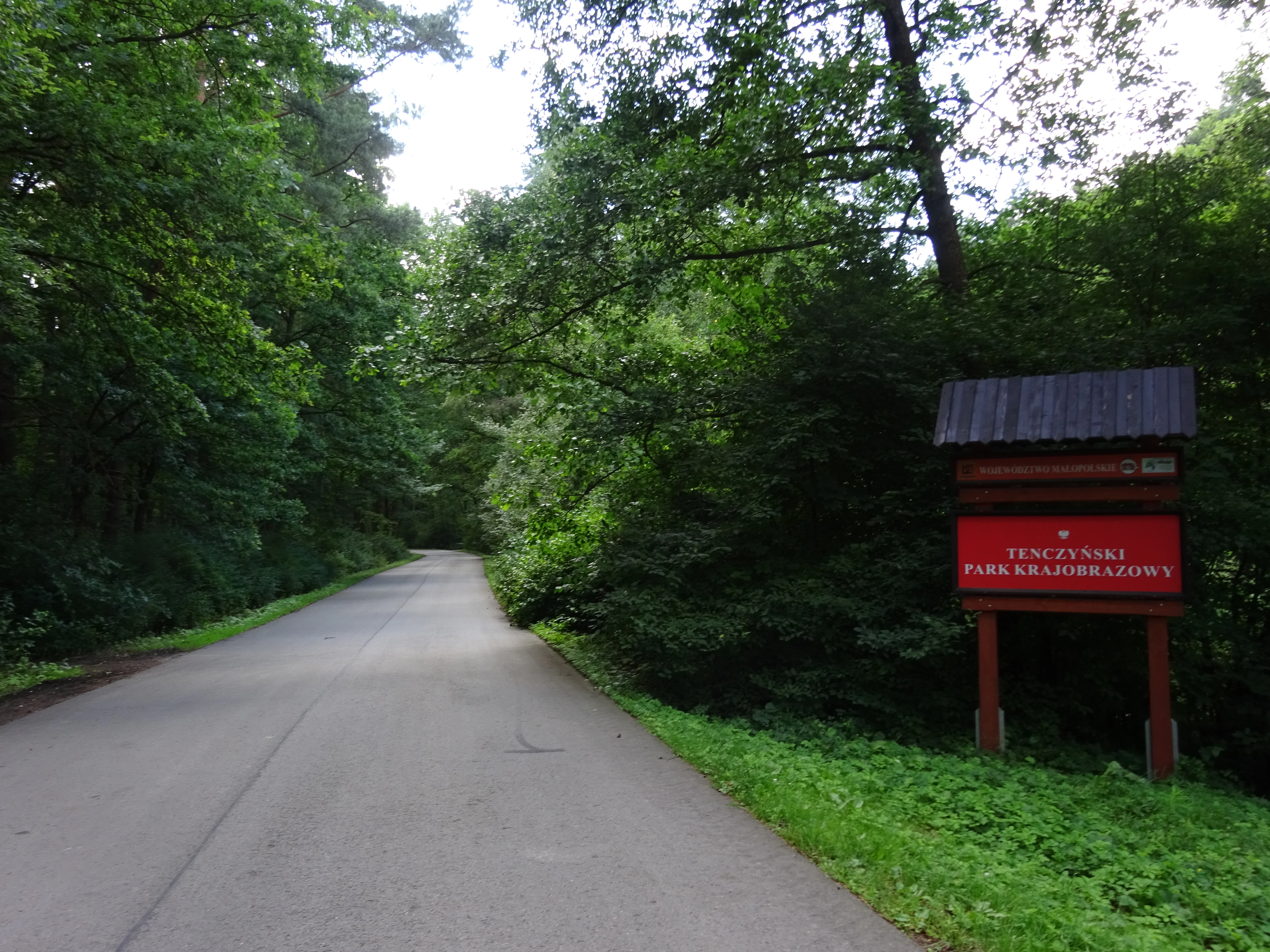
Tenczyński Landscape Park ecosystems, habitats, and plant life
The park protects a notably compact mosaic of habitats. Forests cover roughly a third of its area, and they range from Carpathian beech forests on the best-developed soils to mixed pine-oak communities on lighter substrates. Oak-hornbeam (grąd) forests with beech, oak, and sycamore maple occupy transitional sites, while alder-dominated riverine woods (łęgi olszowe) follow streams and wet pockets.
In the eastern sector, the Dulowska Forest introduces extensive pine forests (bory sosnowe) on sandy soils, creating a different character from the rest of the park. Wetland microhabitats are scattered across the lower terrain, particularly in the Rów Krzeszowicki, supporting moisture-dependent flora such as bog violet and round-leaved sundew, alongside marsh vegetation in raw peat-like conditions.
Protected plant species documented within the park include houseleek, Moldavian monkshood, common ivy, marsh violet, Turk's cap lily, sweet woodruff, wood meadowsweet, round-leaved sundew, lesser periwinkle, and giant horsetail. The combination of dry limestone ridges, mesic woodland slopes, and wet lowland pockets explains how so many distinct species can occur within such a limited area.
Tenczyński Landscape Park wildlife and species highlights
Although sources on the park's fauna are limited, the habitat diversity described above supports a recognizable range of animal life. Forest mammals typical of southern Poland's mixed woodland are present in the park, including moose, which are noted among the protected fauna in the area. Open and semi-open habitats in the park's lower sections provide conditions for ground-nesting birds and damp-loving species.
Documented and protected bird species include the sparrowhawk, barn owl, common buzzard, northern lapwing, and corncrake, indicating a mix of woodland raptors, open-country waders, and owls that reflect the park's combination of forest, wetland, and agricultural edge. The presence of the European pond turtle (żółw błotny) underscores the conservation value of the park's wetland pockets for reptile and amphibian fauna reliant on standing and slow-moving water.
The mosaic of forest, marsh, and cultivated land gives the park an unusually broad faunal profile for its size. This is reinforced by five nature reserves within the park: Bukowica, Dolina Mnikowska, Lipowiec, Skała Kmity, and Zimny Dół, which collectively protect representative forest stands, valley habitats, and rock outcrop communities that sustain local wildlife.
Tenczyński Landscape Park conservation status and protection priorities
Tenczyński Landscape Park has conservation importance that extends beyond its immediate scenic qualities. It protects a transitional landscape between the heavily populated Kraków area and the wider Kraków-Częstochowa Upland, maintaining ecological corridors, woodland continuity, and habitat variety within easy reach of a major urban center.
Its designation under the Małopolska Landscape Parks System gives it a formal role in safeguarding karst geomorphology, Jurassic limestone outcrops, and associated plant communities, including several legally protected plant species. The park also shelters wetlands that support species such as the European pond turtle and a range of moisture-dependent plants, contributing to biodiversity preservation at the regional scale.
A network of five nature reserves within the park, covering forest reserves, a valley reserve, and rock outcrop reserves, strengthens its conservation framework. These reserves concentrate protection on sites that best represent the park's principal natural values, including old-growth forest patches and ecologically important valley habitats.
Tenczyński Landscape Park cultural meaning and human context
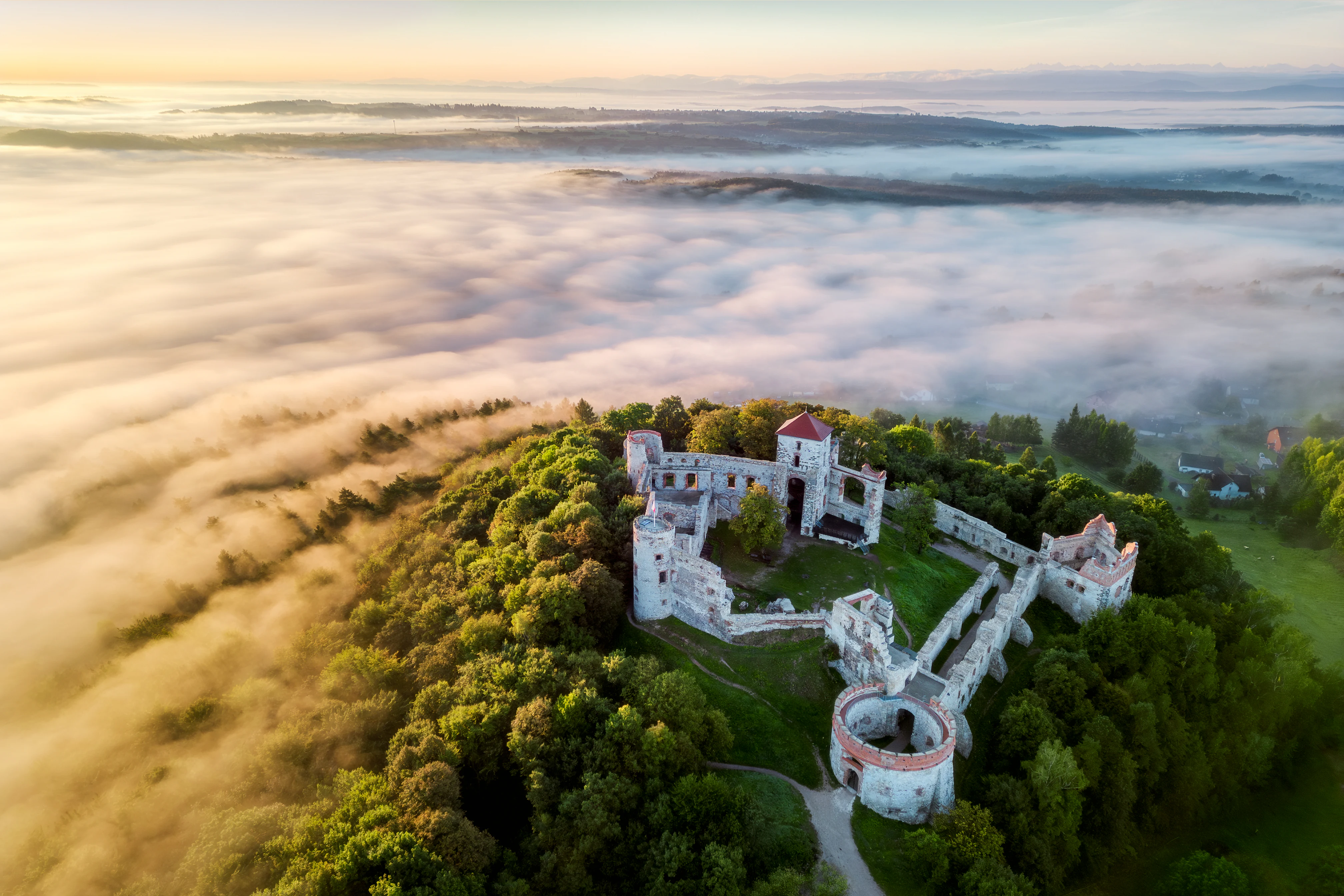
The area protected by the park carries a rich cultural layer that has long shaped how it is perceived. The ruins of Tenczyn Castle near Rudno and Lipowiec Castle near Babice are prominent historical landmarks set directly within the landscape, and they have come to symbolize the identity of the Garb Tenczyński region.
Religious architecture within and near the park includes Baroque churches in Tenczynek and Morawica, which anchor several of the area's villages and reflect the Catholic heritage of the region. On the eastern, Kraków-facing edge of the park, four former Austro-Hungarian forts reflect the area's late 19th- and early 20th-century military history, while the Radziwiłł Palace complex in Balice represents the aristocratic architectural heritage of the late historical period.
The intersection of castles, Baroque villages, fort systems, and noble residences gives the park an unusually dense cultural footprint for a relatively compact protected area, and these sites are central to how the landscape around Kraków's western edge is understood both locally and regionally.
Top sights and standout views in Tenczyński Landscape Park
Tenczyński Landscape Park's standout feature is the interplay between the Garb Tenczyński ridge with its karst-shaped limestone outcrops and the marshy Rów Krzeszowicki below, a contrast that defines the park's visual and ecological identity.
Equally distinctive is the combination of medieval heritage with natural landscape, exemplified by the ruins of Tenczyn Castle and Lipowiec Castle set among forests, complemented by Baroque churches, Austro-Hungarian forts, and the Balice palace complex on the Kraków side.
Finally, the park's compact ecological richness, anchored by Carpathian beech forests, mixed pine-oak woods, the pine-dominated Dulowska Forest, and protected species such as the European pond turtle, gives it a strong conservation profile that belies its proximity to one of Poland's largest cities.
Best time to visit Tenczyński Landscape Park
Because the park lies at low elevation on the Kraków-Częstochowa Upland, conditions are broadly accessible year-round. Spring is a particularly rewarding time, as woodland understory species come into leaf and marsh vegetation in the lower sections becomes more visible, while deciduous forests including Carpathian beech stands show fresh growth.
Summer offers the most active wildlife viewing opportunities in open habitats and wetland margins, and is well suited to longer walks across both the rocky ridge and the lower-lying sections. Autumn highlights the beech and oak communities at their most colorful, especially in mixed woodland areas around the ridge.
Winter reduces foliage cover, which can actually benefit visitors interested in the park's geological features, as exposed limestone outcrops, castle ruins, and small caves are more easily seen, though some paths may be more demanding under colder conditions.