Mori Atlas logo
National parkOjców National Park

Discover iconic limestone cliffs, ravines, and cave systems mapped within this protected national park.

Ojców National Park: Poland's Karst Protected Landscape in Lesser Poland Voivodeship

(Ojcowski Park Narodowy)

Ojców National Park, Poland's smallest national park, presents a remarkable example of karst topography within the Kraków-Częstochowa Upland of Lesser Poland Voivodeship. This protected area is defined by its dramatic limestone cliffs, deep ravines carved by the Prądnik and Sąspówka rivers, and an extensive network of over 400 caves. Explore the unique geology, mapped protected boundaries, and the distinctive rock formations that characterize this significant natural landscape.

Karst LandscapeLimestone CliffsCave SystemsBat ColoniesJurassic GeologyMedieval Castles

Ojców National Park

National park

Park overview

Structured park overview, official facts, and landscape profile for Ojców National Park

Ojców National Park park facts, protected area profile, and essential visitor context
Review the core facts for Ojców National Park, including designation, size, terrain, visitor scale, habitats, and operating context in one park-focused overview.

About Ojców National Park

Ojców National Park occupies a distinctive position as Poland's smallest national park, yet it contains remarkable geological and ecological diversity within its modest 21.46 square kilometers. The park is situated in the heart of the Jurajska Upland, a region characterized by its Cretaceous limestone formations that have been sculpted by millions of years of karst processes. The landscape presents a dramatic tableau of steep-walled valleys, towering cliffs, and labyrinthine cave systems that together create one of Poland's most visually striking protected landscapes.

The geological foundation of the park consists of Upper Jurassic limestone originating from seabed sediments rich in marine organism skeletons. These limestone deposits, reaching thicknesses of up to 200 meters in places, have produced two distinct rock types: hard reef limestone forming the prominent rock towers and softer bedded limestone filling the intervening spaces. This geological diversity underlies the park's extraordinary cave systems and distinctive surface formations that attract both scientific interest and visitor fascination.

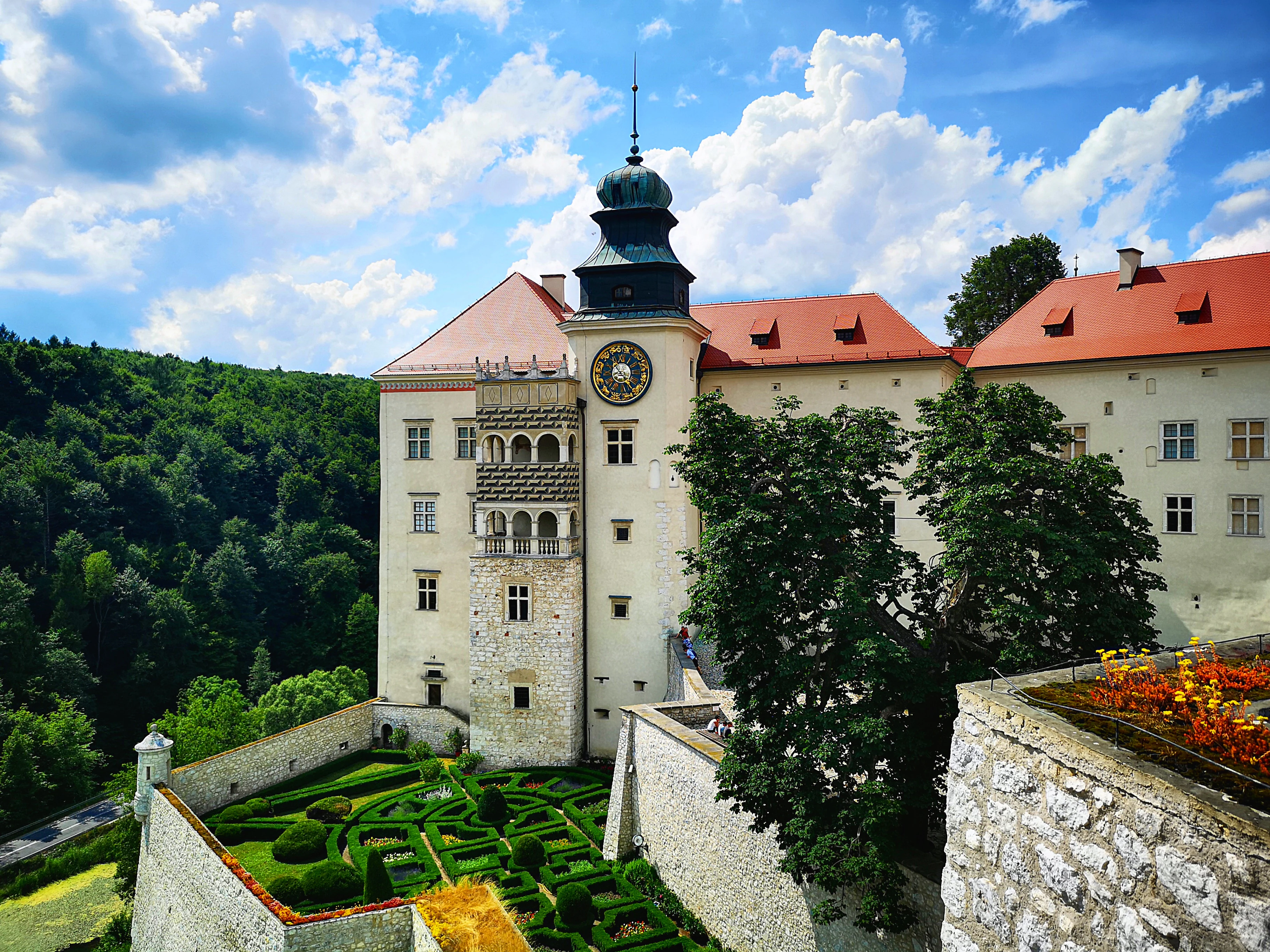
Beyond its geological significance, the park serves as a crucial ecological corridor within the heavily agricultural landscape of southern Poland. The combination of forested slopes, rocky outcrops, river valleys, and cave systems creates a mosaic of habitats supporting extraordinary biodiversity. The Prądnik valley, the park's principal watercourse, and its tributary the Sąspówka provide essential aquatic habitats while their steep sides host specialized rock-dwelling communities. The park's cultural heritage further enhances its value, with medieval castles at Ojców and Pieskowa Skała representing significant architectural landmarks along the historic Trail of the Eagles' Nests.

Quick facts and research context for Ojców National Park

Ojców National Park is situated in Kraków County, Lesser Poland Voivodeship, southern Poland, within the Kraków-Częstochowa Upland (Wyżyna Krakowsko-Częstochowska). The park covers 21.46 km², making it Poland's smallest national park, with 15.28 km² forested and 2.51 km² under strict protection. The terrain is dominated by Jurassic limestone karst formations, with over 400 caves including Łokietek's Cave at 320 meters depth. The park contains two main river valleys: Prądnik and Sąspówka, fed by approximately 20 karst springs. Notable cultural landmarks include the ruined Gothic Ojców Castle and the better-preserved Renaissance Pieskowa Skała castle. The park receives approximately 400,000 visitors annually and maintains a protective buffer zone of 67.77 km².

Park context

Deeper park guide and search-rich context for Ojców National Park

Ojców National Park history, landscape, wildlife, and travel context
Explore Ojców National Park through its history, landscape character, ecosystems, wildlife, conservation priorities, cultural context, and seasonal travel timing in a structured park guide built for atlas discovery and search intent.

Why Ojców National Park stands out

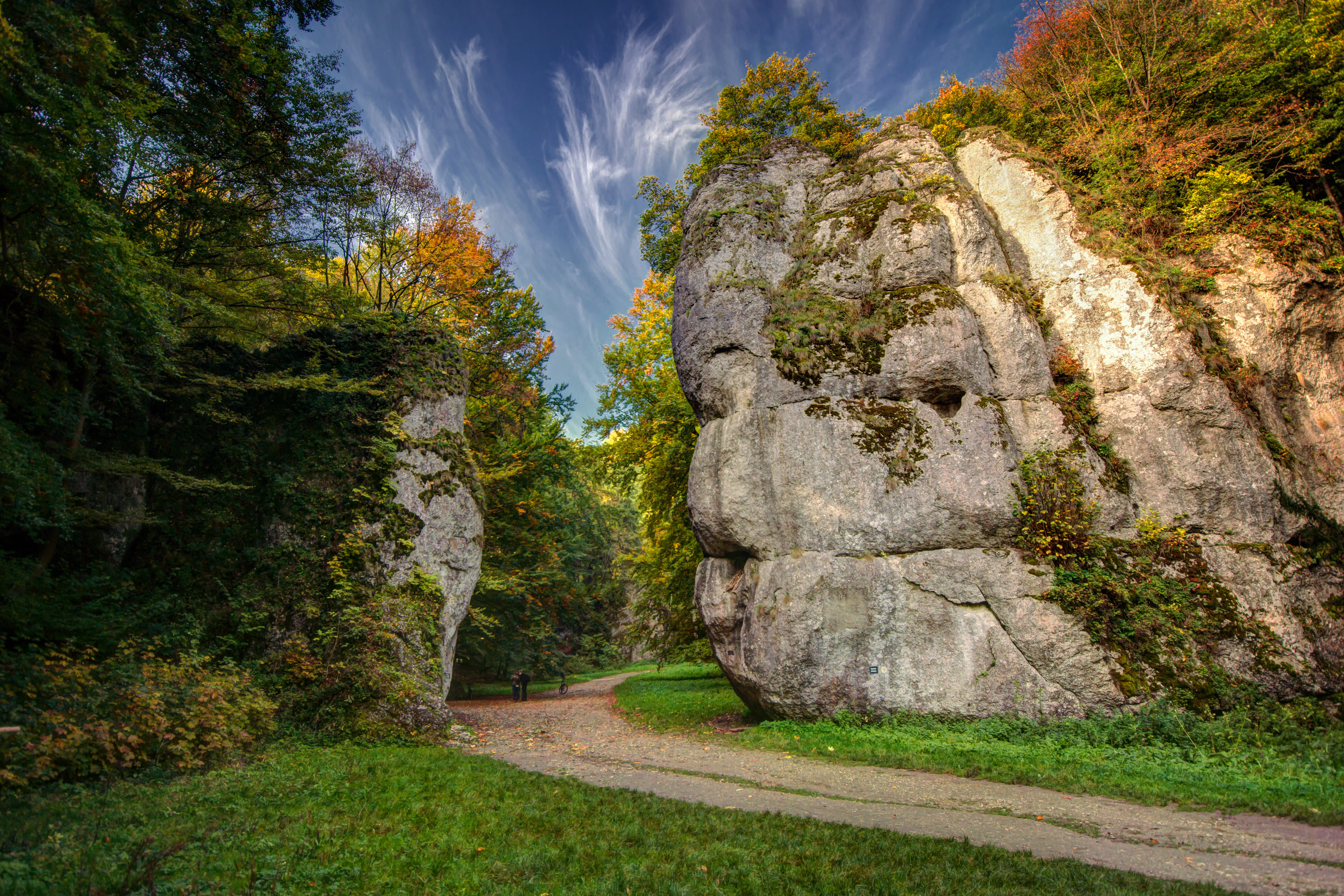
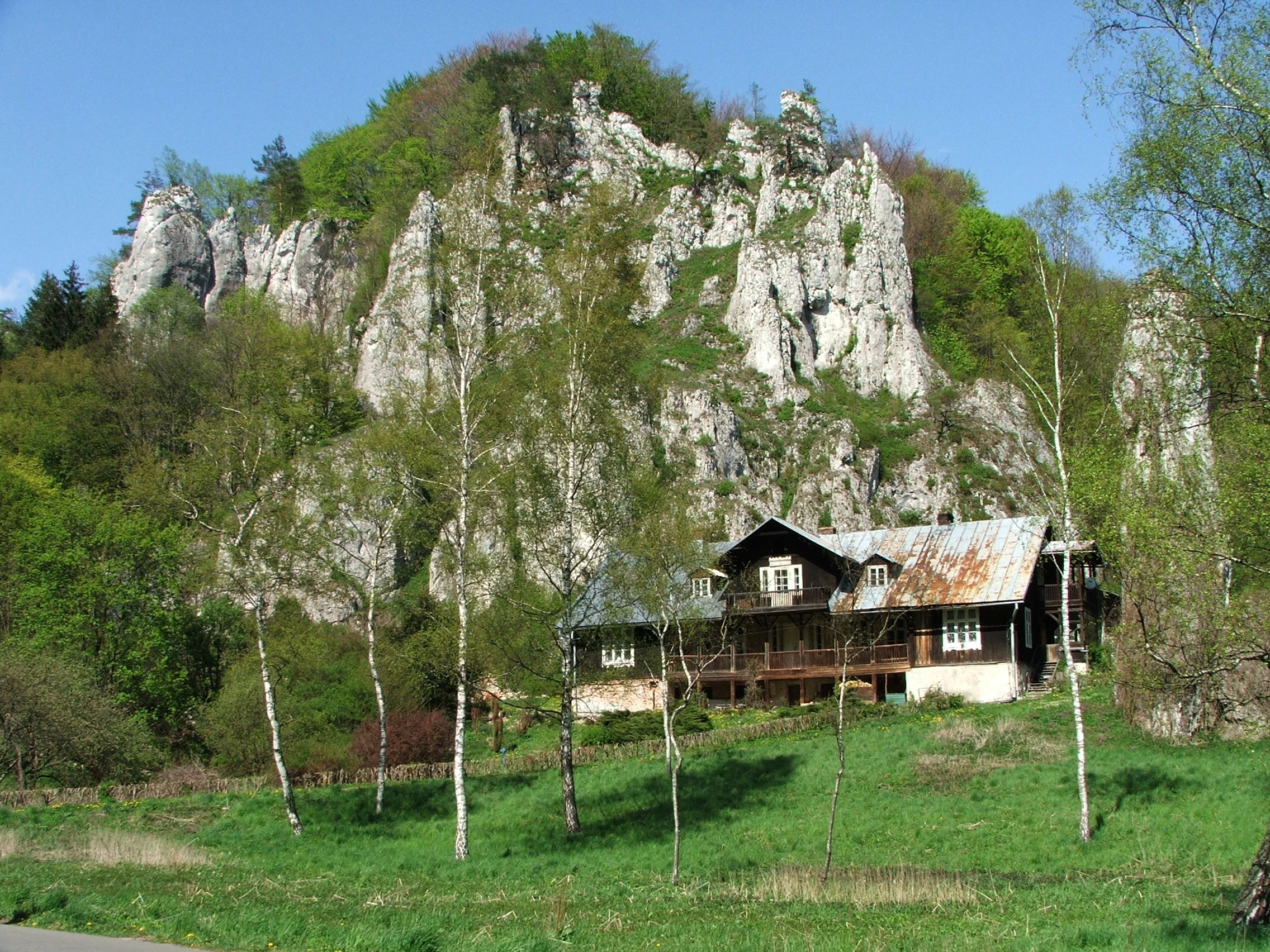
Ojców National Park is best known for its exceptional karst landscape featuring dramatic limestone rock formations and an extensive cave system. The park contains over 400 caves, with Łokietek's Cave being the largest at 320 meters deep and historically associated with King Władysław I Łokietek. The iconic Hercules' Club (Maczuga Herkulesa) stands as a 25-meter-high limestone column, while other notable formations include the Kraków Gate (Brama Krakowska), the Deotymy Needle (Igła Deotymy), and the Rękawica rock. The park is also distinguished by its remarkable biodiversity, particularly its significant bat populations with 15 species hibernating in the caves during winter, and its rich insect fauna including 1,700 beetle species and 1,075 butterfly species.
Ojców National Park history and protected-area timeline

The history of Ojców National Park protection spans more than a century of advocacy and gradual establishment. Scientific interest in the Prądnik Valley region began in the 19th century when researchers first documented the area's unique natural features and archaeological significance. However, this period also saw significant environmental degradation as extensive deforestation, cave excavation for guano extraction, and removal of stalactite formations took their toll on the natural environment.

Despite these losses, the region's natural beauty continued to attract visitors and scientists alike, and voices for conservation emerged in the late 19th and early 20th centuries. Local landowners and entrepreneurs, including Ludwik Józef Krasiński, purchased lands to prevent further destruction. In 1924, Professor Władysław Szafer, who would become the park's founding advocate, prepared the first nature reserve proposal for the Prądnik and Sąspówka valleys, developing a comprehensive natural history monograph and designing the reserve to serve both scientific research and public appreciation.

The reserve concept could not be realized before World War II, but conservation efforts resumed in the 1950s. On January 14, 1956, Ojców National Park was officially established as the sixth national park in Poland through a government decree. A protective buffer zone was established in 1981, forming part of the Jurajskie Landscape Parks Complex, and following boundary adjustments in 1997, this buffer zone covers 6,777 hectares. The park maintains two museums: the Professor Władysław Szafer Museum, named for the park's founding advocate, and a branch of the Kraków National Art Collection housed in Pieskowa Skała castle.

Ojców National Park landscape and geographic character

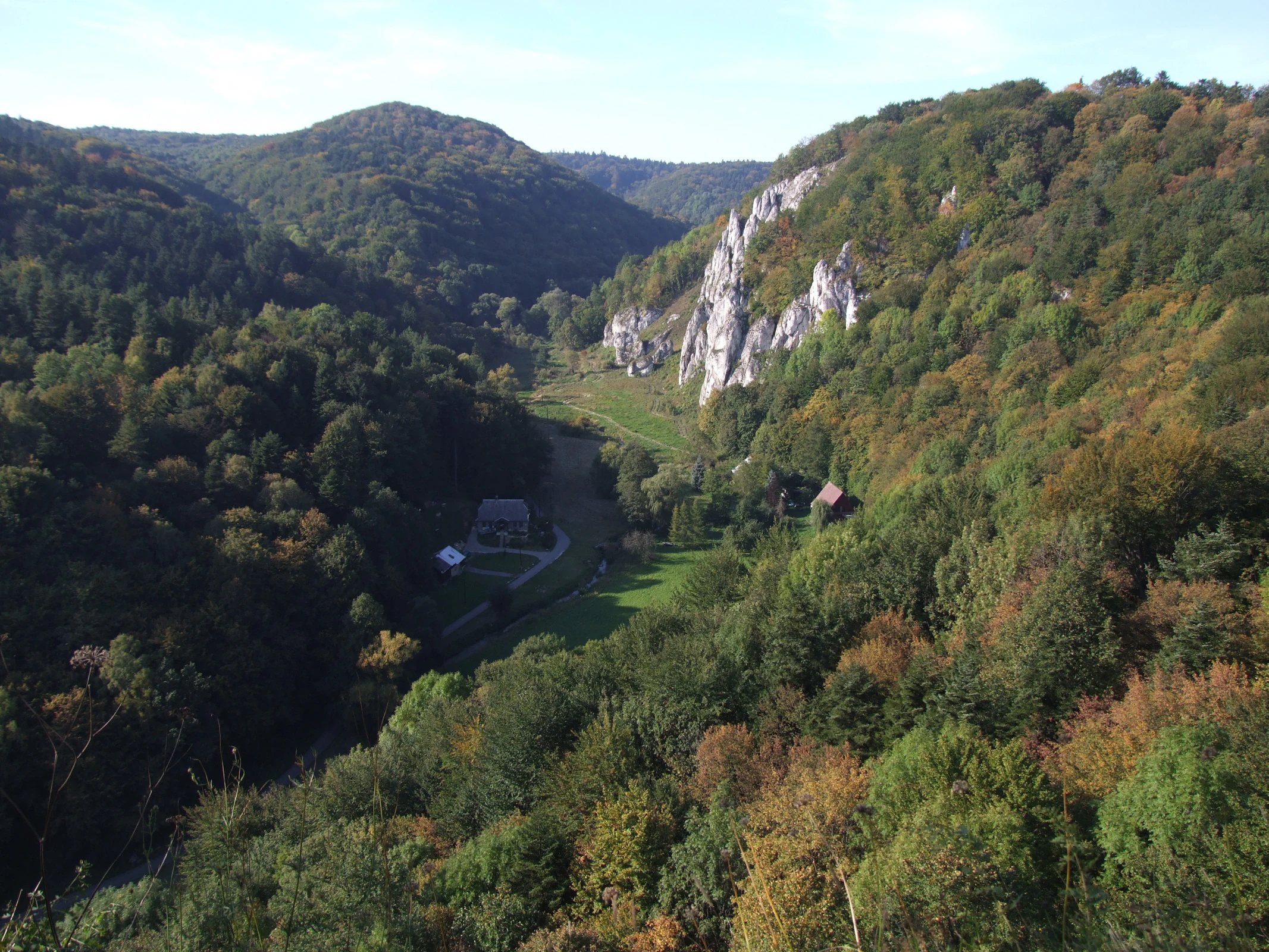
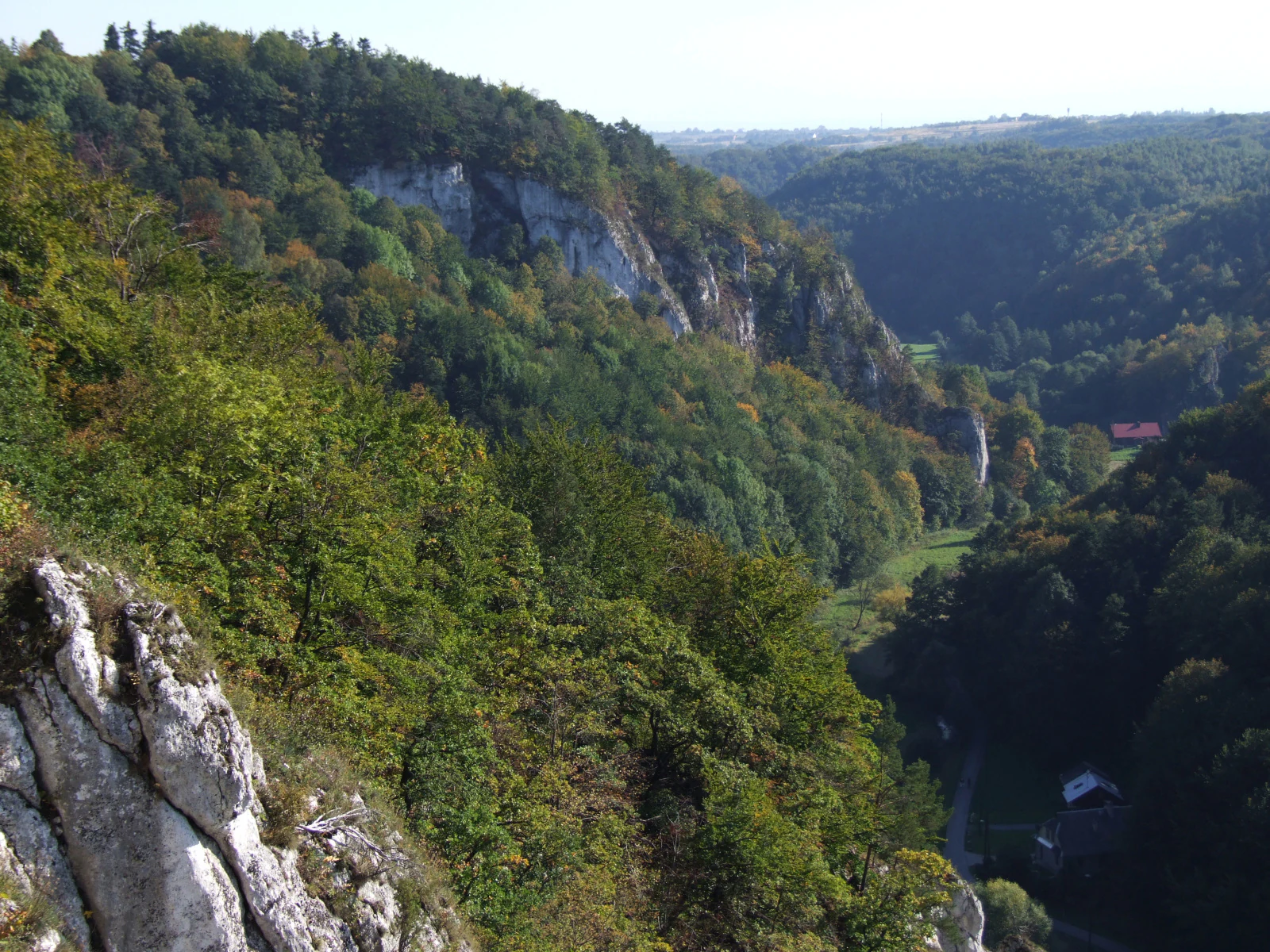
The landscape of Ojców National Park presents a dramatic example of karst topography shaped by millennia of water erosion and weathering. The terrain is characterized by two principal river valleys—the Prądnik and Sąspówka—which have incised deep gorges into the Jurassic limestone plateau, creating valleys with flat floors and steep, often vertical or overhanging walls reaching heights of up to 100 meters. The valleys are flanked by the characteristic wavy upland surface of the Olkuska Upland, dotted with limestone outliers and residual rock towers.

The park's most distinctive features are its numerous rock formations sculpted from hard reef limestone. These tower-like formations rise dramatically above the valley floors and upland surfaces, creating a landscape of remarkable visual complexity. Hercules' Club (Maczuga Herkulesa) stands as the most iconic example—a 25-meter-high limestone column. Other significant formations include the Kraków Gate (Brama Krakowska), a natural arch formation, the needle-like Igła Deotymy, and the Rękawica, Łaskawiec, and Panieńskie Skały formations. The upper surfaces of the plateau are covered by loess deposits up to 8 meters thick, deposited during the last glaciation, which support productive soils in contrast to the thin soils on the limestone exposures.
Ojców National Park ecosystems, habitats, and plant life

The nature of Ojców National Park reflects the complex interplay between limestone terrain, climate, and historical human influence. Despite significant transformations during the 150 years preceding the park's establishment—during which 36 plant species were completely lost—the park retains remarkable ecological diversity. Approximately 950 species of vascular plants, over 230 mosses and liverworts, 1,200 fungal varieties, and around 200 lichen species have been documented within the park's boundaries.

The vegetation reflects the karst landscape's diversity, with oak-hornbeam forests (grądy) dominating the slopes, Carpathian beech forests on the plateau, and pine forests on the loess-covered upland surfaces. Spring brings spectacular flowering in the forest understory, with common hepatica, lungwort, wood anemones, and spring avens creating colorful displays before the tree canopy develops. Rocky outcrops support xerothermic grasslands with steppe species including dwarf cherry and Jan's feather grass, while valley bottoms contain riparian forests. The park also harbors relict species from the Holocene period, including wood anemone and lords-and-ladies, as well as introduced species such as the Japanese Judas tree.
Ojców National Park wildlife and species highlights

The wildlife of Ojców National Park demonstrates remarkable diversity relative to the park's small size, with over 5,500 species documented within its boundaries. The park is particularly notable for its insect fauna, with approximately 4,600 species recorded, including 1,700 beetle species and 1,075 butterfly species. This exceptional invertebrate diversity reflects the variety of habitats—from exposed limestone cliffs to shaded forest floors and species-rich meadows.

Bats represent a particularly significant group in the park, with 15 species documented, including the common noctule and the lesser horseshoe bat. The park's extensive cave system provides critical hibernation habitat, with winter surveys recording over 850 individuals of 11 bat species using 21 underground roosts. Among larger mammals, the park supports roe deer, hare, wild boar, red fox, pine marten, weasel, European badger, European beaver, and the introduced American mink. Bird diversity is equally impressive, with 120 species recorded including 94 breeding species such as black stork, dipper, kingfisher, tawny owl, sparrowhawk, and three species of woodpecker including the black woodpecker.
Ojców National Park conservation status and protection priorities

Ojców National Park holds significant conservation importance as the smallest of Poland's national parks, yet one of the richest in biodiversity relative to its area. The park's protected status preserves a representative sample of Jurassic karst landscape that would otherwise face intensive development pressure given its proximity to Kraków. Strict protection covers 2.51 km² of the most ecologically sensitive areas, while the surrounding 67.77 km² buffer zone provides additional landscape-level protection.

The park's conservation value is enhanced by its role as a biodiversity refuge within a heavily agricultural region. The combination of rocky habitats, forest patches, river valleys, and underground shelters creates a diversity of microhabitats supporting numerous species. The legal protection extends to 218 animal species and 84 plant species, including protected species such as Alpine rose, Ojców birch, marsh orchid, red orchid, common twayblade, sea buckholm, and giant horsetail. The cave systems provide essential hibernacula for bat populations, making the park particularly important for these protected mammals. The karst ecosystem also supports specialized groundwater communities dependent on the springs and streams that emerge from the limestone bedrock.

Ojców National Park cultural meaning and human context

The cultural context of Ojców National Park is deeply intertwined with the region's long human history and its strategic position along the historic Trail of the Eagles' Nests. Archaeological evidence demonstrates human presence in the area dating back approximately 120,000 years to the Paleolithic period, with the region's abundant flint deposits attracting early humans. Excavations in the park's caves have revealed stratified deposits documenting occupation by multiple prehistoric cultures, including the Acheulean, Jerzmanowice, and Magdalenian cultures, with evidence of hunting of mammoths, aurochs, and reindeer.

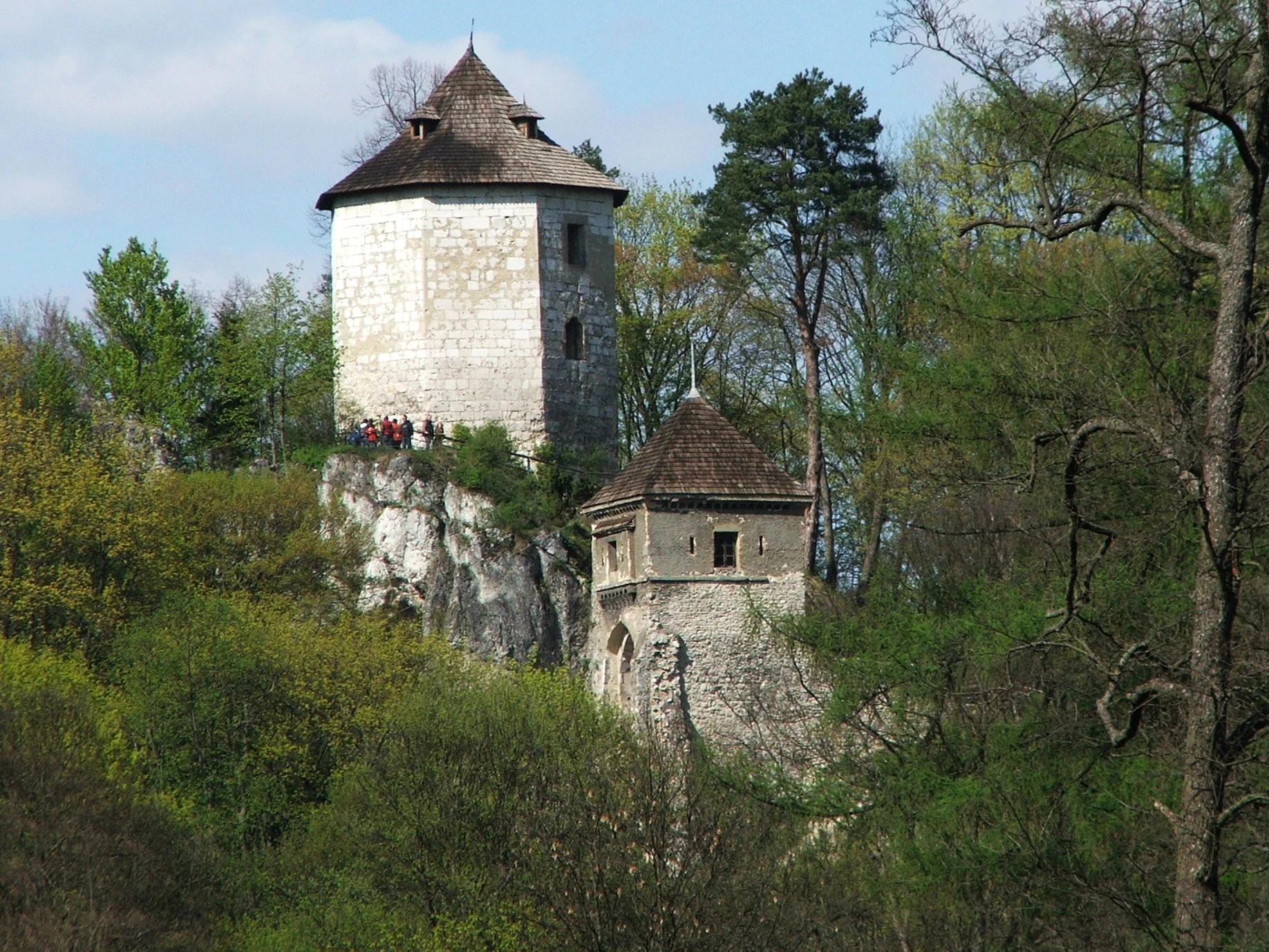
The park contains significant medieval heritage, most notably the ruined Gothic castle at Ojców and the better-preserved Renaissance castle at Pieskowa Skała, both positioned on defensive terraces above the Prądnik valley. The Chapel
Top sights and standout views in Ojców National Park

Ojców National Park offers exceptional highlights that combine geological spectacle, ecological significance, and cultural heritage within a compact area. The park's karst landscape features over 400 caves and dramatic rock formations including the iconic Hercules' Club column and the natural arch of Kraków Gate. Two caves—Łokietek's Cave and Dark Cave (Jaskinia Ciemna)—are open to tourist exploration, providing access to underground chambers with archaeological significance and geological formations. The medieval castle at Pieskowa Skała houses a branch of the Wawel Castle art collection, while the Professor Władysław Szafer Museum provides interpretive context for the park's natural history. The Trail of the Eagles' Nests passes through the park, connecting these cultural landmarks in a historic walking route.
Best time to visit Ojców National Park

The best time to visit Ojców National Park depends on the visitor's interests, as different seasons offer distinct experiences. Spring and early summer bring the forest understory to life with spectacular wildflower displays, while the moderate temperatures make hiking comfortable along the park's 46.6 kilometers of marked trails. The cave systems are most accessible during the warmer months, though visitors should note that some caves may have seasonal access restrictions to protect hibernating bats during winter.

Autumn offers particularly striking scenery as the deciduous forests display autumn coloration, and the limestone formations stand out dramatically against the softer light. Winter visits provide a different perspective on the landscape, though some facilities and trails may have limited access. The park's proximity to Kraków makes it suitable for year-round visits, though summer weekends can be busy with visitors. For those interested in wildlife observation, the bat hibernation season (typically November through March) limits cave access but provides excellent opportunities to observe emerging bats at dusk during the autumn pre-hibernation period.
Park location guide

Geography guide, regional context, and park location map for Ojców National Park

Ojców National Park park geography, regions, and map view in Poland
Understand where Ojców National Park sits in Poland through a broader geographic reading of the surrounding landscape, nearby location context, and its mapped position within the national park landscape.

How Ojców National Park fits into Poland

Poland, officially the Republic of Poland, is a Central European country spanning from the Baltic Sea in the north to the Carpathian Mountains in the south. It borders Germany, Czech Republic, Slovakia, Ukraine, Belarus, Lithuania, and Kaliningrad Oblast. The country has a temperate climate, diverse landscapes, and is known for its rich history, cultural heritage, and strong economic position within the EU.

Wider geography shaping Ojców National Park in Poland

Poland occupies 312,696 km2 in Central Europe, extending from the Baltic Sea coast in the north to the Sudetes and Carpathian Mountains in the south. It borders Germany to the west, Czech Republic and Slovakia to the south, Ukraine and Belarus to the east, and Lithuania and Kaliningrad Oblast to the northeast. The landscape includes lowland plains, uplands, and mountain ranges.

Map view of Ojców National Park

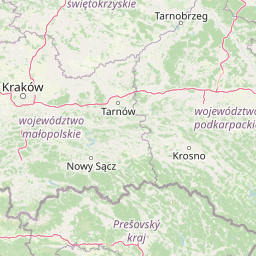
Use this park location map to pinpoint Ojców National Park in Poland, understand its exact geographic position, and read its mapped placement within the surrounding landscape more clearly.

Pigeon | © OpenStreetMap contributors

Location context for Ojców National Park

Lesser Poland Voivodeship
Park atlas

Explore the Regional Geography and Karst Landscapes Surrounding Ojców National Park

Discover Nearby National Parks and Protected Areas Beyond Ojców National Park
Browse other national parks and protected areas geographically connected to Ojców National Park, featuring similar karst landscapes, river valleys, and biodiversity in the Lesser Poland Voivodeship and Kraków-Częstochowa Upland region. Comparing these protected landscapes provides valuable atlas context, allowing for deeper exploration of the region's unique geological formations and conservation efforts.
Watercolor painting showing rolling green hills, forests, and distant mountains under a pale sky
National parkLesser Poland Voivodeship

Gorce National Park: Carpathian Forest Ecosystems and Mapped Terrain in Lesser Poland

Protected landscape discovery within the Western Beskids.

Delve into the protected landscape of Gorce National Park, a key national park situated in Poland's Lesser Poland Voivodeship. This atlas entry focuses on its mapped geography, highlighting the characteristic Carpathian mountain terrain, extensive old-growth forests, and unique alpine meadows. Understand the park's protected boundaries and its significance within the regional landscape context of the Western Beskids, providing a foundation for structured geographic exploration.

Area
70.3 km²
Established
1981
IUCN
II
Visitors
80K annual
Watercolor illustration of a river flowing through a forested valley with rolling hills and scattered trees
National parkPrešov Region

Pieniny National Park: Slovakia's Distinctive Protected Landscape and Dunajec River Gorge

Explore mapped boundaries, regional geography, and protected karst terrain.

Pieniny National Park offers a focused exploration of dramatic limestone gorges and unique Carpathian mountain geography within Slovakia's Prešov Region. This national park is celebrated for the spectacular Dunajec River Gorge, a feature that defines its protected landscape and provides a profound example of natural terrain shaping. Understanding Pieniny National Park involves appreciating its specific mapped boundaries and its role as a significant protected area within the broader atlas of European natural wonders and conservation territories.

Area
37.5 km²
Established
1967
IUCN
II
Relief
Mountain
Watercolor painting of mountain ranges, forests, and a winding river
National parkLesser Poland Voivodeship

Tatra National Park: Poland's Premier Alpine National Park and Protected Landscape

Explore dramatic glacial terrain, mountain lakes, and regional geography.

Tatra National Park is the definitive Alpine protected area in Poland, located in Lesser Poland Voivodeship. It showcases unique glacial landforms, including over 30 mountain lakes and dramatic peaks like Rysy. This national park serves as a crucial habitat for endemic species and offers unparalleled opportunities for atlas exploration of its rugged, mapped terrain. Understand its geographic significance as part of the Carpathian Mountains and its role as a protected landscape.

Area
211.64 km²
Established
1954
IUCN
II
Visitors
3.9M annual
Watercolor illustration of rolling hills with green forests in the foreground and purple, green, pink, and yellow mountain ranges in the background
National parkŚwiętokrzyskie Voivodeship

Świętokrzyski National Park: Protected Landscape and Mapped Terrain of Poland's Ancient Mountains

Discover the unique gołoborze and ancient forests of this national park.

Świętokrzyski National Park in Poland's Świętokrzyskie Voivodeship offers a unique geographic discovery experience. Explore the park's mapped boundaries, characterized by its distinctive gołoborze rock rubble fields, ancient silver fir trees, and endemic Polish larch forests. This protected area within the Holy Cross Mountains provides a prime example of ancient landscape evolution and protected forest ecosystems, ideal for atlas-based exploration and understanding regional geography.

Area
76.26 km²
Established
1950
IUCN
II
Visitors
168K annual
National park

Malá Fatra National Park National Park: Geographic Context and Protected Area Mapping

Explore the mapped terrain and regional geography.

Malá Fatra National Park serves as a cornerstone for understanding Slovakia's protected landscapes. This dedicated park page provides crucial geographic context, detailing its national park designation and the extent of its protected area boundaries. Users can leverage MoriAtlas to visualize the park's location within the broader regional geography, facilitating a structured approach to discovering its natural landscape and terrain through map-based exploration.

Area
226.3 km²
Established
1988
IUCN
II
Relief
Mountain
National park

Veľká Fatra National Park: Slovakia's Premier Protected Landscape for Geographic Discovery

Explore the park's mapped boundaries and regional natural terrain.

Veľká Fatra National Park stands as a distinct protected area, offering critical insights into Slovakia's regional geography and landscape character. This entry provides an atlas-driven perspective on its mapped boundaries and its significance as a national park. Delve into the structured geographic details and protected land context that define Veľká Fatra National Park for comprehensive discovery.

Area
403.713 km²
Established
2002
Relief
Mountain
Climate
Temperate
National park

Low Tatras National Park: Slovakia's Vast National Park and Carpathian Protected Landscape

Explore mapped terrain and regional geographic context.

The Low Tatras National Park represents Slovakia's largest protected area, encompassing the entirety of the Low Tatras mountain range. Its landscape is defined by dramatic altitudinal diversity, from alpine summits like Ďumbier to extensive forest zones and significant karst formations with notable cave systems. This page provides detailed geographic context and map-based discovery for the park's protected boundaries and its ecological significance within the Carpathian region.

Area
728 km²
Established
1978
IUCN
II
Relief
Mountain
Watercolor illustration showing a landscape with rolling hills, green trees, and distant mountains under a light sky
National parkSubcarpathian Voivodeship

Magura National Park: Mapped Protected Landscape & Carpathian Geography Atlas

Explore unique sandstone formations and mapped natural terrain.

Magura National Park, located in the Subcarpathian Voivodeship of Poland, offers a rich focus for protected-area exploration and geographic discovery. This national park is distinguished by its dramatic sandstone rock formations, forested Carpathian ridges, and its ecological importance as a transitional zone. Users engaging with Magura National Park can examine its mapped boundaries, understand its specific landscape context, and appreciate its role within the broader regional geography.

Area
194.39 km²
Established
1995
IUCN
II
Visitors
40K annual

Common questions about visiting, size, designation, and location context for Ojców National Park

Ojców National Park FAQs for park facts, access, geography, and protected area context
Find quick answers about Ojców National Park, including protected-area facts, park geography, trail and visitor context, and how the park fits into its surrounding country and regional landscape.
MoriAtlas Explorer

Continue Your Protected Areas Search Across the Global Atlas

Deepen your exploration by continuing the structured search for national parks and protected areas worldwide. Utilize the comprehensive filtering capabilities to compare different conservation landscapes and refine your understanding of global park geography. Discover more about the distribution and characteristics of protected natural areas.

Global natural geography