
Mori Atlas logo
Natural monumentVáclavovice – pískovna

Examining the ecological landscape, wetland terrain, and amphibian habitats within this former sand quarry

Václavovice – pískovna Natural Monument and Protected Landscape in the Moravian-Silesian Region

(Přírodní památka Václavovice – pískovna)

Václavovice – pískovna stands as a significant natural monument located in the Moravian-Silesian Region of the Czech Republic. This protected area transforms a former industrial sand extraction site into a vital wetland ecosystem, featuring standing pools, marshy fringes, and regenerating woodland. The site serves as a crucial habitat for amphibian populations, particularly the great crested newt, while demonstrating the complex environmental succession of reclaimed landscapes.

natural monumentNatura 2000sand quarry habitatwetlandamphibian conservationgreat crested newt
A flat-design, vector-style illustration showing a winding path leading through a forest toward a waterfall cascading down a high mountain cliff.

Václavovice – pískovna

Natural monument

Park overview

Structured park overview, official facts, and landscape profile for Václavovice, Pískovna

Václavovice, Pískovna park facts, protected area profile, and essential visitor context

Review the core facts for Václavovice, Pískovna, including designation, size, terrain, visitor scale, habitats, and operating context in one park-focused overview.

About Václavovice, Pískovna

Václavovice – Pískovna sits in the eastern part of the Czech Republic, in the heavily urbanized borderland around Ostrava, where industrial heritage and renewed natural habitats often stand side by side. The protected area occupies part of an old sand extraction site that, after the cessation of quarrying, gradually filled with water and developed a mosaic of shallow pools, marshy shores, reed beds, and damp woodland edges. This kind of regenerative habitat is increasingly recognized across Europe for its conservation value, particularly because commercial extraction sites can mimic the open, disturbed conditions that many pioneer and wetland species rely on.

Administratively, the site falls within the Ostrava-město district of the Moravian-Silesian Region and crosses two cadastral areas, those of the town of Šenov and the village of Václavovice, both of which it is named after. Its modest surface area of under seven hectares and elevation of roughly 240 to 278 meters above sea level place it firmly within the lowland character of the broader Ostrava basin, where gentle topography, moisture-retaining soils, and a temperate continental climate combine to support rich amphibian life.

The site's inclusion in the Natura 2000 network underscores its broader European significance. Within the Czech system of nature conservation, it is classified as a přírodní památka, or natural monument, a category typically applied to small but ecologically valuable localities. The designation of Václavovice – Pískovna reflects an emphasis on protecting not just a single species but the integrated aquatic and wetland habitat that sustains it, particularly through seasonal flooding cycles and the persistence of open water within the former quarry.

Quick facts and research context for Václavovice, Pískovna

Václavovice – Pískovna is a Czech natural monument (přírodní památka), recognized under IUCN Category III. It was officially declared on 4 June 2013 and spans roughly 6.86 hectares at an elevation of about 240 to 278 meters above sea level. The site lies in the Ostrava-město district of the Moravian-Silesian Region, in the cadastral territories of Šenov and Václavovice.

The protected area is part of the Natura 2000 European network of important sites, with its primary conservation focus on amphibians, especially the great crested newt. Its small footprint and proximity to Ostrava mark it as a notable example of localized habitat protection within an otherwise industrialized regional landscape.

Protection and recognition

Examine the documented conservation background and institutional recognition records for Václavovice – pískovna.

Václavovice – pískovna Protection Status and Natura 2000 Recognition

Václavovice – pískovna holds registered Natura 2000 status as part of its documented conservation framework and geographic profile. Structured records outline the official protection history and international designations assigned to the protected area.
Park context

Deeper park guide and search-rich context for Václavovice, Pískovna

Václavovice, Pískovna history, landscape, wildlife, and travel context

Explore Václavovice, Pískovna through its history, landscape character, ecosystems, wildlife, conservation priorities, cultural context, and seasonal travel timing in a structured park guide built for atlas discovery and search intent.

Why Václavovice, Pískovna stands out

Václavovice, Pískovna is best known as a protected breeding site for the great crested newt (Triturus cristatus), one of the most strictly protected amphibian species in Central Europe. The site's combination of standing water in a former sand quarry, wet woodland edges, and reed-dominated marshy patches creates exactly the kind of habitat mosaic that this species requires for successful reproduction and seasonal refuge. Beyond its flagship newt population, the site is also valued for supporting a broader amphibian community, including several other newt species, tree frogs, and common toads. This makes the former quarry an unusually rich amphibian locality despite its modest size.
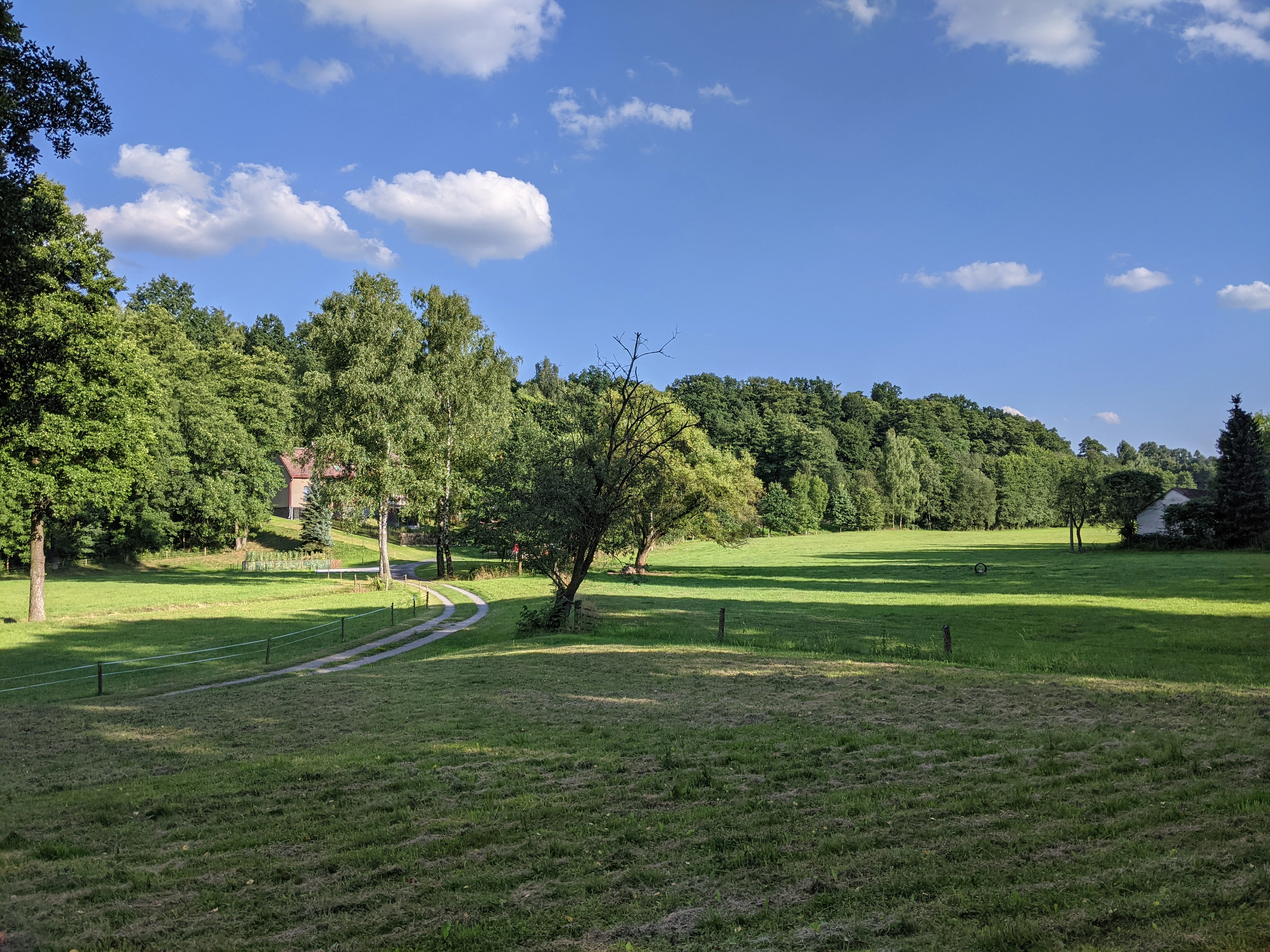
A green, grassy meadow framed by trees under a blue sky with white clouds, with a winding dirt path in the foreground.
A summer view of the natural monument area in Vaclavovice.

Václavovice, Pískovna history and protected-area timeline

The site was officially declared a protected natural monument (přírodní památka) on 4 June 2013, under the Czech system of small-scale nature conservation. Its protection is closely tied to its recognition as a European Important Site within the Natura 2000 network, a status that formalized its conservation significance beyond purely national frameworks.

Before its designation, the area had been used as a sand quarry, and its transformation into a protected locality represents a broader shift toward recognizing and conserving habitats that emerge on former extraction sites. The formal protection in 2013 effectively locked in the conservation value that had developed organically in the abandoned quarry, ensuring the preservation of its amphibian-rich pools and surrounding wetland vegetation.

Václavovice, Pískovna landscape and geographic character

The physical landscape of Václavovice – Pískovna is shaped by its origins as a former sand quarry. Rather than featuring dramatic relief, the area is defined by excavated basins, shallow standing water, gently sloping pit walls, and surrounding woodland fringes that have gradually reclaimed the site. The terrain sits at roughly 240 to 278 meters above sea level, consistent with the broader lowland character of the Ostrava region.

Wetland elements dominate the scene: pools of slow-moving water, marshy edges, reed vegetation, and damp banks form the core of the protected area. Surrounding alder and aspen woodland softens the quarry's geometry, while reeds (sítiny) and taller marsh plants like Glyceria maxima grow along the waterline. The result is a layered landscape of water, marsh, scrub, and woodland, all within an unusually compact area.

Václavovice, Pískovna ecosystems, habitats, and plant life

Ecologically, Václavovice – Pískovna is a textbook example of a regenerated industrial site that has matured into a biologically valuable wetland. The interplay between open water, disturbed mineral substrates, and encroaching woodland has produced a habitat mosaic that supports multiple ecological niches within a very small footprint.

Wetland vegetation is central to the site. Stands of common alder (Alnus glutinosa) and aspen (Populus tremula) characterize the wooded margins, while the shoreline and open water zones host Glyceria maxima, sedges such as Carex spicata and Carex divulsa, and dense reed (sítina) growth. These formations offer shelter, calling sites, and breeding substrate for amphibians, while also providing structural diversity for invertebrates and other small fauna.

The site's open, disturbed soils and past quarrying history have also made it susceptible to invasive species. The presence of giant knotweed (Reynoutria sachalinensis) at the site is noted as a management concern, illustrating the ongoing tension between secondary habitat development and the need to protect habitat integrity. Despite this, the site retains strong ecological function as an amphibian refuge.

Václavovice, Pískovna wildlife and species highlights

Wildlife interest at Václavovice – Pískovna centers overwhelmingly on amphibians, which are the primary subject of the site's protection. The great crested newt (Triturus cristatus), a species of high conservation concern across much of Europe, is the flagship species and the formal reason for the site's inclusion in the Natura 2000 network.

Alongside the great crested newt, the site supports a robust community of other amphibians: the smooth newt (Lissotriton vulgaris), the alpine newt (Mesotriton alpestris), the European tree frog (Hyla arborea), the common frog (Rana temporaria), the edible frog (Pelophylax esculentus), and the fire-bellied toad (Bombina bombina). This species richness, combined with limited human disturbance and stable water bodies, makes the site an important local stronghold for amphibian biodiversity.

Although the available sources do not detail larger mammal or bird populations, the wetland and woodland structure of the site provides habitat for typical lowland fauna of the Ostrava region. The site's significance, however, remains firmly rooted in its amphibian character, which is the core focus of both national protection and Natura 2000 designation.

Václavovice, Pískovna conservation status and protection priorities

Václavovice – Pískovna is a conservation success story in miniature: a small, locally driven protected area that anchors regional amphibian diversity and contributes to a Europe-wide ecological network. Its designation as a přírodní památka in 2013 formalized protection for the quarry's mosaic of pools, marshland, and damp woodland, all of which together form the necessary habitat structure for sensitive amphibian species.

The site's inclusion in the Natura 2000 network, specifically as a European Important Site, elevates its conservation significance beyond the Czech Republic and ties it to broader efforts to safeguard Triturus cristatus and supporting wetland habitats across the continent. This dual layer of protection, national and European, gives the area an institutional framework for active management, monitoring, and potential intervention against threats such as invasive species and habitat degradation.

The presence of invasive giant knotweed on the site underscores one of the ongoing conservation challenges: maintaining open, dynamic habitat conditions in a recovering quarry without allowing aggressive non-native vegetation to displace native flora and the amphibian communities that depend on it. Despite these pressures, the site remains a high-value conservation node within an otherwise heavily modified regional landscape.

Václavovice, Pískovna cultural meaning and human context

While Václavovice – Pískovna is primarily valued for its ecological character, its location also carries regional cultural significance. The site sits within the traditional administrative and cultural landscape of the Ostrava region, an area long defined by coal mining, heavy industry, and the everyday proximity between working land and human settlement. The Václavovice and Šenov communities bordering the site reflect this blending of village identity and industrial-era land use.

The transformation of a former sand quarry into a protected natural monument also speaks to a broader shift in regional identity across the post-industrial Czech landscape, where abandoned extraction sites are increasingly reimagined as ecological assets. Sources do not provide detailed cultural or historical narratives beyond this context, so deeper cultural interpretation is not supported.

Top sights and standout views in Václavovice, Pískovna

Václavovice – Pískovna stands out for packing a remarkable concentration of ecological value into a very small footprint. Its pools and reed-filled marsh fringes host one of the more significant great crested newt populations in the Ostrava region and support six other amphibian species, including the European tree frog and the fire-bellied toad.

The site's formal dual designation, national natural monument and Natura 2000 European Important Site, gives it both local and continental conservation weight. Its character as a regenerated industrial site adds a further distinctive layer, illustrating how former quarries can become important refuges for wetland and amphibian biodiversity within heavily urbanized regions.

Best time to visit Václavovice, Pískovna

Spring and early summer are generally the most rewarding periods to appreciate the ecological character of Václavovice – Pískovna, as this is when amphibian activity, including breeding choruses and newt presence in the pools, is at its peak. The surrounding reed beds and alder woodland are also most visually expressive during this season.

Late spring and early summer also tend to offer the mildest and most stable conditions for exploring wetland habitats of this kind, while autumn visits can highlight the changing character of the woodland margins. The site's small size and proximity to urban infrastructure mean it is accessible across much of the year, but the active ecological season remains the most compelling window for visitors interested in its amphibian fauna.
Monthly climate preview

Long-term representative measurements of monthly temperature and precipitation rhythms

Climate Normals and Annual Temperature Patterns for Václavovice – pískovna

Representative coordinate records outline the measured annual temperature and precipitation rhythm across twelve months at Václavovice – pískovna. Examining the complete monthly climate normals profile provides detailed long-term averages for thermal and moisture patterns.
Annual mean8 °C
-3 °C20 °C
Jan-3°
Feb-2°
Mar
Apr
May14°
Jun17°
Jul20°
Aug19°
Sep14°
Oct
Nov
Dec-2°
Warmest month
July

19.7 °C

Coolest month
January

-3.3 °C

Wettest month
July

3.1 mm/day

Driest month
January

1.2 mm/day

Park location guide

Geography guide, regional context, and park location map for Václavovice, Pískovna

Václavovice, Pískovna park geography, regions, and map view in Czechia

Understand where Václavovice, Pískovna sits in Czechia through a broader geographic reading of the surrounding landscape, nearby location context, and its mapped position within the national park landscape.

How Václavovice, Pískovna fits into Czechia

Czech Republic is a landlocked Central European country with a population of approximately 10.9 million people. The nation was established as an independent state on January 1, 1993, following the dissolution of Czechoslovakia. Its capital and largest city is Prague, with other major urban centers including Brno, Ostrava, Plzeň, and Liberec.

Wider geography shaping Václavovice, Pískovna in Czechia

The Czech Republic is a landlocked country in Central Europe. It is bordered by Germany to the west, Austria to the south, Poland to the northeast, and Slovakia to the southeast. The landscape is predominantly hilly, with the territory covering 78,871 square kilometers.

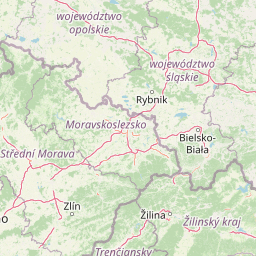
Map view of Václavovice, Pískovna

Use this park location map to pinpoint Václavovice, Pískovna in Czechia, understand its exact geographic position, and read its mapped placement within the surrounding landscape more clearly.

Pigeon | © OpenStreetMap contributors

Location context for Václavovice, Pískovna

Moravskoslezský kraj
Recorded earthquake history

Explore the Recorded Earthquake History for Václavovice – pískovna

Review our structured catalogue of historical earthquakes documented in the vicinity of Václavovice – pískovna. MoriAtlas provides transparent access to regional seismic data, allowing for direct investigation of documented event records near this important natural monument.

Václavovice – pískovna Earthquake History

Catalogued events

135 events

Strongest magnitude

Magnitude 5.1

Most recent event

Jan 27, 2025

This history includes earthquakes recorded inside the park or within 50 km of its borders

Visualizing the wetland habitats and former sand quarry terrain

Václavovice – pískovna Photos and Mapped Landscape Scenery

Photographic records reveal the distinct water basins, reed fringes, and woodland edges that define the protected landscape of Václavovice – pískovna. Visual documentation provides clear insight into the regenerated quarry terrain and specialized amphibian habitats preserved within the region.

A green, grassy meadow framed by trees under a blue sky with white clouds, with a winding dirt path in the foreground.

Park atlas

Compare regional wetland habitats and protected landscapes across the surrounding terrain.

Explore Other Parks and Protected Areas Near Václavovice – pískovna

Browsing other parks near Václavovice – pískovna allows visitors to compare similar wetland habitats and regenerated natural monuments across the surrounding region. Extending the geographic review provides deeper context on regional protected landscapes and local conservation networks.
Watercolor painting of a meandering river landscape with green grasses, shrubs, and soft pink hills in the background.
Natural monumentMoravskoslezský kraj
About 3.6 km away#1 closest

East

Meandry Lučiny Natural Monument: Protected Riverine Geography and Floodplain Habitat Maps

Natural river meanders in the Moravian-Silesian landscape

This protected natural monument preserves a vital lowland river corridor where the Lučina River flows in an unregulated course. Through its shifting meanders and diverse floodplain habitats, the area highlights the ecological importance of maintaining natural hydrological processes in a heavily urbanized region of the Czech Republic.

Area
0.406 km²
Established
1992
IUCN
III
Relief
Lowland
A soft watercolor illustration depicting a green, open floodplain with rows of trees under a pale, gentle sky.
Nature reserveMoravskoslezský kraj
About 12 km away#2 closest

West

Polanský les Nature Reserve: Mapped Protected Landscape and Floodplain Geography

A preserved hardwood forest relic in the Ostrava region

Polanský les maintains a critical status as a protected nature reserve, safeguarding a relic hardwood floodplain forest along the Oder River. This area is characterized by its significant botanical diversity, including established snowdrop populations and mature broadleaf woodland. Its location within the Moravskoslezský kraj highlights its role as a dense ecological fragment at the geological boundary between the Bohemian Massif and the Outer Western Carpathians.

Area
0.598 km²
Established
1970
IUCN
IV
Relief
Lowland
Natural monumentMoravskoslezský kraj
About 19 km away#3 closest

North

Věřňovice Natural Monument: Mapping Protected Floodplain Woodlands in the Moravian-Silesian Region

Geographic overview of the Olše river terrace habitat.

Located near the Czech-Polish border, Věřňovice serves as a vital protected natural monument featuring well-preserved floodplain forest communities. This compact site offers deep insights into river terrace geomorphology and local woodland distribution, characterized by a diverse mosaic of elm and oak-hornbeam stands that support distinct ecological communities.

Area
0.046 km²
Established
1989
IUCN
III
Relief
Lowland
Natural monumentMoravskoslezský kraj
About 22 km away#4 closest

South

Vodopády Satiny Natural Monument: Mapped Geography and Protected Carpathian Landscapes

Regional geomorphology in the Moravskoslezský kraj

The Vodopády Satiny natural monument protects one of the most clearly exposed rock channels in the Czech Carpathians. Located in the Moravskoslezský kraj, the site demonstrates the impact of flysch geology on stream formation, where cascading waters have carved a distinct, long-exposure path through local mountain forests.

Area
0.09 km²
Established
2006
IUCN
III
Relief
Mountain
Natural monumentMoravskoslezský kraj
About 26 km away#5 closest

Southwest

Váňův kámen: Natural Monument and Jurassic Limestone Landmark in the Moravian-Silesian Region

Geological outcrops and forest terrain in the Sub-Beskydy Hills

Váňův kámen presents a sharp, pyramid-shaped Jurassic limestone formation that breaks the rolling topography of the Sub-Beskydy Hills. This 0.78-hectare protected site preserves vital evidence of prehistoric coral reefs alongside significant archaeological layers and historical markers. Its unique position as a natural, historical, and geological feature makes it a focal point for understanding the diverse landscape composition of the Czech Moravian-Silesian Region.

Area
0.008 km²
Established
1993
IUCN
III
Relief
Upland
A horizontal watercolor painting depicting soft, layered green hills and purple-toned mountain ridges in the distance, with a foreground of stylized evergreen trees.
Protected landscapeSilesian Voivodeship
27 km away#6 closest

East

Park Krajobrazowy Beskidu Śląskiego: Geographic Atlas of Protected Silesian Beskid Landscapes

Mapped mountain ridges, river headwaters, and protected forest reserves.

Gain insight into the ecological and structural character of Park Krajobrazowy Beskidu Śląskiego. This resource documents the park's flysch geological formations, rare cave systems, and the hydrological significance of the Vistula River headwaters within the Silesian Beskids.

Area
386.2 km²
Established
1998
Relief
Mountain
Climate
Alpine
Natural monumentMoravskoslezský kraj
About 31 km away#7 closest

Southwest

Velký kámen: A Geological Natural Monument in the Moravskoslezský kraj Landscape

Sandstone cliffs and slope deformation in the western Carpathians.

Velký kámen offers a precise window into the flysch geology of the western Carpathians. The site features a defined sandstone cliff and extensive boulder debris, integrated with a natural forest fragment that showcases the biodiversity and terrain evolution characteristic of the Radhošťská hornatina highlands.

Area
0.036 km²
Established
1999
IUCN
III
Relief
Mountain
Nature reservePoland
34 km away#8 closest

East

Kościół w Górkach Wielkich: Nature Reserve and Protected Habitat in Silesian Voivodeship

Mapping cultural heritage and ecological sanctuary boundaries

Explore the geography of Kościół w Górkach Wielkich, a specialized Natura 2000 protected site situated within the Brenna commune. This entry provides context on the church architecture and the local protected terrain that creates a essential roost for regional bat populations in the Silesian Beskids foothills.

Relief
Lowland
Scope
Terrestrial
Water
Minor water

Common questions about visiting, size, designation, and location context for Václavovice, Pískovna

Václavovice, Pískovna FAQs for park facts, access, geography, and protected area context

Find quick answers about Václavovice, Pískovna, including protected-area facts, park geography, trail and visitor context, and how the park fits into its surrounding country and regional landscape.
MoriAtlas Explorer

Continue Your Protected Areas Search Across the Global Atlas

Deepen your exploration by continuing the structured search for national parks and protected areas worldwide. Utilize the comprehensive filtering capabilities to compare different conservation landscapes and refine your understanding of global park geography. Discover more about the distribution and characteristics of protected natural areas.

Global natural geography