
Why Věřňovice Natural Monument stands out
Věřňovice is best known for its well-preserved floodplain forest growing on the Olše river terrace and for its abundance of snowdrops (_Galanthus nivalis_), which form one of the most conspicuous features of the site in early spring. The reserve also illustrates the typical mosaic of wet and dry floodplain woodland found along the Olše, where elm-rich stands give way to oak-hornbeam forest over short distances. Beyond its botanical interest, the site reflects the broader natural heritage of the Czech-Polish border landscape in the Karviná District, where protected small patches help maintain native woodland communities and associated wildlife in a region otherwise strongly shaped by industry and settlement.
Věřňovice Natural Monument history and protected-area timeline
Věřňovice was officially declared a natural monument on 15 May 1989 by the District National Committee in Karviná. The designation came at a time when Czechoslovakia’s system of small protected areas was being significantly expanded to conserve locally important habitats, particularly in industrial and densely populated districts where larger reserves were impractical.
The site has since been administered by the Nature Conservation Agency of the Czech Republic, which manages the register of protected areas across the country. The natural monument registers under code 1227 in the national database, and the area remains a recognized component of the broader network of protected floodplain remnants along the Olše.
Aside from its formal establishment, the site’s history is essentially the history of the woodland itself, a long-maintained natural composition on a river terrace that escaped the more disruptive land uses that shaped much of the surrounding Karviná District landscape during the industrial twentieth century.
Věřňovice Natural Monument landscape and geographic character
The defining landscape feature of Věřňovice is a pronounced river terrace belonging to the Olše. The terrace sits a short distance from the active floodplain, elevated enough to form a distinct step in the terrain, and it carries the bulk of the protected area’s soils and woodland. Elevation across the site runs from roughly 201 to 216 meters above sea level, a small but ecologically meaningful range that helps drive the internal variation of the habitat.
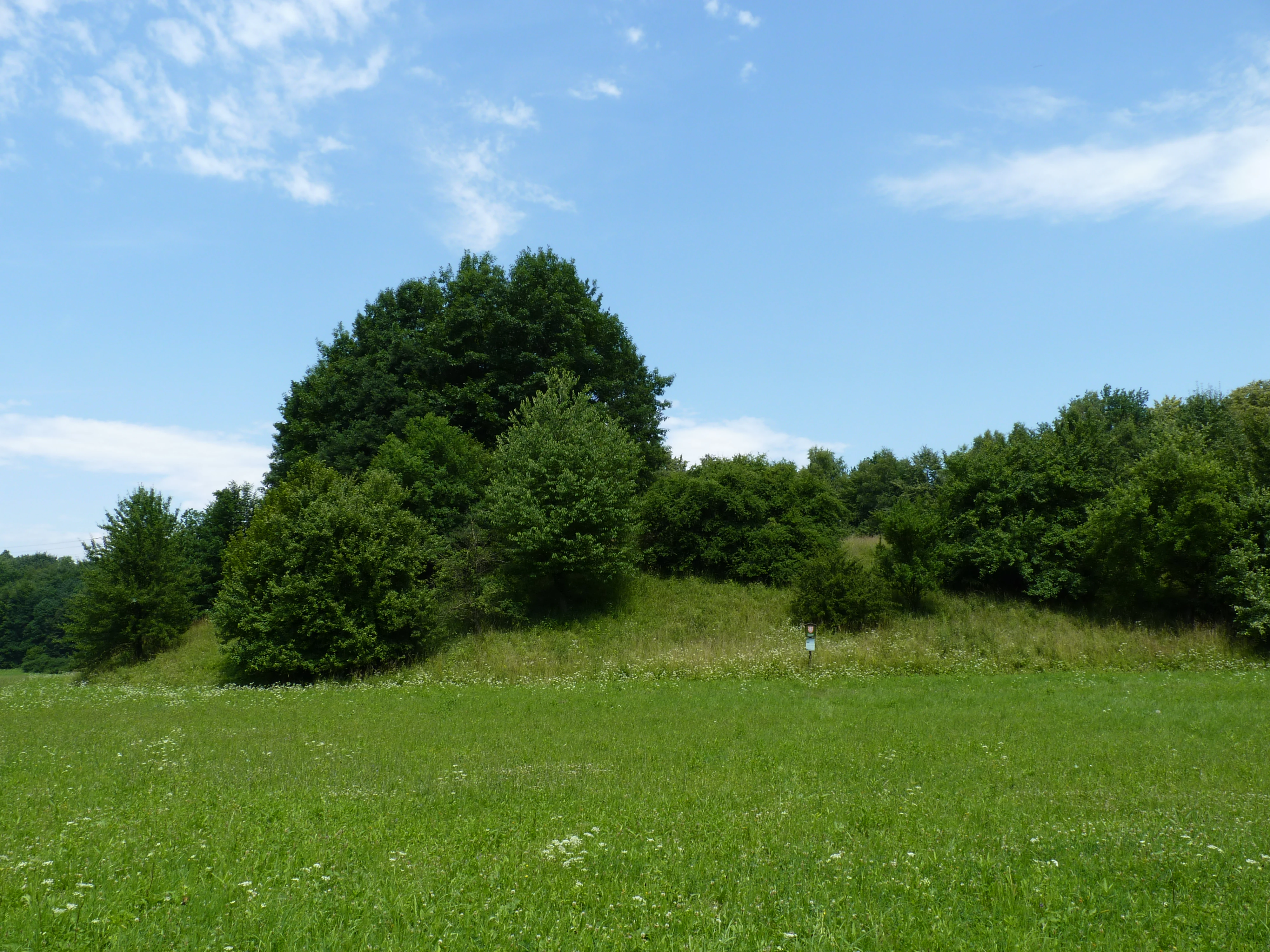
Within the reserve, the land surface is gently undulating rather than dramatic. There are no cliffs, peaks, or large water bodies on the site itself; the visual interest comes instead from the texture of the woodland and the contrast between the slightly elevated terrace and the lower Olše floodplain beyond it. This quiet topography makes the natural monument feel like a careful window into the original riverine landscape, even though its surroundings have been substantially altered by human activity.
The terrain’s subtle but consistent patterns, wetter pockets alternating with better-drained ridges, are the foundation for the site’s habitat mosaic. These topographic differences translate directly into the floral communities described in the reserve’s natural history: elm-rich vegetation where the soils are heavier and more humid, and oak-hornbeam woodland where the surface dries out more readily.
Věřňovice Natural Monument ecosystems, habitats, and plant life
Věřňovice is, ecologically, a floodplain forest reserve, and the character of its vegetation reflects that single defining reality. The reserve is dominated by woodland rather than open meadow, with forest cover forming a continuous green canopy over the terrace. Within that canopy, however, two recognizable habitat types coexist side by side, reflecting moisture differences across the site.
In the wetter parts of the terrace, the forest carries the signature of elm floodplain woodland, a vegetation type historically common along lowland Central European rivers but now reduced to scattered fragments. In the drier portions, the trees shift toward a more upland composition resembling oak-hornbeam forest, a classic Central European community that thrives on better-drained but still base-rich soils. Together, these two woodland types give the small reserve an unusually rich habitat structure for its size.
The natural composition has been partially influenced by past plantings of non-native species, including northern red oak (_Quercus rubra_) and European beech (_Fagus sylvatica_), which interrupt the otherwise natural mix of native trees. Despite this, the site retains a strong natural character and an active ground flora, including a striking population of snowdrops (_Galanthus nivalis_), a species strongly associated with old, semi-natural deciduous woodland. The meadows in the southern part of the reserve are managed by regular mowing, an approach that keeps open habitats from being lost to shrub and tree encroachment and supports the broader habitat diversity of the site.
Věřňovice Natural Monument wildlife and species highlights
Wildlife records at Věřňovice document a meaningful diversity of animals for such a small reserve. Eighteen species of mammals have been recorded within the protected area, including the European badger (_Meles meles_) and the raccoon dog (_Nyctereutes procyonoides_), both species associated with mixed landscapes that combine woodland, edge habitats, and water.
The reserve also supports forty recorded bird species, a number that reflects the importance of vertical structure in the woodland and the proximity to the Olše river corridor. The combination of closed canopy, shrub layers, open meadows in the southern section, and adjacent aquatic and riparian habitats provides varied niches for forest, edge, and wetland-associated birds.
The wildlife profile of Věřňovice is therefore best understood as the result of a small but structurally rich woodland mosaic embedded within a broader working landscape. Even modest protected areas along the Olše can accumulate a respectable vertebrate list when their forest composition and management retain natural elements, and Věřňovice illustrates exactly that point.
Věřňovice Natural Monument conservation status and protection priorities
The conservation significance of Věřňovice rests on its role in preserving a representative fragment of floodplain forest along the Olše, a habitat type heavily reduced across Central Europe during the twentieth century. By protecting both the terrace’s natural woodland and its characteristic species, the reserve anchors a small but real piece of the river’s ecological heritage.
The site also has practical conservation value as a refuge for protected plant species, notably the snowdrop, and for a mammal and bird community that depends on intact native woodland structure. The presence of two distinct forest communities, elm-rich and oak-hornbeam, within a single small site makes the reserve disproportionately valuable for ecological representation: a site of just over four hectares can illustrate a habitat gradient that is now rare at landscape scale.
Management is carried out by the Nature Conservation Agency of the Czech Republic, which oversees the country’s small protected areas. Routine management includes mowing of the southern meadows, an action that maintains open ground against natural woodland succession. The site fits within the broader national framework for protecting small natural monuments, classified as IUCN Category III (natural monument or feature), and stands as a typical example of how targeted small-scale protection complements the country’s larger national parks and protected landscape areas.
Věřňovice Natural Monument cultural meaning and human context
Věřňovice’s cultural context is tied closely to the Karviná District and the border landscape of the Olše. The reserve lies near a small village of the same name, part of the municipality of Dolní Lutyně, and it sits in a region historically defined by the river as both a natural and a national boundary between the Czech lands and Poland. The broader Karviná area is widely known for its industrial past, particularly coal mining and heavy industry, which gives small natural sites like Věřňovice a special resonance as surviving green refuges within a heavily modified region.
The cultural layer is modest but real: the protected woodland is part of the local sense of place along the Olše, and its designation in 1989 reflects the late-twentieth-century shift toward recognizing small but ecologically valuable natural areas as part of regional identity and environmental heritage.
Top sights and standout views in Věřňovice Natural Monument
The standout qualities of Věřňovice lie in its combination of a clearly defined river terrace, a naturally composed floodplain forest, and an unusually rich display of snowdrops in early spring. The reserve’s mosaic of elm-rich and oak-hornbeam woodland within just a few hectares makes it a compact but illustrative example of Central European floodplain ecology.
Alongside these natural features, the reserve’s value as a small, formally protected green refuge in the Karviná District gives it additional significance. It demonstrates how even very small protected sites can preserve habitat structure, support recorded mammal and bird communities, and maintain rare woodland types that have largely vanished elsewhere along the Olše.
Best time to visit Věřňovice Natural Monument
The most rewarding time to experience Věřňovice is early spring, when the snowdrop population within the reserve comes into flower and the woodland floor brightens noticeably beneath the still-bare tree canopy. Visiting in spring also catches the contrast between wetter and drier parts of the terrace at its most visible, because the ground-level differences between elm-floodplain and oak-hornbeam woodland are easiest to read before the canopy fully closes.
Late spring and early summer are also appealing, particularly for observing the structure of the woodland and any meadow margins where mowing keeps the southern part of the reserve open. Autumn brings a quieter, more contemplative character, with forest colors and lower human activity along the Olše corridor. Winter visits are possible but offer little of the floral interest that defines the reserve’s identity.