
Why Vai Aesthetic Forest stands out
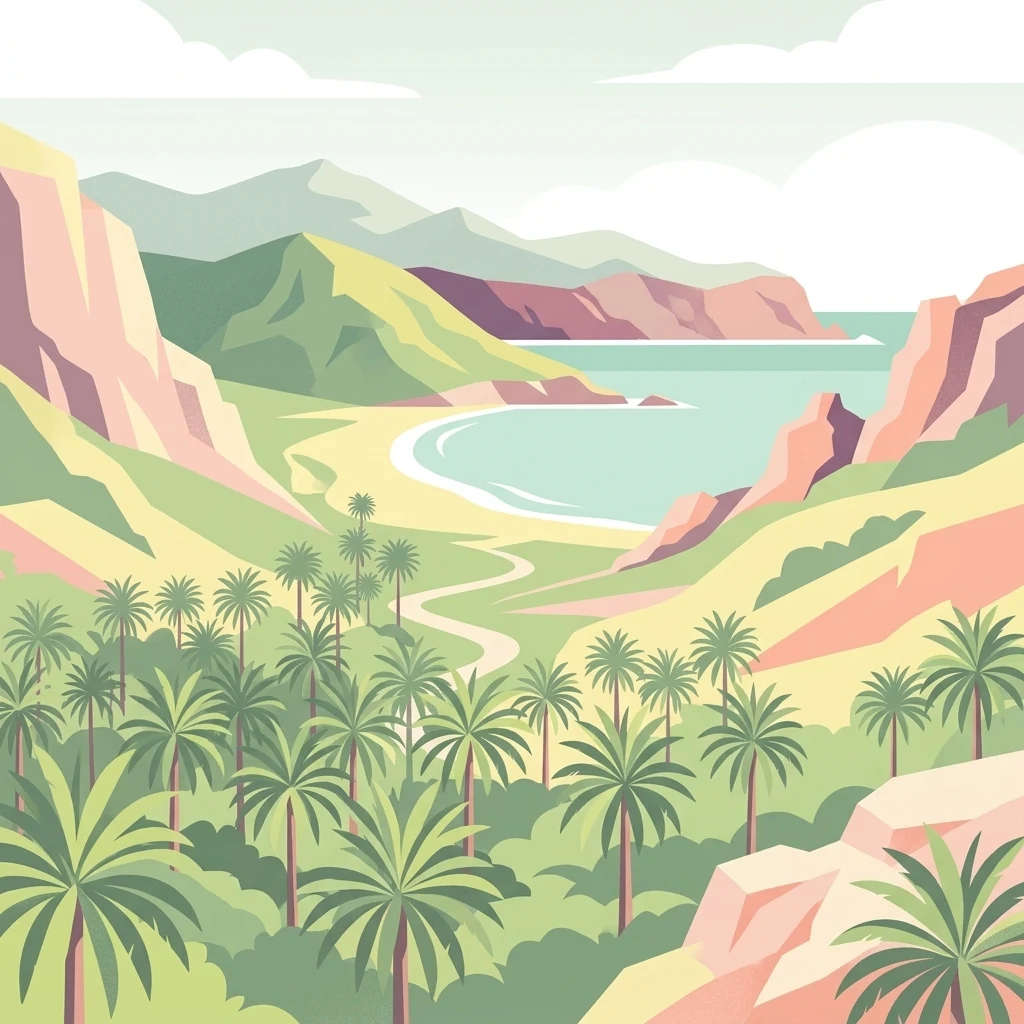
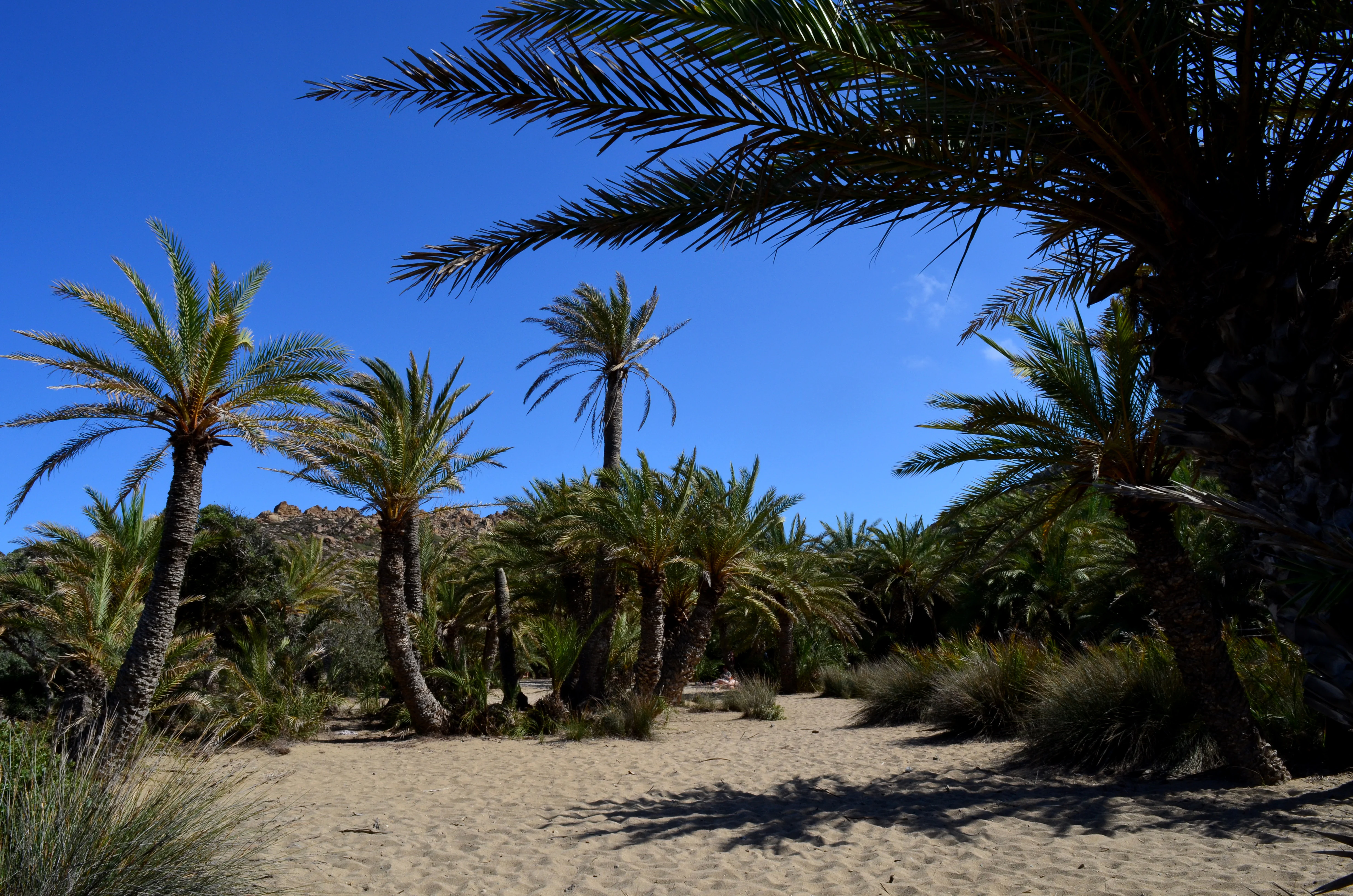
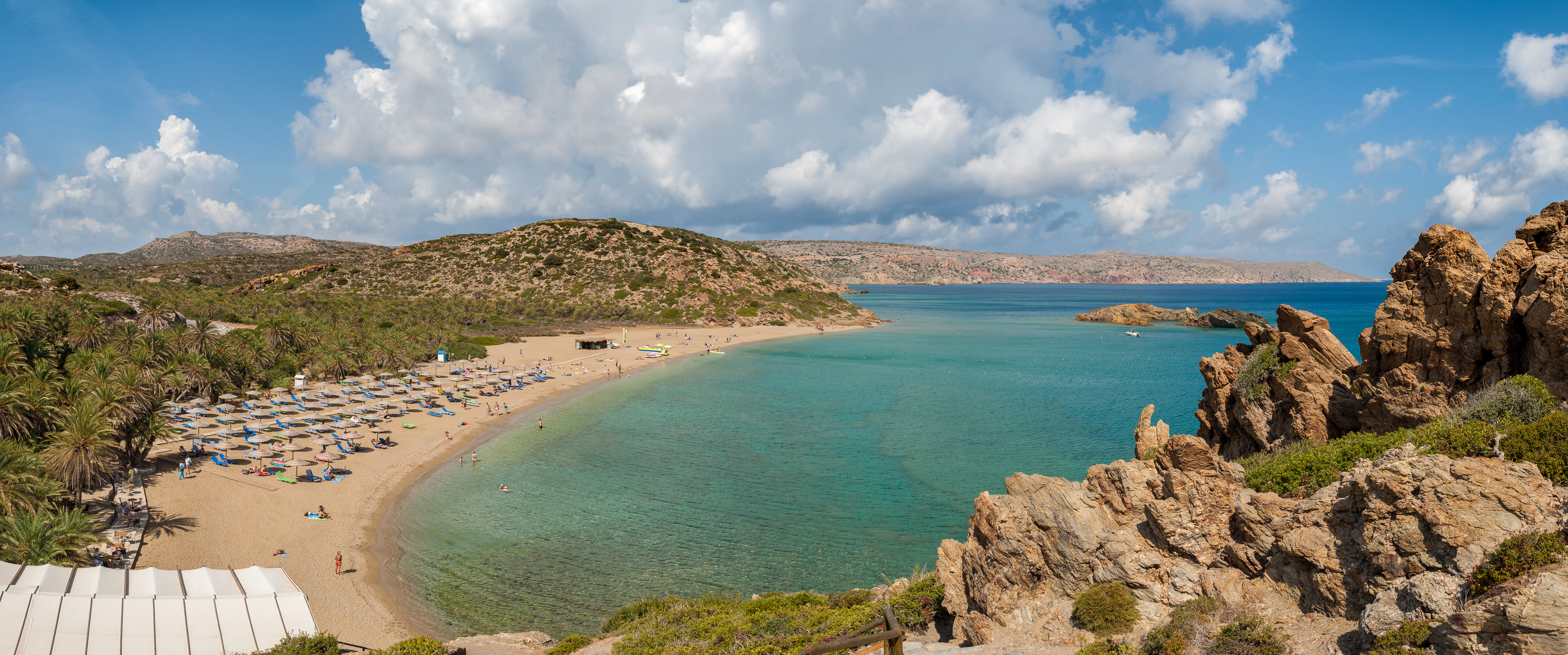
Vai is best known for being the location of Europe's largest natural grove of the Cretan date palm, Phoenix theophrasti, a species long thought extinct or just an escaped cultivar until its distinct identity was recognized in 1967. The palm-filled valley, opening directly onto a sandy beach under a typically Mediterranean sky, gives the site an almost tropical appearance that is otherwise absent from European landscapes. Beyond the palms, Vai is also recognized for its layered significance: a coastal Natura 2000 refuge for migratory birds and rare island flora, a geological feature within the Sitia UNESCO Global Geopark, and a setting with deep Minoan and Greco-Roman archaeological depth nearby.
Vai Aesthetic Forest history and protected-area timeline
The natural stand of palms at Vai has likely existed for millennia, but the modern recognition of its ecological importance began in the twentieth century, when the site faced mounting pressure from agricultural conversion and uncontrolled recreation. In 1957 a large monastic farming project uprooted the majority of the original forest, reducing it from an extensive grove to a small remnant, and for decades afterward Vai beach served as an informal campground for large numbers of visitors. The combined strain prompted the Greek state to fence the surviving forest and declare Vai a national park in the late 1980s, anchoring the area as part of Greece's network of formal protected sites.
The park's botanical profile sharpened in 1967, when Werner Greuter recognized that the Vai palms differed meaningfully from the cultivated date palm and formally described them as a separate species, Phoenix theophrasti, named in honor of Theophrastus, the ancient Greek botanist of Aristotle's Lyceum. This taxonomic recognition transformed Vai from a curiosity into a conservation priority, because the species was found to be genuinely rare and locally endemic.
From 1999 to 2002 the European Commission supported Project Vai under the EU Habitats Directive, an effort that brought the surviving grove under a Natura 2000 management plan. The plan included negotiation with Toplou Monastery to acquire additional acreage, replanting in cleared areas, monitoring of the water table, irrigation contingency measures, and a public awareness campaign. Through this combined effort the protected forest expanded modestly while the health of the existing trees and the supporting wetland were stabilized.
Alongside the conservation timeline, the landscape carries a long human history. Archaeological work by the French School at Athens uncovered Late Minoan remains near the forest beginning in 1950, and the larger Itanos Archaeological Survey from 1994 to 2005 documented roughly 100 to 200 sites across the surrounding peninsula, from the Neolithic onward. In the late twentieth and early twenty-first centuries the area became the focus of protracted legal disputes between monastic landowners, developers, conservationists, and the Greek state, most famously in the Cavo Sidero case and the contested Itanos Gaia project. These contests shaped the contemporary political geography of Vai as much as the ecological management plans did.
Vai Aesthetic Forest landscape and geographic character
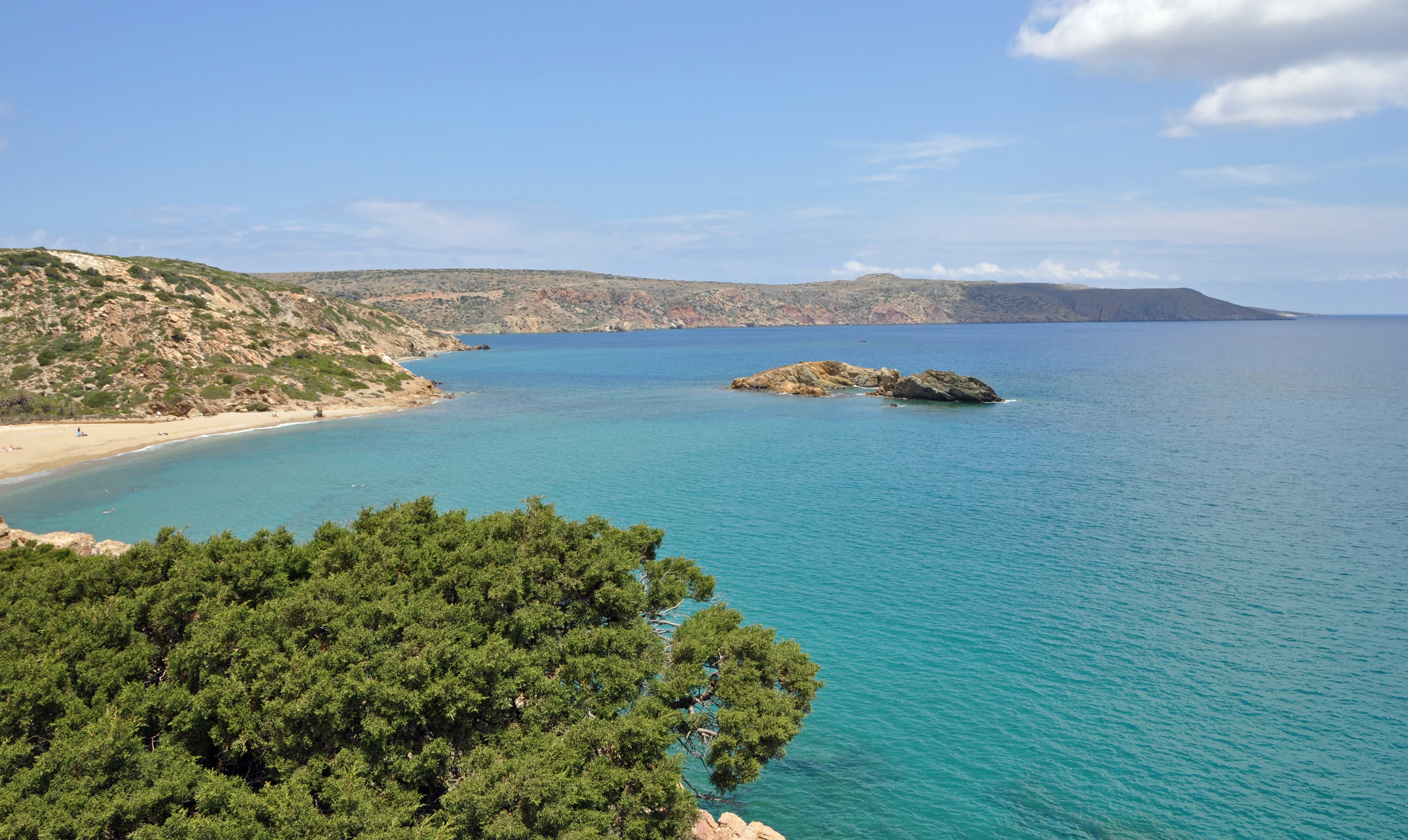
The Vai coastline is shaped by a characteristic pattern of northeastern Cretan geology: a low coastal range of hills broken by short valleys that run perpendicular to the sea, with a relatively flat interior plain beyond and a higher inland range further still. Vai beach occupies one of these valleys, framed by headlands that rise modestly above the sand. The valley that contains the forest extends inland through the coastal hills and visually connects with the open agricultural land beyond, where the lower slopes flatten out toward the plain.
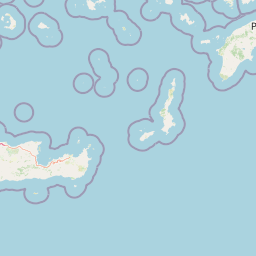
Within the forested valley, an intermittent stream descends from the northern hill, feeding a small wetland that sustains the palms and ultimately reaches the sea at the back of the beach. The change in elevation across the site is modest, with the valley floor descending only a few meters above sea level before meeting the shoreline. Coastal dunes form the eastern edge of the forest where it meets the beach, providing exactly the loose, sandy substrate that the Cretan date palm favors. To the north of Vai beach, the offshore islets of Peristerovrachoi rise abruptly from the sea, and the coastline beyond becomes increasingly rugged and cliff-like as it stretches toward Cape Sidero. South of Vai, the smaller Psili Ammos beach lies in a more enclosed ravine, prized for its fine sand and quieter setting.
Vai Aesthetic Forest ecosystems, habitats, and plant life
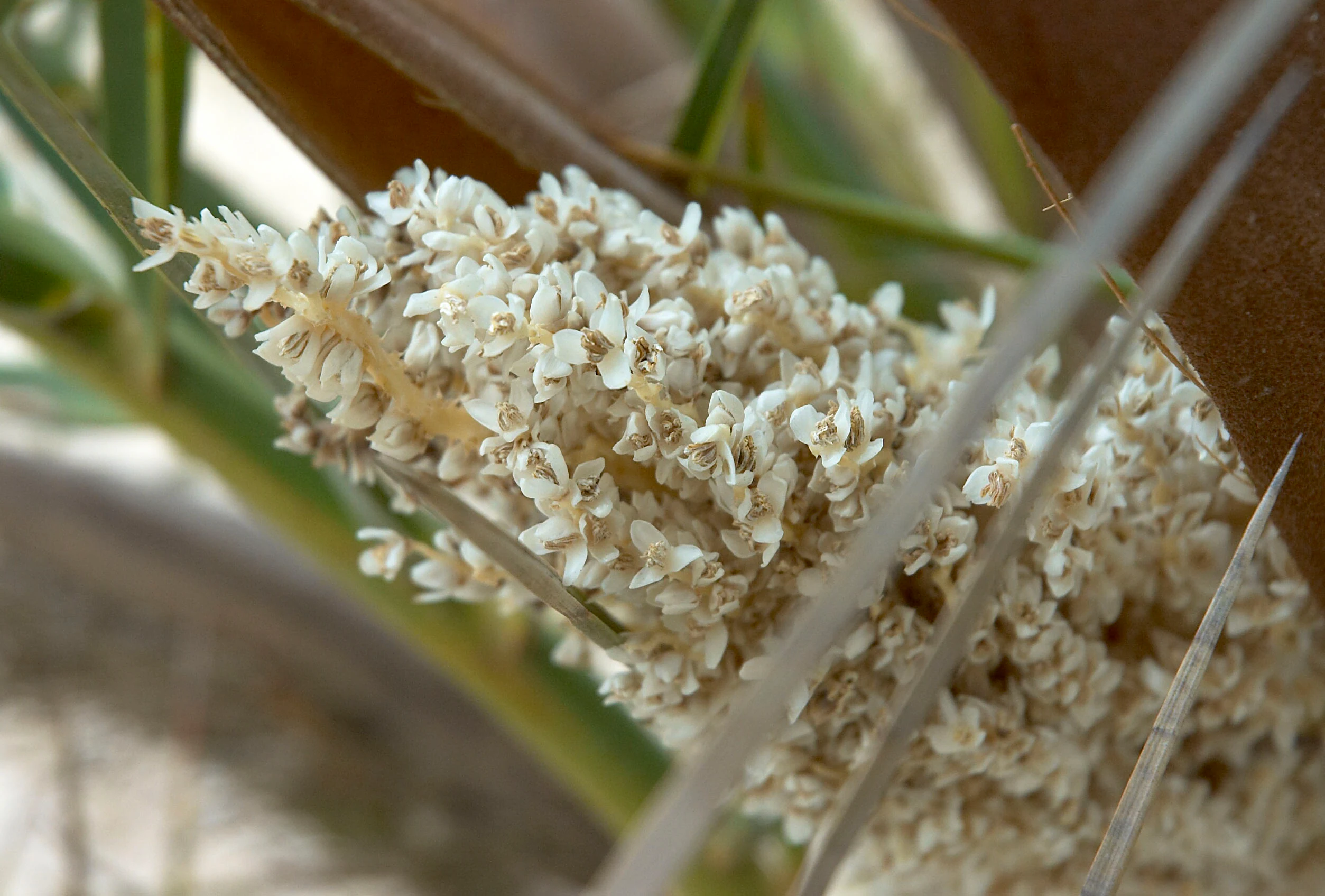
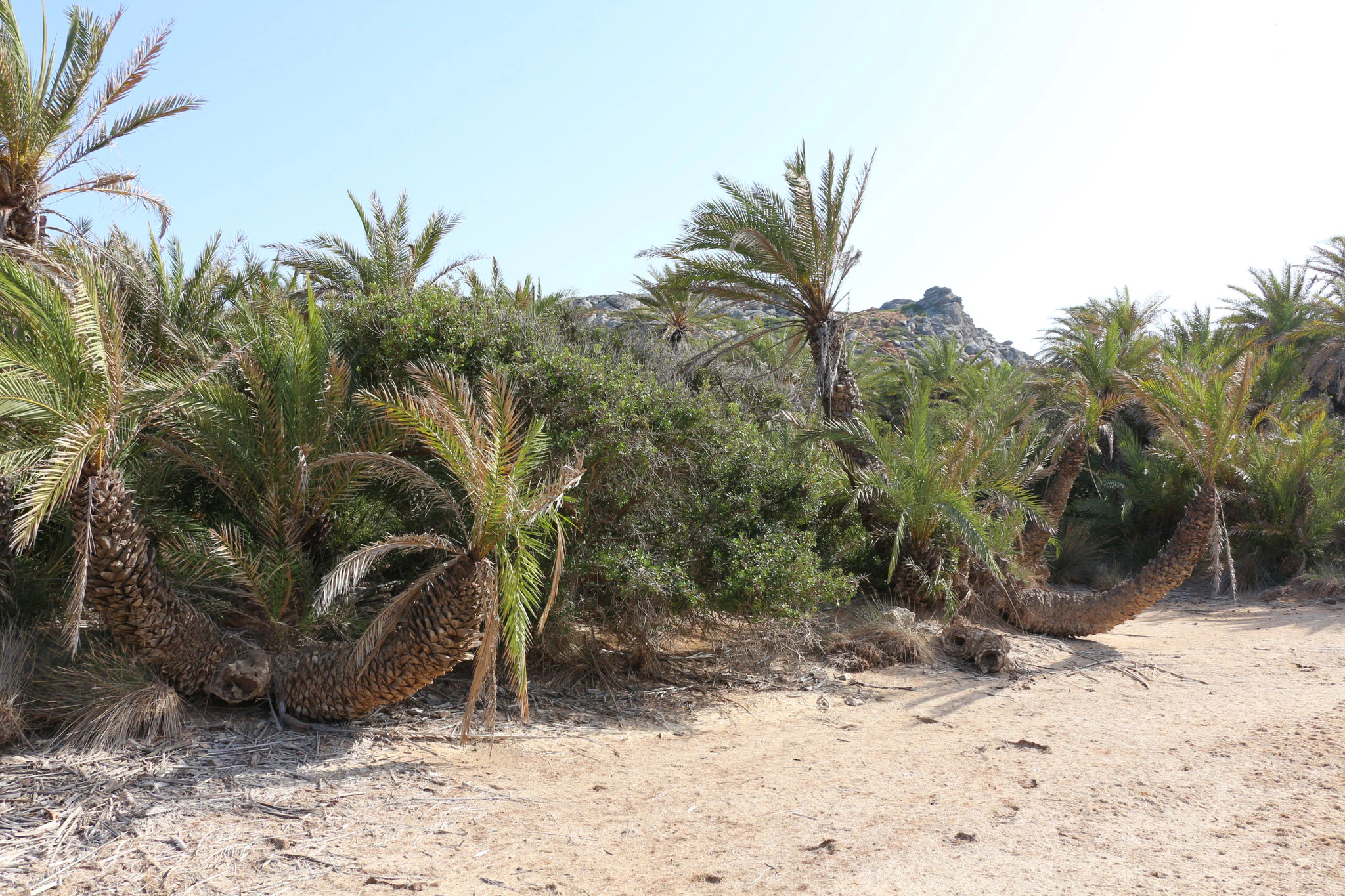
The ecological identity of Vai is built around a single, deeply unusual feature: a natural European palm forest. Phoenix theophrasti, the Cretan date palm, is a member of a small group of palm species that survives from the Miocene era and remains highly localized. Vai hosts by far the largest population in Europe; roughly twenty other locations in Crete hold only small clusters or isolated groves, and scattered populations also occur on a few Turkish and Greek Aegean coasts.
Within the valley, the palms occur in a range of growth forms, from free-standing mature trees with tall, single trunks to smaller multi-stemmed clumps resembling maquis shrubs. Their favored habitat is the narrow interface between the freshwater wetland fed by the spring-fed stream and the sandy coastal dunes behind the beach. This unusual combination of continuous groundwater, sandy substrate, and sheltered valley microclimate is what makes the grove possible in an otherwise Mediterranean landscape.
Beyond the palms, the abandoned agricultural land on the Itanos peninsula supports a broader mosaic of Mediterranean island ecosystems, including phrygana scrub, Genista acanthoclada thickets, and relict patches of woodland. The peninsula functions as a refugium for indigenous plant and animal species, including several that are rare or endangered, and forms a notable station on the migration routes of a wide variety of birds. The persistence of this mosaic, alongside the palms, is what justifies Vai's inclusion in multiple overlapping protection regimes.
Vai Aesthetic Forest wildlife and species highlights
Wildlife interest at Vai is shaped as much by what surrounds the palms as by the palms themselves. The Itanos peninsula, of which the Vai area forms the southern portion, has been identified as an important biological refuge harboring numerous indigenous plant and animal species, many of them uncommon elsewhere in Europe. The mosaic of scrubland, relict woodland, fenced palm grove, open agricultural land, and cliff-lined coast provides a range of habitats in close proximity, supporting varied invertebrate, reptile, and bird populations typical of the eastern Mediterranean.
The peninsula is also recognized as a significant spring and autumn station on avian migration routes, with the combination of coastal cliffs, isolated islets such as Peristerovrachoi, and relatively undisturbed interior scrubland offering stopover habitat for a wide variety of migratory birds. Beach and dune environments at Vai and Psili Ammos likewise sustain typical Mediterranean shore communities. While the palms themselves are the most visually dominant biological feature, the broader wildlife value of Vai lies in this combination of endemic flora, migratory birds, and intact coastal island habitats.
Vai Aesthetic Forest conservation status and protection priorities
Vai's conservation importance rests on the fact that it holds the only substantial European population of Phoenix theophrasti, a species that exists in just a handful of scattered localities across the entire eastern Mediterranean. The palm is a survivor of an ancient lineage whose European range has contracted dramatically over geological time, making its surviving strongholds disproportionately important for global biodiversity.
Recognition of this importance has translated into layered protection. After decades of damage caused by agricultural clearing and unregulated beach use, the surviving grove was formally declared a national park under Greek law and is administered by the Greek Forestry Service. A barbed-wire fence was erected to exclude campers and visitors from the core area. The site is additionally covered by Natura 2000 designations under the EU Habitats Directive, which have brought structured management planning, monitoring of the water table, replanting in cleared zones, and negotiated land acquisitions to expand the protected footprint.
These conservation efforts have not unfolded without conflict. The broader Cape Sidero peninsula has been the setting of long-running disputes over monastic land ownership, proposed resort development, and the limits of environmental review, most visibly in the legal challenge to the Itanos Gaia project. While such disputes have at times threatened the wider protected landscape, they have also clarified the legal tools available for safeguarding Vai and reinforced its profile as a nationally and internationally recognized conservation site, further reinforced by its inclusion in the Sitia UNESCO Global Geopark.
Vai Aesthetic Forest cultural meaning and human context
Vai is embedded in a cultural landscape with very deep roots. The surrounding peninsula contains the remains of ancient Itanus and, on a hill overlooking the palm forest, the Late Minoan residence known as Vai Villa, excavated by the French School at Athens beginning in 1950. Subsequent surveys have traced human occupation of the cape back to the Neolithic and forward through Minoan, Greco-Roman, and later periods, situating Vai within a continuum of Aegean coastal settlement.
In more recent centuries the area has been shaped by the holdings of Toplou Monastery, which historically owned most of the land outside the few coastal villages and operated farms, windmills, and small industries across the cape. The transition in the twentieth century from a primarily custodial monastic role to a more openly commercial one drove many of the land use changes that ultimately catalyzed Vai's protection, including the clearance of most of the original palm forest for agriculture. Tensions between monastic land ownership, modern tourism development, and environmental conservation have defined the contemporary cultural context of Vai and continue to color how the site is managed and perceived.
Top sights and standout views in Vai Aesthetic Forest
Vai stands out for the improbable image of a dense, tropical-looking palm grove opening directly onto a Mediterranean beach, an association found nowhere else at this scale in Europe. Its palms are not ornamental plantings but a genuinely native population of Phoenix theophrasti, a species unique to a few scattered localities in the eastern Mediterranean, and the grove has been formally recognized as a national park, a Natura 2000 site, and a feature of a UNESCO Global Geopark.
Equally distinctive is the layered human story around the palms: the Late Minoan Vai Villa on the slope above the forest, the Greco-Roman roots of nearby Itanus, the long monastic stewardship of the surrounding land, and the modern legal contests over tourism development. Together these give Vai a cultural and historical depth that matches the botanical uniqueness of its trees.
Best time to visit Vai Aesthetic Forest
Vai is a Mediterranean coastal park whose character shifts with the seasons. Spring and early summer tend to bring milder temperatures, calmer sea conditions, and an active phase for the surrounding scrubland and migratory bird movement, making the area especially rewarding for visitors interested in natural settings rather than only beach use. Late summer is the warmest and most visited period, when the beach is busiest but the palms, wetlands, and overall scenery remain at their most lush. Autumn can offer quieter conditions and dramatic skies, while winter is mild but brings fewer visitors and a more contemplative atmosphere, with the surrounding cliffs and headlands taking on a starker appearance against the off-season sea.