

Mori Atlas logo
Nature reserveAndrew Johnston Big Scrub Nature Reserve

Mapping the botanical diversity and volcanic basalt terrain of this critical conservation landscape

Andrew Johnston Big Scrub Nature Reserve: A Protected Subtropical Rainforest Remnant in Northern New South Wales

Andrew Johnston Big Scrub Nature Reserve stands as the largest remaining fragment of the expansive subtropical lowland rainforest that once blanketed the Northern Rivers region of New South Wales. This protected nature reserve preserves a complex forest structure rooted in fertile volcanic basalt soils, serving as an ecologically vital island within a predominantly agricultural landscape. The area features iconic Moreton Bay figs and dense understory vegetation, representing a crucial remnant of ancient lowland terrain.

subtropical rainforestlowland rainforestBig Scrub remnantNorthern RiversNew South Walessmall nature reserve

Andrew Johnston Big Scrub Nature Reserve

Nature reserve

Park overview

Structured park overview, official facts, and landscape profile for Andrew Johnston Big Scrub Nature Reserve

Andrew Johnston Big Scrub Nature Reserve park facts, protected area profile, and essential visitor context

Review the core facts for Andrew Johnston Big Scrub Nature Reserve, including designation, size, terrain, visitor scale, habitats, and operating context in one park-focused overview.

About Andrew Johnston Big Scrub Nature Reserve

Andrew Johnston Big Scrub Nature Reserve is a small but exceptionally rich subtropical rainforest reserve located in the Northern Rivers region of northeastern New South Wales. Situated roughly nineteen kilometres northeast of Lismore, the reserve preserves a fragment of what was once one of the most extensive lowland subtropical rainforests in Australia, the Big Scrub. That ecosystem originally covered tens of thousands of hectares of rich basaltic soils in the Richmond River lowlands, but successive waves of clearing for agriculture reduced it to a handful of small remnants. Andrew Johnston is widely regarded as the largest and most ecologically significant of those surviving fragments.

The reserve sits on red-brown soils that were formed by volcanic flows from Mount Warning and later eruptions associated with the Nightcap Range, giving it some of the most fertile growing conditions for rainforest plants in the region. The climate is humid subtropical, with average annual rainfall near Lismore of around 1,340 millimetres, supporting dense, layered vegetation with tall emergent trees, an understory of smaller trees and palms, and a rich ground layer of ferns and vines. This combination of deep basalt soil and high rainfall is what made the Big Scrub so distinctive and what now makes its surviving remnants so botanically valuable.

Although it covers only about twenty-one hectares, Andrew Johnston is exceptionally diverse. More than 170 species of trees, shrubs, and vines have been recorded within its boundaries. The reserve harbours characteristic rainforest species such as white booyong, rosewood, long jack, red bean, koda, cudgerie, white cedar, and black bean, and its canopy includes large Moreton Bay figs that are a familiar feature of the larger Big Scrub remnants. Because so little of the original forest survives, the reserve carries a conservation weight far beyond its modest size and is an important site for rainforest research, birdwatching, and understanding the legacy of land use in the Northern Rivers.

Quick facts and research context for Andrew Johnston Big Scrub Nature Reserve

Andrew Johnston Big Scrub Nature Reserve lies about nineteen kilometres northeast of Lismore in the Northern Rivers region of New South Wales, covering roughly twenty-one hectares. It is managed by the NSW National Parks and Wildlife Service under IUCN category IV, as a habitat and species management area. It was formally established in March 1993 and protects basalt-soil subtropical rainforest that originated on volcanic flows from Mount Warning and later eruptions associated with the Nightcap Range. More than 170 plant species have been recorded on the site, and the reserve is regarded as the largest and most important surviving fragment of the broader Big Scrub ecosystem.

Protection and recognition

Examine the terrestrial protection scope and documented designation records

Andrew Johnston Big Scrub Nature Reserve Protection Status and Governance Data

Andrew Johnston Big Scrub Nature Reserve maintains a defined terrestrial protection scope within the regional conservation network. Structured records detail the official designation framework and administrative parameters governing the protected landscape.

Protection details

Protection scope
Terrestrial
Transboundary protection
No
Park context

Deeper park guide and search-rich context for Andrew Johnston Big Scrub Nature Reserve

Andrew Johnston Big Scrub Nature Reserve history, landscape, wildlife, and travel context

Explore Andrew Johnston Big Scrub Nature Reserve through its history, landscape character, ecosystems, wildlife, conservation priorities, cultural context, and seasonal travel timing in a structured park guide built for atlas discovery and search intent.

Why Andrew Johnston Big Scrub Nature Reserve stands out

Andrew Johnston is best known as the largest and most ecologically important surviving remnant of the Big Scrub, the almost entirely cleared subtropical lowland rainforest that once blanketed the lowlands around Lismore. The reserve is especially valued for its high diversity of rainforest trees within a very small land area, its large Moreton Bay figs, and its habitat for the uncommon marbled frogmouth.

Andrew Johnston Big Scrub Nature Reserve history and protected-area timeline

The Big Scrub that once dominated the lowlands around Lismore was progressively cleared from the nineteenth century onward as settlers converted the deep volcanic soils to dairy pasture, cropping, and other agricultural uses. By the time conservation interest in these remnants matured, only a tiny fraction of the original forest remained, making each surviving patch, including Andrew Johnston, ecologically critical.

Andrew Johnston Big Scrub Nature Reserve was formally established in March 1993 and is now managed by the NSW National Parks and Wildlife Service as a habitat and species management area under IUCN category IV. Its protection recognized both the botanical richness of the site and the importance of preserving a meaningful example of the Big Scrub ecosystem for future scientific study and conservation.

Andrew Johnston Big Scrub Nature Reserve landscape and geographic character

The landscape of Andrew Johnston Big Scrub Nature Reserve is defined by lowland subtropical rainforest growing on deep, fertile basaltic soils. The terrain is generally gentle, sitting on the alluvial and volcanic lowlands of the Northern Rivers, but the underlying geology is the key to its character: red-brown soils derived from ancient basalt flows associated with Mount Warning and later volcanic activity from the Nightcap Range.

Rainfall is high, with average annual precipitation in the surrounding Lismore area of about 1,340 millimetres, producing the persistently moist conditions that allow tall emergent trees, layered understory vegetation, and a dense carpet of ferns and vines to flourish. Large Moreton Bay figs rise above the canopy in many places, giving parts of the reserve a particularly cathedral-like forest character. The adjacent farmland and pasture create a sharp visual contrast, making the reserve feel like a small forested island within an otherwise cleared agricultural landscape.

Andrew Johnston Big Scrub Nature Reserve ecosystems, habitats, and plant life

Andrew Johnston protects a representative example of Big Scrub subtropical lowland rainforest, an ecosystem distinguished by deep volcanic soils, high rainfall, and exceptional plant species richness. The vegetation is structurally complex, with tall canopy trees giving way to smaller trees, palms, shrubs, climbing vines, and a moist ground layer of ferns and leaf litter characteristic of mature subtropical rainforest.

More than 170 species of trees, shrubs, and vines have been recorded on the site, including white booyong, rosewood, long jack, red bean, koda, cudgerie, white cedar, and black bean. The canopy features prominent mature Moreton Bay figs, which contribute both to the structural diversity of the forest and to the habitat provided for birds and other animals. Because the ecosystem is naturally rare and heavily reduced, the floral richness packed into a small area is one of the defining features of the reserve.

Andrew Johnston Big Scrub Nature Reserve wildlife and species highlights

The reserve's value for wildlife stems largely from the intact rainforest structure and the dense, fruit-bearing canopy of mature trees such as Moreton Bay figs. These conditions support a community of forest-dependent birds and other animals typically found in richer Big Scrub remnants.

A particular point of interest is the reserve's habitat for the marbled frogmouth, an elusive and seldom-seen rainforest bird that relies on dense, structurally complex subtropical forest. Such species give Andrew Johnston an importance for birdwatching and rainforest fauna conservation that extends well beyond its small footprint.

Andrew Johnston Big Scrub Nature Reserve conservation status and protection priorities

Andrew Johnston Big Scrub Nature Reserve was established specifically to protect a representative remnant of the Big Scrub, an ecosystem of which less than one percent survives today. By safeguarding a relatively large and botanically rich fragment, the reserve plays a significant role in preserving the genetic resources, plant communities, and ecological processes of a vanished regional rainforest system.

It is managed as an IUCN Category IV habitat and species management area, reflecting its focus on maintaining specific rainforest habitats and the species that depend on them. Because the surrounding land is largely cleared for agriculture, the reserve also serves as a refuge and potential source for rainforest species in the broader Northern Rivers landscape.

Andrew Johnston Big Scrub Nature Reserve cultural meaning and human context

The reserve reflects a broader regional story of land clearing and rural transformation in the Northern Rivers. The Big Scrub was once a defining feature of the lowlands around Lismore, supplying timber and fueling early settlement, before being progressively converted to pasture and farmland. Andrew Johnston stands as a memorial to that lost landscape and as part of a community-led and government effort to retain meaningful rainforest remnants for future generations.

Top sights and standout views in Andrew Johnston Big Scrub Nature Reserve

Andrew Johnston Big Scrub Nature Reserve's strongest points are its botanical diversity within a small area, its role as the largest and most important surviving Big Scrub remnant, and its value as habitat for elusive rainforest-dependent species such as the marbled frogmouth. The combination of basalt soils, high rainfall, complex rainforest structure, and prominent Moreton Bay figs gives the reserve an ecological character that punches well above its modest twenty-one-hectare footprint.

Best time to visit Andrew Johnston Big Scrub Nature Reserve

Andrew Johnston Big Scrub Nature Reserve is a humid subtropical rainforest site, so the cooler and drier months of late autumn, winter, and early spring generally offer the most comfortable conditions for walking and birdwatching, with less heat, fewer mosquitoes, and easier forest access. Summer brings lush growth and active birdlife but also higher temperatures, higher humidity, and greater insect activity. The reserve is a small, shaded rainforest patch that can be appreciated in most seasons, and visiting at calmer times of day increases the chances of observing shy forest birds such as the marbled frogmouth.
Monthly climate preview

Long-term temperature and precipitation records measured across representative regional coordinates.

Andrew Johnston Big Scrub Nature Reserve Annual Climate Normals and Weather by Month

Andrew Johnston Big Scrub Nature Reserve experiences a measured annual temperature and precipitation rhythm ranging from cooler midyear periods to warmer monthly peaks. Reviewing complete monthly climate normals provides deeper statistical context for long-term meteorological patterns.
Annual mean19 °C
13 °C24 °C
Jan24°
Feb24°
Mar22°
Apr20°
May16°
Jun14°
Jul13°
Aug14°
Sep17°
Oct20°
Nov22°
Dec23°
Warmest month
January

24.2 °C

Coolest month
July

13.2 °C

Wettest month
February

6 mm/day

Driest month
September

1.3 mm/day

Park location guide

Geography guide, regional context, and park location map for Andrew Johnston Big Scrub Nature Reserve

Andrew Johnston Big Scrub Nature Reserve park geography, regions, and map view in Australia

Understand where Andrew Johnston Big Scrub Nature Reserve sits in Australia through a broader geographic reading of the surrounding landscape, nearby location context, and its mapped position within the national park landscape.

How Andrew Johnston Big Scrub Nature Reserve fits into Australia

Australia is a constitutional monarchy and federal parliamentary democracy comprising six states and ten territories. With a population of nearly 28 million, it is one of the world's most urbanised countries, with most people concentrated on the eastern seaboard. The country has a high Human Development Index and is known for its cultural diversity, ancient Aboriginal heritage, and unique wildlife.

Wider geography shaping Andrew Johnston Big Scrub Nature Reserve in Australia

Australia occupies the entire Australian continent, the island of Tasmania, and numerous smaller islands. It is the world's flattest and driest inhabited continent, featuring vast deserts in the interior (the Outback), tropical rainforests along the eastern coast, and a coastline bordering the Indian and Pacific Oceans.

Map view of Andrew Johnston Big Scrub Nature Reserve

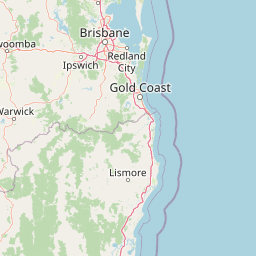
Use this park location map to pinpoint Andrew Johnston Big Scrub Nature Reserve in Australia, understand its exact geographic position, and read its mapped placement within the surrounding landscape more clearly.

Pigeon | © OpenStreetMap contributors

Location context for Andrew Johnston Big Scrub Nature Reserve

New South Wales
Park atlas

Compare nearby national parks and connected lowland rainforest habitats across the region

Parks Near Andrew Johnston Big Scrub Nature Reserve and Surrounding Protected Landscapes

Browse protected areas near Andrew Johnston Big Scrub Nature Reserve to examine similar lowland rainforest remnants and volcanic terrain across the Northern Rivers. Comparing adjacent reserves reveals broader ecological patterns and regional vegetation gradients within New South Wales.
National parkNew South Wales
About 8 km away#1 closest

Northwest

Nightcap National Park: New South Wales Protected Landscape and Geographic Atlas

Mapping the protected area boundaries and natural terrain.

Nightcap National Park is a key protected landscape within New South Wales, Australia, offering distinct opportunities for geographic exploration. This entry provides critical details about its mapped boundaries, surrounding regional terrain, and its role as a national park. Understand the park's specific environmental context and its contribution to the broader atlas of protected lands in the region, ideal for detailed map-based discovery.

Area
81 km²
Established
1983
IUCN
II
Relief
Mountain
National parkNew South Wales
About 12 km away#2 closest

North

Goonengerry National Park: New South Wales Protected Landscape and Geography

Discover mapped boundaries and regional context.

Goonengerry National Park is a designated national park in New South Wales, Australia, offering valuable insights for geographic exploration. This entry provides a structured view of its protected area status, focusing on its mapped boundaries and landscape context. Users can explore how Goonengerry National Park fits into the regional geography of New South Wales, enhancing understanding of protected lands within the Australian atlas.

Area
4 km²
Established
1999
IUCN
II
Relief
Upland
National parkNew South Wales
About 15 km away#3 closest

North

Mount Jerusalem National Park: Ancient Volcanic Terrain and Protected Landscape Discovery in New South Wales

Explore its mapped geography and Albert's lyrebird habitat.

Mount Jerusalem National Park stands as a key protected area within the dramatic landscape of New South Wales. Situated on the eroded outer rim of the ancient Tweed Caldera, the park showcases distinctive volcanic terrain shaped over millions of years. Its protected boundaries encompass vital habitats, notably supporting significant populations of Albert's lyrebird, and contribute to the watershed dynamics of the Tweed, Brunswick, and Richmond River systems, offering a rich focus for geographic and landscape exploration.

Area
52 km²
Established
1995
IUCN
II
Relief
Mountain
Nature reserveNew South Wales
About 16 km away#4 closest

East

Hayters Hill Nature Reserve: A Significant Big Scrub Rainforest Remnant in New South Wales

Protected subtropical forest in the Northern Rivers hinterland

Hayters Hill Nature Reserve represents a critical protected fragment of the original Big Scrub subtropical rainforests. Situated on elevated ground near Byron Bay, this nature reserve offers insight into the regional topography and the conservation of lowland forest ecosystems in the Northern Rivers area of New South Wales.

Area
0.08 km²
Established
1989
IUCN
IV
Relief
Upland
National parkNew South Wales
About 18 km away#5 closest

East

Arakwal National Park: National Park Protected Landscape in New South Wales

Explore mapped boundaries and regional geography.

Arakwal National Park stands as a protected national park, offering insights into its distinct landscape and geographic setting within New South Wales. This resource provides detailed information focused on the park's mapped boundaries and its role as a conservation landscape. Users can explore the regional geography and understand the specific protected-area context that defines Arakwal National Park, contributing to a broader atlas understanding.

Area
1.99 km²
Established
2001
IUCN
II
Relief
Lowland
Nature reserveNew South Wales
About 18 km away#6 closest

Northeast

Tyagarah Nature Reserve: A Protected Coastal Landscape Atlas in Northern New South Wales

Coastal dunes, endangered ecosystems, and whale migration geography.

Located along the Pacific coast of New South Wales, Tyagarah Nature Reserve features seven kilometers of undeveloped beach backed by a mosaic of stable dunes and wetland habitats. The area provides a critical sanctuary for numerous threatened plant species and serves as a premier vantage point for tracking migrating humpback whales from the shore. This site represents a convergence of Indigenous cultural history and vital coastal conservation landscapes in the Byron Shire.

Area
8.75 km²
Relief
Lowland
Climate
Subtropical
Scope
Terrestrial
Nature reserveNew South Wales
About 19 km away#7 closest

South

Davis Scrub Nature Reserve: Geographic Profile of a New South Wales Rainforest Fragment

Protected basaltic-soil habitat in the Northern Rivers region.

Davis Scrub Nature Reserve functions as an ecologically significant habitat and species management area within New South Wales. Covering a compact but dense 13-hectare fragment of the original Big Scrub, this protected area sits atop nutrient-rich basaltic soils derived from the nearby Mount Warning volcanic complex. It serves as a living record of sub-tropical rainforest canopy structures, featuring dominant Moreton Bay figs and diverse native plant communities that define the regional lowland landscape.

Area
0.13 km²
Established
1980
IUCN
IV
Relief
Upland
A stylized illustration showing a sandy beach meeting the ocean, flanked by grassy green hills and cliffs under a soft-colored sky.
Nature reserveNew South Wales
About 19 km away#8 closest

East

Broken Head Nature Reserve: Littoral Rainforest and Coastal Geography of New South Wales

Coastal terrain and protected headland mapped landscapes

Located in the Northern Rivers region of New South Wales, Broken Head Nature Reserve offers a concentrated view of coastal ecological zones. The protected area features a unique combination of littoral rainforest, sandstone formations, and beach ecosystems. This geography provides insight into regional conservation and the historical landscape of the far north coast of Australia.

Area
0.98 km²
IUCN
Ia
Relief
Lowland
Climate
Subtropical

Common questions about visiting, size, designation, and location context for Andrew Johnston Big Scrub Nature Reserve

Andrew Johnston Big Scrub Nature Reserve FAQs for park facts, access, geography, and protected area context

Find quick answers about Andrew Johnston Big Scrub Nature Reserve, including protected-area facts, park geography, trail and visitor context, and how the park fits into its surrounding country and regional landscape.
MoriAtlas Explorer

Continue Your Protected Areas Search Across the Global Atlas

Deepen your exploration by continuing the structured search for national parks and protected areas worldwide. Utilize the comprehensive filtering capabilities to compare different conservation landscapes and refine your understanding of global park geography. Discover more about the distribution and characteristics of protected natural areas.

Global natural geography