
Why Apo Reef Marine Natural Park stands out
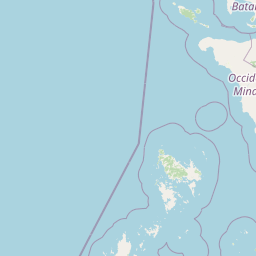
Apo Reef Marine Natural Park is best known as the second-largest coral reef system in the Philippines, a remote atoll-like reef complex renowned for dramatic vertical drop-offs and rich tropical marine biodiversity. Divers and conservationists value it for its two large triangular coral banks with shallow central lagoons, separated by a roughly 30-meter-deep submarine trench. Beyond the reefs themselves, the park is recognized as an ASEAN Asian Heritage Park and holds a platinum rating from the Marine Conservation Institute's Blue Parks initiative. The combination of unusual reef geomorphology for a continental shelf setting, deep drop-offs, and clear tropical waters has made Apo Reef a signature destination for marine conservation and diving tourism in the Philippines.
Apo Reef Marine Natural Park history and protected-area timeline
Apo Reef Marine Natural Park was formally established on September 6, 1996, by Presidential Proclamation No. 868 of the Philippine government. The proclamation declared the area a Marine Natural Park, recognizing the unique ecological character of the reef system and the need to protect it from growing pressures from fishing, tourism, and resource extraction.
The naming of the park was an intentional choice designed to leverage the prior recognition of the Apo Reef itself, which had already become a well-known destination for diving tourism. By attaching the protected area designation to the familiar reef name, authorities sought to maintain and channel that diving interest into a managed, conservation-oriented framework.
In 2006, the park was placed on the Philippines' tentative list for UNESCO World Heritage status, signaling an effort to elevate the site's global profile and secure additional recognition. The park has subsequently been included among the Asian Heritage Parks designated under the ASEAN framework and has been awarded platinum status under the Marine Conservation Institute's Blue Parks initiative, an international recognition reserved for marine areas of exceptional conservation value.
Apo Reef Marine Natural Park landscape and geographic character
The physical landscape of Apo Reef Marine Natural Park is overwhelmingly a marine seascape, with only a tiny fraction of the protected area ever emerging above the South China Sea. The reef system spans roughly 26 kilometers by 20 kilometers, shaped into two large triangular coral banks that resemble atolls and a smaller, isolated reef to the west. From the surface, the seascape is dominated by open water, with low islands and shallow banks breaking the horizon only occasionally.
Beneath the surface, the marine landscape is defined by dramatic vertical relief. Reef edges plunge in steep, sometimes near-vertical walls to depths of between five and 80 meters, generating an unusually steep underwater topography for a reef complex in this part of the Philippines. Between the two main reef structures lies a submarine trench reaching approximately 30 meters in depth, separating the two atoll-like formations.
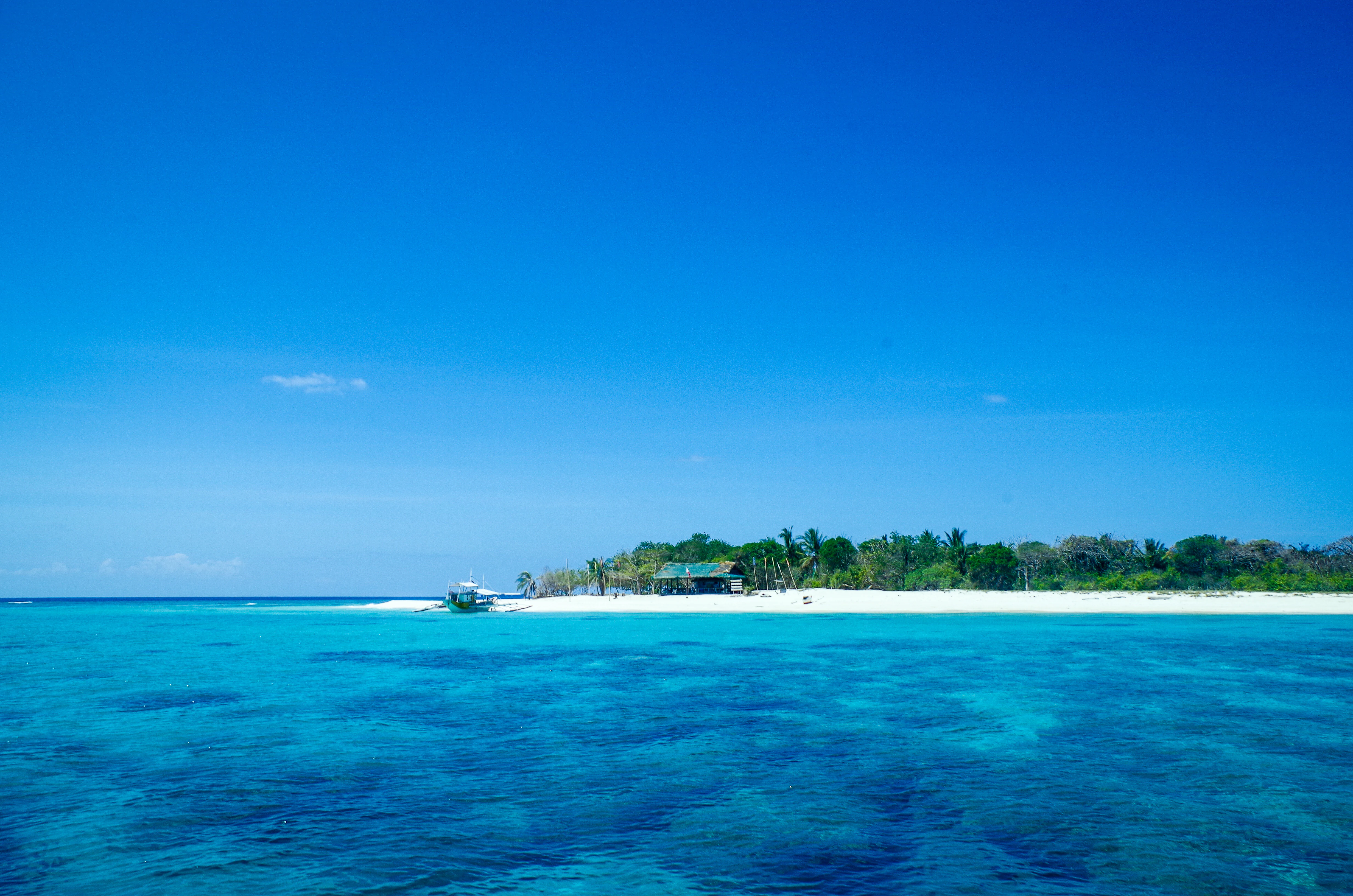
The three small land features within the park each present a distinct micro-landscape. Apo Island, the largest at about 22 hectares, supports mangrove and other coastal vegetation typical of small tropical islands, and is marked by a lighthouse. Binangaan consists of low rocky limestone with sparse plants, while Cayos del Bajo Tinangkapang is a tiny bare coral bank only a few hundred square meters in size, without vegetation of its own.
Apo Reef Marine Natural Park ecosystems, habitats, and plant life
The ecological identity of Apo Reef Marine Natural Park centers on its coral reef ecosystems, which together form the second-largest contiguous reef complex in the Philippines after the Danajon Bank off Bohol. Coral coverage spans a total of around 15,800 hectares across the three reef structures, supporting a full range of reef-associated habitats from shallow reef flats and lagoon floors to deep drop-off zones and trench walls.
The atoll-like arrangement of the main reef banks is significant because it echoes the structure of oceanic atolls despite being located in the Mindoro Strait close to Mindoro Island. This gives the park a distinctive ecological profile, with shallow, sunlit lagoon environments lying in close proximity to deep, shaded reef walls, a juxtaposition that supports a wide diversity of reef organisms. The presence of mangrove and coastal vegetation on Apo Island adds an additional small but ecologically meaningful terrestrial component, providing nutrient input and habitat linkages between land and sea.
Because Apo Reef is one of the largest and most topographically varied reef systems in the Philippines, it functions as a regional refuge for reef biodiversity and as a source area for larval dispersal to surrounding waters, an important ecological role for coral and fish populations in the Mindoro Strait.
Apo Reef Marine Natural Park wildlife and species highlights
Apo Reef Marine Natural Park is widely recognized as a key site for marine wildlife in the Philippines, with a reef system whose combination of shallow lagoons, steep drop-offs, and open seascape supports an unusually diverse array of reef-associated species. As the country's second-largest coral reef complex, it provides habitat for a broad range of corals, reef fishes, and larger pelagic visitors typical of Philippine tropical marine environments, including species that depend on drop-off structures and clear, deep water.
Apo Reef Marine Natural Park conservation status and protection priorities
Apo Reef Marine Natural Park holds a distinctive place in Philippine and international marine conservation. Designated as a Marine Natural Park by Presidential Proclamation No. 868 in 1996, the area has been protected for several decades through a combination of core zone management and a substantial buffer zone of around 11,702 hectares surrounding the central 27,469-hectare protected core.
In 2006, the park was placed on the Philippines' tentative list for UNESCO World Heritage status, reflecting its recognized global ecological value. It has also been included among the ASEAN Asian Heritage Parks, a regional recognition of natural and cultural heritage significance.
Internationally, the park has been awarded platinum status under the Marine Conservation Institute's Blue Parks initiative, a designation reserved for marine areas of exceptional conservation importance. Taken together, these layers of recognition show that Apo Reef Marine Natural Park is managed not only as a national reserve but as a site of significant international conservation standing, with the park's remote setting and reef scale both contributing to its long-term ecological value.
Apo Reef Marine Natural Park cultural meaning and human context
Apo Reef Marine Natural Park has a cultural dimension tied primarily to its role as a destination for Philippine dive tourism and to its integration into regional conservation frameworks. The choice of the park's name reflected the desire to preserve and build on the prior recognition of the Apo Reef among the Philippine and international diving community.
The park is also symbolically part of a broader national and regional heritage framework through its inclusion in the ASEAN Asian Heritage Parks network, which highlights sites across Southeast Asia recognized for their natural heritage value. On Apo Island itself, the lighthouse stands as a long-standing navigational feature linked to maritime activity in the Mindoro Strait, though the park itself protects and manages access rather than supporting regular settlement.
Top sights and standout views in Apo Reef Marine Natural Park
Apo Reef Marine Natural Park's highlights are concentrated in its underwater topography and its layered conservation recognition. The two large atoll-like coral banks with shallow central lagoons, separated by a 30-meter trench, define the underwater character of the site.
The park's steep, near-vertical reef drop-offs, descending from five to 80 meters in places, are among the most distinctive features of the Philippine coral reef environment. Combined with its status as the second-largest reef complex in the country, its ASEAN Asian Heritage Park designation, its UNESCO tentative listing since 2006, and its platinum Blue Parks rating, Apo Reef stands out as both a national flagship marine protected area and an internationally recognized conservation site.
Best time to visit Apo Reef Marine Natural Park
Because Apo Reef Marine Natural Park is a dive and marine focused site in the open waters of the Mindoro Strait, conditions for visiting are closely tied to broader Philippine dry and wet season patterns typical of the MIMAROPA region. Months falling within the country's generally calmer, drier season tend to offer more stable sea conditions and clearer underwater visibility, supporting both diving and snorkeling experiences.
Outside the calmest months, rougher seas, reduced visibility, and tropical weather disturbances can affect access to the small islands and reef areas. Visitors planning trips based on diving or snorkeling priorities will generally find conditions most favorable during the calmer and drier part of the year, though exact seasonal conditions can vary year to year.