Mori Atlas logo
Nature reserveBahno w Borkach Nature Reserve

Examining the ecological terrain, mire systems, and protected boundaries within Poland

Bahno w Borkach Nature Reserve: A Detailed Atlas of Boreal Peatland and Forest Landscapes

(Rezerwat przyrody „Bahno w Borkach”)

Bahno w Borkach Nature Reserve functions as a critical protected peatland refuge in northeastern Poland, deeply embedded within the Knyszyn Forest. This detailed geographic overview highlights the reserve's unique mosaic of low-mire communities, bryophyte-rich vegetation, and the surrounding woodland terrain characteristic of the Podlaskie Voivodeship. By tracing its specific ecological boundaries and placement within the regional upland landscape, the atlas provides a comprehensive look at this boreal-influenced protected area.

peatlandborealmirebryophytesprotected forestnature reserve

Bahno w Borkach Nature Reserve

Nature reserve

Park overview

Structured park overview, official facts, and landscape profile for Bahno w Borkach Nature Reserve

Bahno w Borkach Nature Reserve park facts, protected area profile, and essential visitor context

Review the core facts for Bahno w Borkach Nature Reserve, including designation, size, terrain, visitor scale, habitats, and operating context in one park-focused overview.

About Bahno w Borkach Nature Reserve

Bahno w Borkach Nature Reserve is one of the ecologically defining protected areas of the Knyszyn Forest in northeastern Poland. Located in the Podlaskie Voivodeship within Sokółka County, the reserve sits in the central part of this extensive forest complex and overlaps with the Knyszyn Forest Landscape Park, the broader framework within which its conservation role is situated.

The reserve's core identity is built around its peatland character. Although it is formally classified as a phytocenotic and peatland reserve, the underlying landscape reflects the Wysoczyzna Białostocka mesoregion, a gently undulating glacial upland that provides the platform for the accumulation and preservation of organic-rich mire substrates. Within this setting, Bahno w Borkach protects a mosaic of low-mire communities and associated forest stands, the combination that gives the reserve its particular boreal flavor.

From a botanical perspective, the reserve protects well-developed communities of peatland vegetation with an explicitly boreal character. These communities are notable for their richness in vascular plants and bryophytes, with mosses and liverworts forming a particularly important component of the biodiversity profile. The protected area also supports a large number of legally protected species, reinforcing its standing in the regional conservation network.

The legal framework reflects both preservation and stewardship. Formally, the reserve combines elements of strict protection with active management, recognizing that peatland systems of this type benefit from direct intervention to maintain hydrological conditions and community composition. The area covers 289.87 hectares, with the founding act originally referencing 286.90 hectares.

In regional context, Bahno w Borkach complements the broader protected landscape of the Knyszyn Forest, contributing to the continuity of mire, bog, and forest habitats across this important northeastern Polish woodland. Its protection helps sustain ecological processes, hydrological functions, and habitat diversity at a landscape scale.

Quick facts and research context for Bahno w Borkach Nature Reserve

Bahno w Borkach Nature Reserve is located in Podlaskie Voivodeship in northeastern Poland, in the Sokółka County area on the Wysoczyzna Białostocka mesoregion. It lies in the central part of the Knyszyn Forest, within the wider boundaries of the Knyszyn Forest Landscape Park.

The reserve was created in 1990 by the relevant legal act and was designated as a phytocenotic and peatland (mire) nature reserve, with subtypes covering forest communities and low mires. Its total area is 289.87 hectares. The protected area combines strict protection with active conservation measures to maintain its characteristic boreal peatland communities.

Protection and recognition

Examine terrestrial protection scope and recorded international recognition details

Bahno w Borkach Nature Reserve Protection Status and Recognition Data

Bahno w Borkach Nature Reserve maintains a documented terrestrial protection scope within the regional conservation framework. Certified records assemble official designation parameters and recognition data for administrative tracking.

Protection details

Protection scope
Terrestrial
Transboundary protection
No
Park context

Deeper park guide and search-rich context for Bahno w Borkach Nature Reserve

Bahno w Borkach Nature Reserve history, landscape, wildlife, and travel context

Explore Bahno w Borkach Nature Reserve through its history, landscape character, ecosystems, wildlife, conservation priorities, cultural context, and seasonal travel timing in a structured park guide built for atlas discovery and search intent.

Why Bahno w Borkach Nature Reserve stands out

Bahno w Borkach is best known for its well-developed boreal peatland communities, which host a notable diversity of vascular plants and bryophytes. The reserve is recognized for the presence of a large number of protected species within its mire and forest mosaic habitats. The reserve's ecological reputation rests on its reputation as a representative example of low-mire communities developed within a forest setting, with bryophyte-rich assemblages adding to its scientific value. It is therefore an important reference site for understanding boreal-influenced mire ecosystems in the eastern Polish lowlands.

Bahno w Borkach Nature Reserve history and protected-area timeline

Bahno w Borkach Nature Reserve was officially established in 1990 through the relevant Polish legal instrument, the Monitor Polski ordinance of 1990, number 31, position 248. The reserve was created specifically to protect well-developed peatland communities of a boreal character, recognized for their richness in vascular plant and bryophyte species, as well as for hosting a large number of protected species.

From its establishment, the reserve was classified as both a phytocenotic reserve and a peatland (mire) reserve, with subtypes covering forest communities and low mires. The founding description referenced an area of 286.90 hectares, while the current recorded extent stands at 289.87 hectares.

The 1990 designation placed the reserve within the wider framework of Polish peatland conservation practice at the time, recognizing both strict preservation and active management as appropriate approaches for sustaining boreal mire communities. Within the landscape, it functions as a key element of peatland protection in the central part of the Knyszyn Forest, alongside the landscape park-level protections covering the surrounding woodland.

Bahno w Borkach Nature Reserve landscape and geographic character

The physical setting of Bahno w Borkach is defined by the gently undulating terrain of the Wysoczyzna Białostocka, a glacial upland mesoregion in northeastern Poland. Within this broader landscape, the reserve occupies the central portion of the Knyszyn Forest, a large forested complex that frames the mire systems and influences their hydrology and ecological character.

The reserve's terrain is shaped by the conditions that allow peat formation: relatively flat to gently sloping ground, sufficient moisture retention, and a substrate history that has supported organic accumulation. The result is a mosaic of low-mire communities interspersed with forest patches, typical of boreal-influenced peatland landscapes in this part of Europe.

The wider visual and physical context of the Knyszyn Forest means that the reserve is embedded within extensive woodland surroundings, with the mire habitats forming distinctive ecological clearings and transitions within an otherwise continuous forest cover. This setting shapes both the hydrological regime supporting the mires and the ecological connectivity between boreal, forested, and peatland environments.

Bahno w Borkach Nature Reserve ecosystems, habitats, and plant life

The ecological character of Bahno w Borkach is dominated by well-developed peatland communities with an explicitly boreal character. The reserve is recognized for the richness of its vascular plant flora and its bryophyte communities, the latter being a defining feature of the site's botanical value.

The habitat mosaic combines low-mire peatland communities with associated forest stands, the latter reflected in the reserve's subtype classification. This combination of mire and forest environments is typical of boreal peatland complexes in the eastern Polish lowlands and supports a layered vegetation structure, from open bog and mire vegetation through transitional wet woodland to surrounding forest communities.

The flora includes a high number of legally protected species, underlining the conservation importance of the peatland systems. The boreal character of the vegetation, expressed in the composition of both vascular plants and bryophytes, gives the reserve an ecological profile distinct from other mire sites in Poland, tying it to the broader distribution of boreal peatland communities across northern and northeastern Europe.

Bahno w Borkach Nature Reserve wildlife and species highlights

While the principal documented focus of Bahno w Borkach is botanical, the reserve's peatland and forest mosaic also provides habitat conditions relevant to fauna typical of boreal mire and forest complexes in northeastern Poland. Such habitats commonly support characteristic peatland fauna associated with wet, moss-rich, and structurally diverse environments, and the surrounding Knyszyn Forest contributes additional forest-based wildlife context.

The protected species richness highlighted in the reserve's founding documentation reinforces the broader ecological significance of the site beyond plants, suggesting that the combination of mire communities and forest patches supports a community of organisms where protected species occur regularly across multiple groups of organisms found in boreal peatlands and adjacent forests.

Bahno w Borkach Nature Reserve conservation status and protection priorities

Bahno w Borkach plays an important role in the conservation of boreal peatland communities in northeastern Poland. As a phytocenotic and peatland reserve with both strict and active protection measures, it is designed to safeguard a representative example of well-developed mire vegetation that has become increasingly rare and ecologically valuable in the region.

The reserve's significance stems from several reinforcing factors. It protects a particularly complete expression of low-mire communities with boreal character, representing a habitat type that is limited in distribution and sensitive to hydrological change. It also preserves a notably rich bryophyte flora alongside its vascular plant diversity, contributing to the broader diversity of protected peatland sites across Poland.

The presence of a large number of protected species, as documented at the time of the reserve's establishment, gave the site its formal justification for protection. The combination of strict and active management approaches reflects recognition that peatland systems of this kind require sustained intervention to maintain hydrological conditions, vegetation composition, and habitat quality over time.

The reserve is also embedded in a wider conservation landscape: it lies within the Knyszyn Forest Landscape Park, anchoring mire protection within a broader network of forest and landscape-level protections. This integration strengthens the reserve's contribution to ecological connectivity, hydrological function, and habitat preservation at a landscape scale in the Podlaskie region.

Top sights and standout views in Bahno w Borkach Nature Reserve

Bahno w Borkach stands out as a coherent, well-documented example of boreal peatland protection within the Knyszyn Forest of northeastern Poland. Its combination of well-developed low-mire communities, rich bryophyte flora, and numerous protected vascular plant species makes it an ecologically distinctive site within the regional protected-area network.

The reserve's profile is reinforced by its position within the Knyszyn Forest Landscape Park and by its formal integration of strict and active conservation measures, which together support the long-term viability of its peatland and forest habitat mosaic. For conservation planners and ecologists, the reserve offers a representative reference site for boreal-influenced mire communities in the eastern Polish lowlands.

Monthly climate preview

Long term temperature and precipitation data recorded at representative geographic coordinates

Bahno w Borkach Nature Reserve Climate Normals and Annual Weather Patterns

Representative coordinate records show measured monthly temperature variations and precipitation distributions across the protected landscape from 1991 to 2020. Examining the full twelve month profile provides deeper insight into long term averages and multi year climatic trends.
Annual mean7 °C
-5 °C19 °C
Jan-5°
Feb-4°
Mar
Apr
May13°
Jun17°
Jul19°
Aug19°
Sep13°
Oct
Nov
Dec-3°
Warmest month
July

19.3 °C

Coolest month
January

-5.2 °C

Wettest month
July

2.7 mm/day

Driest month
March

1.3 mm/day

Park location guide

Geography guide, regional context, and park location map for Bahno w Borkach Nature Reserve

Bahno w Borkach Nature Reserve park geography, regions, and map view in Poland

Understand where Bahno w Borkach Nature Reserve sits in Poland through a broader geographic reading of the surrounding landscape, nearby location context, and its mapped position within the national park landscape.

How Bahno w Borkach Nature Reserve fits into Poland

Poland, officially the Republic of Poland, is a Central European country spanning from the Baltic Sea in the north to the Carpathian Mountains in the south. It borders Germany, Czech Republic, Slovakia, Ukraine, Belarus, Lithuania, and Kaliningrad Oblast. The country has a temperate climate, diverse landscapes, and is known for its rich history, cultural heritage, and strong economic position within the EU.

Wider geography shaping Bahno w Borkach Nature Reserve in Poland

Poland occupies 312,696 km2 in Central Europe, extending from the Baltic Sea coast in the north to the Sudetes and Carpathian Mountains in the south. It borders Germany to the west, Czech Republic and Slovakia to the south, Ukraine and Belarus to the east, and Lithuania and Kaliningrad Oblast to the northeast. The landscape includes lowland plains, uplands, and mountain ranges.

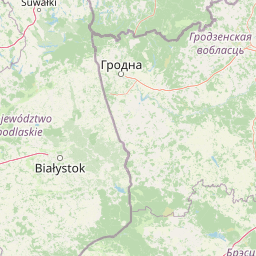
Map view of Bahno w Borkach Nature Reserve

Use this park location map to pinpoint Bahno w Borkach Nature Reserve in Poland, understand its exact geographic position, and read its mapped placement within the surrounding landscape more clearly.

Pigeon | © OpenStreetMap contributors

Location context for Bahno w Borkach Nature Reserve

Podlaskie Voivodeship
Park atlas

Compare regional wetland habitats, lowland forests, and nearby nature reserves in northeastern Poland.

Explore Parks Near Bahno w Borkach Nature Reserve and Surrounding Protected Landscapes

Browsing other protected areas near Bahno w Borkach Nature Reserve reveals the wider ecological context of the Knyszyn Forest. Evaluating adjacent lowland reserves helps map regional peatland ecosystems and connected woodland habitats across the Podlaskie Voivodeship.
A soft watercolor painting showing a panoramic view of a lush, green landscape with a winding stream, distant hills, and trees against a pale, warm sky.
Nature reservePodlaskie Voivodeship
About 7.1 km away#1 closest

North

Rezerwat przyrody Międzyrzecze: Exploring Protected Woodland Geography in Poland

A detailed geographic look at forest protection in the Knyszyn Forest landscape.

Deepen your understanding of Rezerwat przyrody Międzyrzecze through a focused study of its protected terrain. This site covers the essential geography of the nature reserve, detailing how glacial landforms and internal springs create unique woodland conditions within the Podlaskie Voivodeship. Access mapped data to see how this protected fragment integrates into the broader Knyszyn Forest ecological network.

Area
2.508 km²
Established
1990
Relief
Upland
Scope
Terrestrial
Nature reservePodlaskie Voivodeship
About 26 km away#2 closest

Southeast

Rezerwat przyrody Jezioro Wiejki: Wetland Geography and Protected Landscape in Eastern Poland

Glacial lake basin and peatland ecology in Podlaskie Voivodeship

This nature reserve protects a rare mesotrophic lake and peatland complex, serving as a testament to the glacial history of the Białystok Highlands. The site is noted for its concentric wetland vegetation bands, including floating bog communities and populations of endangered low birch, which offer a clear window into the ecological dynamics of northeastern Polish water systems.

Area
0.225 km²
Established
2005
Relief
Lowland
Climate
Temperate
A soft, light-toned watercolor painting of a lowland forest landscape with trees, meadows, and distant hills.
Protected areaPoland
About 33 km away#3 closest

South

Puszcza Białowieska Protected Area: Primeval Forest Geography and Mapped Boundaries

Ancient lowland forest landscapes of the Polish-Belarusian border

Examine the geographic composition of Puszcza Białowieska, an extensive primeval lowland forest characterized by multi-aged tree stands and abundant deadwood ecosystems. The area serves as a primary site for ecological research into natural forest regeneration and megafauna protection, specifically for the European bison and diverse predator populations living within its protected landscape boundaries.

Area
1,500 km²
Established
1932
Relief
Lowland
Climate
Temperate
Watercolor painting showing a winding river through marshy fields with distant hills
National parkPodlaskie Voivodeship
About 38 km away#4 closest

West

Narew National Park: Discover Poland's Premier Wetland National Park with Unique River Geography

Explore its mapped boundaries and rich protected landscape.

Narew National Park represents a significant protected area within the Podlaskie Voivodeship, distinguished by its one-of-a-kind anastomosing river system where the Narew River splits into numerous interconnected channels. This dynamic wetland environment provides critical habitat and showcases a complex interplay of water, land, and diverse ecosystems. Users can explore the park's geographic features, understand its protected landscape status, and appreciate its vital role within the regional atlas through detailed mapping and factual context.

Area
73.5 km²
Established
1996
IUCN
II
Relief
Lowland
A horizontal watercolor illustration showing a wooden boardwalk winding through a green and marshy landscape with soft hills in the background.
National parkPodlaskie Voivodeship
About 38 km away#5 closest

West

Narwiański Park Narodowy: Mapped Wetland Geography and Protected Floodplain Landscapes

Examining the hydrologic patterns and marshland terrain of the Narew River valley.

Narwiański Park Narodowy features a unique, water-dominated geography in Podlaskie Voivodeship. This protected area centers on the anastomosing Narew River, creating a shifting mosaic of streams, oxbows, and managed grasslands that serves as a vital refuge for wetland birds and aquatic species within the broader Polish landscape.

Area
68.1 km²
Established
1996
Visitors
15K annual
Relief
Lowland
Nature reservePodlaskie Voivodeship
About 39 km away#6 closest

South

Dolina Waliczówki Nature Reserve: Protected Forest and Stream Valley Geography

Key protected area within the Białowieża Forest of Poland

Spanning over 44 hectares, Dolina Waliczówki Nature Reserve serves as a concentrated site for the preservation of natural forest communities and springhead flora in the Podlaskie Voivodeship. The protected terrain, defined by the small Waliczówka stream, illustrates the ecological detail of the broader Białowieża Forest lowland woodland.

Area
0.448 km²
Established
1995
Relief
Lowland
Scope
Terrestrial
Watercolor painting showing a river flowing through a forested landscape with green hills, distant mountains, and a pink and yellow sky
National parkBelarus
About 44 km away#7 closest

South

Belavezhskaya Pushcha National Park: Ancient Primeval Forest & European Bison Sanctuary

Explore mapped protected areas and regional geography.

Belavezhskaya Pushcha National Park stands as a testament to Europe's ancient woodland heritage, a protected landscape of immense ecological value. This primeval forest, a sanctuary for the European bison, offers a unique glimpse into an ecosystem preserved for millennia. The park's mapped boundaries and geographic context provide essential detail for understanding its role as a critical natural monument and a cornerstone of regional protected areas.

Area
1,500.69 km²
Established
1932
IUCN
II
Visitors
300K annual
Watercolor illustration of a river flowing through grassy terrain with rolling hills in the background
National parkPodlaskie Voivodeship
About 49 km away#8 closest

Southeast

Białowieża National Park: Primeval Forest and European Bison Protected Landscape

Northeastern Poland's ancient woodland and river valley geography

Encompassing the heart of the Białowieża Forest, this national park protects an unparalleled temperate old-growth ecosystem. The landscape contains a complex mix of upland forests, swampy alder groves, and meandering river corridors, providing a crucial habitat for the world's largest free-ranging population of European bison.

Area
105.17 km²
Established
1932
IUCN
II
Visitors
140K annual

Common questions about visiting, size, designation, and location context for Bahno w Borkach Nature Reserve

Bahno w Borkach Nature Reserve FAQs for park facts, access, geography, and protected area context

Find quick answers about Bahno w Borkach Nature Reserve, including protected-area facts, park geography, trail and visitor context, and how the park fits into its surrounding country and regional landscape.
MoriAtlas Explorer

Continue Your Protected Areas Search Across the Global Atlas

Deepen your exploration by continuing the structured search for national parks and protected areas worldwide. Utilize the comprehensive filtering capabilities to compare different conservation landscapes and refine your understanding of global park geography. Discover more about the distribution and characteristics of protected natural areas.

Global natural geography