
Why Biotopo Fiavé stands out
Biotopo Fiavé is best known for hosting one of the most extensive peat bogs in Trentino, formed in the basin of the ancient post-glacial Lago Carera, and for the presence within its boundaries of a UNESCO World Heritage prehistoric pile dwelling site dating back to the Bronze Age. Its combination of conservation significance, wetland biodiversity, and archaeological importance makes it a rare example of an Italian biotope where ecological protection and prehistoric cultural heritage are managed side by side. The reserve is also increasingly recognized for its role as a frontline area in the recolonization of the Alps by large carnivores, including the first confirmed reproduction of the golden jackal in Trentino documented near the biotope in the early 2020s.
Biotopo Fiavé history and protected-area timeline
The natural history of the area now occupied by Biotopo Fiavé begins at the close of the last glaciation. Around 14,000 years ago, a glacier descending through the Giudicarie valleys left a terminal moraine that dammed the local drainage and gave rise to Lago Carera, a lake roughly 20 meters deep. Over millennia, the outflowing river gradually cut through the moraine, allowing the lake to drain and leaving behind a shallow, marshy basin. As vegetation colonized the wet ground and successive generations of plants died back into the waterlogged soils, their partially decomposed remains accumulated to produce the peat layer that now defines the site.
The peatland has also preserved a long record of human presence. From the third millennium BCE onward, the area around the basin supported various prehistoric communities, and the wooden piles and structural remains of these early settlements were eventually entombed and conserved within the waterlogged deposits. The result is one of the most important prehistoric pile dwelling landscapes of the Alps, recognized internationally in 2011 when UNESCO added the Fiavé site to the World Heritage List as part of a transnational serial property covering 111 pile dwelling sites across six Alpine countries.
In more recent centuries, human pressure on the wetland intensified. Beginning in the eighteenth century, drainage and reclamation works were undertaken to convert portions of the peatland to other uses, and from 1853 onward peat was actively extracted from the basin. These interventions altered both the hydrology and vegetation of the area, setting the stage for the conservation effort that followed.
On 15 July 1988, the area was officially designated as a protected area by decree of the President of the Provincial Government of Trento, establishing Biotopo Fiavé as a provincial nature reserve. Following designation, the managing authority of the Autonomous Province of Trento developed an educational trail that allows visitors to experience the peat bog and its associated habitats without compromising their scientific integrity, and the reserve has since been integrated into the European Natura 2000 network as a Site of Community Importance.
Biotopo Fiavé landscape and geographic character
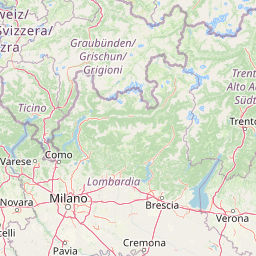
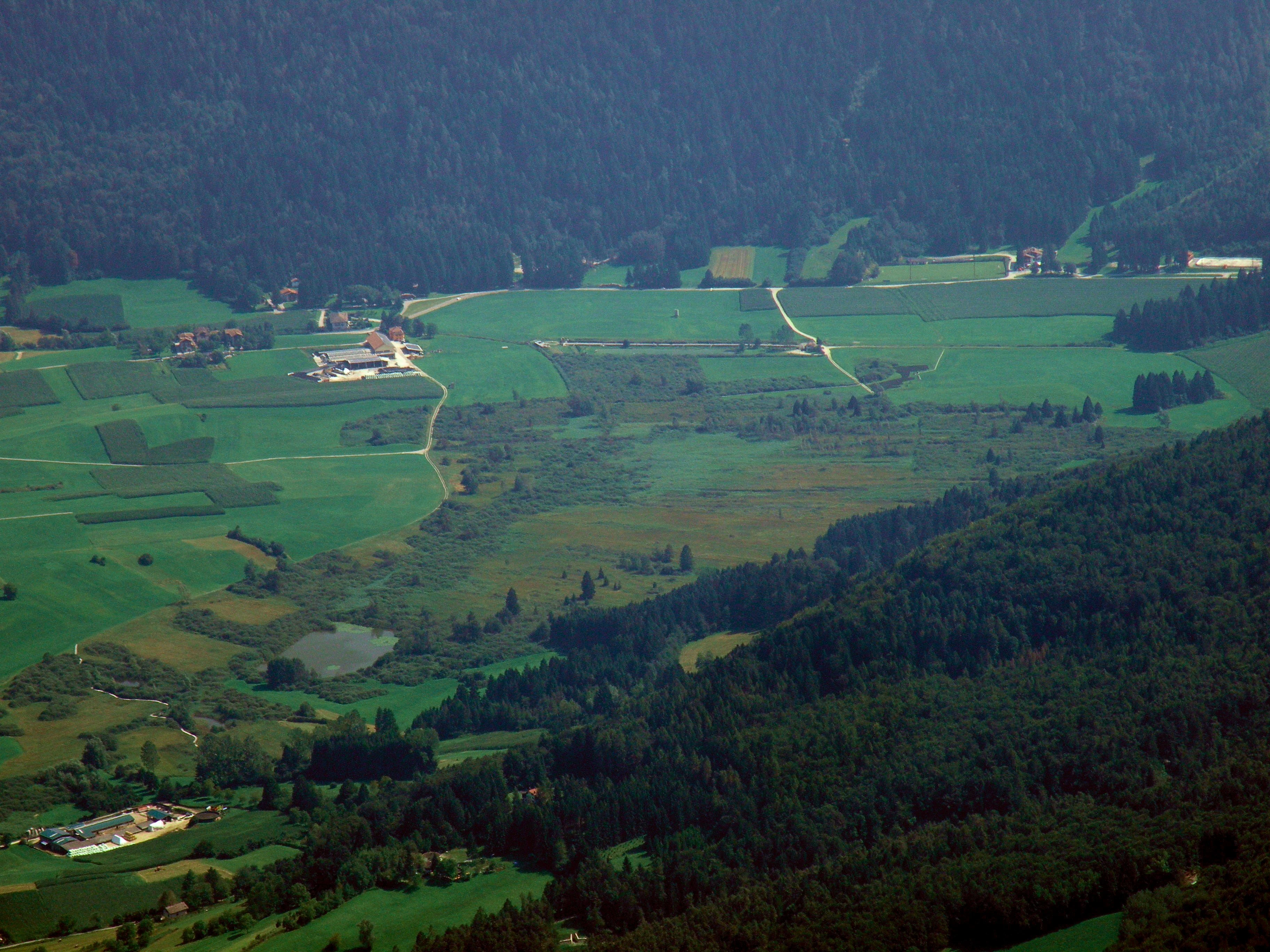
The biotope occupies a low-lying basin at the southern foot of Monte Cogorna and close to Monte Misone, two prominent mountains that frame the Giudicarie Esteriori landscape. The setting is transitional, where the steep mountain slopes of the outer Alps meet the gentler valley floor and the broad wetland that fills the former lakebed. From the surrounding trails, the terrain shifts abruptly from forested mountain flanks to open reed beds, sedge mires, wet meadows, and scattered pools, producing a compact but visually diverse scene that contrasts sharply with the more rugged Alpine scenery above.
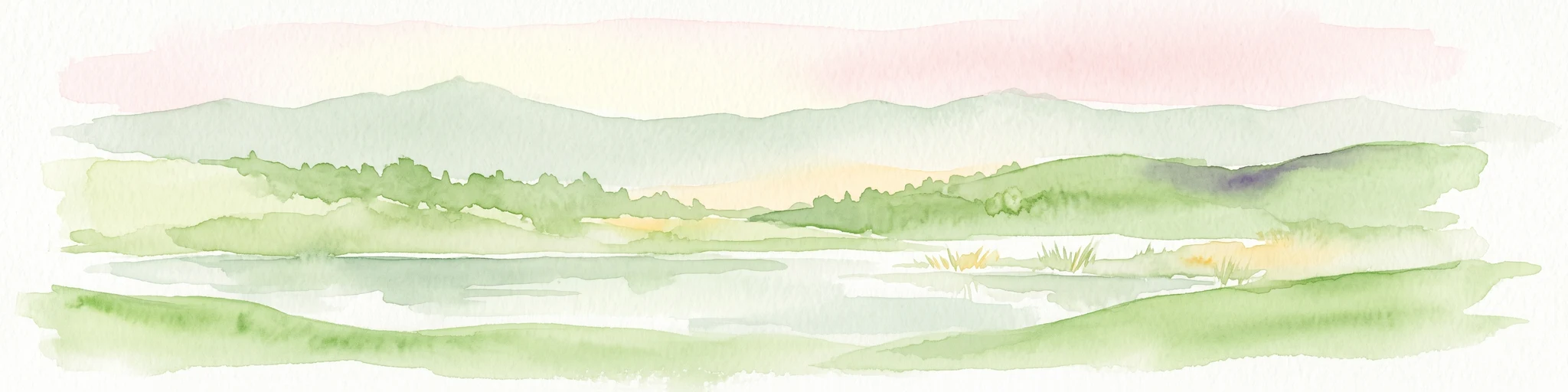
The dominant structural feature of the reserve is the peatland itself. It lies in the basin of the vanished Lago Carera, where centuries of organic accumulation have built up a thick peat deposit over the original lake floor. Small open water surfaces still survive as quiet pools, often bordered by stands of white water lily, while elsewhere the surface is closed by dense reed beds and low sedge communities. Toward the southern edge of the biotope, the wetland grades into a zone of mixed woodland dominated by grey willow and alder, where the waterlogged peat gradually gives way to more solidly rooted soil.
Despite its modest elevation, the landscape of Biotopo Fiavé reads almost as a small-scale cross-section of Alpine valley hydrology, with the threads of former river channels, the remnants of the morainic barrier, and the surrounding mountain ridges all legible to a careful observer. This combination of geological inheritance, wetland morphology, and surrounding Alpine scenery gives the biotope a layered character unusual for a reserve of its size.
Biotopo Fiavé ecosystems, habitats, and plant life
Ecologically, Biotopo Fiavé is defined by the unusual concentration and diversity of wetland habitats found within a relatively small protected area. Its vegetation structure reflects the progressive transition from open water to dry land, with distinct plant communities anchored to specific hydrological and soil conditions.
The most distinctive habitats are the peat-forming communities. Two large sedges, Carex elata and Carex rostrata, dominate large portions of the mire, often forming tussock-like surfaces that hold water within the peat body. Common reed (Phragmites australis) builds tall, dense reed beds along parts of the basin, providing cover and nesting structure for many bird species, while open pools within and beside the reed beds support rooted aquatic vegetation including white water lily (Nymphaea alba). Around the margins, wet meadows and shrubby transitional zones host a mixture of herbaceous plants and woody species.
The southern sector of the reserve is characterized by mixed thickets of grey willow (Salix cinerea) and alder (Alnus), marking the shift from open mire to more terrestrial woodland. This mosaic of water, reed, sedge, meadow, and wet woodland creates a high diversity of microhabitats within very short distances, supporting a correspondingly rich community of invertebrates, amphibians, and wetland-adapted birds. The site is recognized at the European level as a Site of Community Importance principally because of the rarity and ecological value of these peatland and wetland habitats within the Alpine biogeographical region.
Biotopo Fiavé wildlife and species highlights
The wildlife of Biotopo Fiavé reflects the rich habitat mosaic described above, with both resident wetland species and visitors from the surrounding mountains contributing to the area's biodiversity. The biotope is particularly important for waterbirds, which use the reed beds, pools, and wet meadows for nesting, feeding, stopover during migration, and in some cases wintering.
Among the regularly recorded species are mallard, common moorhen, Eurasian coot, gadwall, Eurasian teal, and the bittern, alongside smaller passerines associated with reed and wet meadow habitats such as yellow wagtail, marsh warbler, Eurasian reed warbler, great reed warbler, common sandpiper, and reed bunting. Amphibians are well represented, with common toad, the green frog complex, and the European common frog breeding in and around the wetland.
Invertebrate diversity is also notable, with dragonflies frequenting the open water and a variety of stag beetles (Lucanidae) recorded in the surrounding woodland. From the surrounding mountains, larger mammals regularly enter or pass through the reserve, including red deer, roe deer, wild boar, red fox, and stone marten. In recent decades, larger carnivores have become a more conspicuous presence, with brown bears repeatedly detected along the connection between the biotope and the nearby Ballino Pass, and wolves confirmed in the same mountain area. A particularly notable development has been the first confirmed reproduction of the golden jackal in Trentino, documented by camera traps near the biotope between 2020 and 2022, a small family group of which has now become sedentary in the area.
Biotopo Fiavé conservation status and protection priorities
From a conservation perspective, Biotopo Fiavé is valuable primarily because it conserves one of the most extensive peat bog systems in Trentino within a protected area framework. Peatlands of this kind are rare in the Alps and store significant quantities of carbon while providing specialized habitats that support distinctive plant and animal communities. The site is accordingly designated as a Site of Community Importance (SIC IT3120068) under the European Union's Natura 2000 network, a status that recognizes its contribution to the conservation of threatened wetland habitats and species at the European level.
Management of the reserve lies with the Autonomous Province of Trento, which oversees both the ecological protection of the wetland and the maintenance of an educational trail that allows visitors to learn about bog formation and biodiversity without damaging the underlying peat deposits. The site's registration in the World Database on Protected Areas and its inclusion in the national EUAP list reflect its formal standing within Italian and international conservation frameworks.
A further conservation dimension relates to the broader landscape context. The biotope is increasingly important as a transitional zone where Alpine wildlife, including recovering populations of large carnivores such as the brown bear, wolf, and the newly arrived golden jackal, can move between valley habitats and higher montane environments. By protecting wetland habitats and the ecological integrity of the surrounding forest and mountain interfaces, Biotopo Fiavé contributes to the long-term conservation of biological corridors in the Giudicarie.
Biotopo Fiavé cultural meaning and human context
The cultural significance of Biotopo Fiavé is inseparable from its prehistoric archaeological heritage. The peat bogs that the reserve has been created to protect also created the waterlogged, oxygen-poor conditions that preserved the wooden remains of ancient pile dwellings on the margins of the old lake basin. Human activity in the area dates back to at least the third millennium BCE, and generations of settlements have left traces within and around the present-day biotope.
The Fiavé pile dwelling site became internationally recognized in 2011, when UNESCO inscribed it on the World Heritage List as part of the transnational property 'Prehistoric Pile Dwellings around the Alps,' a serial nomination that united 111 archaeological sites across six Alpine countries. Within the broader context of Alpine archaeology, Fiavé is regarded as one of the key reference sites for understanding prehistoric lake dwelling culture in the southern Alps, and there is a dedicated museum, the Museo delle Palafitte di Fiavé, that complements the on-site experience.
More recent cultural layers include the long history of human modification of the wetland itself. Beginning in the eighteenth century, the peatland was subjected to drainage and reclamation, and from 1853 peat was extracted, a heritage of land use that has shaped the present-day vegetation patterns of the basin. These intertwined layers of prehistoric settlement, traditional rural land use, and modern conservation give the biotope a layered cultural identity that is unusual for a small wetland reserve.
Top sights and standout views in Biotopo Fiavé
Biotopo Fiavé's most distinctive features include its large peat bog, formed in the basin of the vanished post-glacial Lago Carera; its dense mosaic of reed beds, sedge mires, wet meadows, and willow-alder thickets; and its unusually rich waterbird, amphibian, and invertebrate fauna for a reserve of its size. The site also stands out within Italy's network of small protected areas because it directly contains a UNESCO World Heritage prehistoric pile dwelling site.
In addition, the reserve has emerged as an important observation point for the recovery of large carnivores in the Alps. Documented movements of brown bears and wolves, as well as the first confirmed reproduction of the golden jackal in Trentino recorded near the biotope in the early 2020s, give the site an unexpected relevance to ongoing debates about Alpine wildlife recolonization. Together, these features make Biotopo Fiavé a compact but multi-layered site of ecological, archaeological, and cultural interest.
Best time to visit Biotopo Fiavé
Biotopo Fiavé can be visited throughout much of the year, but seasonal conditions strongly shape what visitors experience. Late spring and early summer are typically the most rewarding period for birdwatching, when the wetland hosts nesting and singing waterbirds and the surrounding vegetation is at its lushest.
Early autumn offers a quieter atmosphere with softer light, favorable conditions for observing amphibians and terrestrial mammals near the wetland margins, and stable walking conditions along the educational trail. Winter can also be rewarding, especially for waterbird watching, but visitors should expect colder temperatures, shorter daylight, and the possibility of snow affecting trail conditions in the surrounding mountains.