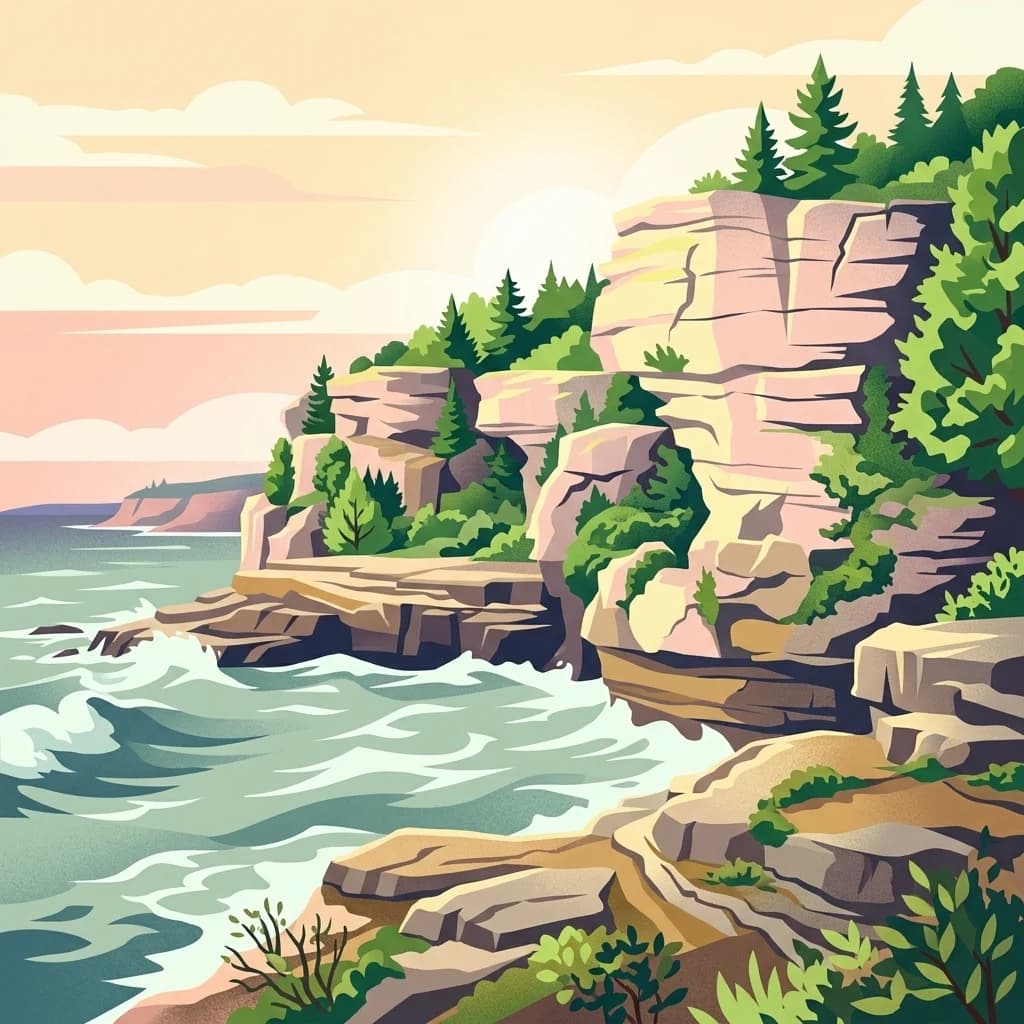
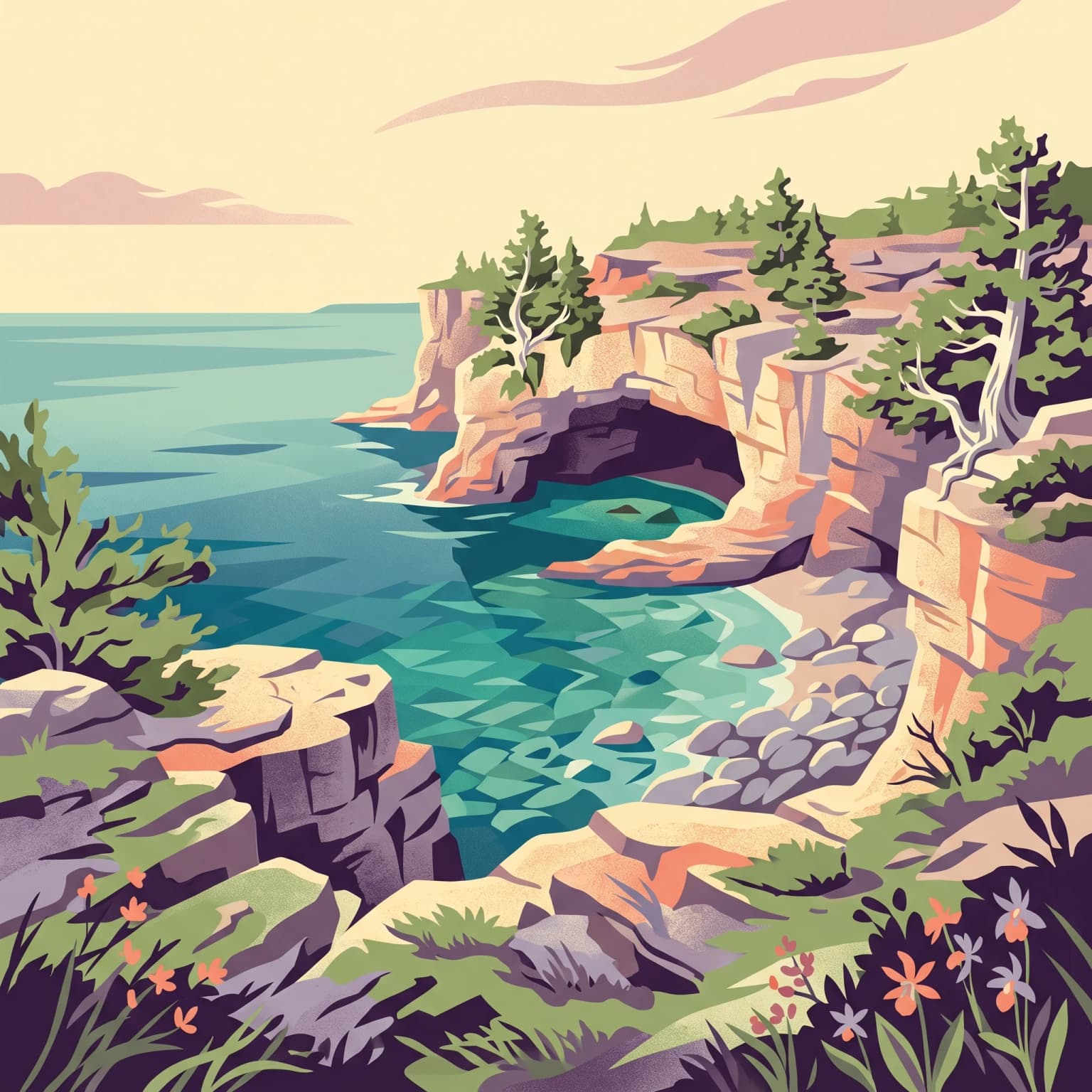
Dramatic Niagara Escarpment cliffs meeting the crystal waters of Georgian Bay
Bruce Peninsula National Park
Bruce Peninsula National Park represents a crown jewel in Canada's protected areas network, preserving a unique segment of the Niagara Escarpment where 400-million-year-old Ordovician limestone and dolomite create a landscape of extraordinary geological and ecological significance. The park's location at the northern terminus of the Bruce Peninsula places it at the confluence of two Great Lakes, Georgian Bay to the east and Lake Huron to the west, creating a maritime-influenced environment that supports species more typical of boreal or coastal ecosystems. The dramatic shoreline features towering cliffs, arching rock formations, cobblestone beaches, and deep blue waters that have earned the region its reputation as one of Ontario's most scenic destinations. The park's interior contains a mosaic of habitats including mixed-wood forests, wetlands, alvars, talus slopes, and cliff faces, each supporting distinctive communities of plants and animals adapted to the challenging terrain. The Bruce Trail, Canada's longest hiking trail, traverses the park's length, providing access to some of the most spectacular viewpoints in the region where sunrise and sunset paint the dolomite cliffs in brilliant hues. This combination of accessible wilderness, geological wonder, and ecological diversity makes the park a destination of lasting importance.