

Mori Atlas logo
Park guides

Seasonal context for Mediterranean forest, raña, and mountains

Cabañeros National Park visitor-planning guide for its Toledo Province setting

Use the available Cabañeros National Park guides for Mediterranean oak woods, river valleys, mountain slopes, and open raña. The timing guide highlights spring and autumn for comfortable temperatures and active wildlife, while setting them against intense summer heat and winter's cold nights and frost despite often sunny days.

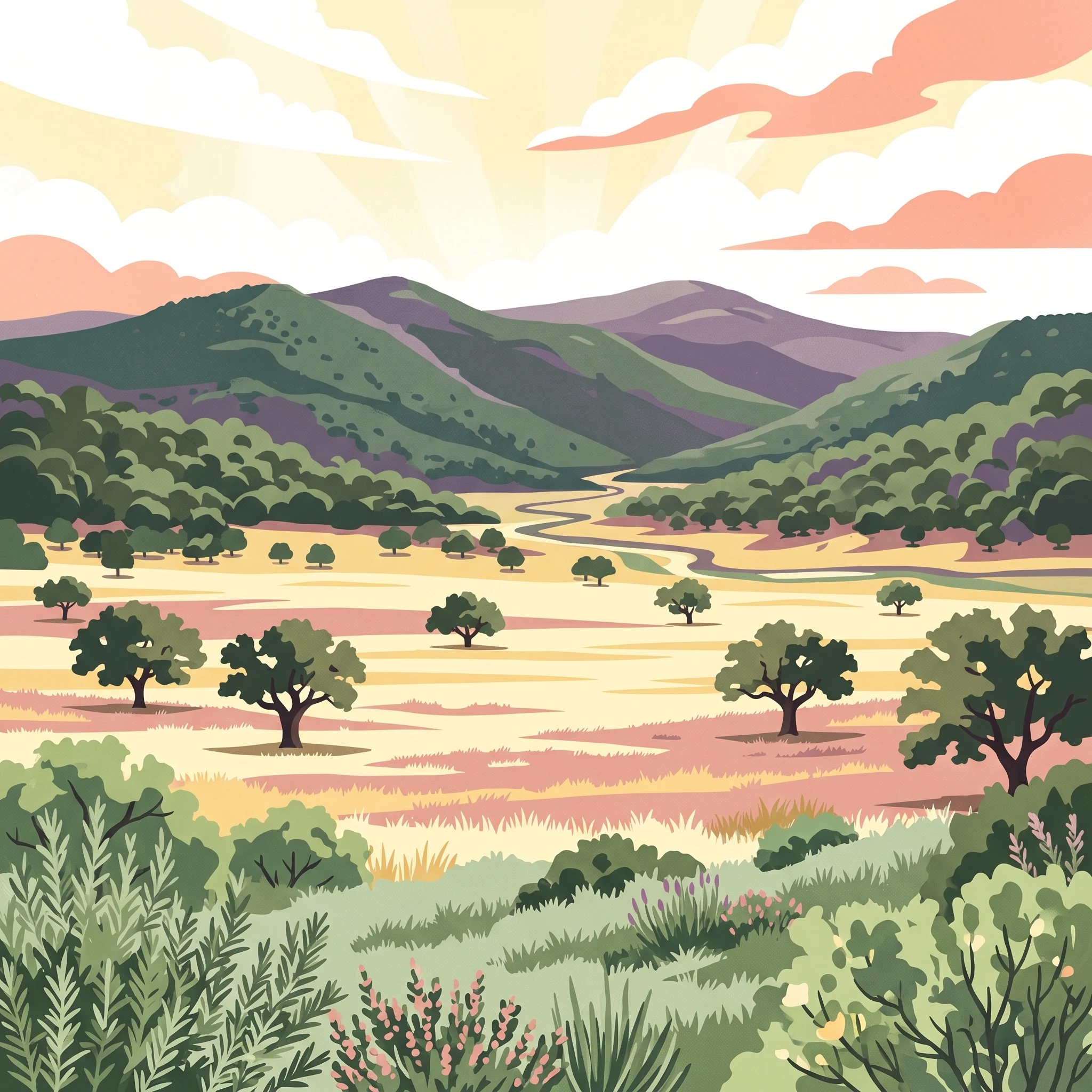
Stylized illustration of mountainous terrain with forests, a waterfall, and a valley under a partly cloudy sky

Spain's finest Mediterranean forest reserve in the Montes de Toledo

Cabañeros National Park

Cabañeros National Park occupies a privileged position in Spain's protected area network as the finest representation of Mediterranean forest ecosystems on the Iberian Peninsula. Located in the Montes de Toledo, the park straddles two provinces—Ciudad Real and Toledo—within the Castilla-La Mancha region of central Spain. The park's establishment in 1995 marked the culmination of decades of conservation advocacy, following earlier designation as a natural park in 1988 when local communities successfully opposed military use of the area for shooting ranges. The park's geographical complexity reveals itself through two contrasting landscape units that define its character. The raña, a vast flatland covering approximately 8,000 hectares in the southeast, originated from geological fill processes occurring roughly three million years ago. This unique ecosystem, partially converted to cereal cultivation in the 1960s, now exists as a grassy woodland maintaining remnants of original vegetation in certain areas. The sierras occupy the majority of the park's terrain, encompassing mountain ranges that rise from 650 meters to the Rocigalgo summit at 1,448 meters. These mountainous areas support dense forests of oak, cork oak, and melojo oak alongside Mediterranean scrubland. The park's value extends beyond its biological richness to encompass geological significance recognized internationally. Areas near Navas de Estena contain fossil deposits from the Ordovician period, more than 400 million years ago, when this territory lay beneath ancient seas. The Boquerón de Estena yielded fossils of the oldest giant worm discovered to date, adding scientific importance to the park's geological heritage. Quartzite and slate dominate the terrain, with certain outcrops proposed as Global Geosites of international geological significance. This combination of biological, geological, and cultural values makes Cabañeros one of Spain's most comprehensive protected areas.

Location
Spain
Park type
National park
Established
1995
Area
409 km²
Highest point
1,448 m
Cabañeros National Park Protected Landscape
MoriAtlas Explorer

Continue Exploring Cabañeros National Park's Mapped Geography and Protected Landscape

Deepen your understanding of Cabañeros National Park by examining its precise geographic boundaries and unique landscape features. MoriAtlas provides structured data to contextualize this vital protected area within the Montes de Toledo region, offering unparalleled insight into its role as a significant component of Spain's natural atlas. Engage with the mapped terrain and diverse ecosystems that define this exceptional Spanish national park.