Mori Atlas logo
Protected landscapeCisowsko-Orłowiński Park Krajobrazowy

Mapping the Paleozoic geology, lowland forest mosaics, and ancient woodland reserves of the region.

Cisowsko-Orłowiński Park Krajobrazowy: A Protected Landscape in Świętokrzyskie Voivodeship

Cisowsko-Orłowiński Park Krajobrazowy preserves a remarkable range of lowland habitat types and geological landmarks within the Świętokrzyskie Voivodeship of Poland. This protected landscape encompasses diverse terrain including forested plateaus, peat bogs, and Devonian limestone outcrops. Researchers and nature enthusiasts can examine the intricate mapping of Paleozoic rock formations, the 200-meter Zbójecka Cave system, and historic forest reserves like Białe Ługi that shelter exceptionally old tree stands.

landscape parklowland forestspeat bogsold-growth treesfloodplain meadowskarst and caves

Cisowsko-Orłowiński Park Krajobrazowy

Protected landscape

Park overview

Structured park overview, official facts, and landscape profile for Cisowsko-Orłowiński Landscape Park

Cisowsko-Orłowiński Landscape Park park facts, protected area profile, and essential visitor context

Review the core facts for Cisowsko-Orłowiński Landscape Park, including designation, size, terrain, visitor scale, habitats, and operating context in one park-focused overview.

About Cisowsko-Orłowiński Landscape Park

Cisowsko-Orłowiński Park Krajobrazowy encompasses one of the most ecologically varied protected landscapes in the Świętokrzyskie region of Poland. Located southeast of Kielce, the park stretches across municipalities including Bieliny, Daleszyce, Łagów, Pierzchnica, and Raków, with its buffer zone also extending into Górno. Its placement within the Góry Świętokrzyskie and Pogórze Szydłowskie mesoregions gives it a transitional character between mountain foothills and lowland landscapes.

The park was created with the explicit aim of preserving a remarkable concentration of biodiversity. Within its boundaries, almost all lowland habitat types recognized in Poland can be found, along with a large share of the region's characteristic flora and fauna. The vegetation is notable for old-growth and near-old-growth forest stands, especially mixed fir-beech-oak woodlands, with individual beech and oak specimens exceeding 200 years in age. Some yew and juniper trees have been recognized as natural monuments for their individual significance.

A central feature of the park is its network of strictly protected nature reserves. Białe Ługi protects forest and peatland communities and is among the most valuable parts of the park. The Cisów reserve, named after the botanist Zygmunt Czubiński, preserves further examples of the area's botanical richness, while the Zamczysko reserve combines natural protection with cultural heritage.

Geology is a defining element of the park's character. Paleozoic rocks and Devonian limestone outcrops underlie much of the area, and the Zbójecka Cave, carved into bituminous limestone and reaching about 200 meters in length, is one of the park's unique features. Volcanic rock outcrops at Sieraków and stone runs at Niwach illustrate the geological diversity, while Zalesie exposes Ordovician and Silurian sandstones containing fossil fauna. Several of these geological sites have been designated as natural monuments, illustrating how closely geological, ecological, and cultural values are interwoven in the park.

Quick facts and research context for Cisowsko-Orłowiński Landscape Park

Cisowsko-Orłowiński Park Krajobrazowy is a landscape park located in the Świętokrzyskie Voivodeship in south-central Poland, southeast of Kielce. It lies in the mesoregions of the Góry Świętokrzyskie and Pogórze Szydłowskie, with administrative coverage across several rural gminas including Bieliny, Daleszyce, Łagów, Pierzchnica, and Raków.

It was formally established on June 10, 1988, by resolution of the provincial council in Kielc, marking a major step in recognizing the region's ecological and geological value. The park protects a broad range of lowland habitats and is home to 52 protected plant species and 15 rare plant species. It also supports large mammals, diverse birdlife, and reintroduced beaver populations.

Protection and recognition

Explore documented terrestrial conservation scope and recognition history

Cisowsko-Orłowiński Park Krajobrazowy Protection Status and Recognition

Cisowsko-Orłowiński Park Krajobrazowy maintains structured terrestrial protection parameters within regional conservation frameworks. Documented records provide verified administrative details without external international recognition sources.

Protection details

Protection scope
Terrestrial
Transboundary protection
No
Buffer area
253.36 km²
Park context

Deeper park guide and search-rich context for Cisowsko-Orłowiński Landscape Park

Cisowsko-Orłowiński Landscape Park history, landscape, wildlife, and travel context

Explore Cisowsko-Orłowiński Landscape Park through its history, landscape character, ecosystems, wildlife, conservation priorities, cultural context, and seasonal travel timing in a structured park guide built for atlas discovery and search intent.

Why Cisowsko-Orłowiński Landscape Park stands out

The park is best known for its biological richness, particularly the presence of almost all lowland habitat types found in Poland within a single protected area. It contains rare peat-bog forest communities preserved in the Białe Ługi reserve and ancient fir-beech-oak tree stands approaching 200 years of age. The park's landscape identity is also strongly tied to its geology. Paleozoic rocks, Devonian limestone outcrops, the 200-meter Zbójecka Cave system, Ordovician and Silurian sandstones at Zalesie, volcanic rock exposures at Sieraków, and stone runs at Niwach give the park a distinctive geological profile rarely matched by other Polish protected areas.

Cisowsko-Orłowiński Landscape Park history and protected-area timeline

Cisowsko-Orłowiński Park Krajobrazowy was formally established on June 10, 1988, through a resolution of the provincial council in Kielc (Uchwała Nr XXVIII/279/88 Wojewódzkiej Rady Narodowej w Kielcach). The creation of the park reflected increasing awareness of the natural value of the forests, peatlands, and geological sites located southeast of Kielce, which had previously been only partially protected through smaller reserves.

The natural reserves incorporated into the park and its buffer zone, notably Białe Ługi and Słopiec, preserve plant communities and old-growth stands that had drawn the attention of botanists and conservationists well before the park's formal designation. The Cisów reserve reflects the scientific legacy of Professor Zygmunt Czubiński, after whom it is named.

Cultural heritage is also embedded in the park's history. Within the Zamczysko forest reserve lies a pre-Christian sanctuary of earth ramparts and terraces, marking the area as a place of long-standing human significance, though the natural protection status of the area only became formalized in the late twentieth century.

Cisowsko-Orłowiński Landscape Park landscape and geographic character

The landscape of Cisowsko-Orłowiński Park Krajobrazowy combines the foothills of the Góry Świętokrzyskie with the gentler terrain of the Pogórze Szydłowskie. Forests dominate much of the area, interspersed with peat bogs, valleys, and plateaus shaped by Paleozoic bedrock. The result is a mosaic terrain that shifts between soft lowlands and more rugged elevations.

Geological formations strongly influence the visible scenery. Bituminous limestone outcrops host the 200-meter Zbójecka Cave, one of the park's standout landforms. Stone run formations at Niwach and volcanic rock exposures near Sieraków give parts of the park an unusually rocky character, while the Ordovician and Silurian sandstones at Zalesie add layered, fossil-rich cliffs. These features are not only visually striking but also significant as protected natural monuments within the park.

Cisowsko-Orłowiński Landscape Park ecosystems, habitats, and plant life

Ecologically, the park is exceptional for its diversity of lowland habitats. Within a relatively compact area, it harbors most of the lowland habitat types present in Poland, creating a network of forest, peatland, meadow, and aquatic environments that support a wide range of species.

The woodlands are characterized by near-old-growth stands of fir, beech, and oak. In the Białe Ługi reserve, peat-bog and forest communities intermingle to produce one of the most ecologically distinctive parts of the park. The presence of 52 protected plant species and 15 rare plant species underscores the botanical richness of the area.

Old trees play a special ecological role. Specimens of beech, oak, maple, sycamore maple, and fir exceed 200 years of age, while individual yew and juniper trees have been formally recognized as natural monuments. This combination of diverse habitats, old-growth forest elements, and protected species gives the park a strong identity as a refuge for lowland biodiversity.

Cisowsko-Orłowiński Landscape Park wildlife and species highlights

The park's habitat diversity supports a correspondingly rich fauna. Large mammals are a particular presence, with moose, red deer, roe deer, wild boar, badger, and gray wolf occurring within the area. The European beaver was reintroduced in 1985 and has since become part of the established fauna, especially around the park's wetland and waterway systems.

Birdlife is also varied. Among notable species is the black grouse, an increasingly rare inhabitant of lowland woodland and bog edge habitats in Poland, and the Siberian jay, a species otherwise typical of the taiga and notable for its unusual presence at this latitude. The mix of forest, peatland, and edge habitats provides feeding and nesting conditions for many additional bird species throughout the year.

Cisowsko-Orłowiński Landscape Park conservation status and protection priorities

Cisowsko-Orłowiński Park Krajobrazowy serves as a major conservation unit within the Świętokrzyskie region, protecting a concentration of lowland biodiversity that is rare at the national scale. The park's stated mission is to preserve biological diversity, with particular emphasis on maintaining the full range of lowland habitat types found in Poland.

The park contains three strictly protected nature reserves, with a fourth reserve (Słopiec) located within the protective buffer zone. These reserves safeguard peatland forests, ancient mixed woodlands, and culturally important sites such as Zamczysko. The park also protects significant geological features, with several rock outcrops, stone run formations, and fossil-bearing exposures classified as natural monuments.

By combining habitat protection, geological conservation, and recognition of individual ancient trees as natural monuments, the park operates as an integrated conservation landscape rather than a narrowly ecological reserve.

Cisowsko-Orłowiński Landscape Park cultural meaning and human context

Beyond its natural value, the park contains cultural heritage tied to the landscape itself. Within the Zamczysko forest reserve, earth ramparts and terraces mark the remains of a pre-Christian sanctuary, indicating that the area has long been a place of significance to the communities living in or near the Świętokrzyskie foothills.

The park's reserves also carry scientific and biographical dimensions. The Cisów reserve is named after the botanist Zygmunt Czubiński, linking the site to a tradition of Polish botanical research. Small communities and rural infrastructure continue to coexist with the protected area, with buffer zones allowing traditional land use adjacent to the stricter reserve cores.

Top sights and standout views in Cisowsko-Orłowiński Landscape Park

Cisowsko-Orłowiński Park Krajobrazowy stands out for combining dense lowland biodiversity with striking Paleozoic geology. The peatland and forest reserves of Białe Ługi and Słopiec protect some of the most ecologically valuable woodlands in the region, while the volcanic rock exposures of Sieraków, the stone runs of Niwach, and the fossil-bearing sandstones of Zalesie make the park equally distinctive from a geological perspective.

The Zbójecka Cave system and the old pagan sanctuary of Zamczysko add further identity, anchoring the park's natural landscapes with underground and cultural features that visitors and researchers can experience side by side.

Best time to visit Cisowsko-Orłowiński Landscape Park

Spring and early summer tend to be the most rewarding seasons for experiencing the park's biodiversity, when forest and peatland vegetation are fully active and woodland birdlife is most vocal. Late spring is also a good period for observing peat-bog communities in Białe Ługi, when water levels are typically high and plant diversity reaches its peak. Autumn brings visual interest through old-growth forest coloring and is a productive time for larger mammals and forest birds. Winter can offer a quieter experience and good visibility for tracking larger fauna in snow conditions, though some peatland areas may be difficult to access in wet or icy weather.
Monthly climate preview

Long-term temperature ranges and monthly precipitation patterns across representative terrain

Cisowsko-Orłowiński Park Krajobrazowy Climate Normals and Annual Weather Rhythm

Cisowsko-Orłowiński Park Krajobrazowy experiences measurable annual shifts in average temperature and monthly precipitation based on historical reference points. Examining the complete twelve-month record reveals detailed climatic variations across the protected landscape.
Annual mean8 °C
-4 °C20 °C
Jan-4°
Feb-2°
Mar
Apr
May14°
Jun18°
Jul20°
Aug20°
Sep14°
Oct
Nov
Dec-2°
Warmest month
July

20 °C

Coolest month
January

-3.6 °C

Wettest month
July

3 mm/day

Driest month
December

1.3 mm/day

Park location guide

Geography guide, regional context, and park location map for Cisowsko-Orłowiński Landscape Park

Cisowsko-Orłowiński Landscape Park park geography, regions, and map view in Poland

Understand where Cisowsko-Orłowiński Landscape Park sits in Poland through a broader geographic reading of the surrounding landscape, nearby location context, and its mapped position within the national park landscape.

How Cisowsko-Orłowiński Landscape Park fits into Poland

Poland, officially the Republic of Poland, is a Central European country spanning from the Baltic Sea in the north to the Carpathian Mountains in the south. It borders Germany, Czech Republic, Slovakia, Ukraine, Belarus, Lithuania, and Kaliningrad Oblast. The country has a temperate climate, diverse landscapes, and is known for its rich history, cultural heritage, and strong economic position within the EU.

Wider geography shaping Cisowsko-Orłowiński Landscape Park in Poland

Poland occupies 312,696 km2 in Central Europe, extending from the Baltic Sea coast in the north to the Sudetes and Carpathian Mountains in the south. It borders Germany to the west, Czech Republic and Slovakia to the south, Ukraine and Belarus to the east, and Lithuania and Kaliningrad Oblast to the northeast. The landscape includes lowland plains, uplands, and mountain ranges.

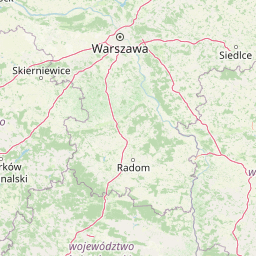
Map view of Cisowsko-Orłowiński Landscape Park

Use this park location map to pinpoint Cisowsko-Orłowiński Landscape Park in Poland, understand its exact geographic position, and read its mapped placement within the surrounding landscape more clearly.

Pigeon | © OpenStreetMap contributors

Location context for Cisowsko-Orłowiński Landscape Park

Świętokrzyskie Voivodeship
Recorded earthquake history

View the Documented Earthquake History for Cisowsko-Orłowiński Park Krajobrazowy

Examine the historical seismic record associated with Cisowsko-Orłowiński Park Krajobrazowy to understand regional patterns. MoriAtlas provides a clear, structured view of recorded events, enabling deeper geographic analysis of the terrain surrounding this protected landscape through reliable earthquake data.

Cisowsko-Orłowiński Park Krajobrazowy Earthquake Records

Catalogued events

3 events

Strongest magnitude

Magnitude 3.3

Most recent event

Aug 21, 1996

This history includes earthquakes recorded inside the park or within 50 km of its borders

Park atlas

Compare adjacent nature reserves and regional park geography across south-central Poland.

Parks near Cisowsko-Orłowiński Park Krajobrazowy and Surrounding Protected Landscapes

Browse protected areas and forested terrain located adjacent to Cisowsko-Orłowiński Park Krajobrazowy. Evaluating these regional conservation zones provides a deeper understanding of the natural heritage found throughout the Świętokrzyskie region.
Watercolor illustration of rolling hills with green forests in the foreground and purple, green, pink, and yellow mountain ranges in the background
National parkŚwiętokrzyskie Voivodeship
5.6 km away#1 closest

North

Świętokrzyski National Park: Protected Mountain Terrain in Świętokrzyskie Voivodeship

Geography and landscape mapping for Poland's oldest mountain range

Świętokrzyski National Park encompasses the highest ridges of the Świętokrzyskie Mountains, showcasing a landscape defined by expansive granite boulder fields and primeval fir forests. This atlas entry provides a detailed look at the park's topography, ranging from the prominent Łysica peak to the protected valley floors, highlighting the geological and biological diversity preserved within this central Polish sanctuary.

Area
76.26 km²
Established
1950
IUCN
II
Visitors
168K annual
National parkŚwiętokrzyskie Voivodeship
5.6 km away#2 closest

North

Świętokrzyski Park Narodowy: Protected Forests and Mountain Geography in Central Poland

A preserved landscape of ancient fir forests and rubble fields

Situated within the Świętokrzyskie Voivodeship, this protected area guards the Łysogóry range and its rare forest associations. The landscape is characterized by its dramatic gołoborza rubble fields and dense mixed-woodland terrain, providing a unique look into the natural geography of the region.

Area
76.26 km²
Established
1950
Visitors
168K annual
Relief
Mountain
Protected landscapeŚwiętokrzyskie Voivodeship
8.1 km away#3 closest

West

Chęcińsko-Kielecki Park Krajobrazowy: Protected Landscapes and Geological Atlas

Geographical overview of the Świętokrzyskie foothills in Poland

Located in the Świętokrzyskie Voivodeship, this protected area features a unique concentration of rocky hill summits, limestone caves, and forested corridors. The landscape serves as a vital transition zone, linking the regional capital of Kielce with traditional agricultural valleys and historic cultural landmarks. Map the terrain and understand the protected features that define this significant Polish landscape park.

Area
197.816 km²
Established
1996
Relief
Upland
Climate
Temperate
Nature reserveŚwiętokrzyskie Voivodeship
About 11 km away#4 closest

Northeast

Małe Gołoborze Nature Reserve: Mapping Cambrian Geology and Forested Ridge Ecosystems

A study of protected terrain in the Świętokrzyskie Voivodeship

Małe Gołoborze Nature Reserve stands as a preserved fragment of the Jeleniowskie Range, showcasing rare surface exposures of Cambrian quartzite sandstones alongside mature deciduous woodland. This entry offers a focused perspective on the reserve's topography, including its signature boulder slope and the valley floor that reveals the underlying geological foundations of central Poland's mountain landscape.

Area
0.216 km²
Established
1994
Relief
Mountain
Climate
Temperate
Nature reserveświętokrzyskie
15 km away#5 closest

Southeast

Ostoja Żyznów Protected Landscape: Loess Ravines and River Valleys of Świętokrzyskie

A dense mosaic of xerothermic grasslands and mixed forest ecosystems

Ostoja Żyznów protects a compact yet ecologically rich region characterized by deep loess gullies and the meandering paths of the Koprzywianka and Kacanka rivers. The area creates a striking transitional landscape, shifting from flat agricultural plateaus to steep, forest-covered ravines and cliff-like river walls. This site offers significant value for understanding regional biodiversity, featuring a rare combination of warm-dry grasslands and moisture-dependent peatland habitats in the heart of Poland.

Area
44.8 km²
Established
2011
Relief
Mixed relief
Climate
Temperate
Nature reserveświętokrzyskie
16 km away#6 closest

Northwest

Ostoja Wierzejska Nature Reserve: Protected Forest and Ridge Geography in Świętokrzyskie

Ecological corridors and rare fir forest habitat mapping

Uncover the landscape characteristics of Ostoja Wierzejska, a protected area in Poland featuring quartzite ridges and diverse forest ecosystems. The reserve acts as a crucial ecological link within the Masłowskie Range, sheltering mature tree stands, rare fungi, and specialized invertebrates that define the unique phytosociology of the Świętokrzyskie Mountains.

Area
2.25 km²
Established
2011
Relief
Mountain
Climate
Temperate
Protected areaŚwiętokrzyskie Voivodeship
16 km away#7 closest

Northeast

Wzgórza Kunowskie: Geographic Atlas of an Essential Polish Protected Area and Habitat Mosaic

Mapping riparian forests and inland dunes in Świętokrzyskie

Wzgórza Kunowskie serves as a crucial Natura 2000 site in Poland, blending sand grasslands, oak-hornbeam forests, and riverine floodplains within a compact landscape. This overview analyzes the topographical gradients and habitat distribution that define the area, from elevated dunes to the moisture-rich valley floors of the Świętokrzyskie region, reflecting the interplay between sandy substrate and river regulation.

Area
18.687 km²
Water
Major water bodies
Protected landscapeŚwiętokrzyskie Voivodeship
17 km away#8 closest

Southwest

Szaniecki Park Krajobrazowy: Protected Landscape Atlas and Regional Map Context

Exploring xerothermic habitats across the Ponidzie plateau

Szaniecki Park Krajobrazowy anchors conservation efforts across the Płaskowyż Szaniecki and the Garb Pińczowski ridge. This detailed profile tracks the regional geography, calcareous soil influence, and the protection of rare steppe flora within the broader Świętokrzyskie Voivodeship landscape framework.

Area
112.896 km²
Established
1986
Relief
Upland
Climate
Temperate

Common questions about visiting, size, designation, and location context for Cisowsko-Orłowiński Landscape Park

Cisowsko-Orłowiński Landscape Park FAQs for park facts, access, geography, and protected area context

Find quick answers about Cisowsko-Orłowiński Landscape Park, including protected-area facts, park geography, trail and visitor context, and how the park fits into its surrounding country and regional landscape.
MoriAtlas Explorer

Continue Your Protected Areas Search Across the Global Atlas

Deepen your exploration by continuing the structured search for national parks and protected areas worldwide. Utilize the comprehensive filtering capabilities to compare different conservation landscapes and refine your understanding of global park geography. Discover more about the distribution and characteristics of protected natural areas.

Global natural geography