
Mori Atlas logo
Nature reserveDas große Hörmes bei Dieburg

Tracing the mapped boundaries and hydrological landscape of this southern Hesse wetland refuge

Das große Hörmes bei Dieburg Nature Reserve and Wetland Protected Area in Hesse Germany

(Naturschutzgebiet „Das große Hörmes bei Dieburg")

Das große Hörmes bei Dieburg is a significant nature reserve situated within the Untermainebene lowlands of southern Hesse. Stretching along the Hörmesgraben tributary, this protected area preserves a complex mosaic of reedbeds, sedge stands, and traditional wet meadows that sustain diverse plant communities and meadow-breeding bird populations within the Gersprenz river lowlands.

nature reservewetlandreedbedsedge meadowlowland habitatmeadow birds
A graphic illustration of a mountainous valley featuring a winding river in the foreground, dense pine forests, tall granite cliffs, a visible waterfall, and a pastel-toned sky.

Das große Hörmes bei Dieburg

Nature reserve

Park overview

Structured park overview, official facts, and landscape profile for Das große Hörmes bei Dieburg

Das große Hörmes bei Dieburg park facts, protected area profile, and essential visitor context

Review the core facts for Das große Hörmes bei Dieburg, including designation, size, terrain, visitor scale, habitats, and operating context in one park-focused overview.

About Das große Hörmes bei Dieburg

Das große Hörmes bei Dieburg is a small but ecologically focused nature reserve in southern Hesse, Germany, situated in the rural Untermainebene lowlands northwest of the town of Dieburg. It belongs to the district of Darmstadt-Dieburg, an area of central Germany that contains a notably dense network of small Naturschutzgebiete, many of which protect surviving fragments of wetland habitat in a predominantly agricultural landscape.

The reserve occupies a stretch of land shaped by the Hörmesgraben, a modest side stream of the Gersprenz river that defines the northern boundary of the protected area. Within roughly 13.6 hectares, the site combines several complementary wetland habitat types; extensive reedbeds and sedge stands, moist meadows, classic Streuwiesen (litter meadows used historically for bedding material), and areas maintained as hay meadows through traditional mowing.

This habitat mosaic is the core of the reserve's ecological importance. Wetland complexes of this kind have become increasingly rare in the German lowlands as drainage, agricultural intensification, and land-use change have reduced the extent of reed and sedge habitats. By formal protection, Das große Hörmes safeguards a representative sample of these communities together with the plant and animal species that depend on them.

The site also has regional significance as part of a broader pattern of small reserves in the Gersprenzniederung. Together with neighboring protected areas in the Darmstadt-Dieburg district, it contributes to habitat connectivity for wetland and meadow species and helps maintain the landscape character of the Untermainebene, where surviving wet habitats are otherwise scattered and vulnerable.

Quick facts and research context for Das große Hörmes bei Dieburg

Das große Hörmes bei Dieburg is a designated nature reserve (Naturschutzgebiet) located northwest of Dieburg in the Darmstadt-Dieburg district of southern Hesse. The site covers roughly 13.63 hectares and was placed under formal protection on 4 February 1985 by regulatory decree.

The reserve lies within the Untermainebene natural region, specifically in the Gersprenzniederung (Gersprenz lowland), and extends about 860 meters east to west and up to 378 meters north to south. Its northern boundary is formed by the Hörmesgraben, a small side stream of the Gersprenz. Habitats protected include reedbeds, sedge communities, wet meadows, and litter meadows managed as hay meadows.

Protection and recognition

Documented conservation records, management frameworks, and official registry data

Das große Hörmes bei Dieburg Protection Status and International Registry Facts

Examine the formal protection status and registry history established for Das große Hörmes bei Dieburg within official conservation databases. Verified administrative records provide transparent insight into the established management framework and protected area metrics.

Protection details

WDPA ID
162707
Park context

Deeper park guide and search-rich context for Das große Hörmes bei Dieburg

Das große Hörmes bei Dieburg history, landscape, wildlife, and travel context

Explore Das große Hörmes bei Dieburg through its history, landscape character, ecosystems, wildlife, conservation priorities, cultural context, and seasonal travel timing in a structured park guide built for atlas discovery and search intent.

Why Das große Hörmes bei Dieburg stands out

Das große Hörmes is best known as a compact lowland wetland reserve that preserves a mosaic of reedbeds, sedge stands, wet meadows, and traditional litter meadows in the otherwise intensively used Gersprenz lowland. The site is particularly notable for hosting Red List plant species such as cottongrass, the broad-leaved marsh orchid, the splendid pink (Prachtnelke), and the water avens (Bach-Nelkenwurz), as well as a community of meadow-breeding birds typical of undisturbed wet grassland. Its value is amplified by its position along the Hörmesgraben, a tributary of the Gersprenz, which gives the reserve a clearly defined hydrological setting and ties it into the wider network of small protected wetlands in the Darmstadt-Dieburg district.
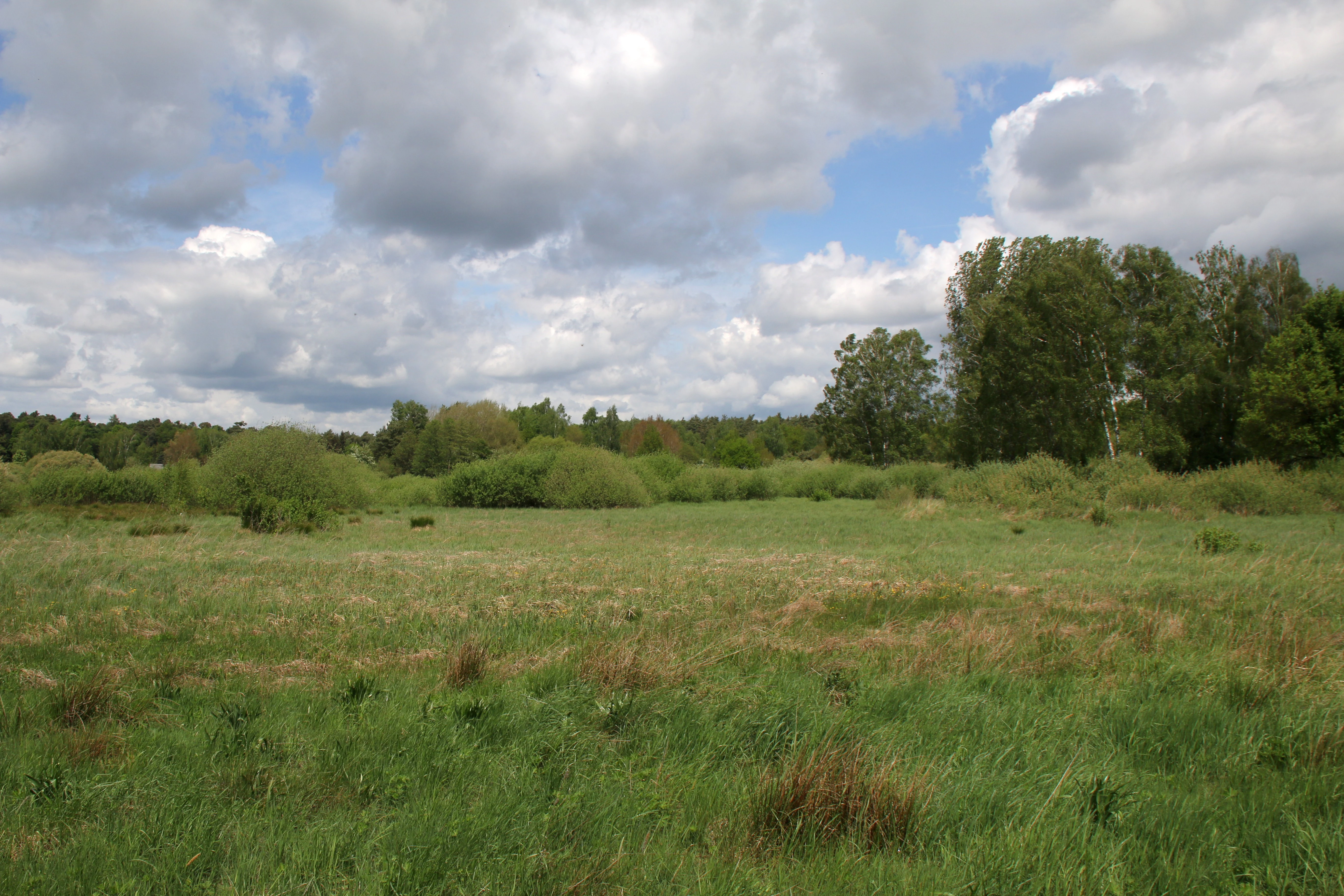
A wide view of a green, grassy wetland meadow under a cloudy sky, with clusters of trees and shrubs in the distance.
A view of the wetland meadow landscape at Das große Hörmes nature reserve.

Das große Hörmes bei Dieburg history and protected-area timeline

The site has been formally protected as a nature reserve since 4 February 1985, when the regional authorities issued the Schutzverordnung that placed it under the legal status of Naturschutzgebiet. The legal designation marked the recognition that this small stretch of wetland in the Untermainebene was ecologically valuable enough to warrant specific protection against drainage, conversion, or other land-use changes.

Although the formal protection is recent, the wetland itself reflects long-standing hydrological and land-use patterns of the Gersprenz lowland. The presence of Streuwiesen, traditional litter meadows, suggests that the site has been managed as grassland for many decades, likely sustaining its open, herb-rich character through historic mowing practices rather than through recent restoration.

The reserve is also catalogued internationally through the World Database on Protected Areas, where it appears under WDPA ID 162707, reflecting its recognition as part of the global network of protected natural sites. Beyond this, the documented history is limited, and the reserve's significance lies more in the continuity of its traditional land use than in dramatic conservation milestones.

Das große Hörmes bei Dieburg landscape and geographic character

The landscape of Das große Hörmes is defined by the flat, low-lying terrain of the Untermainebene, specifically the Gersprenzniederung. The area lies at a modest elevation and is shaped by the gentle topography of a river lowland rather than by dramatic relief. Water, not altitude, is the primary sculptor of the site.

The northern boundary follows the Hörmesgraben, a small tributary that links the reserve to the broader Gersprenz system. This stream channel defines the hydrological backbone of the site and supports the moist soil conditions that allow reedbeds, sedge communities, and wet meadows to persist. The reserve extends in an elongated east-west band roughly 860 meters long and up to 378 meters wide, giving it a linear character tied to the watercourse.

Beyond the wetland core, the surrounding landscape is rural and agricultural, with arable fields, small woodlands, and dispersed settlement. The contrast between the wet, herbaceous interior of the reserve and the cultivated surroundings is sharp, emphasizing the refuge-like character of the protected area within an otherwise working farmland mosaic.

Das große Hörmes bei Dieburg ecosystems, habitats, and plant life

Ecologically, Das große Hörmes is a wetland reserve whose value lies in the persistence of habitat types that have become scarce in the German lowlands. Reedbeds and sedge stands form the structural backbone of the site, providing dense, waterlogged vegetation that supports specialized aquatic and semi-aquatic species. Around these core wet areas, the reserve includes moist meadows and traditional litter meadows, creating graded transitions from open water and saturated ground to drier grassland.

The litter meadows, or Streuwiesen, are especially characteristic; they are traditionally cut late in the year and historically used for animal bedding, and they tend to support particularly rich herbaceous flora. The combination of reed, sedge, wet meadow, and litter meadow creates a layered habitat structure in which different moisture zones sit side by side, expanding the ecological niches available to plants, insects, and birds.

Although modest in size, the reserve reflects a classic Untermainebene wetland composition and represents the kind of habitat mosaic that once extended across the Gersprenz lowlands before agricultural intensification reduced such landscapes to isolated fragments. The ecological function of Das große Hörmes is therefore both local, as a refuge for wetland species, and regional, as a surviving piece of a much larger wetland system.

Das große Hörmes bei Dieburg wildlife and species highlights

Das große Hörmes is recognized primarily as a bird habitat, with breeding populations of several meadow- and wetland-nesting species documented within the reserve. Among the breeding birds specifically associated with the site are the common snipe, the corn bunting, the whinchat, the meadow pipit, and the yellow wagtail, all species that depend on open, structurally diverse wet or moist grassland rather than on closed woodland or cropland.

This bird community reflects the reserve's character as open, low-intensity wet habitat. The combination of reedbeds for cover and adjoining open meadow for foraging and display is typical of the habitat these species require, and the protected status of the site ensures that the mowing and land-use regime remains compatible with their breeding cycle.

Beyond the documented breeding bird assemblage, the wetland vegetation supports a wider invertebrate and small-fauna community typical of lowland reed and sedge habitats in central Germany, although the available source material does not detail specific non-avian species. The reserve's wildlife value therefore centers on its functioning as a breeding and feeding area for characteristic wet-grassland birds within the Gersprenzniederung.

Das große Hörmes bei Dieburg conservation status and protection priorities

From a conservation perspective, Das große Hörmes matters as a surviving example of lowland wetland habitat in an intensively used agricultural region. Reedbeds, sedge communities, and Streuwiesen have all declined substantially across the German lowlands during the twentieth century, and the formal protection of this site since 1985 represents a deliberate effort to halt that loss on a local scale.

The reserve is classified as an IUCN Category IV area, a Habitat/Species Management Area, indicating that protection here is aimed at active conservation of particular habitats and species rather than at strict preservation of an untouched ecosystem. Management interventions such as traditional mowing of the litter meadows are part of the conservation approach, maintaining the open, species-rich character of the grassland that would otherwise be lost to scrub encroachment.

The site also gains conservation significance from its inclusion in the international World Database on Protected Areas under WDPA ID 162707, situating it within the broader accounting of protected natural areas. At the regional level, Das große Hörmes complements the wider network of small Naturschutzgebiete in the Darmstadt-Dieburg district, collectively preserving a network of wetland and meadow refuges across the Untermainebene.

Das große Hörmes bei Dieburg cultural meaning and human context

There is limited distinct cultural or historical content about Das große Hörmes beyond its identity as a long-standing piece of rural landscape. The presence of Streuwiesen points to traditional agricultural practices typical of southern Hesse and many other parts of central Germany, in which wet meadows were cut for bedding material rather than for hay or silage.

These practices shaped both the vegetation and the cultural memory of such places: they are landscapes co-produced by generations of farmers, and the species-rich meadows they sustain are the result of that long interaction. The reserve can therefore be read as an example of how European lowland wetland conservation often depends not on rewilding but on the maintenance of low-intensity, historically rooted land use.

Nevertheless, the source material does not develop a deeper cultural narrative about local traditions, settlement history, or community ties to the site, and so any broader cultural framing remains implicit rather than explicit.

Top sights and standout views in Das große Hörmes bei Dieburg

Das große Hörmes is a compact but well-defined wetland reserve that combines reedbeds, sedge stands, wet meadows, and traditional litter meadows along the Hörmesgraben tributary of the Gersprenz. Its size is small, only around 13.6 hectares, but the habitat mosaic it protects is structurally rich and ecologically characteristic of the Untermainebene lowlands.

The reserve stands out for its combination of Red List plant species, including cottongrass, the broad-leaved marsh orchid, the splendid pink, and water avens, with a breeding bird community that includes snipe, corn bunting, whinchat, meadow pipit, and yellow wagtail. Protected continuously since 1985, it serves as a small but coherent refuge within the agricultural landscape of the Darmstadt-Dieburg district.

Best time to visit Das große Hörmes bei Dieburg

As a wetland meadow and reedbed reserve, Das große Hörmes is best appreciated when vegetation is lush and meadow-breeding birds are active, broadly corresponding to the late spring and early summer months in central Germany. During this period, reedbeds and litter meadows are in full growth, wildflowers among the protected plant species are most likely to be visible, and the characteristic birds of open wet grassland are establishing breeding territories.

Late summer and early autumn can also offer a quieter visiting atmosphere, when hay meadows and litter meadows have been traditionally cut but the broader reed vegetation still provides structure and cover. The site is not presented as a major tourist destination, so the focus of any visit is on quiet observation of habitat and species rather than on seasonal tourist programming.

Monthly climate preview

Long-term temperature ranges and monthly precipitation metrics for Hesse protected terrain

Annual Climate Normals and Weather Patterns at Das große Hörmes bei Dieburg

Representative coordinate records outline long-term average temperature variations and monthly precipitation measurements across the protected landscape. Full twelve-month statistical profiles provide deeper insight into annual meteorological rhythms.
Annual mean10 °C
0 °C21 °C
Jan
Feb
Mar
Apr10°
May14°
Jun18°
Jul21°
Aug20°
Sep15°
Oct10°
Nov
Dec
Warmest month
July

20.6 °C

Coolest month
January

0.2 °C

Wettest month
July

2.2 mm/day

Driest month
April

1.4 mm/day

Park location guide

Geography guide, regional context, and park location map for Das große Hörmes bei Dieburg

Das große Hörmes bei Dieburg park geography, regions, and map view in Germany

Understand where Das große Hörmes bei Dieburg sits in Germany through a broader geographic reading of the surrounding landscape, nearby location context, and its mapped position within the national park landscape.

How Das große Hörmes bei Dieburg fits into Germany

Germany is a federal republic in Western and Central Europe with a population of over 83 million across sixteen constituent states. It is Europe's largest economy by nominal GDP and a major global exporter and importer. The capital is Berlin, and the country borders Denmark, Poland, Czech Republic, Austria, Switzerland, France, Luxembourg, Belgium, and the Netherlands.

Wider geography shaping Das große Hörmes bei Dieburg in Germany

Germany is located in Western and Central Europe, spanning 357,022 km². It borders Denmark to the north, Poland and the Czech Republic to the east, Austria and Switzerland to the south, and France, Luxembourg, Belgium, and the Netherlands to the west. The country has coastlines on the Baltic Sea and North Sea to the north, with the Alps located in the southern region.

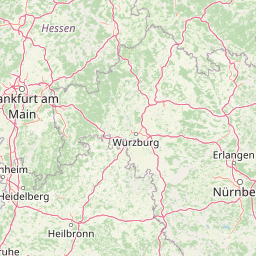
Map view of Das große Hörmes bei Dieburg

Use this park location map to pinpoint Das große Hörmes bei Dieburg in Germany, understand its exact geographic position, and read its mapped placement within the surrounding landscape more clearly.

Pigeon | © OpenStreetMap contributors

Location context for Das große Hörmes bei Dieburg

Hesse

Visual exploration of reedbeds, sedge stands, and lowland river habitats

Das große Hörmes bei Dieburg Photos and Protected Wetland Landscapes

Visual documentation captures the flat terrain, moist meadows, and intricate hydrological network defining Das große Hörmes bei Dieburg. Photographic records reveal the distinct ecological contrast between the protected wetland core and the surrounding agricultural farmland mosaic.

A wide view of a green, grassy wetland meadow under a cloudy sky, with clusters of trees and shrubs in the distance.

Park atlas

Compare regional lowland habitats and wetland reserves across southern Hesse

Explore Other Parks Near Das große Hörmes bei Dieburg and Surrounding Protected Areas

Browse protected areas near Das große Hörmes bei Dieburg to compare lowland wetland reserves and river valley habitats in the surrounding region. Extending regional park discovery helps reveal broader conservation networks and connected wildlife corridors throughout central Germany.
Watercolor painting of a soft, hazy landscape featuring scattered trees, bushes, and rolling hills in shades of green and pink against a pale background.
Nature reserveHesse
About 1.7 km away#1 closest

North

Fohlenweide von Dieburg: Nature Reserve and Protected Landscape in Hesse, Germany

Mapping the wet meadow habitats and ecological boundaries of southern Hesse.

Located in the Darmstadt-Dieburg district, Fohlenweide von Dieburg is a refined example of a small-scale cultural landscape preserved for its high ecological value. The protected area features a unique mosaic of damp grasslands, forest margins, and riparian strips that support a range of wildlife. This site offers insight into regional conservation management in Central Europe.

Area
0.235 km²
Established
1989
IUCN
IV
Relief
Lowland
A soft watercolor painting of a winding stream through a green wetland with trees and distant hills in the background.
Nature reserveHessen
About 3.2 km away#2 closest

North

Faulbruch von Münster Nature Reserve: Hessen Wetland and Forest Geography

Mapped protected landscapes in southern Germany.

Discover the geographic composition of Faulbruch von Münster, a protected nature reserve in Hessen. This area features a distinctive mix of alder swamp forest and wet meadows, providing a valuable habitat within the Rhine-Main region. Analyze the terrain, forest patches, and wetland boundaries through our detailed regional atlas.

Area
0.77 km²
Established
1985
IUCN
IV
A soft watercolor illustration depicting a calm wetland scene with distant rolling hills, foreground reeds, and overhanging tree branches.
Nature reserveHesse
About 4.7 km away#3 closest

North

Rallenteich von Eppertshausen Nature Reserve: Protected Landscape and Regional Geography

Wetland and forest mosaic in the Hesse region

Examine the geographic footprint of Rallenteich von Eppertshausen, a significant nature reserve in Hesse, Germany. This 12-hectare protected area showcases a dense mosaic of pond, reedbed, and acidic oak forest that evolved from historical clay mining. Understanding the park's topography and internal landscape zones offers insight into the evolution of post-industrial protected lands.

Area
0.12 km²
Established
1976
IUCN
IV
Relief
Lowland
A horizontal watercolor illustration depicting a soft, pastel-colored meadow with wildflowers in the foreground and a gentle forest line in the background against a white background.
Nature reserveLandkreis Darmstadt-Dieburg
About 5 km away#4 closest

Northwest

Neuwiese von Messel Nature Reserve: Mapped Geography and Protected Landscape Context

Essential nature reserve located in Landkreis Darmstadt-Dieburg

Neuwiese von Messel consists of open meadow islands surrounded by mature deciduous forest, creating a representative forest-meadow mosaic in the Messeler Hügelland. This nature reserve functions as a vital conservation site for specialized plants and habitat types, protected within the European Natura 2000 network. Gain insight into its terrain, soil-based biodiversity, and the centuries-old traditional management that sustains this protected German landscape.

Area
1.072 km²
Established
1986
IUCN
IV
Relief
Lowland
A wide watercolor painting showing a river flowing through a green meadow with trees and distant hills.
Protected areaHesse
About 5 km away#5 closest

South

Scheelhecke von Groß-Zimmern Protected Area, Hesse: A Wetland and Riverine Landscape Study

Key protected wetland features in the Reinheimer Hügelland

Scheelhecke von Groß-Zimmern protects an essential network of wet meadows and brook corridors in the Darmstadt-Dieburg district. Its geography encompasses a transition from open sedge-dominated floodplain to softwood forest, providing critical support for avian species and amphibians within the Natura 2000 Gersprenz network.

Area
0.046 km²
Established
1983
Relief
Upland
Climate
Temperate
Nature reserveHessen
About 5.1 km away#6 closest

North

Erlenwiesen bei Ober-Roden Nature Reserve: Landscape and Geography in Hessen, Germany

Protected riparian forest and wetland habitat mosaic

Erlenwiesen bei Ober-Roden is a specialized nature reserve in the Messeler Hügelland of Hessen, protecting a dense concentration of alder-ash floodplain forests, sedge swamps, and wet meadows. Spanning approximately 14 hectares, it remains a crucial example of lowland stream valley conservation and habitat management within the German landscape.

Area
0.143 km²
Established
1996
IUCN
IV
A soft watercolor illustration depicting a meadow landscape with a winding stream, distant hills, and foreground wildflowers.
Nature reserveHessen
About 5.3 km away#7 closest

Northeast

Die kleine Qualle von Hergershausen Nature Reserve and Protected Floodplain Landscapes

A preserved wetland fragment in the Hessen region

Die kleine Qualle von Hergershausen stands as a key protected area within the Gersprenz floodplain. This site offers a unique look at remnant wet meadow terrain, serving as an essential breeding and stopover ground for waterbirds in the Darmstadt-Dieburg district. Its geography provides a clear contrast to the surrounding agricultural fields, highlighting the impact of long-term conservation and habitat restoration efforts.

Area
0.27 km²
Established
1984
IUCN
IV
A horizontal watercolor painting depicting a soft-focus landscape with green fields, patches of wildflowers, and distant low hills.
Nature reserveHessen
About 5.5 km away#8 closest

Northeast

Auf dem Sand zwischen Hergershausen und Altheim Protected Nature Reserve in Hessen

Inland dune and floodplain landscape mapping

Explore the geography of Auf dem Sand zwischen Hergershausen und Altheim, a nature reserve in Hessen. The area serves as a critical habitat mosaic, featuring sandy inland dunes, expansive wet grasslands, and renaturalized floodplain terrain within the Gersprenz valley.

Area
0.233 km²
Established
1998
IUCN
IV

Common questions about visiting, size, designation, and location context for Das große Hörmes bei Dieburg

Das große Hörmes bei Dieburg FAQs for park facts, access, geography, and protected area context

Find quick answers about Das große Hörmes bei Dieburg, including protected-area facts, park geography, trail and visitor context, and how the park fits into its surrounding country and regional landscape.
MoriAtlas Explorer

Continue Your Protected Areas Search Across the Global Atlas

Deepen your exploration by continuing the structured search for national parks and protected areas worldwide. Utilize the comprehensive filtering capabilities to compare different conservation landscapes and refine your understanding of global park geography. Discover more about the distribution and characteristics of protected natural areas.

Global natural geography