Why Dęby Sądowskie Nature Reserve stands out
Dęby Sądowskie is best known for its exceptionally old stand of pedunculate oaks, including trees estimated to be 320 to 400 years old, with several monumental specimens exceeding three meters in trunk circumference. Among these, at least one individual oak surpasses 700 centimeters in girth, making it one of the most remarkable veteran trees in the region. Beyond its trees, the reserve is recognized for preserving a well-developed example of subatlantic oak-hornbeam forest, complete with a natural forest edge (okrajek) and a valuable understorey. It is also noted as a refuge for rare and protected plant, fungal, and invertebrate species associated with old deciduous woodlands that have largely disappeared from surrounding farmland.
Dęby Sądowskie Nature Reserve history and protected-area timeline
The reserve was established on 11 April 1985 by order of the Polish Minister of Forestry and the Wood Industry, formalizing the protection of a small but ecologically exceptional forest fragment that had survived centuries of regional land-use change. The founding act initially described the area as approximately 2.98 hectares, a figure later slightly adjusted to 3.10 hectares in subsequent documentation.
The creation of Dęby Sądowskie was part of a broader wave of Polish nature reserve designations in the 1980s, a period when the country expanded its network of protected forest patches in response to growing awareness of how much native woodland had already been lost to agriculture and industrial forestry. The site's extraordinary veteran oaks made it a natural candidate for this protective framework.
A formal protection plan for the reserve was adopted in 2006, providing modern guidance for active conservation management. Under this plan, the reserve has been placed under active protection (ochrona czynna), reflecting the recognition that the unique features of the stand, particularly the ancient oaks and the accompanying rare species, require deliberate stewardship to persist in good condition.
Dęby Sądowskie Nature Reserve landscape and geographic character
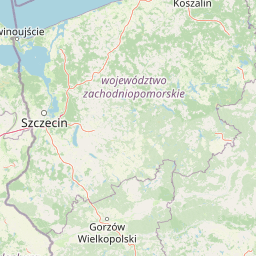
The landscape of Dęby Sądowskie is shaped by its position within the Choszczeńskie Lake District, a mesoregion of post-glacial terrain defined by moraine hills, small lakes, and broad forested corridors. Within this broader setting, the reserve itself occupies a very small patch of forest that stands out from the surrounding cultivated lowlands as a pocket of mature woodland surrounded by agricultural fields and railway infrastructure.
The terrain within the reserve is gently undulating, with soils that support rich deciduous forest communities rather than coniferous stands. The reserve's small size means that its landscape character is largely expressed through its vegetation structure rather than dramatic topographic features. A well-formed forest edge (okrajek) marks the transition between the dense interior woodland and the adjacent open land, creating a visually distinct boundary that has historically reinforced the reserve's identity as a singular natural feature within its local landscape setting. nature, and the wider lowland forest mosaic. The combination of ancient broadleaf canopy, varied understorey, and intact forest margin gives this small reserve a rare sense of ecological completeness.
Dęby Sądowskie Nature Reserve wildlife and species highlights
The reserve's wildlife reflects its character as a fragment of ancient deciduous woodland, supporting communities of invertebrates and ground-dwelling species that depend on the structural complexity of old broadleaf forests. Important biological records for the reserve include rare and protected species of vascular plants, fungi, and invertebrates, which together reflect the continuity and ecological stability of the woodland.
Among the invertebrates, the reserve is noted as a habitat for uncommon forest-dwelling groups that have largely disappeared from the surrounding agricultural landscape. The presence of large veteran oaks with hollows, dead branches, and decaying wood provides essential microhabitats for saproxylic species and other organisms that depend on old trees for survival.
Birds and mammals typical of mature lowland forests in Poland may be expected to use the reserve and its margins, with the surrounding agricultural matrix providing a contrasting foraging landscape. The reserve's value for wildlife is amplified by its protected status, which keeps disturbance low and allows sensitive species to persist in close proximity to human activity.
Dęby Sądowskie Nature Reserve conservation status and protection priorities
Dęby Sądowskie is a conservation site of regional significance because it preserves an exceptionally old and structurally rich broadleaf forest that has otherwise largely vanished from the surrounding West Pomeranian landscape. Its value lies not just in the protection of individual species, but in maintaining an entire forest ecosystem, the subatlantic oak-hornbeam community with its characteristic herb and shrub layers, as a functioning unit.
The reserve also plays a key role in protecting the genetic and ecological legacy represented in its ancient pedunculate oaks. Such trees are irreplaceable on human timescales: their age, canopy complexity, deadwood resources, and root networks support a wide range of associated organisms that cannot easily colonize younger stands. Safeguarding this old-growth element gives the site significance far beyond its tiny size.
Under its 2006 protection plan, the reserve is managed through active conservation (ochrona czynna), which implies deliberate interventions to maintain the unique features of the ecosystem, including the veteran oaks, the rare flora, and the associated fauna. Management is overseen by Nadleśnictwo Choszczno and supervised by the Regional Nature Conservation Officer in Szczecin, integrating the site into the wider Polish system of actively protected forest reserves.
Top sights and standout views in Dęby Sądowskie Nature Reserve
Dęby Sądowskie stands out for its combination of very small size and exceptionally high ecological value, anchored by an old-growth pedunculate oak stand whose individual trees may exceed four centuries of age. The reserve captures a specific moment in the regional ecological landscape: a surviving example of subatlantic oak-hornbeam forest complete with a natural forest edge.
Its highlights include veteran trees, a structurally diverse broadleaf canopy, rare plants and fungi, and a suite of invertebrates tied to ancient woodland. Managed actively under the Regional Nature Conservation framework, the reserve illustrates how Poland uses small, well-targeted protected areas to anchor biodiversity conservation in regions where most natural forests have long since been replaced by farmland and commercial forestry.
Best time to visit Dęby Sądowskie Nature Reserve
Dęby Sądowskie is a quiet forest reserve rather than a major tourist attraction, so the best time for a visit depends largely on what kind of natural experience is sought. Spring and early summer bring fresh leaf-out, flowering understorey plants, and active birdlife at the forest edge, making these seasons rewarding for observers of woodland flora and fauna.
Late summer and autumn highlight the reserve's defining feature, its mature broadleaf forest, with the oaks, beeches, and hornbeams presenting a rich tapestry of color and seed crop. Winter visits reveal the structural character of the veteran oaks most clearly, when the open canopy exposes the gnarled trunks and branches of the oldest trees.