
Mori Atlas logo
Protected landscapeSzczeciński Park Krajobrazowy „Puszcza Bukowa”

Examining the hilly terrain, dense beech forests, and ravine networks of this protected area.

Szczeciński Park Krajobrazowy Puszcza Bukowa: A Protected Landscape in Zachodniopomorskie

(Szczeciński Park Krajobrazowy "Puszcza Bukowa")

Szczeciński Park Krajobrazowy Puszcza Bukowa serves as a major protected landscape in the Zachodniopomorskie Voivodeship, characterized by the hilly terrain of the Bukowe Hills. This area encompasses significant lowland beech woodlands, complex ravine systems known as parowy, and glacial lakes that distinguish it from the surrounding plains. It functions as a critical regional ecological anchor, safeguarding diverse forest types and wetland habitats within its defined boundaries.

lowland beech foresthilly terrainlandscape parkriver valleys and ravinesnature reservesdeciduous woodland
A flat vector illustration showing a green lake surrounded by forests, with pink cliffs and a waterfall in the background, framed by tree branches in the foreground.

Szczeciński Park Krajobrazowy „Puszcza Bukowa”

Protected landscape

Park overview

Structured park overview, official facts, and landscape profile for Szczeciński Landscape Park Puszcza Bukowa

Szczeciński Landscape Park Puszcza Bukowa park facts, protected area profile, and essential visitor context

Review the core facts for Szczeciński Landscape Park Puszcza Bukowa, including designation, size, terrain, visitor scale, habitats, and operating context in one park-focused overview.

About Szczeciński Landscape Park Puszcza Bukowa

Szczeciński Landscape Park Puszcza Bukowa is a forested protected landscape located on the southern outskirts of Szczecin in the West Pomeranian Voivodeship of northwestern Poland. It was created to safeguard the natural, scenic, and cultural values of the historic Puszcza Bukowa forest and the hills it covers, and it remains one of the most important large woodland reserves in the region.

The park belongs to the Polish category of landscape park, a designation used for areas where the protection of landscape character is combined with the conservation of natural ecosystems and the preservation of cultural heritage. The surrounding buffer zone, or otulina, extends the area of influence well beyond the park's core boundaries, helping to manage land use in the adjacent farmland and settlements.

The terrain here stands out from the otherwise flat geography typical of the Pomeranian lowlands. The Bukowe Hills produce a hummocky, undulating relief with numerous steep-sided ravines carved by water over millennia. Within these sheltered depressions grow oak-hornbeam forests, ash-alder floodplain woodlands, and wet boggy patches, contrasting with the drier beech-dominated slopes that dominate the broader landscape.

In ecological terms, the park is best understood as a mosaic of mature deciduous forests interspersed with small lakes, peatlands, springs, and rocky fragments. A long history of woodland management and the region's position along important north-south ecological corridors have helped preserve a continuity of forest cover that gives Puszcza Bukowa its distinctive character. This makes the park both a local recreational resource and a regionally significant stronghold for lowland forest biodiversity, complementing the conservation efforts carried out in nearby protected areas such as the Lower Oder Valley.

Quick facts and research context for Szczeciński Landscape Park Puszcza Bukowa

Szczeciński Landscape Park Puszcza Bukowa was established on 4 November 1981 by resolution of the Provincial National Council in Szczecin. It is managed by the West Pomeranian Voivodeship Landscape Parks Team based in Szczecin.

The park covers approximately 9,096 hectares and is surrounded by a protective buffer zone of around 11,842 hectares. It lies within the West Pomeranian Voivodeship, mainly in Gmina Stare Czarnowo and partly within the city of Szczecin and Gmina Gryfino.

The protected area is classified as a landscape park (park krajobrazowy), a Polish category of protected land that emphasizes the combined protection of natural, scenic, and cultural values. It contains seven nature reserves dedicated to its most valuable forest and habitat complexes, a documented arboretum near the village of Glinna, and over 100 recognized natural monuments such as ancient trees, erratic boulders, and spring seepage areas.

Protection and recognition

Examine the official designation records and management scope for this protected landscape.

Szczeciński Park Krajobrazowy „Puszcza Bukowa” Protection Status and Terrestrial Boundaries

Szczeciński Park Krajobrazowy „Puszcza Bukowa” maintains a defined terrestrial protection status within the global database. Recorded conservation records outline the official designation framework and administrative scope for the protected area.

Protection details

Protection scope
Terrestrial
Transboundary protection
No
WDPA ID
159203
Buffer area
118.42 km²
Park context

Deeper park guide and search-rich context for Szczeciński Landscape Park Puszcza Bukowa

Szczeciński Landscape Park Puszcza Bukowa history, landscape, wildlife, and travel context

Explore Szczeciński Landscape Park Puszcza Bukowa through its history, landscape character, ecosystems, wildlife, conservation priorities, cultural context, and seasonal travel timing in a structured park guide built for atlas discovery and search intent.

Why Szczeciński Landscape Park Puszcza Bukowa stands out

The park is best known for its extensive lowland beech forests growing on hilly terrain, a feature that has given rise to both the forest's name Puszcza Bukowa ("beech forest") and the park's identity. The Wzgórza Bukowe, or Bukowe Hills, form a distinctive hummocky relief dotted with deep erosional ravines known locally as parowy, which create unusually varied microhabitats within a relatively compact area. It is also recognized for the density and quality of its strictly protected nature reserves, which preserve the most intact examples of the region's beech, oak-hornbeam, and floodplain forests. Several reserves protect rare plant species, including naturally regenerating yew colonies, while transitional peatlands and seepage spring communities add further ecological interest. Together, these features make the park a reference area for lowland beech woodland conservation in northwestern Poland.
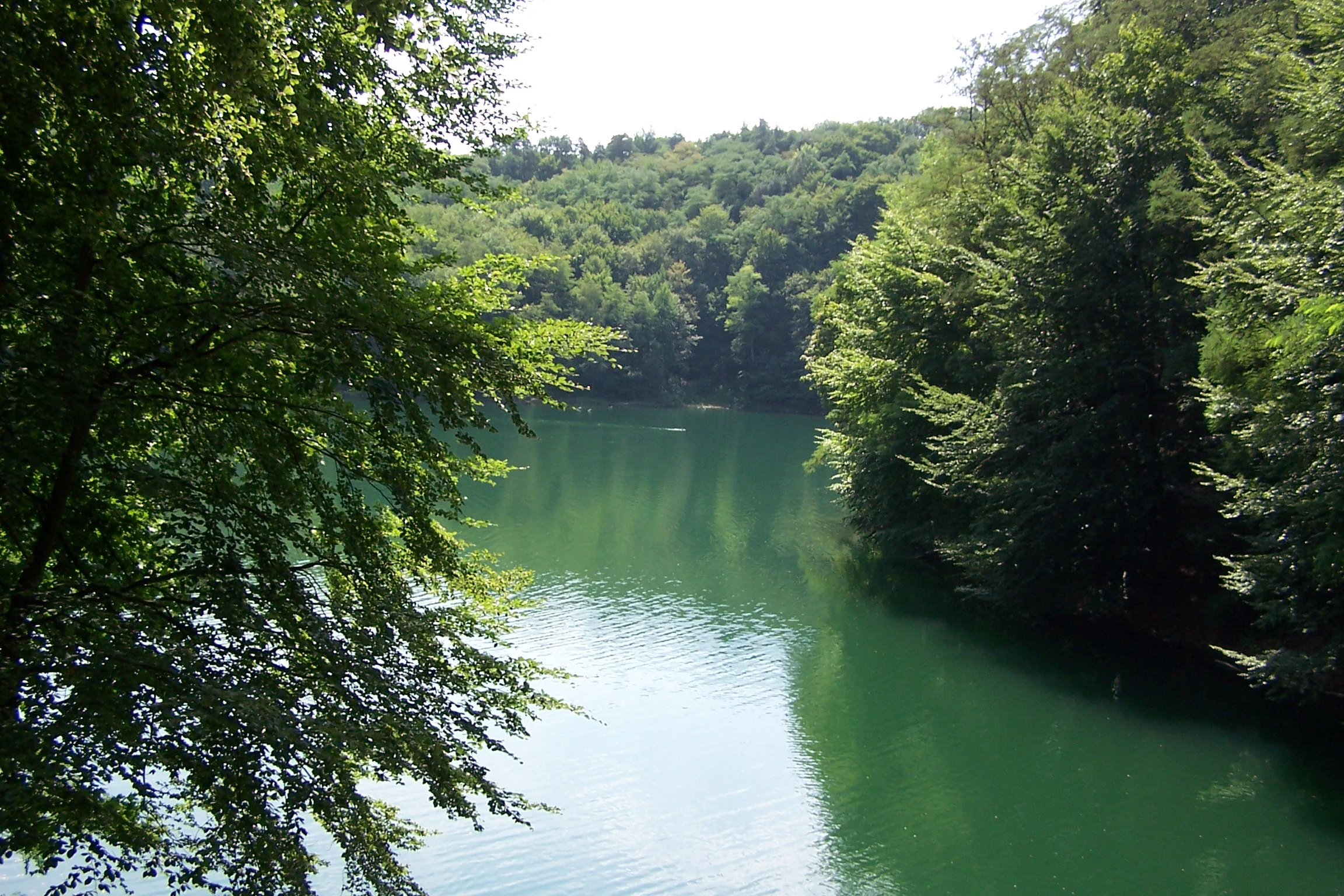
A calm emerald-green lake surrounded by dense green forest, with tree branches framing the left side of the view and forested hills in the background.
Emerald Lake (Jezioro Szmaragdowe) showing its distinctive green water surrounded by dense beech forest in Szczecin Landscape Park.

Szczeciński Landscape Park Puszcza Bukowa history and protected-area timeline

The history of formal protection on this site stretches back to the late nineteenth century, when conservation-minded residents of Szczecin founded the Buchheide Verein, a society dedicated to appreciating and preserving the Bukowa Forest. The organization, led by the geographer Carl Friedrich Meyer from 1889, helped foster early public interest in the landscape and laid the cultural groundwork for later protection.

In 1940, the forested area received formal landscape protection under the German designation Landschaftsschutzgebiet, reflecting its scenic and ecological value. Following the post-war changes, Polish authorities gradually introduced a layered system of strict nature reserves, beginning in 1956 with the establishment of several reserves including Bukowe Zdroje, Buczynowe Wąwozy, Kołowskie Parowy, and Trawiasta Buczyna. Additional reserves followed through subsequent decades, including Zdroje in 1959 and Osetno in 2008.

The concept of a broader landscape park was formally supported by the State Council for Nature Conservation in 1971, and after a period of planning and regional consultation, the park was officially established on 4 November 1981. From this point onward, it was administered alongside other regional landscape parks through a dedicated management directorate, which over time evolved into today's West Pomeranian Voivodeship Landscape Parks Team based in Szczecin.

A further significant conservation milestone came in 2007, when the European Commission approved the Natura 2000 site "Wzgórza Bukowe," recognizing the area's value at the European Union level and integrating the landscape park into a broader transnational ecological network. Park management was subsequently reorganized in 2012 to bring the area within the unified framework of the voivodeship's landscape park team.

Szczeciński Landscape Park Puszcza Bukowa landscape and geographic character

The defining feature of the park is the hilly terrain of the Wzgórza Bukowe, an upland that rises gently but distinctly above the surrounding Pomeranian plain. The combination of elevations, slope exposures, and long-term erosion has produced an unusually varied microtopography for this part of Poland, with shallow ridges, hollows, and narrow ravine systems shaping both the scenery and the distribution of habitats.

Deep ravines, locally called parowy, cut through the hills in several places, with steep forested slopes and moist valley bottoms. These ravines concentrate water movement and create cooler, more humid conditions that contrast sharply with the warmer, drier hilltops above. The result is a patchwork of beech forest on upper slopes, mixed deciduous woodland on midslopes, and lush alder-ash floodplain vegetation along the bottoms.

In the northern part of the park lies the Glinna area, where a notable arboretum has been developed among older woodland stands. A series of small glacial lakes, including Glinna Wielka, Jezioro Binowskie, and Piasecznik Duży, adds open-water elements to the predominantly forested scenery. To the south, the terrain gradually levels out toward the Wełtyńska Plain, providing a softer transition zone between the park's hill country and the wider agricultural landscape.

Szczeciński Landscape Park Puszcza Bukowa ecosystems, habitats, and plant life

Ecologically, the park is dominated by extensive deciduous forests that represent some of the better-preserved examples of the region's lowland woodland. Lowland beech forest is the signature ecosystem, with stands varying from richer fertile forms on productive soils to grass-rich variants on more exposed sites. Mature beech canopies create the deep shade and stable microclimate that define much of the park's interior.

In the depressions, ravines, and along watercourses, the vegetation shifts toward wetter communities. Alder-ash floodplain forests thrive in locations with high groundwater and intermittent flooding, supporting a richer understory than the surrounding beech stands. Transitional peatlands appear in places where water collects in shallow basins, adding acidic, moss-dominated habitats that host specialized plants. The nature reserve Trawiasta Buczyna, for example, protects such a combination of fertile beech forest and transitional mire.

Beyond forests, the park hosts scattered small lakes, seepage springs known as helocrenes, and rocky outcrops carrying erratic boulders, each of which contributes additional microhabitats. The protected resources also include old individual trees and tree groups recognized as natural monuments, a measure that helps preserve the long continuity of forest cover and the genetic legacy of veteran specimens across the landscape.

Szczeciński Landscape Park Puszcza Bukowa wildlife and species highlights

The park's largely undisturbed woodland character supports a rich community of forest-associated fauna typical of mature lowland deciduous forest in this part of Europe. The mosaic of beech stands, wet floodplain forest, peatland patches, and small lakes provides a wide range of nesting, feeding, and shelter conditions for both resident and seasonal species.

In the strict reserves, particularly those with ancient trees and undisturbed deadwood, specialist invertebrates, fungi, and cavity-nesting species find refuge. The reserve Osetno in particular is recognized for its value in protecting mushroom communities within forest and woodland-edge ecosystems, highlighting the importance of fungal diversity as part of the broader habitat network.

Wetland and lake habitats support amphibians, dragonflies, and a variety of water-associated invertebrates, while the continuity of forest cover enables larger mammals to maintain populations of regional significance. The combination of habitats also makes the park a useful area for birdlife, with both woodland species and wetland-edge species present throughout the seasons.

Szczeciński Landscape Park Puszcza Bukowa conservation status and protection priorities

From a conservation standpoint, the park plays an important role in protecting lowland beech forest ecosystems, which have been heavily reduced across much of Central Europe and remain a priority for both national and EU-level nature policy. By securing large continuous tracts of mature deciduous woodland, the park helps maintain ecological processes such as natural regeneration, carbon storage, and population dispersal for forest-dependent species.

Its inclusion in the Natura 2000 network through the site Wzgórza Bukowe ties it into European conservation frameworks and underlines its significance beyond the regional scale. This status brings additional obligations regarding habitat and species monitoring, and has helped reinforce the long-term protection of features such as rare ferns, sedges, and orchids documented in the reserves.

Layered protection is a defining feature of the conservation approach. Beyond the landscape park designation itself, seven nature reserves within its boundaries safeguard the most sensitive forest stands, peatlands, and rare plant populations. A surrounding buffer zone limits damaging land uses in transitional areas, while the recognition of over 112 natural monuments, including ancient trees, erratic boulders, and spring seepage zones, provides additional safeguards for smaller but ecologically important features scattered across the territory.

Szczeciński Landscape Park Puszcza Bukowa cultural meaning and human context

The forest at the heart of the park has long been part of the cultural identity of Szczecin and its surrounding region. Late nineteenth-century initiatives like the Buchheide Verein reflect an early civic engagement with the landscape, treating the forest as a shared natural and aesthetic heritage rather than purely a resource for timber production.

The area also carries traces of older human activity. Historical features such as a documented hillfort site dating to around the tenth century within the Bukowe Zdroje reserve and Bronze Age burial mounds in Trawiasta Buczyna indicate that the present-day forest landscape overlays a landscape long inhabited and shaped by human communities.

Nearby villages such as Binowo, Dobropole Gryfińskie, and Kołowo contain built heritage that contributes to the broader cultural setting of the park, linking the forested core to the traditional rural landscape that surrounds it. Pathways, viewpoints, and the arboretum at Glinna reflect an ongoing cultural tradition of using the woodland for education, recreation, and appreciation of nature on the edge of the city.

Top sights and standout views in Szczeciński Landscape Park Puszcza Bukowa

The park's strongest distinguishing qualities lie in its combination of hilly relief and extensive beech-dominated forest cover, an unusual pairing in the otherwise flat Polish lowlands. Its deep ravines, or parowy, create ecological gradients and scenic depth that make the protected area visually distinctive as well as biologically rich.

Equally important is its dense network of strict nature reserves, which collectively safeguard the most intact beech forests, alder-ash floodplain woods, peatlands, and rare-species habitats in the area. Recognition as a Natura 2000 site further confirms its standing as a regionally significant stronghold for lowland forest conservation, while its proximity to Szczecin gives it strong value as an accessible natural area within easy reach of a major urban population.

Best time to visit Szczeciński Landscape Park Puszcza Bukowa

The park is most rewarding to visit in late spring and early summer, when the beech canopy is fully leafed out and the forest interior takes on its characteristic cool, shaded character. Understory plants in the reserves are most visible at this time, and small forest streams and seeps run at fuller levels, accentuating the contrast between moist ravine bottoms and the drier hilltops above.

Autumn is also a strong season, particularly for those interested in the forest itself. The changing colors of beech and oak stands, combined with the peak activity of fungi in woodland habitats, give the area a distinctly seasonal atmosphere. Bird and mammal activity concentrate around fruiting trees and transitional zones, rewarding patient observation.

Winter visits offer a quieter experience, with open views from higher points across the hummocky Bukowe Hills and the chance to see landscape structure that is normally hidden beneath summer foliage. Trails may be quieter in deeper snow, but the network of forest paths around the Glinna area, Binowo, and the reserves remains a focal point for low-impact walking throughout the colder months.
Monthly climate preview

Long-term representative point measurements tracking twelve-month thermal and precipitation cycles

Annual Climate Normals and Temperature Rhythms for Szczeciński Park Krajobrazowy „Puszcza Bukowa”

Historical data records sustained temperature shifts alongside measured monthly precipitation baselines across representative terrain coordinates. Detailed multi-year statistical records reveal precise thermal fluctuations and moisture distributions across the protected landscape.
Annual mean9 °C
-1 °C19 °C
Jan-1°
Feb
Mar
Apr
May13°
Jun17°
Jul19°
Aug19°
Sep15°
Oct
Nov
Dec
Warmest month
July

19.2 °C

Coolest month
January

-0.9 °C

Wettest month
July

2.6 mm/day

Driest month
April

1.2 mm/day

Park location guide

Geography guide, regional context, and park location map for Szczeciński Landscape Park Puszcza Bukowa

Szczeciński Landscape Park Puszcza Bukowa park geography, regions, and map view in Poland

Understand where Szczeciński Landscape Park Puszcza Bukowa sits in Poland through a broader geographic reading of the surrounding landscape, nearby location context, and its mapped position within the national park landscape.

How Szczeciński Landscape Park Puszcza Bukowa fits into Poland

Poland, officially the Republic of Poland, is a Central European country spanning from the Baltic Sea in the north to the Carpathian Mountains in the south. It borders Germany, Czech Republic, Slovakia, Ukraine, Belarus, Lithuania, and Kaliningrad Oblast. The country has a temperate climate, diverse landscapes, and is known for its rich history, cultural heritage, and strong economic position within the EU.

Wider geography shaping Szczeciński Landscape Park Puszcza Bukowa in Poland

Poland occupies 312,696 km2 in Central Europe, extending from the Baltic Sea coast in the north to the Sudetes and Carpathian Mountains in the south. It borders Germany to the west, Czech Republic and Slovakia to the south, Ukraine and Belarus to the east, and Lithuania and Kaliningrad Oblast to the northeast. The landscape includes lowland plains, uplands, and mountain ranges.

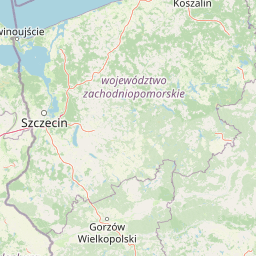
Map view of Szczeciński Landscape Park Puszcza Bukowa

Use this park location map to pinpoint Szczeciński Landscape Park Puszcza Bukowa in Poland, understand its exact geographic position, and read its mapped placement within the surrounding landscape more clearly.

Pigeon | © OpenStreetMap contributors

Location context for Szczeciński Landscape Park Puszcza Bukowa

Zachodniopomorskie Voivodeship

Visual reference guide to lowland beech forests, hilly terrain, and glacial lakes

Szczeciński Park Krajobrazowy „Puszcza Bukowa” Photos and Landscape Scenery

Visual documentation captures the rolling relief, deep erosional ravines, and mature deciduous woodland that define the protected landscape. Examining these field photographs reveals the microhabitats and topographic diversity distinguishing the beech forests of northwestern Poland.

A calm emerald-green lake surrounded by dense green forest, with tree branches framing the left side of the view and forested hills in the background.

A red sign with white text reading Rezerwat Przyrody Bukowe Zdroje stands among tall trees in a green forest.

Park atlas

Compare surrounding regional landscapes and connected protected territories in northwestern Poland.

Other Parks and Protected Areas Near Szczeciński Park Krajobrazowy „Puszcza Bukowa”

Browse nearby protected areas and regional conservation zones situated throughout the surrounding West Pomeranian terrain. Comparing adjacent forest reserves provides deeper geographic context for understanding regional lowland ecosystems.
Watercolor painting depicting a river flowing through a valley with green vegetation and distant mountains
National parkBrandenburg
10 km away#1 closest

Southwest

Lower Oder Valley National Park: Unique Polder Landscape and Bird Sanctuary

Discover protected area maps and regional geography in Brandenburg

Delve into the Lower Oder Valley National Park, a national park recognized for its extraordinary polder landscape and extensive wetland ecosystems. This page provides detailed geographic context, highlighting the park's unique engineered floodplain, its role as a sanctuary for numerous bird species, and its position within the regional geography of Brandenburg. Understand the mapped boundaries and ecological importance of this exceptional protected area.

Area
103.23 km²
Established
1995
IUCN
II
Visitors
150K annual
Protected areaZachodniopomorskie
16 km away#2 closest

North

Ujście Odry i Zalew Szczeciński: Protected Area Geography and Estuarine Landscape Mapping

Coastal lagoons, riverine deltas, and island habitats in Zachodniopomorskie.

This extensive protected area offers a comprehensive view of the Oder estuary as it meets the Baltic Sea. The landscape comprises broad lagoons, branching river channels, and coastal islands that provide crucial habitat for migratory waterbirds and sustain a rare brackish water ecosystem. Use this geographic entry to analyze the boundaries, terrain, and interconnected waterways of this major Polish nature site.

Area
526.12 km²
Established
2008
Relief
Lowland
Scope
Mixed
A horizontal watercolor painting showing rolling green hills and a dense forest line against a pale, light-colored sky background.
Protected landscapeWest Pomeranian Voivodeship
17 km away#3 closest

Northeast

Puszcza Goleniowska Protected Landscape: Geographic Profile and Mapped Boundaries

A large-scale lowland forest complex in West Pomeranian Voivodeship.

Puszcza Goleniowska represents a critical protected woodland in Poland, spanning 630 square kilometers of post-glacial plains. This forest complex is characterized by its pine-dominated canopy, widespread bog and marshland habitats, and a series of rivers and lakes that form the backbone of its regional drainage. The area encompasses numerous nature reserves and Natura 2000 sites, offering a comprehensive look at the lowland ecological structure of the West Pomeranian Voivodeship.

Area
630 km²
Established
1349
Relief
Lowland
Climate
Temperate
Protected areaZachodniopomorskie
21 km away#4 closest

North

Police - kanały Protected Area: Mapping Industrial Infrastructure and Ecological Conservation in Zachodniopomorskie

Underground hibernation habitats on the Równina Wkrzańska plain

Police - kanały is an unusual protected area in northern Poland defined by four kilometers of subterranean canals. These industrial remnants provide essential winter habitat for regional bat populations, marking a rare intersection between human-built heritage and biological conservation within the flat lowland plains of the Zachodniopomorskie region.

Area
1.121 km²
Established
2008
Relief
Lowland
Scope
Terrestrial
Watercolor painting of a rolling rural landscape with soft green hills, forest patches, and a foreground of wildflowers, presented in a wide panorama style.
Protected areaWest Pomeranian Voivodeship
26 km away#5 closest

East

Ostoja Ińska Protected Area: Geographic Context and Landscape Features in West Pomeranian Voivodeship

Postglacial moraine ridges and wetland mosaic exploration

Ostoja Ińska is a major bird protection sanctuary in northwestern Poland, renowned for its postglacial mosaic of lakes, bogs and forests. Spanning the Iński Landscape Park, the area offers a unique view into the undulating topography of the Pomeranian lake district and its vital role in regional avian conservation.

Area
877.109 km²
Established
2004
Relief
Upland
Climate
Temperate
Protected areaZachodniopomorskie
30 km away#6 closest

North

Łąki Skoszewskie Protected Area: Geography, Mapped Terrain, and Wetland Landscapes

Coastal marshland and bird sanctuary in Zachodniopomorskie

Located along the Szczecin Lagoon, Łąki Skoszewskie consists of extensive wet meadows, alder carrs, and Scots pine forests. This protected area provides a detailed look at the hydrological networks and coastal transition zones that define the unique natural landscape of northwestern Poland.

Area
90.834 km²
Established
2004
Relief
Lowland
Climate
Temperate
Watercolor painting of a green and pink abstract landscape featuring rolling hills and forested areas.
Protected landscapeWest Pomeranian Voivodeship
About 31 km away#7 closest

Northwest

Puszcza Wkrzańska Protected Landscape: Regional Forest Geography and Mapped Terrain Atlas

Transboundary pine-beech woodland and wetland ecosystems in West Pomeranian Voivodeship.

The Puszcza Wkrzańska forest complex represents a major protected landscape in northwestern Poland. Its geography is characterized by glacial sandy uplands, river-carved valleys, and vital wetland reserves. This atlas entry provides a detailed look at the forest boundaries, the surrounding hydrography, and the distinct natural terrain defining this essential Pomeranian wilderness.

Area
1,550 km²
Relief
Upland
Climate
Temperate
Access
Easy access
Protected landscapeWest Pomeranian Voivodeship
34 km away#8 closest

Southwest

Cedynia Landscape Park: Mapped Protected Landscapes and Regional Geography in Poland

Protected mosaic of sandy forests and river valleys

Spanning 308 square kilometers, Cedynia Landscape Park protects a complex transition zone in Poland. The area features the expansive Puszcza Piaskowa pine forests, the hilly moraine relief of the Cedynia Carpathians, and the biodiverse wetlands of the lower Oder River. This protected landscape represents an essential study in lowland ecological gradients and postglacial terrain development within the West Pomeranian Voivodeship.

Area
308.5 km²
Established
1993
Relief
Upland
Climate
Temperate

Common questions about visiting, size, designation, and location context for Szczeciński Landscape Park Puszcza Bukowa

Szczeciński Landscape Park Puszcza Bukowa FAQs for park facts, access, geography, and protected area context

Find quick answers about Szczeciński Landscape Park Puszcza Bukowa, including protected-area facts, park geography, trail and visitor context, and how the park fits into its surrounding country and regional landscape.
MoriAtlas Explorer

Continue Your Protected Areas Search Across the Global Atlas

Deepen your exploration by continuing the structured search for national parks and protected areas worldwide. Utilize the comprehensive filtering capabilities to compare different conservation landscapes and refine your understanding of global park geography. Discover more about the distribution and characteristics of protected natural areas.

Global natural geography