Why Łąki Skoszewskie stands out
Łąki Skoszewskie is best known as a major marshland and lagoon bird sanctuary on Poland's northwestern coast. The site is recognized for the exceptional variety of breeding and migratory waterbirds that use its wet meadows, channels, alder woods, and the nearby Szczecin Lagoon shoreline. Species of high conservation interest supported here include the aquatic warbler, ruff, black-tailed godwit, corncrake, spotted crake, and white-headed duck, alongside raptors such as the white-tailed eagle and lesser spotted eagle. The area is also notable for the way it combines formal Natura 2000 protection with active community-led conservation. The Czarnocin Polder within the site has become a focus for grassroots bird reserve initiatives that emphasize traditional grazing and the maintenance of wet conditions to keep the habitat suitable for ground-nesting wetland birds.
Łąki Skoszewskie history and protected-area timeline
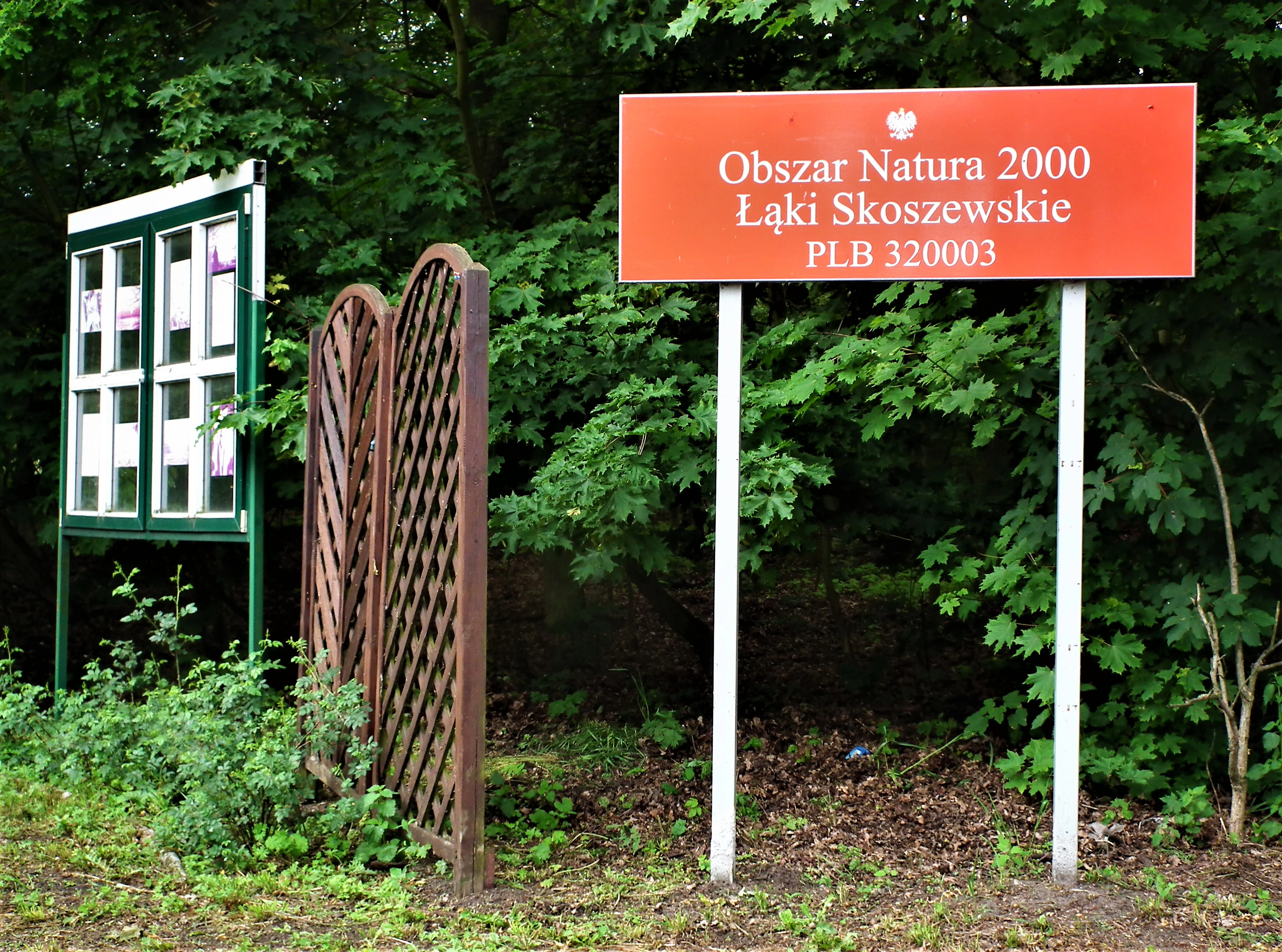
Łąki Skoszewskie was formally designated as a Special Protection Area within the Natura 2000 network in 2004, under the EU Birds Directive framework that obliges member states to safeguard habitats of threatened and migratory bird species. The site code PLB320003 indicates its place within the Polish Natura 2000 system, alongside a complementary habitat site, Ujście Odry i Zalew Szczeciński, that covers much of the same broad region.
Long before its formal designation, the landscape had already been shaped by centuries of agricultural drainage, peat cutting, and grazing management. The system of canals, ditches, and meadows visible today reflects this long history of human adaptation to a naturally low-lying and waterlogged coastal plain. Within the protected area, traditional nature reserves were established to protect more specific values: the Czarnocin reserve, named after Professor Janina Jasnowska, protects ecologically valuable wetland habitats within the broader bird area, while the neighboring Białodrzew Kopicki reserve guards older woodland along the lagoon shore.
A more recent chapter in the area's history began in 2025 with the creation of the Społeczny Rezerwat Ptaków Polder Czarnocin, a community-led bird reserve covering around 500 hectares of the Czarnocin Polder within the Łąki Skoszewskie area. Established by the Stowarzyszenie na Rzecz Wybrzeża, this initiative focuses on active conservation of waterbirds and wetland species through habitat wetting management and traditional grazing, showing how the modern protection of the area combines European designations, national reserves, and grassroots stewardship.
Łąki Skoszewskie landscape and geographic character
The landscape of Łąki Skoszewskie is characterized by its low elevation and strong horizontal extent, typical of the Goleniów Plain. The terrain consists largely of flat or gently undulating glacial lowlands that descend toward the Szczecin Lagoon. Across the area, wet meadows dominate the view, interspersed with straightened and meandering drainage canals, ditches, and remnants of older watercourses that together form an extensive hydrological network.
Woodland forms a significant component of the landscape as well. Alder carrs occupy the wettest depressions, often along canal edges where water levels remain high. On slightly drier ground, Scots pine forests form larger blocks that give the area its taller, darker tree layer. Mixed patches of alder and older deciduous trees break up the pine stands, particularly near the lagoon shore and along the reserves of Czarnocin and Białodrzew Kopicki. The interplay of open wet meadow, narrow woodland belts, and the broad water surface of the neighboring lagoon creates a wide, open, and visually layered coastal scenery.
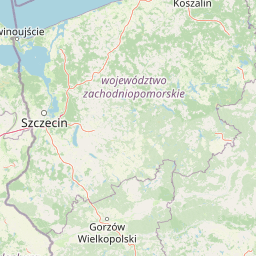
The eastern boundary of the area, reaching toward Żarnowo, transitions into more agricultural land, while the western side is defined by the shoreline of the Szczecin Lagoon. The result is a transitional coastal-plain landscape where managed wetland, forest, and the open waters of a large brackish lagoon meet, producing the kind of habitat mosaic that defines much of Poland's northwestern coastal lowlands.
Łąki Skoszewskie ecosystems, habitats, and plant life
Ecologically, Łąki Skoszewskie is defined by its wetland vegetation and the species communities that these habitats support. The wet meadows are dominated by grasses, sedges, and reeds typical of flooded grasslands, with vegetation patterns strongly influenced by the system's network of drainage channels. Where water levels rise or grazing is light, reed beds and sedge tussocks expand, while regularly grazed or mown sections remain as more open meadow.
Alder woodland is one of the most distinctive habitat types within the site, forming wet carrs where alder trees root into saturated peat or alluvial soils. These woodlands are biologically rich, supporting amphibians, specialist invertebrates, and nesting opportunities for woodland and edge species. The pine forests that occupy drier sandy ridges contribute a different ecological character, with a more acidic ground flora and open canopy structure. The mix of wet woodland, marsh, and open water within drainage ditches and channels creates a rich transitional zone where aquatic, semi-aquatic, and terrestrial species overlap.
At a broader biogeographical scale, the area belongs to the larger system of the Oder estuary and Szczecin Lagoon, and a significant portion of Łąki Skoszewskie falls within the Natura 2000 habitat site Ujście Odry i Zalew Szczeciński. This overlap reflects the close ecological connection between the inland meadows, the alder forests, and the brackish lagoon waters, together forming one of the most important wetland complexes along the southern Baltic coast.
Łąki Skoszewskie wildlife and species highlights
The wildlife value of Łąki Skoszewskie is overwhelmingly defined by its birdlife, which is the principal reason for the area's designation as a Special Protection Area. The combination of wet meadows, reed-fringed channels, alder wood, and adjacent lagoon shoreline supports an exceptionally rich bird community. Among the breeding and visiting species of conservation interest are ruff, aquatic warbler, black-tailed godwit, common snipe, white-headed duck, little bittern, bittern, spotted crake, corncrake, and garganey.
Raptors are also well represented, with white-tailed eagle, lesser spotted eagle, hen harrier, marsh harrier, Montagu's harrier, black kite, red kite, and peregrine falcon among the species linked to the area. Woodpeckers such as black woodpecker and middle spotted woodpecker use the older alder and mixed woodland, while species like the lesser whitethroat, red-backed shrike, and small flycatcher occupy shrubby and woodland edges. The presence of whinchat and short-eared owl, along with kingfisher and common crane, further underscores the structural variety of the habitats available.
Beyond birds, the wet meadows and alder carrs provide habitat for amphibians, dragonflies, and other wetland invertebrates, while the pine forests and mixed edges host typical forest mammals and a range of insects. However, the site's strongest and most widely recognized contribution to Poland's biodiversity remains its role as a refuge for waterbirds and other birds dependent on extensive, well-connected wetland landscapes.
Łąki Skoszewskie conservation status and protection priorities
Łąki Skoszewskie is a key component of the European ecological network protecting wetlands along the southern Baltic coast. Its designation as a Special Protection Area in 2004 under the Natura 2000 network places it within a coordinated European framework for bird conservation, targeting species listed under the EU Birds Directive. The site also overlaps with the Natura 2000 habitat site Ujście Odry i Zalew Szczeciński, which broadens protection to habitat types and non-bird species across the wider estuary and lagoon system.
On a national level, the area benefits from stricter local protection through the Czarnocin nature reserve, named in honor of Professor Janina Jasnowska, which safeguards representative wetland habitats within the larger bird area. The neighboring Białodrzew Kopicki reserve adds further protection for older woodland along the lagoon shore, creating a layered conservation architecture where European designations, national reserves, and local initiatives reinforce one another.
A particularly notable conservation development is the creation in 2025 of the Społeczny Rezerwat Ptaków Polder Czarnocin, a community-led bird reserve of around 500 hectares within the Łąki Skoszewskie area, established by the Stowarzyszenie na Rzecz Wybrzeża. This initiative focuses on the active protection of waterbirds such as spotted crake, lapwing, snipe, and black-tailed godwit through habitat wetting and traditional grazing. Its emergence reflects an increasing awareness that long-term conservation of the area depends not only on legal designation but also on continued hydrological management and the maintenance of traditional land use that keeps the meadows suitable for ground-nesting birds.
Łąki Skoszewskie cultural meaning and human context
The cultural context of Łąki Skoszewskie is closely tied to the long history of human management of the coastal lowlands along the Szczecin Lagoon. The meadows, ditches, and drainage channels visible across the area are the result of generations of agricultural work, peat cutting, and water regulation, reflecting how local communities have shaped the landscape while also living from it. Traditional grazing, haymaking, and small-scale fishing around the lagoon have all contributed to the open, semi-natural appearance of the terrain.
The reserve named after Professor Janina Jasnowska highlights the importance of scientific and academic engagement with this landscape, while more recent community efforts, such as the Społeczny Rezerwat Ptaków Polder Czarnocin, demonstrate a renewed grassroots commitment to maintaining both the ecological and cultural character of the area. Together, these threads illustrate how Łąki Skoszewskie is not only an ecological asset but also a living landscape where conservation, scientific study, and local heritage intersect.
Top sights and standout views in Łąki Skoszewskie
Łąki Skoszewskie stands out as one of the most important wetland bird areas along Poland's Baltic coast. Its combination of marshy meadows, alder carrs, pine forests, and the open waters of the Szczecin Lagoon supports an unusually broad bird community, including waterbirds, waders, and raptors of high conservation concern. The site's integration into the Natura 2000 network through both the Special Protection Area PLB320003 and the habitat site Ujście Odry i Zalew Szczeciński gives it a strong place within European conservation frameworks, while national reserves and new community-led initiatives add depth and local relevance to its protection.
Best time to visit Łąki Skoszewskie
The most rewarding periods to experience Łąki Skoszewskie are spring and early summer, when meadows and marshes come alive with breeding waterbirds, waders, and passerines. Spring brings arriving migrants and the peak of territorial display for species such as snipe, lapwing, black-tailed godwit, and a range of reedbed and meadow nesters. Early summer continues to offer strong bird activity, especially in the wetland edges, alder carrs, and reed-lined channels.
Autumn can also be rewarding, as passage waders and waterfowl use the area during migration, and the lagoon shoreline provides additional feeding habitat. Winter tends to be quieter, with reduced accessibility to wet ground and lower bird activity, though frost can dramatically reshape the scenery across the meadows and forest. Throughout the year, the quality of the visit depends heavily on weather and water levels, which influence how many wetland birds are visible and how easily the meadows can be observed from paths and the lagoon shore.