Mori Atlas logo
Wildlife reserveDeryneia (Vogelschutzgebiet)

A vital migratory bird stopover on the eastern coast of Cyprus within the UN buffer zone.

Deryneia (Vogelschutzgebiet) Wildlife Reserve: Coastal Mapping and Protected Landscape Analysis

Deryneia (Vogelschutzgebiet) represents a highly specialized protected area on the eastern shoreline of Cyprus, encompassing roughly 5.7 hectares of steep, coastal phrygana shrubland. Situated within the UN buffer zone, this small wildlife reserve provides a quiet, undisturbed sanctuary along the eastern Mediterranean flyway. The geography is characterized by rugged cliff-facing terrain and salt-adapted vegetation, serving as a critical habitat for migratory waders, plovers, and diverse songbird populations passing through the island.

coastal cliffsphrygana shrublandbird sanctuaryNatura 2000 siteUN buffer zoneMediterranean flyway

Deryneia (Vogelschutzgebiet)

Wildlife reserve

Park overview

Structured park overview, official facts, and landscape profile for Deryneia Bird Sanctuary

Deryneia Bird Sanctuary park facts, protected area profile, and essential visitor context

Review the core facts for Deryneia Bird Sanctuary, including designation, size, terrain, visitor scale, habitats, and operating context in one park-focused overview.

About Deryneia Bird Sanctuary

The Deryneia Bird Sanctuary is a Natura 2000 Special Protection Area on the southeastern coast of Cyprus, identified by the site code CY3000011. It sits within the United Nations buffer zone that crosses the island from east to west, with the village of Deryneia lying to its west and the town of Paralimni just to the south. This buffer zone context is one of the defining features of the site: because civilian activity has been strictly limited for decades, the coastal strip has a level of human quiet that is increasingly rare around the Mediterranean, and birds use it accordingly.

At only 5.7 hectares, Deryneia is the smallest of Cyprus's Special Protection Areas for birds, yet the habitat it conserves is regionally distinctive. The site is a piece of steep coastal terrain, dominated by phrygana, a low, aromatic shrub community well adapted to dry, salty, sun-exposed conditions. Phrygana formations are characteristic of coastal Cyprus and are highly important for breeding passerines, reptiles, and pollinating insects, while the adjacent shoreline serves waders, gulls, and terns.

The sanctuary's significance lies mostly in its function as a stop along the eastern Mediterranean migration route. Migratory species use the coast as a temporary refuge during long journeys between wintering grounds in Africa and breeding areas further north. The site's compact size is balanced by its ecological quietness and its position along a heavily used flyway, giving it a clear role in the conservation network of European protected areas.

Quick facts and research context for Deryneia Bird Sanctuary

Deryneia is one of the smallest EU bird protection sites in the Republic of Cyprus, covering just 5.7 hectares. It is located in the UN buffer zone along the island's eastern coast, between Deryneia and Paralimni on the Famagusta side of the divide. The natural environment consists of phrygana-covered coastal slopes meeting a steep shoreline. The site was reported as a Special Protection Area under the Natura 2000 network in 2021, with site code CY3000011.

Protection and recognition

Explore the documented terrestrial conservation scope and recognition history.

Deryneia (Vogelschutzgebiet) Protection Status and Designated Area Record

Examine the verified protection status and terrestrial management scope established for Deryneia (Vogelschutzgebiet). Review structured conservation facts and official designation records compiled for this protected area.

Protection details

Protection scope
Terrestrial
Transboundary protection
No
Park context

Deeper park guide and search-rich context for Deryneia Bird Sanctuary

Deryneia Bird Sanctuary history, landscape, wildlife, and travel context

Explore Deryneia Bird Sanctuary through its history, landscape character, ecosystems, wildlife, conservation priorities, cultural context, and seasonal travel timing in a structured park guide built for atlas discovery and search intent.

Why Deryneia Bird Sanctuary stands out

Deryneia is best known as a quiet migratory bird stopover on Cyprus's eastern coast, set inside the unusually undisturbed UN buffer zone. Its repertoire of regularly noted species includes the Cyprus wheatear, Audouin's gull, European bee-eater, Kentish plover, and Greater sand plover, making it a small but biologically distinctive coastal reserve. The combination of phrygana habitat, low disturbance, and direct position along the eastern Mediterranean flyway gives the site an outsized importance relative to its size.

Deryneia Bird Sanctuary history and protected-area timeline

The Deryneia Special Protection Area was formally reported as a protected bird site in 2021 under the European Union's Natura 2000 framework, giving the area an institutional conservation status that reflects its existing ecological character. Because the site lies inside the UN buffer zone, established after the 1974 division of Cyprus, its biological values have developed more by absence of intensive land use than by deliberate habitat management.

The reporting step in 2021 integrated Deryneia into the wider European network of Special Protection Areas for birds, aligning it with protection regimes that apply elsewhere in Cyprus and the European Union. Within the Cypriot network, it sits alongside other coastal and inland sites that together cover the island's principal bird habitats.

Deryneia Bird Sanctuary landscape and geographic character

Deryneia's landscape is shaped by its position on the steep eastern coast of Cyprus. The site covers only a few hectares of cliff-facing terrain where the land drops quickly toward the sea, giving the area a sharply defined geography of slope, scrub, and shoreline.

The defining surface cover is phrygana, the characteristic Mediterranean low shrub community found across dry coastal Cyprus. These plants are typically short, dense, and aromatic, with a tough structure well adapted to salt-laden winds, drought, and intense sun. The result is an open, low-lying coastal mosaic interspersed with bare rock and small patches of soil, rather than a closed forest or dense vegetation canopy.

Deryneia Bird Sanctuary ecosystems, habitats, and plant life

Ecologically, Deryneia belongs to the eastern Mediterranean coastal zone, where dry shrubland and cliff habitat meet marine shoreline. The phrygana vegetation is the keystone habitat, supporting nesting passerines, invertebrates, and reptiles, while the adjacent waters and shore lines support seabirds and migratory waterbirds.

The combination of phrygana, cliffs, and sea in such a compact area makes the site a transitional zone where terrestrial and marine-influenced habitats overlap. Salt-tolerant plants, seasonal flowering shrubs, and the openness created by low vegetation are all typical of this kind of coast, and they help explain why migrating birds favor it as a resting point.

Deryneia Bird Sanctuary wildlife and species highlights

The site's principal wildlife focus is its bird fauna, both resident and migratory. Species documented for the area include the Eurasian skylark, the common kingfisher, the Eurasian stone-curlew, the Kentish plover, the Greater sand plover, Audouin's gull, and the Cyprus wheatear, the latter being an endemic species of the island with restricted global distribution.

The recorded species mix reflects a dual identity: ground-nesting and shrub-using passerines typical of phrygana habitat, alongside waders and seabirds that use the shore and adjacent sea. The combination of migratory waders like the sand plovers with seabirds like Audouin's gull underscores the site's role along the eastern Mediterranean flyway.

Deryneia Bird Sanctuary conservation status and protection priorities

Deryneia's conservation value rests on three connected facts: its position in an unusually low-disturbance buffer zone, its inclusion in the Natura 2000 network as a Special Protection Area under the EU Birds Directive, and its role along an internationally important bird migration corridor.

The 2021 designation as a Special Protection Area formally recognized the site's importance for the conservation of the listed bird species, several of which are protected under Annex I of the Birds Directive. Phrygana habitat itself is increasingly rare and fragmented around the Mediterranean, so even small protected patches like Deryneia contribute to the resilience of this habitat type at a regional scale.

Deryneia Bird Sanctuary cultural meaning and human context

Cyprus's UN buffer zone, in which Deryneia sits, is itself a defining element of the island's recent political and human geography. For decades, this strip between the areas controlled by the Republic of Cyprus and the de facto administered north has been closed to most civilian activity, and that long-term absence of disturbance is part of why the area retains ecological qualities that are hard to find elsewhere on the heavily visited Mediterranean coast.

Top sights and standout views in Deryneia Bird Sanctuary

Deryneia's standout features are its scale and its quietness. At 5.7 hectares it is Cyprus's smallest bird protection area, yet because it lies inside the UN buffer zone it has the kind of low human disturbance that is precious along Mediterranean coasts.

The site combines phrygana shrubland, steep coastal cliffs, and a shoreline used by migratory plovers, kingfishers, gulls, and the endemic Cyprus wheatear. The 2021 Special Protection Area designation formally integrated the site into Europe's Natura 2000 network, anchoring the area's modest size to a network of much larger protected landscapes.

Best time to visit Deryneia Bird Sanctuary

Bird activity at small Mediterranean coastal sites is shaped strongly by season. Spring and autumn are generally the most rewarding periods, because that is when migratory waders and passerines traveling between Africa and Europe use the eastern coast as a stopover.

Winter and early spring also bring species like the Eurasian skylark and wintering waders to the coastal strip, while breeding species such as the Cyprus wheatear become more present later in spring and through summer, when phrygana vegetation supports nesting passerines. The exact intensity of bird presence will vary with conditions, but the site functions as a migration waypoint most strongly during shoulder seasons.
Monthly climate preview

Long-term representative point averages for annual temperature and precipitation

Deryneia (Vogelschutzgebiet) Climate Normals and Weather by Month

Representative coordinates record measured monthly temperature swings from 13.5 °C to over 30 °C alongside shifting daily precipitation rates across the year. Reviewing the full twelve-month statistical baseline provides deeper insight into the local climate normal profile at this specific monitoring point.
Annual mean21 °C
14 °C30 °C
Jan14°
Feb14°
Mar15°
Apr18°
May23°
Jun27°
Jul30°
Aug30°
Sep28°
Oct24°
Nov19°
Dec15°
Warmest month
August

30 °C

Coolest month
January

13.5 °C

Wettest month
December

2.3 mm/day

Driest month
July

0 mm/day

Park location guide

Geography guide, regional context, and park location map for Deryneia Bird Sanctuary

Deryneia Bird Sanctuary park geography, regions, and map view in Cyprus

Understand where Deryneia Bird Sanctuary sits in Cyprus through a broader geographic reading of the surrounding landscape, nearby location context, and its mapped position within the national park landscape.

How Deryneia Bird Sanctuary fits into Cyprus

Cyprus is an island nation in the eastern Mediterranean Sea, positioned at the crossroads of Europe, Africa, and Asia. The Republic of Cyprus governs the southern portion of the island, with Nicosia as its capital and largest city. The island has a complex political situation due to the Turkish occupation in the north and contains British military bases in the south. Cyprus gained independence from Britain in 1960 and is a member of the European Union.

Wider geography shaping Deryneia Bird Sanctuary in Cyprus

Cyprus is an island located in the eastern Mediterranean Sea, off the coast of the Levant in West Asia. The island lies approximately 75 km south of Turkey, 105 km west of Syria, and 380 km north of Egypt. The terrain varies from mountainous regions in the north and interior to plains and coastal areas. The Troodos Mountains dominate the central and southwestern part of the island. The island has no land borders as it is entirely surrounded by sea.

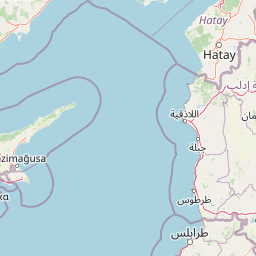
Map view of Deryneia Bird Sanctuary

Use this park location map to pinpoint Deryneia Bird Sanctuary in Cyprus, understand its exact geographic position, and read its mapped placement within the surrounding landscape more clearly.

Pigeon | © OpenStreetMap contributors
Park atlas

Compare regional protected landscapes and discover nearby coastal reserves across the eastern Mediterranean flyway

Exploring Other Parks Near Deryneia (Vogelschutzgebiet) and Surrounding Coastal Protected Areas

Browse protected areas and coastal habitats situated near Deryneia (Vogelschutzgebiet) to evaluate regional ecological networks. Comparing adjacent reserves provides broader geographic context for Mediterranean bird migration corridors.
A soft watercolor illustration showing rolling green hills and a coastal shoreline with sparse vegetation.
Protected areaFamagusta
About 8 km away#1 closest

Southeast

Kavo Gkreko: A Protected Coastal Landscape Atlas in the Famagusta District of Cyprus

Mapped limestone cliffs, seagrass meadows, and marine habitats.

Discover the geographic essence of Kavo Gkreko, a vital protected area on the southeastern tip of Cyprus. This record examines the unique intersection of terrestrial juniper matorral and submerged reef systems. Gain insight into the coastal cliffs, sea caves, and Mediterranean habitats that define this site as a key reference for regional conservation geography.

Area
18.754 km²
Established
2004
Relief
Mixed relief
Climate
Mediterranean
Protected areaCyprus
About 10 km away#2 closest

Southwest

Periochi Agias Theklas - Liopetri: Protected Coastal Geography and Bird Habitat

Natura 2000 protected area in the Famagusta Bay region

Periochi Agias Theklas - Liopetri is a compact coastal site in southeastern Cyprus known for its bird-focused conservation efforts. Within its boundaries, the landscape features low-lying Mediterranean scrub, open ground, and agricultural edges that provide refuge for waders, herons, and migratory species. This site plays an essential role in maintaining ecological connectivity within the Mediterranean flyway.

Area
0.698 km²
Established
2008
Relief
Lowland
Scope
Terrestrial
Protected areaCyprus
About 15 km away#3 closest

Southwest

Ethniko Dasiko Parko Potamos Liopetriou: Coastal Wetland and Protected Landscape Atlas

A diverse protected area on the southeastern Cypriot coastline.

Spanning the mouth of the Liopetri River, this protected area features a layered terrain of salt-influenced soils, dune belts, and phrygana scrubland. It is defined by the integration of seasonal ponds and Mediterranean cliff vegetation, offering a rare look at the natural ecological transitions along the developed coast of Cyprus.

Area
0.747 km²
Established
2009
Relief
Lowland
Climate
Mediterranean
Nature reserveCyprus
About 33 km away#4 closest

West

Periochi Kosiis - Pallourokampou Nature Reserve: Regional Geography and Protected Boundaries

Inland Cyprus protected landscape and natural terrain mapping

Periochi Kosiis - Pallourokampou represents a crucial nature reserve within the Mediterranean ecoregion of Cyprus. Examine the park boundaries and regional geographic context through this structured atlas entry, which details the terrestrial landscape features defining this inland conservation area.

Area
37.178 km²
Established
2007
Climate
Mediterranean
Scope
Terrestrial
A horizontal watercolor illustration of a wetland scene with a calm body of water, grassy shorelines, and distant rolling hills under a soft sky.
Nature reserveLarnaca District
About 38 km away#5 closest

Southwest

Alykes Larnakas Nature Reserve: Atlas of Protected Wetlands and Coastal Mediterranean Terrain

Ecological landscape mapping in the Larnaca District of Cyprus

Alykes Larnakas functions as a cohesive wetland landscape featuring the expansive Larnaka Salt Lake alongside smaller basins like Orfani and Soros. The reserve protects a gradient of ecosystems ranging from coastal lagoons and salt-crust basins to Mediterranean phrygana and dry grassland textures that define the southeastern coast of Cyprus.

Area
15.602 km²
Established
2008
Protected areaCyprus
About 41 km away#6 closest

West

Ethniko Dasiko Parko Rizoelias: A Natura 2000 Protected Area and Mediterranean Habitat Mosaic

Ecological geography and landscape context in inland Cyprus

Ethniko Dasiko Parko Rizoelias represents a significant conservation effort in Cyprus, balancing rare gypsophilous vegetation with Mediterranean shrubland. Its triple Natura 2000 status protects 34 bird species and reptile communities within a compact, structurally diverse terrestrial environment.

Area
1.238 km²
Established
2004
Relief
Lowland
Climate
Mediterranean
Protected areaTajikistan
About 45 km away#7 closest

West

Periochi Moytti Toy Ziou: Protected Landscape and Geographic Overview in Tajikistan

Mapped boundaries and regional protected area context

Discover the geographic identity of Periochi Moytti Toy Ziou, a key protected area situated in Tajikistan. This entry provides essential mapping and landscape data to help visualize the park's boundaries, surrounding terrain, and its contribution to regional conservation geography.

Area
0.181 km²
Relief
Lowland
Scope
Terrestrial
Water
Minor water
Nature reserveCyprus
About 47 km away#8 closest

West

Periochi Lympion - Agias Annas: Inland Protected Landscapes and Nature Reserve Atlas

Mediterranean shrubland and bird conservation zones in central Cyprus

Periochi Lympion - Agias Annas preserves essential thermo-Mediterranean shrubland and Sarcopoterium-dominated phrygana formations within the Cyprus interior. This protected landscape sustains a mosaic of pseudo-steppe grasslands and diverse bird populations, providing a focused view of inland habitat conservation within the eastern Mediterranean ecoregion.

Area
5.167 km²
Established
2002
Relief
Lowland
Scope
Terrestrial

Common questions about visiting, size, designation, and location context for Deryneia Bird Sanctuary

Deryneia Bird Sanctuary FAQs for park facts, access, geography, and protected area context

Find quick answers about Deryneia Bird Sanctuary, including protected-area facts, park geography, trail and visitor context, and how the park fits into its surrounding country and regional landscape.
MoriAtlas Explorer

Continue Your Protected Areas Search Across the Global Atlas

Deepen your exploration by continuing the structured search for national parks and protected areas worldwide. Utilize the comprehensive filtering capabilities to compare different conservation landscapes and refine your understanding of global park geography. Discover more about the distribution and characteristics of protected natural areas.

Global natural geography