
Planning Overview
When is the Best Time to Visit Exmoor National Park?
Deciding on the best time to visit Exmoor National Park requires balancing your appetite for long, daylight-rich hiking days against a preference for quieter trails and distinct seasonal landscapes. While the park is accessible year-round, the most reliable period for outdoor exploration extends from May through September. During these months, visitors benefit from the longest daylight hours of the year and higher mean temperatures, which are particularly conducive to navigating the 55 kilometres of coastline and the exposed, rolling moorlands that define the region. Choosing your travel dates within this window, however, introduces a fundamental trade-off between the vibrant visual appeal of the August heather bloom and the milder, less crowded conditions often experienced in late spring or early autumn.
The Influence of Climate and Landscape on Timing
Your experience in the park is heavily dictated by the interaction between its elevation, coastal position, and the inherent nature of its moorland terrain. As an exposed landscape with significant stretches of open, heather-clad hills, the park is susceptible to Atlantic weather patterns, meaning wind and precipitation levels remain relevant factors regardless of the season. The climate data indicates that while the warmer months offer a more hospitable environment for hiking, humidity and wind speeds remain consistent enough that preparation for shifting conditions is essential for any visit. The park's varied elevation means that even during the warmest month of July, temperature fluctuations occur, and the transition into autumn typically brings a more pronounced sense of exposure on the higher ridges.
Balancing Popularity and Natural Cycles
Beyond basic temperature and daylight considerations, the park's biological and environmental cycles play a primary role in shaping your itinerary. The late summer, specifically August, attracts visitors drawn to the extensive heather moorland as it turns purple, marking a peak period for both visual impact and foot traffic. Those who prioritize solitude or a more reflective experience often find that the shoulders of the season, such as late April or September, offer a more temperate environment. In these shoulder periods, you encounter the same dramatic cliffs and ancient woodlands with more space to move, though you must accept shorter daylight hours and a higher probability of cooler temperatures. Because Exmoor serves as an International Dark Sky Reserve, your choice of dates also dictates your stargazing potential. While long summer days limit late-night astronomy, they provide the most time for daytime exploration, whereas the autumn months offer a distinct advantage for those looking to observe the night sky as the days shorten and nightfall arrives earlier.
Visitor Timeline
When to Visit Exmoor: Peak Months and Seasonal Transitions
Peak Hiking and Coastal Exploration: May to September
For travellers whose primary goal is outdoor activity, the period between May and September offers the most reliable daylight and favorable climatic conditions. During these months, Exmoor experiences its longest days and warmest mean temperatures, often peaking between 20°C and 23°C in the afternoons. May and June are particularly noteworthy for their high daylight hours, which can extend to over 16 hours, providing ample time for extensive treks along the 55-kilometre coastline or deep into the wooded valleys. This window is ideal for those planning to traverse the South West Coast Path or explore the inland moors when ground conditions are typically at their driest, though visitors should always be prepared for the rapid weather changes inherent to a coastal moorland environment.
The Heather Bloom and Summer Height: August
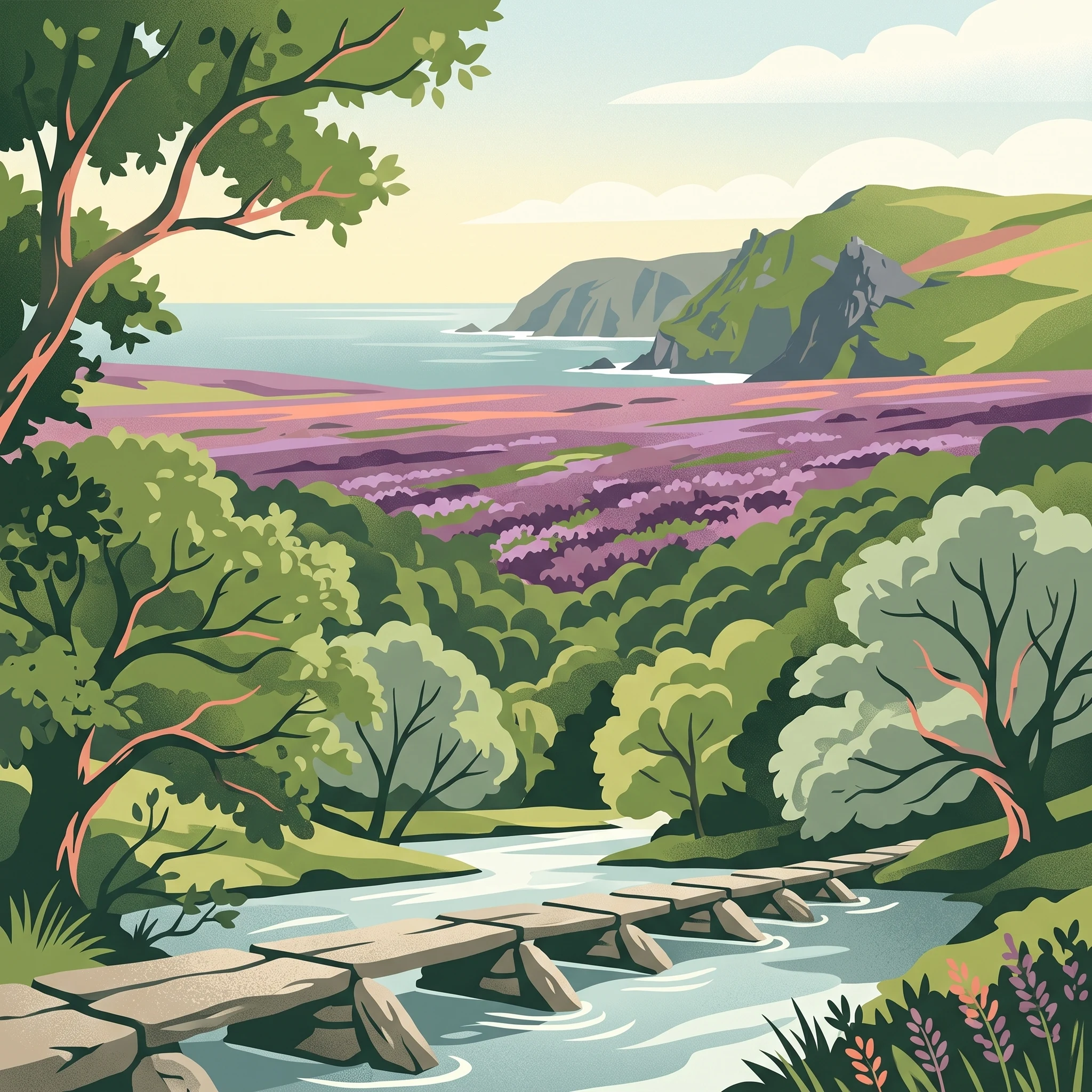
August stands out as a distinct period due to the visual transformation of the landscape. As the heather begins its peak bloom, large swaths of the park shift to a vibrant purple, a phenomenon that defines the quintessential Exmoor aesthetic. While temperatures remain pleasant and conducive to exploration, this month typically sees higher visitor numbers as families and domestic tourists converge on the park. Travellers choosing this time should balance the aesthetic reward of the moorland bloom against the reality of increased activity on popular trails and in local villages. It remains a prime month for those interested in wildlife, such as observing the semi-feral Exmoor ponies and red deer that roam the more secluded expanses of the park.
Quiet Shoulder Seasons: Spring and Autumn
For visitors who prioritize solitude and the chance to experience the park without the peak summer density, the shoulder months of April and October present a compelling alternative. April serves as a transitional month where daylight increases significantly and temperatures begin to rise, making it suitable for early-season hiking if one is comfortable with cooler, more variable weather. October offers a different atmosphere, with the autumn foliage turning the ancient woodlands into a rich palette of color. While wind speeds and precipitation levels are generally higher in these months compared to mid-summer, the trade-off is a much quieter experience on major routes like the Two Moors Way. These periods are particularly advantageous for those interested in photography or a more contemplative pace, provided visitors pack for the cooler, damp conditions typical of the South West in transition.
Annual Climate Overview
Understanding Exmoor National Park weather and climate by month
Interpreting the Exmoor Climate Cycle
While historical climate normals provide a reliable foundation for understanding the annual rhythm of Exmoor National Park, they represent long-term averages recorded at a specific sample elevation rather than daily weather forecasts. Visitors should note that the park is a landscape of high moorland, deep valleys, and exposed coastal cliffs, meaning actual conditions often vary significantly from these baseline figures based on altitude, wind direction, and proximity to the Bristol Channel. The annual climate pattern is defined by a transition from relatively high humidity and cooler temperatures in winter to the longer, brighter, and more temperate days of late spring and summer.
Daylight and Seasonal Sunlight Patterns
Daylight is a defining factor for planning outdoor activities in the park, with a stark contrast between the shortest and longest days of the year. During the winter solstice in December, daylight duration drops to approximately 7.7 hours, which naturally constrains the window for long-distance hiking or remote exploration. In contrast, June offers the peak of the annual cycle with roughly 16.3 hours of potential daylight. This extended light availability from May through July allows for significantly more flexibility when planning longer treks across the moorland or along the coastal paths. By mid-September, daylight retreats to approximately 12.3 hours, marking a transition toward the shorter, darker afternoons characteristic of the late autumn.
Temperature Shifts and Thermal Comfort
Temperature fluctuations across the months reflect the park’s moderate maritime influence. Average daytime maximums climb from a cool 11.3 degrees Celsius in February to a comfortable 23.6 degrees Celsius in July. While July and August represent the warmest part of the year, average minimum temperatures rarely dip into extreme territory during the summer months, staying near 9 degrees Celsius. The spring period, particularly April and May, shows a consistent warming trend where daytime highs often reach between 16 and 20 degrees Celsius. Travelers should be aware that once temperatures begin to decline after September, the moisture-heavy air can make the landscape feel colder than the thermometer might suggest, particularly during wind-exposed ridge walks.
Precipitation, Humidity, and Wind Exposure
Exmoor’s climate is characterized by persistent humidity, which remains high throughout the year, rarely dropping below 80 percent on average. Precipitation patterns show that the winter months of November, December, and January are the wettest, with levels consistently reaching nearly 4 millimeters per day in the coldest weeks. The driest window typically occurs from March through May, providing a more favorable climate for those seeking to avoid mud and rain on popular trails. Wind speed follows a seasonal trend as well, with the highest average speeds recorded in the winter months at over 6 meters per second, gradually tapering down during the summer to roughly 4.7 meters per second in July. This reduction in wind intensity during the summer months contributes to the perception of the park being more accessible and pleasant for visitors who are sensitive to the exposure common on the high moors.
Seasonal dynamics
Understanding Exmoor National Park climate seasons and transition phases
Defining the moorland growth season: May through September
The most active period for visiting the park aligns with the longest days and the highest mean temperatures of the year. From May to September, the climate normals reveal a stable window of relative warmth and decreased wind intensity, providing the most reliable conditions for accessing the extensive coastal path and high-altitude moorland trails. During this phase, daylight peaks at over 16 hours in June, offering the practical advantage of extended time for exploration across the Brendon Hills and the central upland plateau. While this period experiences occasional rain, the frequency of precipitation is generally lower than in the winter months, making it the primary window for those prioritising outdoor activities like hiking and cycling.
The heather bloom as a seasonal threshold
August represents a unique peak within the broader summer season, defined not just by its warmth, but by the aesthetic transformation of the landscape. As the heather enters its bloom, the moorland aesthetic changes, creating a short-lived seasonal peak that draws many visitors. This phase is distinct because it combines the highest average maximum temperatures of the year with the peak of visitor interest. Visitors seeking to experience the moorland in its most vibrant state should plan for this month, while those prioritising quieter trails often find the transition into September more conducive to their needs, as the weather remains mild but the intensity of summer peak traffic begins to wane.
The shoulder transition: April and October
April and October serve as essential transitional periods that act as bridges between the core summer season and the cooler winter months. April is particularly notable for its shift toward longer daylight and warming temperatures, with average maximums climbing toward 17 degrees Celsius. It represents the awakening of the moorland, though visitors should expect changeable weather patterns as the park shifts away from winter conditions. October marks the reverse transition, characterized by shortening days and a cooling trend as the landscape settles. These months are defined by their instability; they offer the promise of clear, bright days but also carry a higher risk of wind and rain compared to mid-summer. For the prepared traveller, these windows offer a significant trade-off, trading the predictability of summer for a quieter experience on trails like the South West Coast Path.
Navigating the winter dormant period
From November through March, the park enters a quieter, more austere phase. The climate data indicates higher mean humidity levels, increased wind speeds, and significantly reduced daylight hours, which drop to just over 7 hours in December. This period is not defined by a complete closure, but rather by the reality of environmental constraints. With average minimums frequently dipping below freezing, the moorland becomes a more challenging environment. Visitors during these months will find a landscape that is less accessible for long-distance hiking, but one that offers rare solitude and a different perspective on the dramatic coastline. Planning for this time requires an acceptance of volatile weather and the necessity of shorter, more focused outings that respect the shorter daylight window.
Seasonal Experiences
Experiencing Exmoor National Park Through the Changing Seasons
Navigating Moorland Trails and Coastal Paths
The timing of your visit significantly dictates the character of the walking experience across Exmoor. During the drier spring and early summer months, the ground conditions on the high moorland are generally more stable, making these periods ideal for long-distance routes like the Two Moors Way. As summer progresses into August, the landscape undergoes a transformation as the heather comes into bloom. This period offers a vivid, purple-hued backdrop for photography and hiking, though it also coincides with warmer afternoons that can make strenuous climbs across exposed terrain more taxing for some visitors. In contrast, the autumn months often introduce softer light and cooler air, which many walkers find more comfortable for traversing the park's steep-sided river valleys and wooded gorges, such as the area around Watersmeet.
Accessing Geologically Distinct Landmarks
Specific natural landmarks within the park also offer varying experiences depending on the time of year. The Valley of Rocks, famous for its dramatic clifftop geology and coastal scenery, is largely accessible year-round, but the experience changes with the weather patterns. In winter, the exposed cliff paths are subject to the full force of the prevailing winds coming off the Bristol Channel, which can make the walk from Lynton feel significantly more rugged and demanding. Conversely, during the mid-summer months, the higher daylight availability allows for extended exploration of the clifftop paths without the pressure of approaching dusk, providing more time to observe the local wildlife, such as the feral goats often found on the crags.
Stargazing in an International Dark Sky Reserve
Because Exmoor holds the designation of an International Dark Sky Reserve, the timing of your visit is critical if astronomy is a primary interest. The late autumn and winter months, while cooler and wetter, provide the longest periods of true darkness. With sunrise occurring later and sunset earlier, these months offer the best astronomical conditions for observing the night sky. In mid-summer, the extended daylight hours make stargazing a late-night activity, shifting the emphasis away from the dark sky experience. Visitors prioritizing the celestial clarity for which the park is renowned should look toward the shoulder seasons or winter months, provided they are prepared for the colder temperatures and increased likelihood of precipitation that characterize this time of year.
Seasonal Wildlife and Historic Observations
The presence of the Exmoor pony and the region's red deer population provides a recurring, year-round attraction, though their behavior and visibility can be influenced by the changing seasons. These animals are hardy, but they are often more active or visible in the open landscapes during the quieter months when visitor footfall is lower. Visiting during the early spring or late autumn can provide a sense of seclusion at historic sites like the Tarr Steps. These ancient clapper bridge crossings are best enjoyed during periods of lower rainfall, which keeps the Barle river levels more manageable and makes the surrounding trails easier to navigate.
Visitor Priorities
When to Visit Exmoor National Park Based on Your Travel Priorities
Prioritizing Milder Temperatures and Longer Daylight
Visitors seeking the most comfortable conditions for extended outdoor activity should target the window between late May and early July. During this period, the park experiences its longest daylight hours, peaking in June with over 16 hours of natural light. These weeks offer the highest mean temperatures of the year, with average daily maximums consistently reaching above 20 degrees Celsius. The combination of extended light and manageable warmth provides the most flexibility for those planning long hikes along the South West Coast Path or across the open moorland, as the risk of encountering the cold, damp conditions characteristic of the winter months is at its lowest.
Targeting Drier Ground for Moorland Hiking
For travellers whose priority is firm ground and reduced precipitation, the late spring and early summer months offer the most reliable window. Climate records from 1991 to 2020 show that May and June typically experience the lowest daily rainfall totals, hovering around 2.2 to 2.5 millimeters per day. While Exmoor remains an upland environment prone to rapid weather shifts regardless of the season, visiting during this drier spell minimizes the likelihood of boggy, saturated trails. The trade-off for these drier conditions is that you will miss the vibrant purple heather bloom, which does not reach its peak until August, meaning you must choose between walking in drier conditions or witnessing the landscape at its most visually iconic.
Aligning Trips with Dark Sky Reserve Quality
Those visiting with the specific intent of astronomy or stargazing must invert the typical summer priority list. Because Exmoor is an International Dark Sky Reserve, the longer daylight hours of midsummer actually work against this goal, as they provide significantly less darkness for viewing. Instead, the best opportunities for stargazing occur during the autumn and winter months, when daylight hours drop considerably. October and November provide a transition where temperatures have not yet reached the extreme lows of January, but the nights are dark and long enough to allow for extended observation. Visitors choosing this period accept the risk of higher precipitation and wind, as the colder months are statistically more volatile than the late spring windows.
Selecting for Cooler Walking Conditions
If you prefer to avoid the heat of mid-July and August, which can see average daily maximums near 23 degrees Celsius, the shoulder months of April and September serve as effective alternatives. April provides a fresh, cool environment for traversing the woodlands, though it carries a higher risk of changeable weather compared to the stable warmth of June. September offers a balanced approach, with daylight still sufficient for active days but temperatures beginning to moderate. This period requires a greater investment in technical clothing layers, as the wind speeds during these transitions can be more pronounced than in the relatively calmer summer months, yet the trade-off is often a more manageable climate for high-exertion walking.
Visitor Access
Seasonal Access and Practical Planning for Exmoor National Park
Navigating Access and Regional Connectivity
Exmoor National Park remains open to the public throughout the year, as it does not operate with gates or perimeter restrictions. Because it is a lived-in landscape comprising a mix of public rights of way, open access land, and private property, the park does not close on a seasonal basis. However, practical accessibility changes significantly with the weather and daylight hours. While the core landscape is accessible regardless of the calendar, visitors should recognize that rural roads and high-altitude moorland tracks can become challenging during periods of heavy rain or winter frost. Before setting out on specific routes, especially remote moorland trails or cliffside paths, always check local conditions through the official park authority or regional traffic information services, as paths may occasionally be subject to maintenance closures or temporary environmental restrictions.
Transport and Arrival Logistics
Planning a visit to the park often involves relying on a combination of regional rail and bus links. The most convenient access points by train are Tiverton Parkway, Taunton, and Barnstaple, all of which serve as gateways to the wider Somerset and Devon region. From these rail hubs, bus services connect to various park entry points, such as the 25B to Dulverton or the 28 to Minehead. Public transport schedules in rural areas are subject to change and may operate on reduced frequencies during off-peak seasons or on weekends. Do not rely on historical bus timetables or secondary travel websites for your trip. Always verify current operating schedules with the relevant local transport providers before your departure to ensure your planned route to the park remains viable.
Visitor Facilities and Operational Considerations
Visitor centres and specific site amenities across the park often follow seasonal operational patterns. While the natural landscapes are available year-round, built infrastructure such as information centres, managed parking facilities, and public toilets may adjust their hours based on visitor volume and maintenance requirements. Some sites may operate on extended hours during the busier summer months and reduce service or close entirely during the quieter winter period. Because these operational details are subject to administrative decisions rather than fixed environmental rules, they do not serve as a reliable indicator of whether you should visit the park during a particular season. Always consult the official Exmoor National Park website for the most current information on opening times, facility availability, and any active alerts that might impact your planned activities.
Preparation and Safety
Seasonal Weather Hazards and Packing for Exmoor National Park
Adapting to Exmoor's Changing Weather
Preparation for a visit to the park relies on understanding the interplay between its upland moorland, deep valleys, and exposed coastline. Long-term climate normals indicate a significant shift in conditions throughout the year. During the cooler months of late autumn and winter, average daily wind speeds increase alongside humidity levels that often exceed 90 percent. This creates a wind-chill factor that can make temperatures feel substantially lower than the thermometer reads, especially on the high, unsheltered sections of the moors. Visitors should prepare for rapid changes in weather, as the park's topography can funnel winds and trap moisture, resulting in conditions that differ significantly from those reported in surrounding lowland areas.
Packing for Variable Terrain and Conditions
Because of the potential for sudden transitions between sunny spells and damp, misty conditions, the most effective approach to packing is layering. Regardless of the month, carrying a robust, wind-resistant, and waterproof outer layer is essential for hikers. Moisture levels are consistently higher from November through February, making sturdy, waterproof footwear a practical requirement for the uneven, often boggy terrain found on many inland paths. While spring and summer months offer more consistent daylight and higher maximum temperatures, the coastal cliffs remain subject to cooling sea breezes. Lightweight, breathable layers that can be added or removed are more versatile than a single heavy garment, allowing for adjustments as you move from sheltered, wooded valleys to the more exposed, high-altitude plateaus.
Seasonal Safety Considerations
Safety on the moors and coastlines is directly influenced by visibility and terrain stability. From late autumn through early spring, shorter daylight hours place a practical limit on hiking duration. Planning routes that can be completed well before sunset is a foundational safety practice, particularly in the deep, steep-sided river valleys where shadows lengthen prematurely. While the park is an open-access destination, the terrain can become slippery or saturated during months with higher precipitation, such as November and December. Visitors should always consult current weather forecasts and official park alerts before setting out on longer trails. These resources provide the most accurate information regarding potential ground conditions or temporary trail issues that cannot be determined by looking at seasonal averages alone. Relying on real-time information rather than general monthly trends ensures that your preparation remains relevant to the actual conditions you will encounter during your stay.
Final Planning
How to choose the right time to visit Exmoor National Park
Selecting your dates for a trip to Exmoor hinges on a clear assessment of your personal tolerance for weather variability and your primary objectives for visiting. There is no single universal window that satisfies every traveler. Instead, the decision-making process functions as a series of trade-offs between longer, warmer daylight hours and the quiet, atmospheric charm of the off-peak months. If your priority is long-distance hiking across the coastal paths or exploring the moorlands with the benefit of maximum daylight, the period between May and September remains the most practical choice. Within this window, August provides the visual spectacle of the heather in bloom, yet it also coincides with the peak density of visitors, which may impact the availability of local amenities and the sense of solitude often sought in these remote landscapes.
For those who prioritize tranquility and a more personal connection with the landscape, the shoulder seasons of April and October present a compelling alternative. During these months, the temperatures remain moderate enough for extended walks, provided you are prepared for the faster transition to darkness and the higher likelihood of rain compared to mid-summer. These periods strip away the summer crowds, allowing for a more intimate experience of the rolling hills and deep river valleys. If your focus shifts to stargazing, the autumn and winter months, starting in late September, offer the longest nights and the darkest skies required to fully appreciate the region's status as an International Dark Sky Reserve. Choosing these dates requires accepting cooler temperatures and the necessity of robust, waterproof gear to manage the unpredictable coastal climate.
Ultimately, your final decision should align with what you value most during your stay. If you require stable conditions and active daylight for photography or complex trekking, concentrate your plans on the height of summer. If you prefer the quiet solitude of the moors and have an interest in astronomy, embrace the shorter, cooler days of the late autumn or winter months. Regardless of when you choose to arrive, remember that seasonal averages are merely statistical indicators rather than guarantees. Always verify current weather forecasts, check for any alerts regarding local access, and consult official park sources for real-time information before finalizing your travel arrangements. By grounding your decision in these seasonal realities, you can tailor your visit to suit your specific interests while remaining prepared for the dynamic environment of the South West coast.