
Mori Atlas logo
National parkExmoor National Park

Discover the mapped boundaries and regional geography of this unique national park.

Exmoor National Park: A Protected Landscape of Heather Moors, Coast, and Valleys in South West England

Exmoor National Park represents a significant protected landscape in South West England, spanning approximately 692 square kilometers across Somerset and Devon. Established in 1954, it showcases a diverse terrain shaped by millennia, from its origins as a royal forest to its present-day status. The park features sweeping heather-clad uplands, dramatic 55-kilometer stretches of coastline along the Bristol Channel, and deep, ancient wooded valleys, offering a rich tapestry for geographic and atlas-based discovery.

moorlandcoastal landscapeancient woodlandheathlandnational parkdark sky reserve
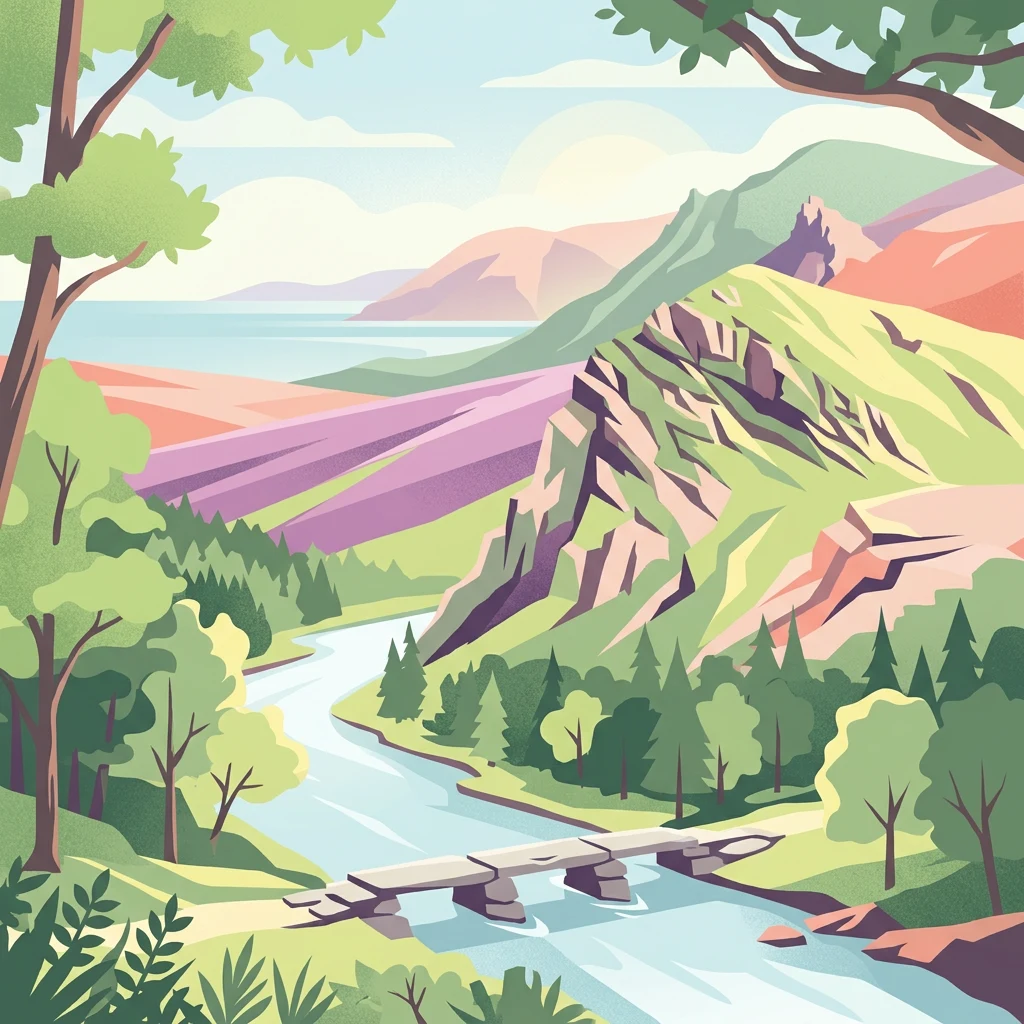
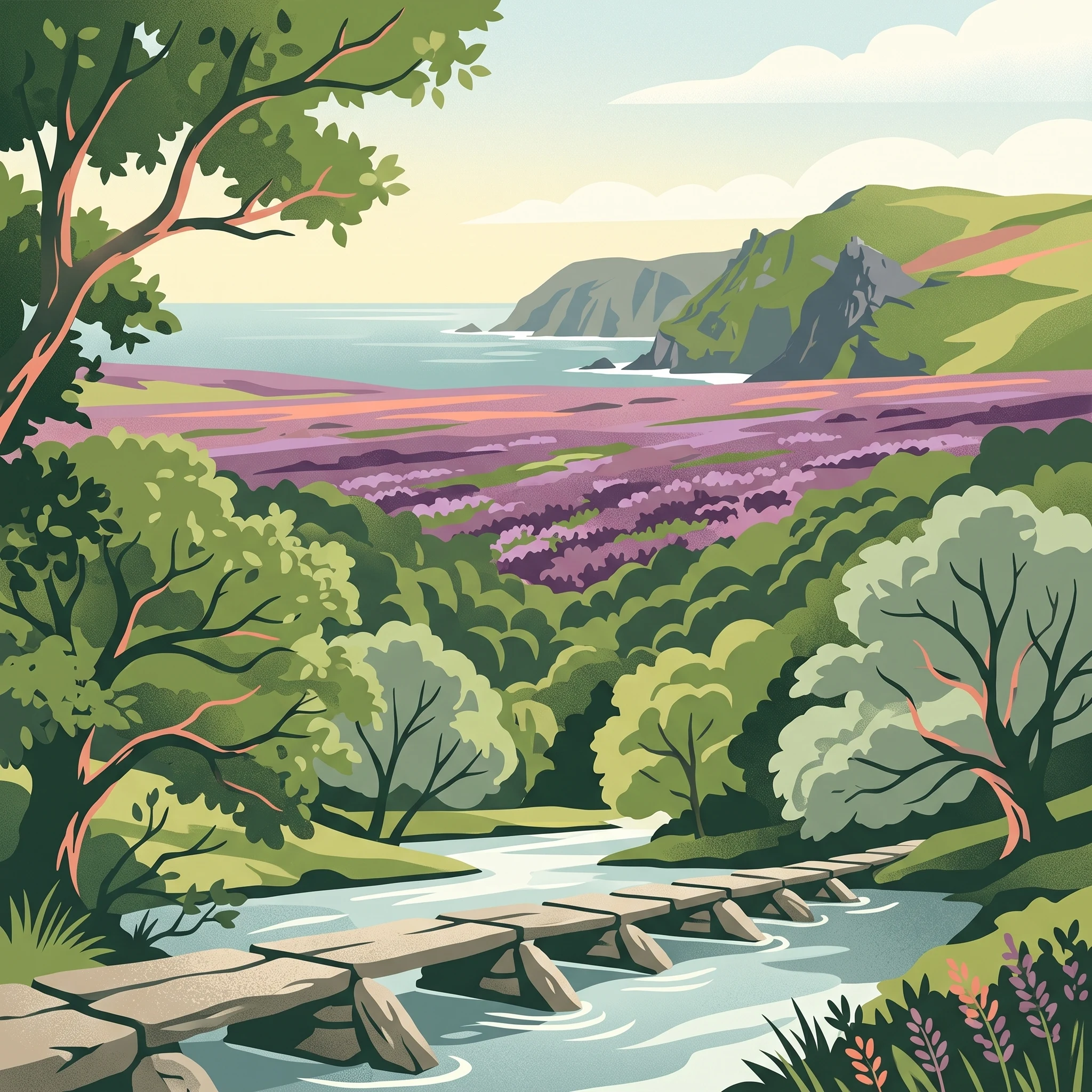
Stone bridge crossing a river in a valley surrounded by green forests and rocky hills under a clear sky

Exmoor National Park

National park

Park overview

Structured park overview, official facts, and landscape profile for Exmoor National Park

Exmoor National Park park facts, protected area profile, and essential visitor context
Review the core facts for Exmoor National Park, including designation, size, terrain, visitor scale, habitats, and operating context in one park-focused overview.

About Exmoor National Park

Exmoor represents one of Britain's finest examples of upland protected landscape, where the interplay of geology, climate, and human activity has created a landscape of extraordinary character and ecological importance. The park straddles the boundary between Somerset and Devon, encompassing a remarkable diversity of terrain from windswept moorland plateaus to deeply incised river valleys, and from ancient woodlands to dramatic sea cliffs. The area takes its name from the River Exe, which rises near Simonsbath at the heart of the moor and flows south to meet the English Channel, while numerous other rivers including the Barle, East Lyn, and Heddon flow north to the Bristol Channel. The landscape is underlain by Devonian sedimentary rocks that give rise to the characteristic gritstone and slate formations visible throughout the park, with younger Triassic and Jurassic rocks appearing on the lower ground between Porlock and Timberscombe. The park is managed by the Exmoor National Park Authority, a single-purpose authority established to conserve and enhance the natural beauty, wildlife, and cultural heritage of the area while promoting public understanding and enjoyment of its special qualities. With a resident population of approximately 10,600 living in scattered villages and hamlets, the park balances conservation with the needs of its rural communities, who continue traditional activities such as sheep farming that have shaped the landscape for centuries.

Quick facts and research context for Exmoor National Park

Exmoor is centred on the catchments of the River Exe, after which the area is named, with the river's source situated two miles north-west of Simonsbath near the heart of the moor. The highest point is Dunkery Beacon at 519 metres, also the highest point in Somerset. The underlying geology consists primarily of Devonian and early Carboniferous sedimentary rocks, with the coastline featuring some of the highest sea cliffs in mainland Britain, including Great Hangman at 318 metres. The park contains significant areas of lowland heath, ancient woodland, and blanket mire, supporting numerous rare species and serving as a designated National Character Area by Natural England.

Park context

Deeper park guide and search-rich context for Exmoor National Park

Exmoor National Park history, landscape, wildlife, and travel context
Explore Exmoor National Park through its history, landscape character, ecosystems, wildlife, conservation priorities, cultural context, and seasonal travel timing in a structured park guide built for atlas discovery and search intent.

Why Exmoor National Park stands out

Exmoor is best known for its extensive heather moorland, which covers approximately a quarter of the park and transforms into a sea of purple bloom each August. The park is famous for its population of Exmoor ponies, a landrace that may be the closest living descendant of wild horses in Europe and is now classified as endangered. The dramatic coastline features towering cliffs, hidden coves, and the highest sea cliffs on mainland Britain, while the inland areas contain ancient woodlands, river valleys, and the remains of prehistoric settlements. Exmoor gained international recognition in 2011 when it became Europe's first International Dark Sky Reserve, designated by the International Dark-Sky Association, making it one of the best places in Britain for stargazing.
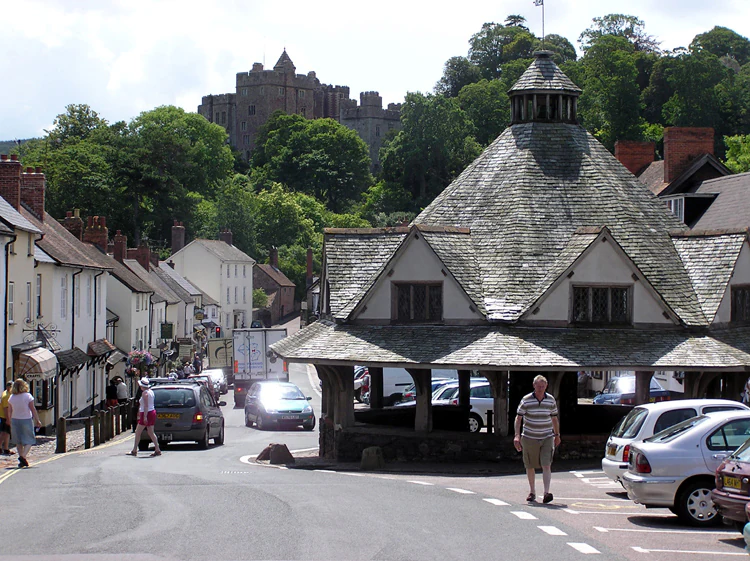
A street view showing the octagonal Yarn Market building with Dunster Castle visible on a hill in the background, surrounded by town buildings and pedestrians
Dunster Yarn Market with Dunster Castle visible in the background

Exmoor National Park history and protected-area timeline

Exmoor's history as a protected landscape stretches back to its designation as a royal forest in the medieval period, with the first recorded wardens named in the Domesday Book of 1086 as foresters of Widepolla, with Withypool serving as the ancient capital of the forest. The royal forest originally covered 18,810 acres and was officially surveyed between 1815 and 1818 before being sold off in sections in the early 19th century, with John Knight purchasing a quarter of the forest including Simonsbath House for £50,000 in 1818. Prior to the medieval period, the area shows evidence of continuous human occupation from Mesolithic times through the Neolithic, Bronze Age, and Iron Ages, with remains of standing stones, cairns, and settlements still visible across the moor. The prehistoric Tarr Steps, a clapper bridge across the River Barle dating from around 1000 BC and made from stone slabs weighing up to five tonnes, represents one of the most significant ancient monuments in the park. During the Middle Ages, sheep farming for the wool trade became dominant, with the wool being spun on isolated farms and processed in thriving towns such as Dunster, where the historic Yarn Market still stands as testimony to this commercial heritage. The 1954 designation as a National Park marked the beginning of formal protection, though the landscape had already been shaped by centuries of traditional farming practices and the unique cultural traditions of the moorland communities.

Exmoor National Park landscape and geographic character

The landscape of Exmoor presents a dramatic tapestry of contrasts, from the open heather-dominated moors of the high ground to the lush, tree-lined valleys and the rugged coastline of the Bristol Channel. The plateau-like uplands are among the oldest landforms in Britain, having escaped the glaciation that shaped much of the rest of the country, resulting in a landscape that retains features from earlier geological periods. The coastline stretches for 55 kilometres and features some of the most spectacular sea cliffs in England, with Great Hangman near Combe Martin rising to 318 metres and holding the distinction of being the highest sea cliff on mainland Britain. The coastal hills reach their maximum height at Culbone Hill at 414 metres, while between Porlock and Foreland Point, the woodlands descend to the shoreline, forming the longest stretch of coastal woodland in England and Wales. The deeply incised valleys, such as the East Lyn Valley and the Barle Valley, carve through the moors, creating intimate landscapes of cascading waterfalls, ancient woodlands, and grassy lanes that represent some of the most picturesque scenery in the park. The Valley of Rocks beyond Lynton is a particularly striking landscape feature, a dry valley running parallel to the sea and capped on its seaward side by dramatic rock formations.
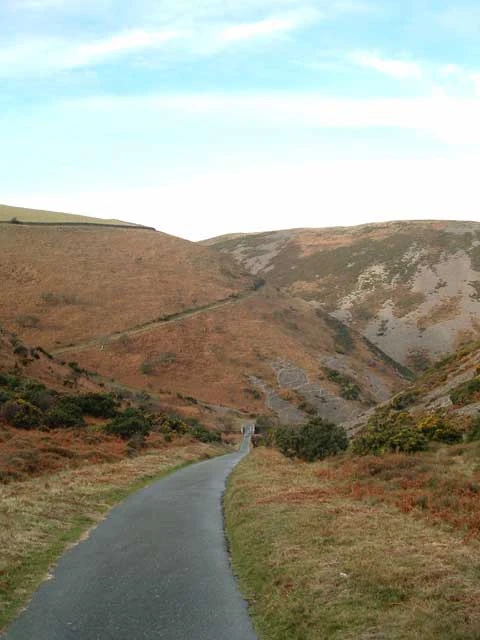
A paved road winding through a moorland valley with rolling hills and brown and green vegetation
A winding road through a moorland valley in Exmoor National Park

Exmoor National Park ecosystems, habitats, and plant life

Exmoor's ecological character is defined by a complex mosaic of habitats that support an exceptional diversity of flora and fauna, reflecting the variety of terrain, soil types, and climatic conditions within the park. The heath communities, classified as south-western lowland heath in the British National Vegetation Classification system, dominate the open moors and represent some of the finest examples of this habitat type in Britain. Where these heaths transition to ancient woodlands through the upland heath, they give way to areas of blanket mire, a peat-forming habitat that has developed over thousands of years in the wet, cool conditions of the high ground. The park contains around 3,000 hectares of Forestry Commission woodland, comprising a mixture of broad-leaved species including oak, ash, and hazel alongside coniferous plantations, with Horner Woodlands and the woodlands around Tarr Steps representing some of the finest examples of semi-natural woodland. The Exmoor Coastal Heaths have been recognised as a Site of Special Scientific Interest due to the exceptional diversity of plant species present, while the park's rivers including the Barle support submerged aquatic plants such as alternate water-milfoil and provide important habitats for migratory fish.
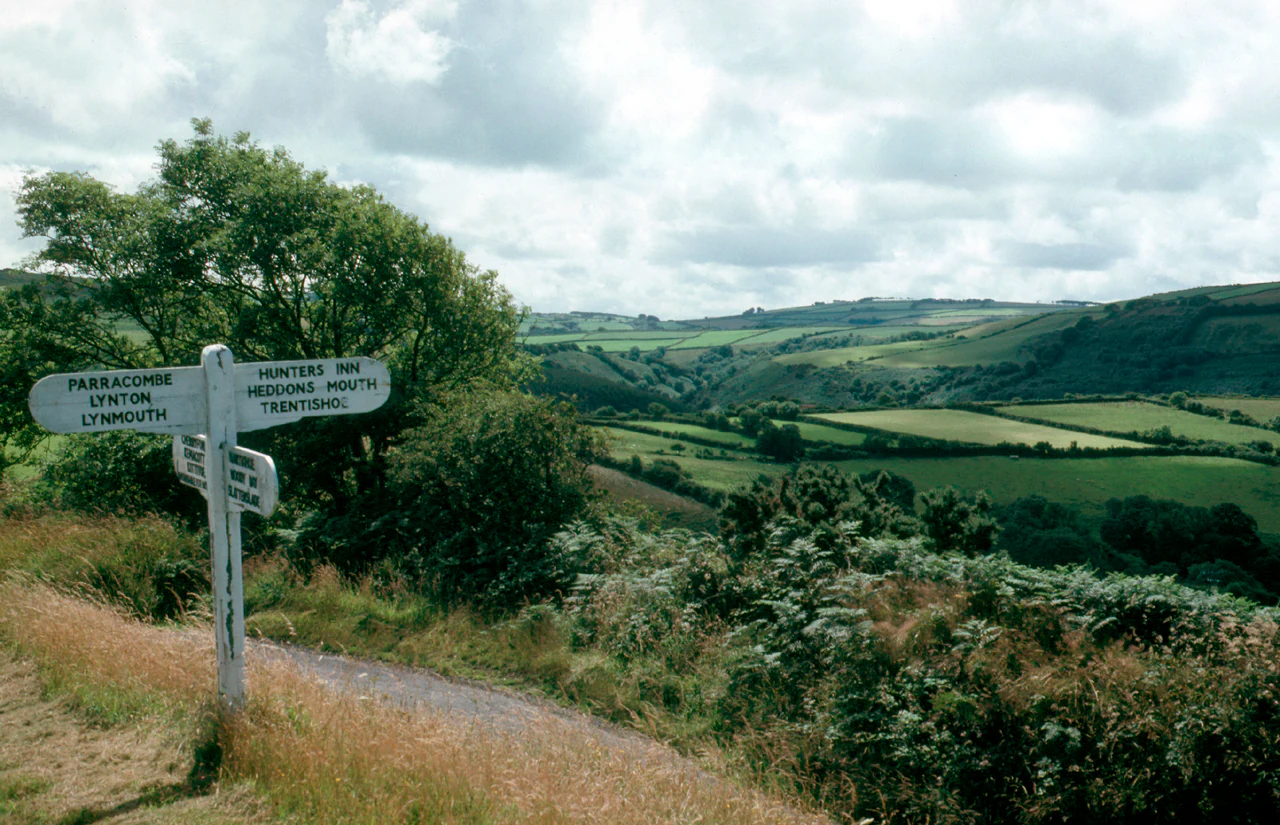
White signpost with directional signs for Princetown, Lynton, and other locations, set against a backdrop of green rolling hills and fields
Directional signpost in Exmoor National Park with views of rolling hills and countryside

Exmoor National Park wildlife and species highlights

The wildlife of Exmoor is remarkably diverse, with the park providing habitats for numerous species that are rare or declining elsewhere in Britain. The Exmoor pony represents the most iconic wildlife symbol of the park, a landrace that has roamed the moors for centuries and may be the closest living descendant of wild horses remaining in Europe. These sturdy ponies are rounded up annually to be marked and checked, with the Acland Herd, also known as the Anchor Herd, still containing direct descendants of the thirty ponies taken by Sir Thomas Acland in 1818. The moorland supports significant populations of red deer, with the Emperor of Exmoor, a red stag, once holding the title of Britain's largest known wild land animal before being killed in 2010. Birdlife is particularly rich, with species such as merlin, peregrine falcon, Eurasian curlew, Dartford warbler, and ring ouzel breeding on the moors, while the river valleys support dipper and grey wagtail. The Chains area supports an exceptional population of the heath fritillary butterfly, one of Britain's rarest butterflies, while the ancient woodlands host important populations of lichens, mosses, and ferns, including species unique to Exmoor such as the Devon whitebeam.
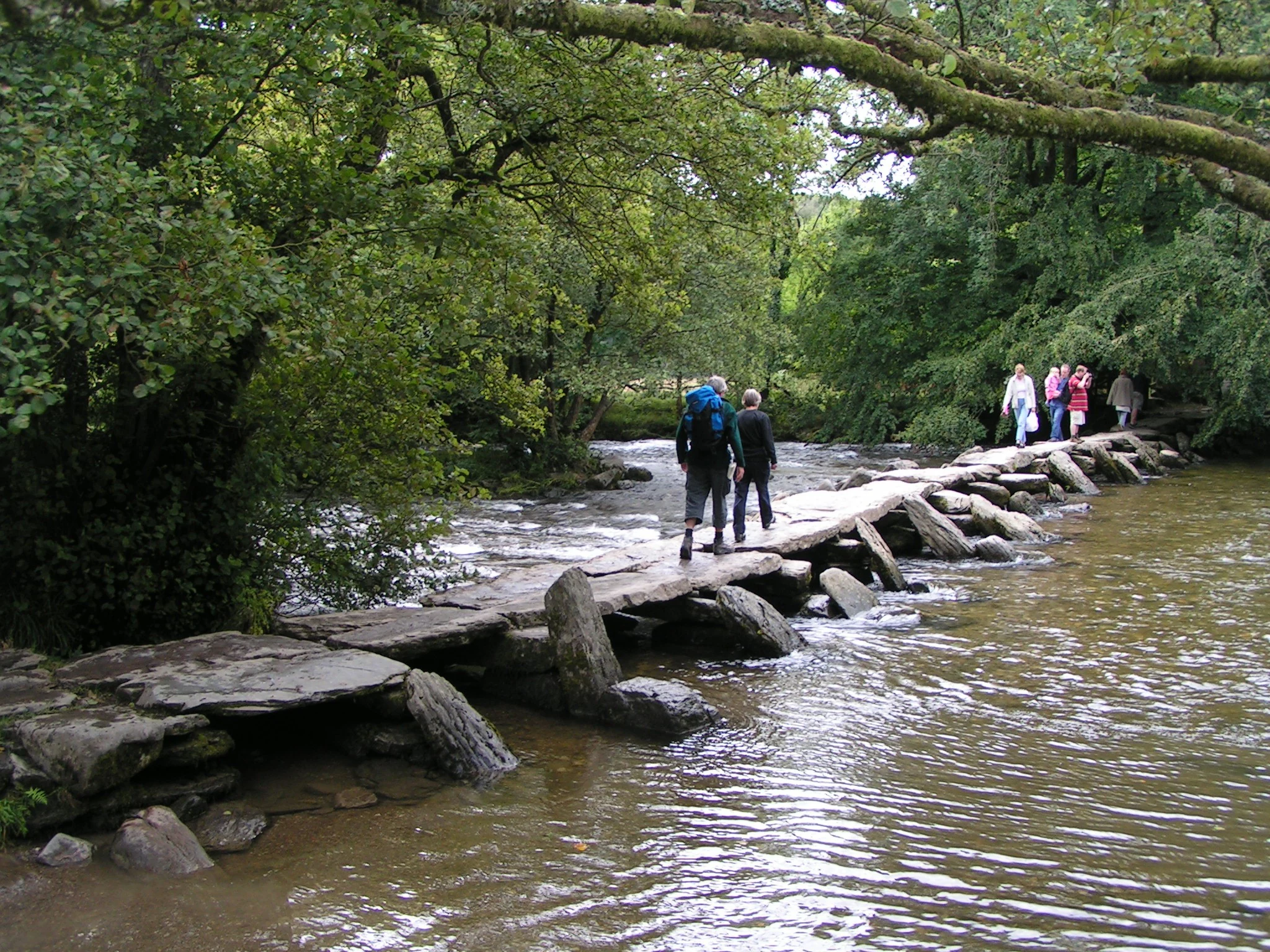
Stone clapper bridge over a river with people walking on it, surrounded by trees
People crossing Tarr Steps, a historic stone bridge in Exmoor National Park

Exmoor National Park conservation status and protection priorities

Exmoor holds significant conservation importance at both national and international levels, with multiple designations reflecting the exceptional natural and geological value of the area. Several areas within the park have been declared Sites of Special Scientific Interest, including the Exmoor Coastal Heaths, North Exmoor covering over 12,000 hectares, and South Exmoor, each recognised for their outstanding flora, fauna, or geological features. The Chains site has been designated as a Geological Conservation Review site and is nationally important for its lowland heath communities, transitions from ancient woodland through upland heath to blanket mire, and its exceptional woodland lichen flora. In 1993, an environmentally sensitive area was established within Exmoor to provide additional protection and support for the traditional farming practices that maintain the landscape character. The designation as Europe's first International Dark Sky Reserve in 2011 by the International Dark-Sky Association further recognises Exmoor's exceptional dark skies, with the low light pollution allowing views of the Milky Way and thousands of stars that are rarely visible in more densely populated parts of Britain.

Exmoor National Park cultural meaning and human context

The cultural heritage of Exmoor is deeply intertwined with the landscape, reflecting centuries of human activity that have shaped and been shaped by the terrain. The area shows evidence of continuous occupation from Mesolithic times, with the remains of prehistoric settlements, standing stones, and burial cairns scattered across the moor providing tangible connections to the ancient past. The medieval period saw the establishment of the royal forest, with wardens and foresters managing the area from at least the time of the Domesday Book, and the system of agistment that allowed outside farmers to graze their livestock on the commons shaped both the economy and the landscape. The wool trade dominated the medieval economy, with sheep farming transforming the moor into a productive agricultural landscape and towns such as Dunster becoming important centres for the trade. The park has inspired numerous works of literature, most famously R.D. Blackmore's novel Lorna Doone, which romanticised the landscape and its history, while the poet Samuel Taylor Coleridge walked the hills and valleys that now form part of the Coleridge Way footpath. The traditional farming practices, including the annual rounding up of Exmoor ponies and the continued use of traditional sheep breeds such as Exmoor Horn, maintain living connections to the cultural traditions that have defined the area for generations.
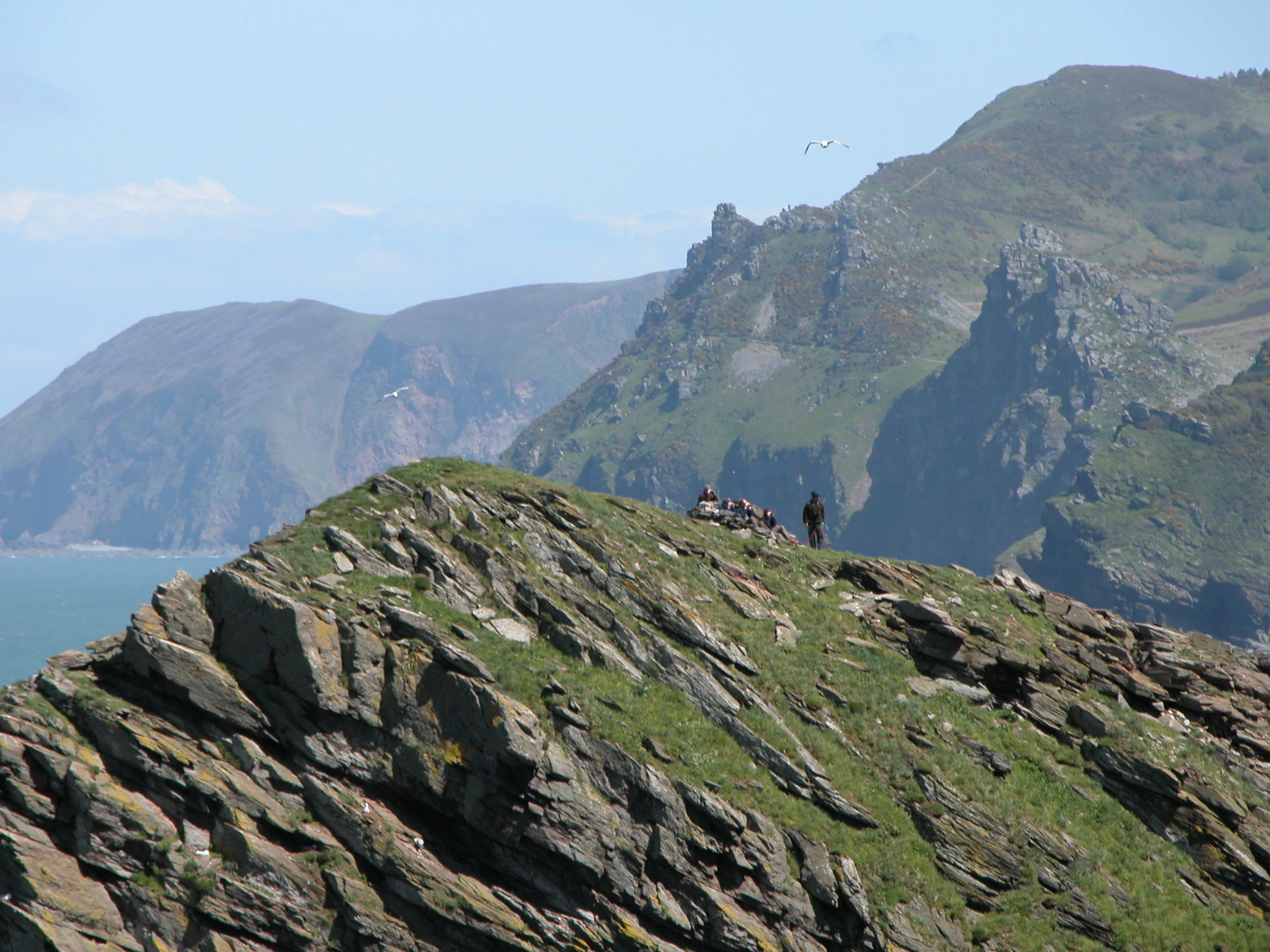
Rocky cliff with grassy patches and a small group of people standing at the summit, distant sea and hills under clear sky
Rocky cliffs overlooking the sea with a group of people on the summit and distant hills

Top sights and standout views in Exmoor National Park

Exmoor offers an exceptional range of attractions, from the sweeping heather moors that turn purple in late summer to the dramatic coastline where cliffs reach heights unmatched on mainland Britain. The walking opportunities are outstanding, with the South West Coast Path, Britain's longest National Trail, starting at Minehead and following the entire 55-kilometre coastline, while the Two Moors Way and Coleridge Way provide inland routes through the most scenic valleys and woodlands. The wildlife is remarkable, with the chance to see Exmoor ponies roaming freely, red deer on quiet hillsides, and rare birds such as Dartford warbler and peregrine falcon. The dark sky designation makes Exmoor one of the best places in Britain for astronomy, while the historic features including the prehistoric Tarr Steps, the medieval hunting forest, and the Victorian railways tell stories of human ingenuity and adaptation to this challenging landscape.
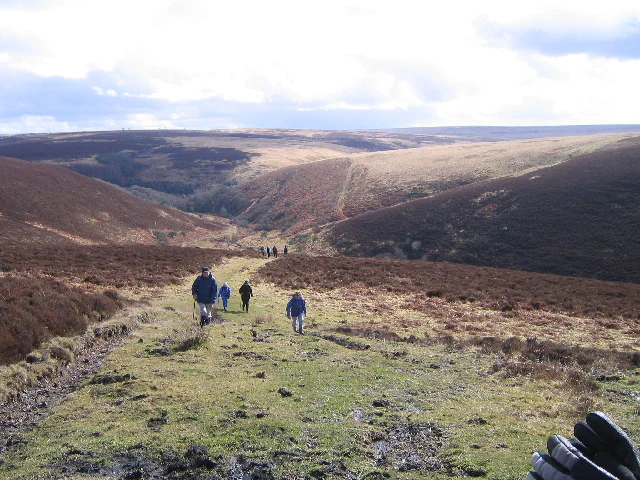
Group of hikers walking on a grassy path through rolling hills and moorland landscape
Hikers walking along a footpath through moorland in Exmoor National Park

Best time to visit Exmoor National Park

Exmoor offers distinct experiences throughout the year, with each season revealing different aspects of the park's character. Late summer, particularly August, sees the heather in full bloom across the moors, creating one of the most spectacular displays of purple in the British countryside and drawing visitors specifically to witness this annual transformation. Spring brings snowdrops to Snowdrop Valley near Wheddon Cross, carpeting the valley in white flowers from February, followed by bluebells in the woodlands and nesting birds throughout the moors. Autumn offers golden colours in the woodlands and the rutting season for red deer, while winter, though often wet and windy, can produce dramatic snow scenes on the higher ground and offers the chance to see the landscape in its most elemental mood. The dark skies are particularly spectacular in autumn and winter when the longer nights and clearer conditions combine to reveal the full richness of the night sky, though the International Dark Sky Reserve designation ensures excellent stargazing throughout the year.
Park location guide

Geography guide, regional context, and park location map for Exmoor National Park

Exmoor National Park park geography, regions, and map view in United Kingdom
Understand where Exmoor National Park sits in United Kingdom through a broader geographic reading of the surrounding landscape, nearby location context, and its mapped position within the national park landscape.

How Exmoor National Park fits into United Kingdom

The United Kingdom is a parliamentary constitutional monarchy located in northwestern Europe, consisting of four constituent countries: England, Scotland, Wales, and Northern Ireland. As a major global power with over 69 million residents, it maintains significant international influence in politics, economics, and culture.

Wider geography shaping Exmoor National Park in United Kingdom

The United Kingdom is an island nation located in northwestern Europe, surrounded by the Atlantic Ocean, North Sea, English Channel, Celtic Sea, and Irish Sea. It shares a land border with the Republic of Ireland to the west. The territory includes the island of Great Britain, the northeastern portion of Ireland, and most of the smaller British Isles islands.

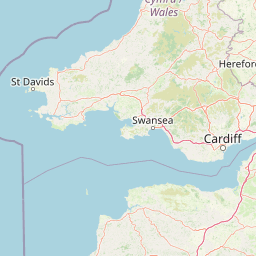
Map view of Exmoor National Park

Use this park location map to pinpoint Exmoor National Park in United Kingdom, understand its exact geographic position, and read its mapped placement within the surrounding landscape more clearly.

Pigeon | © OpenStreetMap contributors

Location context for Exmoor National Park

DevonSomersetSouth West England

Explore the distinct landscape character, diverse habitats, and protected-area views across Exmoor's unique terrain.

Exmoor National Park Photos: Visual Guide to Moorland, Coastal Scenery, and Ancient Woodlands
Visually explore Exmoor National Park through a curated collection of imagery showcasing its sweeping heather moorland, dramatic coastline, and lush river valleys. These photographs provide essential insights into the park's unique protected landscapes, diverse habitats, and distinctive geological features, offering a deeper understanding of its visual identity and environmental characteristics.

A street view showing the octagonal Yarn Market building with Dunster Castle visible on a hill in the background, surrounded by town buildings and pedestrians

Panoramic view of a moorland landscape covered in dense pink heather with rolling hills and distant fields under an overcast sky

A paved road winding through a moorland valley with rolling hills and brown and green vegetation

White signpost with directional signs for Princetown, Lynton, and other locations, set against a backdrop of green rolling hills and fields

Stone clapper bridge over a river with people walking on it, surrounded by trees

River flowing through rocky terrain with moss-covered boulders, surrounded by trees and vegetation.

Rocky cliff with grassy patches and a small group of people standing at the summit, distant sea and hills under clear sky

Group of hikers walking on a grassy path through rolling hills and moorland landscape

Four Exmoor ponies standing in a grassy field with rolling green hills in the background

Snow-covered hills and valleys in Exmoor National Park with patches of exposed vegetation

Park atlas

Compare diverse protected landscapes, mapping their unique geographic features and regional spread across South West England.

Discover Related National Parks and Protected Areas Near Exmoor National Park's Landscapes
Continue your atlas-style exploration by browsing a curated list of national parks and protected areas geographically relevant to Exmoor National Park. Uncover diverse regional landscapes, compare conservation efforts, and trace the geographic spread of protected areas within and surrounding South West England.
Watercolor illustration of Dartmoor moorland landscape with rolling hills, grassy vegetation, a stream, and distant mountains.
National parkDevon

Dartmoor National Park: Granite Tors and Prehistoric Landscape in Devon

Mapped protected area with significant Bronze Age remains.

Dartmoor National Park represents a distinctive granite upland in Devon, England, characterized by its dramatic tors and expansive moorland. This protected landscape is globally significant for its dense concentration of prehistoric archaeological sites, including stone circles, standing stones, and ancient settlements. Exploring Dartmoor offers a unique insight into Britain's regional geography, mapped terrain, and enduring connection to ancient human history.

Area
954 km²
Established
1951
IUCN
V
Visitors
11M annual
Watercolor illustration of a mountainous landscape with lakes and greenery
National parkWales

Brecon Beacons National Park: Explore Wales' Iconic Protected Mountain Landscape

Discover mapped terrain, park boundaries, and regional geography.

Brecon Beacons National Park, officially Bannau Brycheiniog, stands as a premier protected area within Wales, covering over 1,344 square kilometers of striking mountainous terrain. This national park is defined by its dramatic Old Red Sandstone ranges, including Pen y Fan, South Wales' highest peak, and features diverse landscapes from heather moorland to extensive river valleys. Its mapped boundaries encompass unique geological features, significant historical sites, and provide context for regional geographic exploration, making it a key destination for understanding protected lands in the UK.

Area
1,344 km²
Established
1957
IUCN
V
Visitors
4.4M annual
National parkPembrokeshire

Pembrokeshire Coast National Park: Mapped Coastal Boundaries and Protected Landscape Atlas

Explore unique seaside terrain and regional geography.

Delve into the Pembrokeshire Coast National Park, a premier protected landscape recognized for its extraordinary coastal formations and diverse natural terrain. This atlas entry details the park's distinct mapped boundaries, from its iconic limestone cliffs and sea stacks to its sheltered estuaries and inland Preseli Hills. Understand how this significant national park contributes to the protected area map of Pembrokeshire and offers unparalleled opportunities for geographic discovery along the Welsh coast.

Area
629 km²
Established
1952
IUCN
V
Relief
Mixed relief
Watercolor painting showing a landscape with green and purple vegetation, a body of water, and distant hills.
National parkEngland

New Forest National Park: Historic Protected Landscape and Regional Geography in England

Mapped heathland, ancient woodlands, and pastoral traditions.

Explore New Forest National Park, a nationally significant protected area in England renowned for its unique blend of ancient royal forest history, traditional pastoral practices, and biologically rich lowland habitats. This page provides an atlas-focused view of its mapped boundaries, distinctive terrain, and geographic context within England, highlighting its value as a living landscape shaped by centuries of common grazing rights and supporting rare wildlife.

Area
566 km²
Established
2005
IUCN
V
Visitors
14.8M annual
Watercolor illustration of rolling mountains and green valleys with distant peaks
National parkWales

Snowdonia National Park: Protected Landscape and Map Exploration in North Wales

Mountain terrain, glacial lakes, and regional geography.

Snowdonia National Park offers a profound exploration of mountainous protected landscapes in North Wales. This page details the park's mapped boundaries, revealing a terrain shaped by glaciation, featuring dramatic peaks like Snowdon, steep valleys, and pristine glacial lakes. Understand its geographic identity within the United Kingdom and how its protected status contributes to the regional landscape context, providing a unique focus for atlas-based discovery.

Area
2,142 km²
Established
1951
IUCN
V
Relief
Mountain
Watercolor illustration of a coastal landscape featuring green hills, white cliffs, and a body of water
National parkSouth East England

South Downs National Park: A Distinctive Chalk Landscape in South East England's Atlas

Iconic chalk downland, coastal cliffs, and mapped terrain.

South Downs National Park is a premier protected landscape in South East England, celebrated for its unique chalk downland terrain and dramatic coastal formations. This page provides detailed geographic context for the park, highlighting its rolling hills, dry valleys, and ancient woodlands. Discover the park's mapped boundaries and its significance within England's protected areas, offering a structured atlas view for landscape exploration.

Area
1,627 km²
Established
2010
IUCN
V
Visitors
18M annual
National parkUnited Kingdom

Peak District National Park: Explore Protected Landscape and Regional Geography

Mapped boundaries and natural terrain context for this UK national park.

Investigate the Peak District National Park, a cornerstone of the United Kingdom's protected natural areas. This MoriAtlas entry provides essential details on its geographic scope, mapped boundaries, and landscape characteristics. Engage with structured data to understand how this national park fits into the atlas of the United Kingdom, supporting detailed geographic and protected-area discovery for researchers and explorers.

Area
1,440 km²
Established
1951
IUCN
V
Visitors
13M annual
Watercolor illustration of a landscape with mountains, a lake, and trees
National parkCounty Wicklow

Wicklow Mountains National Park: Protected Landscape and Geographic Atlas Mapping

Explore County Wicklow's mapped natural terrain and park boundaries.

Understand the geographic scope and protected landscape identity of Wicklow Mountains National Park. This page offers detailed information on its mapped boundaries and its context within County Wicklow, providing a foundation for atlas-based discovery of Ireland's natural areas. Explore how this national park contributes to the region's mapped geography and conservation landscapes.

Area
205 km²
Established
1991
IUCN
II
Relief
Mountain

Common questions about visiting, size, designation, and location context for Exmoor National Park

Exmoor National Park FAQs for park facts, access, geography, and protected area context
Find quick answers about Exmoor National Park, including protected-area facts, park geography, trail and visitor context, and how the park fits into its surrounding country and regional landscape.
MoriAtlas Explorer

Continue Your Protected Areas Search Across the Global Atlas

Deepen your exploration by continuing the structured search for national parks and protected areas worldwide. Utilize the comprehensive filtering capabilities to compare different conservation landscapes and refine your understanding of global park geography. Discover more about the distribution and characteristics of protected natural areas.

Global natural geography