Why Pembrokeshire Coast National Park stands out
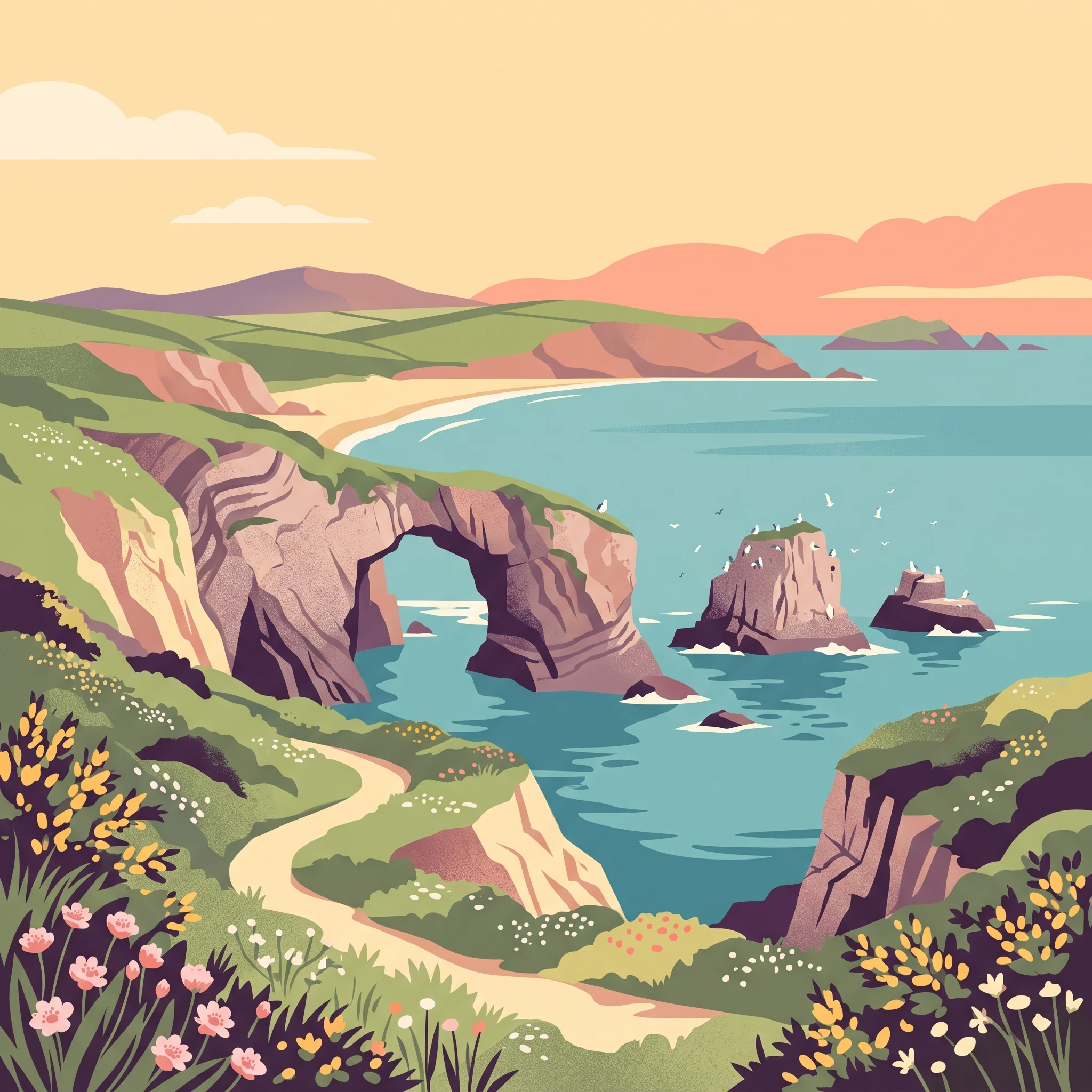
Pembrokeshire Coast National Park is best known for its spectacular and varied coastal scenery, which has earned it recognition as one of the world's premier coastal destinations. The park's defining features include the dramatic limestone cliffs and natural arches such as the Green Bridge of Wales, the iconic sea stacks known as Elegug Stacks that serve as crucial seabird nesting colonies, and the pristine sandy beaches that have garnered numerous Blue Flag and Green Coast Awards. The Pembrokeshire Coast Path, one of Britain's most celebrated long-distance walking trails, follows the entire park coastline at cliff-top level, offering walkers unparalleled views of rugged headlands, hidden coves, and offshore islands. The park is also renowned for its offshore islands including Skomer and Ramsey Island, which support important seabird colonies and marine wildlife, and for the Preseli Hills, the inland moorland that provides a contrasting wild landscape to the coastal scenery.
Pembrokeshire Coast National Park history and protected-area timeline
Pembrokeshire Coast National Park was established in 1952 as part of the post-war movement to protect Britain's most outstanding landscapes. It became the second Welsh national park, following Snowdonia which was designated in 1951, and the fifth national park in the United Kingdom overall. The creation of national parks in Britain reflected a growing recognition that certain landscapes possessed national importance that transcended local boundaries and required systematic preservation for future generations. The park's designation came at a time when post-war planning was reshaping how communities related to their natural surroundings, and the creation of a coastal-focused national park was somewhat innovative, as most British national parks featured mountainous or upland terrain. The Pembrokeshire Coast National Park Authority was established to manage the park, with purposes centered on conserving and enhancing the natural environment while encouraging public enjoyment and understanding of the landscape. In recent decades, the authority has worked to document environmental changes, launching projects such as the "Changing Coasts" initiative in 2016 to record how winter storms are reshaping the coastline. The park also manages the Pembrokeshire Coast Path, which was designated as a National Trail in 1970 and now forms part of the longer Wales Coast Path that circuits the entire Welsh coastline.
Pembrokeshire Coast National Park landscape and geographic character
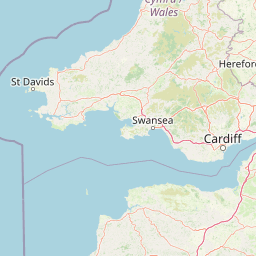
The landscape of Pembrokeshire Coast National Park is defined by the dynamic relationship between land and sea along a deeply indented coastline. The park encompasses four principal geographic sections, each with distinct character. The southern coast features the limestone plateau and dramatic cliffs of the Castlemartin peninsula, where the famous Green Bridge of Wales arches above the waves, while the area around Tenby and Saundersfoot presents a contrast of steep-sided wooded valleys descending to sandy coves. The Daugleddau estuary, leading to the great natural harbor of Milford Haven, provides sheltered waters flanked by tidal woodlands, while the St Bride's Bay coast sweeps westward from the fishing village of St David's, dotted with offshore islands including Ramsey Island and Skomer. The Preseli Hills in the park's interior rise as wild moorland, cut through by the wooded valleys of the River Gwaun and Afon Nyfer, offering an exposed, mountainous feel quite different from the coastal landscapes. Throughout the park, the geology is spectacularly exposed, with examples of natural arches, sea stacks, rock folding, and sea caves visible along the shoreline. The Elegug Stacks near Stackpole are particularly notable, two massive limestone pillars that rise from the sea and provide nesting sites for razorbills and guillemots in spring.
Pembrokeshire Coast National Park ecosystems, habitats, and plant life
The ecological diversity of Pembrokeshire Coast National Park reflects its varied coastal and inland habitats, supporting a richness of species that has earned the area significant conservation recognition. The park contains seven Special Areas of Conservation, a Marine Nature Reserve, six national nature reserves, and 75 Sites of Special Scientific Interest, reflecting the national and international importance of its wildlife habitats. The coastal habitats range from exposed cliff tops and limestone grasslands to sheltered sandy beaches and tidal mudflats, each supporting distinct communities of plants and animals. The offshore islands of Skomer and Ramsey are particularly important for seabirds, hosting breeding colonies of puffins, guillemots, razorbills, and manx shearwaters that nest on the cliff faces during the summer months. The marine environment around the park supports diverse communities of seabed organisms, marine mammals, and fish species that benefit from the clean Atlantic waters. The inland Preseli Hills provide contrasting moorland habitats with their dwarf shrub heath, bog vegetation, and the distinctive rock outcrops that support specialized plant communities adapted to exposed conditions.
Pembrokeshire Coast National Park wildlife and species highlights
Pembrokeshire Coast National Park supports exceptional wildlife populations, particularly concentrated in its coastal and marine environments. The park's offshore islands rank among Britain's most important seabird colonies, with Skomer and Ramsey Islands hosting thousands of breeding seabirds including puffins, which nest in burrows on the grassy cliff tops during summer, along with razorbills and guillemots that nest on the narrow ledges of sea cliffs. The Elegug Stacks provide additional nesting habitat for these species in spring. The marine environment supports populations of grey seals and common seals that haul out on rocky shores and islands, while dolphins and porpoises are regularly sighted in the offshore waters. The park's varied habitats also support diverse breeding bird populations, with species such as choughs and peregrine falcons breeding on coastal cliffs, while the inland heathlands and woodlands support populations of songbirds and raptors. The grasslands and meadows of the park provide habitat for numerous invertebrate species, including rare butterflies and moths that depend on specific plant communities.
Pembrokeshire Coast National Park conservation status and protection priorities
Pembrokeshire Coast National Park holds significant conservation importance at both national and international levels, with designations that reflect the exceptional ecological value of its landscapes and habitats. The park's network of protected areas includes seven Special Areas of Conservation designated under the European Union's Habitats Directive, protecting habitats such as heathlands, grasslands, and marine environments that are considered to be of European importance. The establishment of a Marine Nature Reserve within the park's boundaries recognizes the significance of the surrounding seas and their wildlife, providing protected status to the underwater environments that support diverse communities of marine organisms. The presence of six national nature reserves and 75 Sites of Special Scientific Interest further demonstrates the concentration of important conservation land within the park. In 2011, National Geographic Traveler magazine recognized Pembrokeshire as the world's second best coastal destination for sustainable tourism, acknowledging both the quality of the natural environment and the park's approach to managing visitor impact. The Pembrokeshire Coast National Park Authority continues to balance conservation of the natural environment with sustainable tourism and the wellbeing of local communities.
Pembrokeshire Coast National Park cultural meaning and human context
Pembrokeshire Coast National Park contains a rich tapestry of human history woven into its landscape, with archaeological sites and historical features that reveal thousands of years of settlement and activity. The park includes numerous sites of historic and archaeological importance, among them Pentre Ifan, a Neolithic burial chamber that stands as a silent testament to the prehistoric communities that inhabited this coastline. St. Govan's Chapel, a tiny medieval chapel perched on a cliff near Bosherston, represents the religious traditions that shaped the lives of coastal communities, its location reflecting the spiritual relationship between people and this dramatic landscape. The coastline has long been associated with maritime activity, from the fishing communities that still operate from small harbors around the coast to the historic significance of Milford Haven as one of Britain's great natural harbors. The park's landscape has been shaped by centuries of human activity, with traditional farming practices maintaining the grasslands and woodlands that form part of the park's character, and coastal villages such as Tenby and St David's retaining historic cores that reflect their long history.
Top sights and standout views in Pembrokeshire Coast National Park
Pembrokeshire Coast National Park offers an extraordinary concentration of natural highlights within a relatively compact area. The iconic Green Bridge of Wales, a natural limestone arch standing dramatically on the south coast, represents one of the park's most photographed features. The Elegug Stacks near Stackpole provide a striking visual landmark and important wildlife habitat. The park's beaches are among Britain's finest, with Barafundle Bay regularly cited as one of the country's most beautiful, while the numerous Blue Flag awards recognize water quality and environmental management. Offshore, Ramsey and Skomer Islands offer access to some of Britain's best wildlife experiences, with boat trips allowing visitors to observe seabird colonies and marine wildlife. The Pembrokeshire Coast Path provides the means to explore the entire coastline on foot, with 186 miles of spectacular walking along cliff-top trails. The Preseli Hills offer a contrasting inland experience of wild moorland with ancient archaeological sites. The contrast between the sheltered tidal waters of Milford Haven and the wild Atlantic coast creates a remarkable diversity of maritime landscapes within a single protected area.
Best time to visit Pembrokeshire Coast National Park
Pembrokeshire Coast National Park offers rewarding experiences throughout the year, though the summer months of June through August bring the warmest conditions and longest days for walking and beach activities. The spring months of April and May are particularly special for wildlife enthusiasts, as seabirds return to nesting colonies on cliffs and islands, with puffins, razorbills, and guillemots establishing their breeding territories. Autumn can bring dramatic weather patterns and the chance to witness migratory birds moving along the coast, while winter, though quieter, offers a different character with storm waves crashing against the cliffs and fewer visitors on the trails. The park's coastal location means that weather can be changeable throughout the year, and the experienced visitor comes prepared for rapid conditions changes regardless of season. The Pembrokeshire Coast Path can be walked at any time of year, though the spring and autumn seasons often provide comfortable walking conditions with fewer crowds than summer.