
Why New Forest National Park stands out
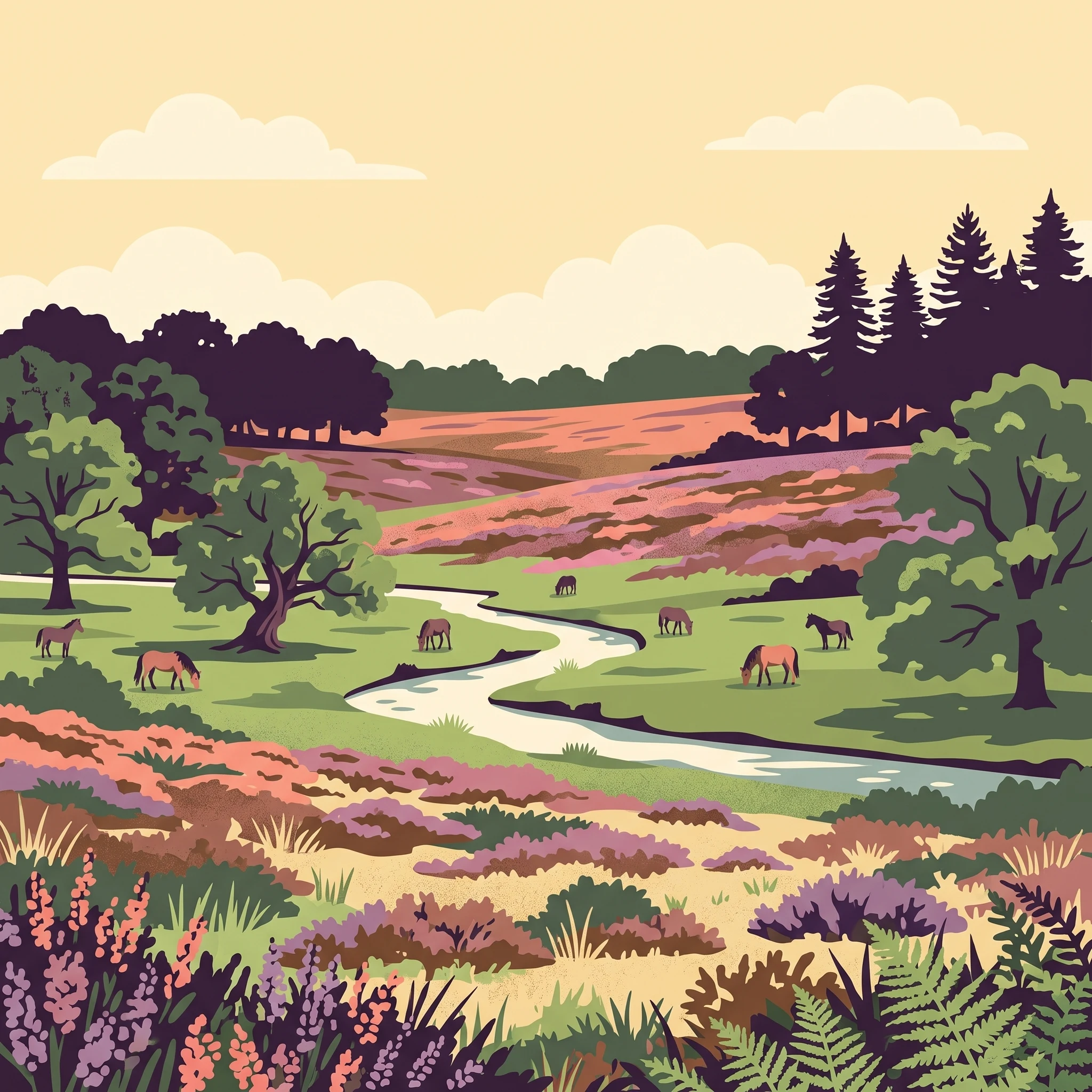
The New Forest is best known for its unique combination of royal heritage dating back nearly a millennium and its living agricultural traditions that continue through the ancient system of common rights. The area is famous for its iconic New Forest ponies, which are one of the indigenous horse breeds of the British Isles and roam freely across the heaths and woodlands. The forest is also renowned for its extensive lowland heathland, which represents one of the rarest habitats in Europe, and for the remarkable variety of wildlife it supports, including all three native British snake species, rare heathland birds such as the Dartford warbler, and the southern damselfly. The landscape is distinguished by its openness, created and maintained by centuries of grazing by commoners' ponies, cattle, and pigs.
New Forest National Park history and protected-area timeline
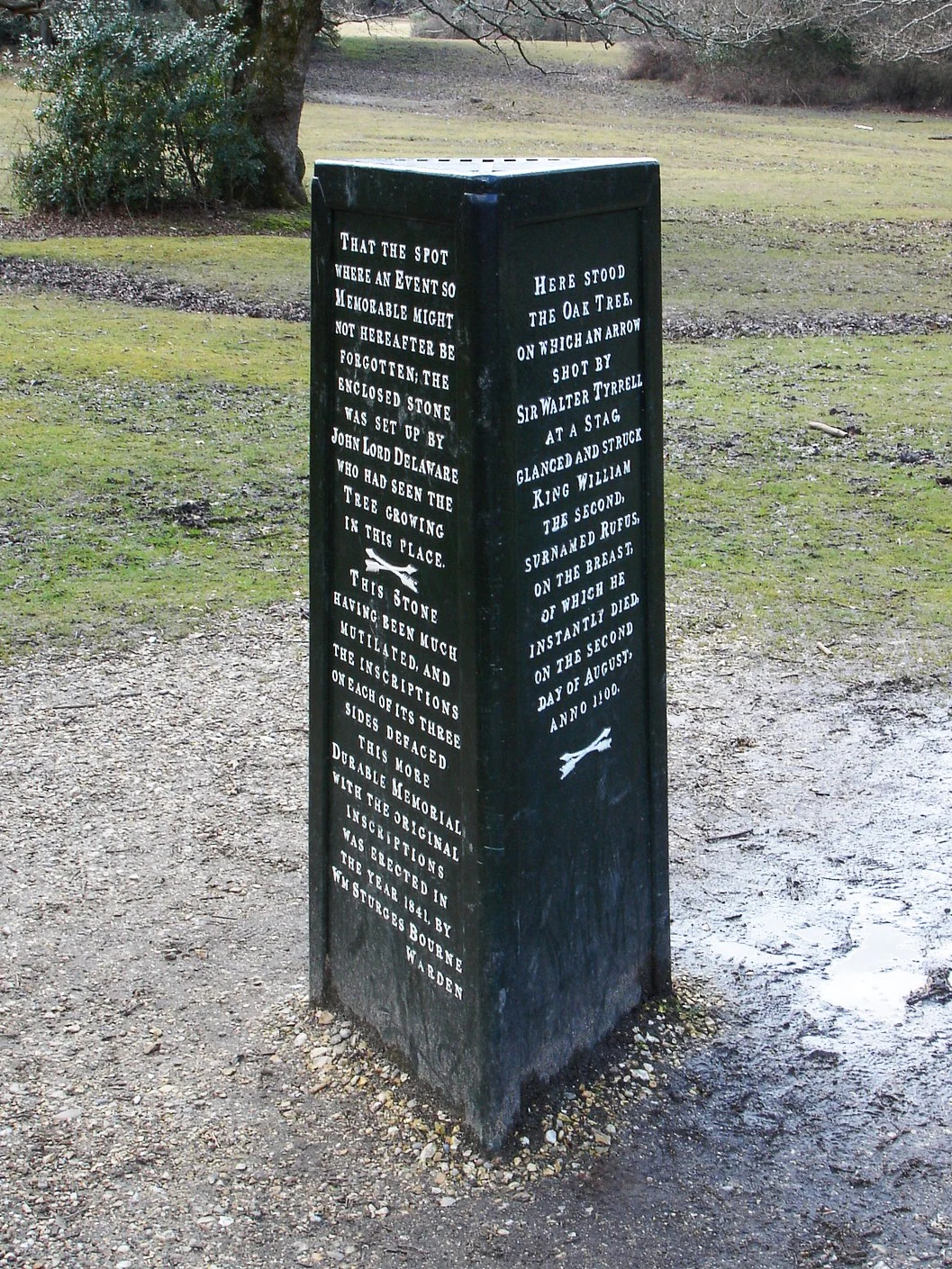
The New Forest's history as a royal forest begins with William the Conqueror, who declared it a royal hunting ground around 1079, creating it at the expense of more than 20 small hamlets and isolated farmsteads. The forest was first recorded as Nova Foresta in the Domesday Book of 1086, the only forest described in detail in that document. Medieval chroniclers alleged that William had evicted the inhabitants of 36 parishes to create the forest, though modern historians question this account given the poor quality of the soil in much of the area. Two of William's sons died in the forest: Prince Richard between 1069 and 1075, and King William II (William Rufus) in 1100, struck down while hunting. The reputed spot of Rufus's death is marked by the Rufus Stone. Common rights were confirmed by the New Forest Act 1697, and the forest became a source of timber for the Royal Navy in the 18th century. The New Forest Act 1877 confirmed the historic rights of the Commoners and limited enclosures to no more than 65 square kilometres. The forest gained SSSI status in 1971 and Heritage Area status in 1985, before becoming a National Park in 2005.
New Forest National Park landscape and geographic character
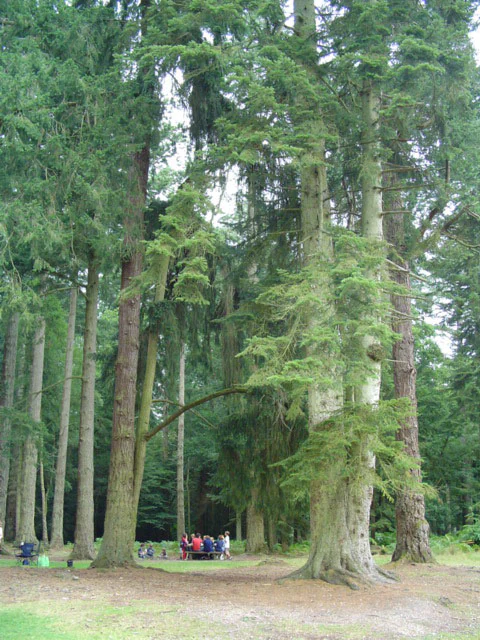
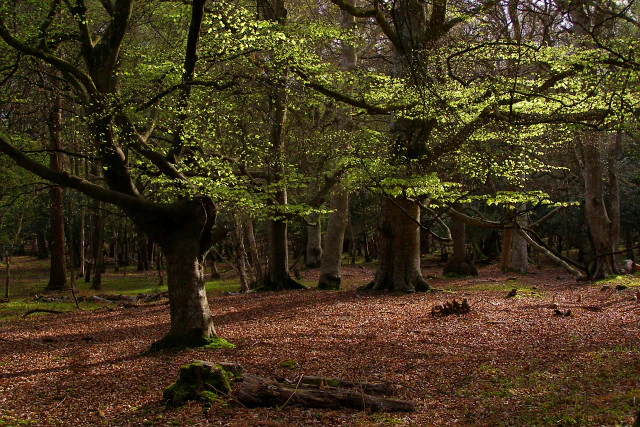
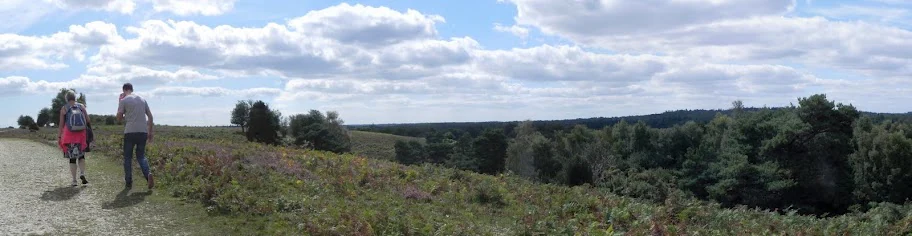
The New Forest landscape is characterized by a distinctive combination of heathland, woodland, and open pasture that is unique in lowland Britain. The heathland ranges from dry heaths dominated by heather and gorse to wet heaths with valley bogs supporting specialized plant communities. Ancient beech woodlands such as Mark Ash Wood and Mallard Wood represent some of the oldest wood-pasture in the country, while the enclosure plantations established since the 18th century add further ecological and visual variety. The highest point, Pipers Wait, rises to 129 metres near Nomansland, though the overall terrain is gently undulating. The geology consists mainly of sedimentary rock within the Hampshire Basin, creating the acid soils that have historically limited agriculture and encouraged the development of heathland. Three rivers—the Lymington, Beaulieu, and Avon Water—drain the forest to the south, while numerous streams flow west toward the Avon valley.
New Forest National Park ecosystems, habitats, and plant life
The ecological importance of the New Forest derives from the extensive areas of lowland habitats that have survived here when they have been lost almost everywhere else in Britain. The forest contains several categories of internationally significant habitat, including valley bogs, alder carr, wet heaths, dry heaths, and deciduous woodland. These habitats support a remarkable concentration of rare species, including the New Forest cicada, the only cicada native to Great Britain, and plant species such as marsh gentian and marsh clubmoss. The wet heaths are particularly important for rare insects including the southern damselfly, large marsh grasshopper, and mole cricket. The forest also supports important populations of fungi, and the combination of habitats creates one of the most biodiverse landscapes in lowland Europe.
New Forest National Park wildlife and species highlights
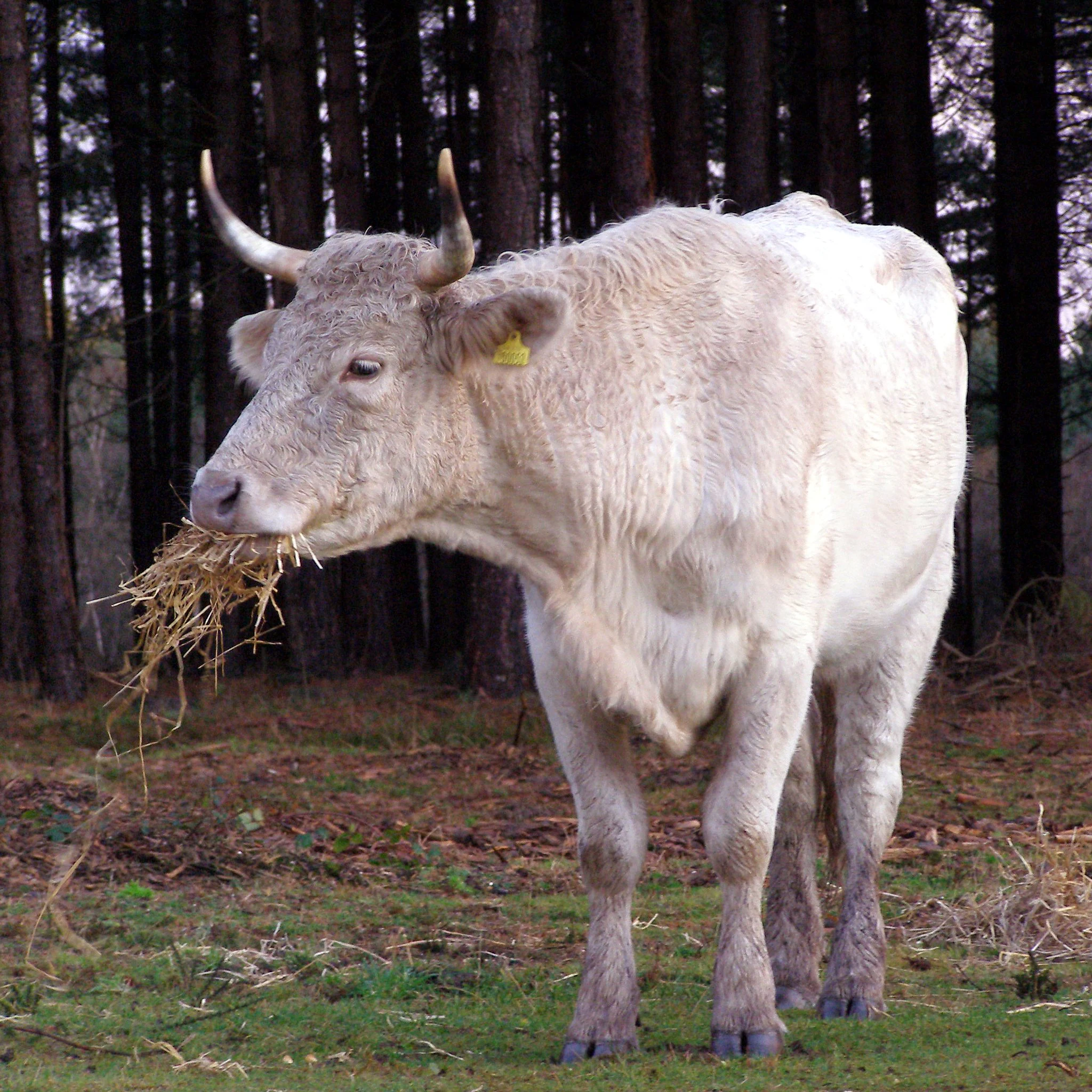
The New Forest supports an exceptional variety of wildlife, with particular importance attached to specialist heathland birds that have declined dramatically across much of Britain. The Dartford warbler, woodlark, northern lapwing, Eurasian curlew, European nightjar, and Eurasian hobby all breed in significant numbers. The forest is one of the few remaining strongholds for the smooth snake, and all three native British snake species—the adder, barred grass snake, and smooth snake—are present. Deer are numerous, with fallow deer being most common, followed by roe deer and red deer, plus smaller populations of introduced sika deer and muntjac. The famous New Forest ponies are a familiar sight, along with commoners' cattle and the pigs released during the traditional pannage season. The New Forest Reptile Centre, established in 1969, plays an important role in conservation, particularly for sand lizards and great crested newts.
New Forest National Park conservation status and protection priorities
The New Forest's conservation significance is recognized through multiple layers of national and international protection. It is designated as a Site of Special Scientific Interest covering almost 300 square kilometres, making it the largest contiguous area of unsown vegetation in lowland Britain. As a Special Area of Conservation, Special Protection Area, and Ramsar wetland site, it receives EU-level protection for its habitats and species. The forest has its own Biodiversity Action Plan, and conservation measures include programs to reintroduce native species such as the sand lizard, which began in 1989, and ongoing efforts to restore conifer plantations to heathland and broadleaved woodland. The management of the forest balances multiple objectives, including the continuation of traditional commoning practices that are essential for maintaining the open heathland habitats.
New Forest National Park cultural meaning and human context
The New Forest's cultural identity is inseparable from the ancient system of common rights that has shaped the landscape for centuries. The New Forest Commoners exercise rights of common pasture that include turning out ponies, cattle, and pigs to graze, gathering fuel wood, cutting peat for fuel, and releasing pigs during the autumn pannage season to eat fallen acorns and beechnuts. These rights are enforced by official verderers and agisters, and the Court of Verderers represents the commoners rather than the Crown. This living tradition has created and maintained the open character of the forest, making it a rare example of a working historic landscape. The forest also contains around 250 round barrows and about 150 scheduled monuments, indicating its importance as a prehistoric landscape.
Top sights and standout views in New Forest National Park
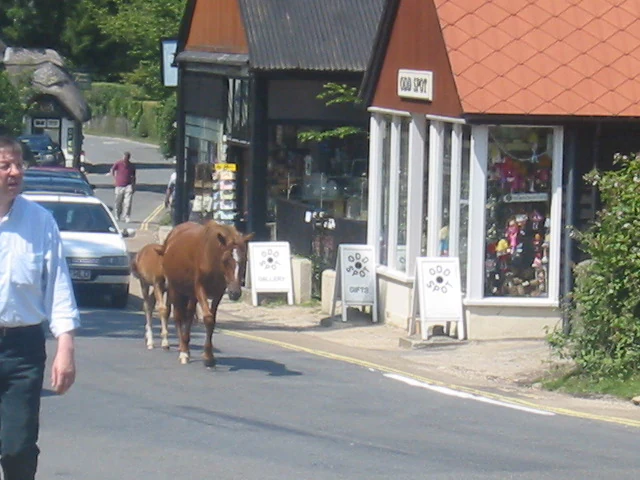
The New Forest offers a distinctive combination of historical depth, ecological significance, and living traditions that sets it apart from other British landscapes. The ancient beech woodlands in Mallard Wood and Mark Ash Wood provide hauntingly beautiful environments, while the open heaths support populations of rare birds and reptiles. The opportunity to see New Forest ponies wandering freely through villages and across the heaths is a unique feature of any visit. The Rufus Stone marks the legendary site of King William II's death, connecting the landscape to nearly a thousand years of royal history. The Reptile Centre near Lyndhurst provides excellent opportunities to learn about the forest's remarkable reptile populations, and the network of footpaths and cycle routes offers waymarked exploration of the diverse habitats.
Best time to visit New Forest National Park
The New Forest can be enjoyed throughout the year, with each season offering different qualities. Spring brings the emergence of reptile activity and the birth of pony foals, while summer sees the heather in full bloom across the heaths and the emergence of dragonflies and damselflies around the bogs. Autumn is the traditional pannage season when pigs are released to forage for acorns, and the woodland floors become carpeted with fallen leaves. Winter offers the best opportunities for deer viewing, as the animals become more visible in the reduced vegetation, and the stark beauty of the bare woodland creates a different atmosphere. The forest is busiest during summer weekends and the annual New Forest Show, but its extensive size means that quieter areas can always be found.