
Mori Atlas logo
Park guides

Explore detailed thematic resources for navigating the park sandstone pagoda terrain

Comprehensive Guide Collection for Gardens of Stone National Park in New South Wales

This collection provides focused resources for Gardens of Stone National Park, covering essential factors for planning visits to this New South Wales protected area. Users can access specific guidance on timing travel around the unique sandstone pagoda formations and geological features of the Central Tablelands.

Related tags

Sandstone formationsWorld Heritage AreaEucalyptus woodlandGreater Blue MountainsGeological significance

Sandstone pagodas and ancient ecosystems in the Greater Blue Mountains

Gardens of Stone National Park

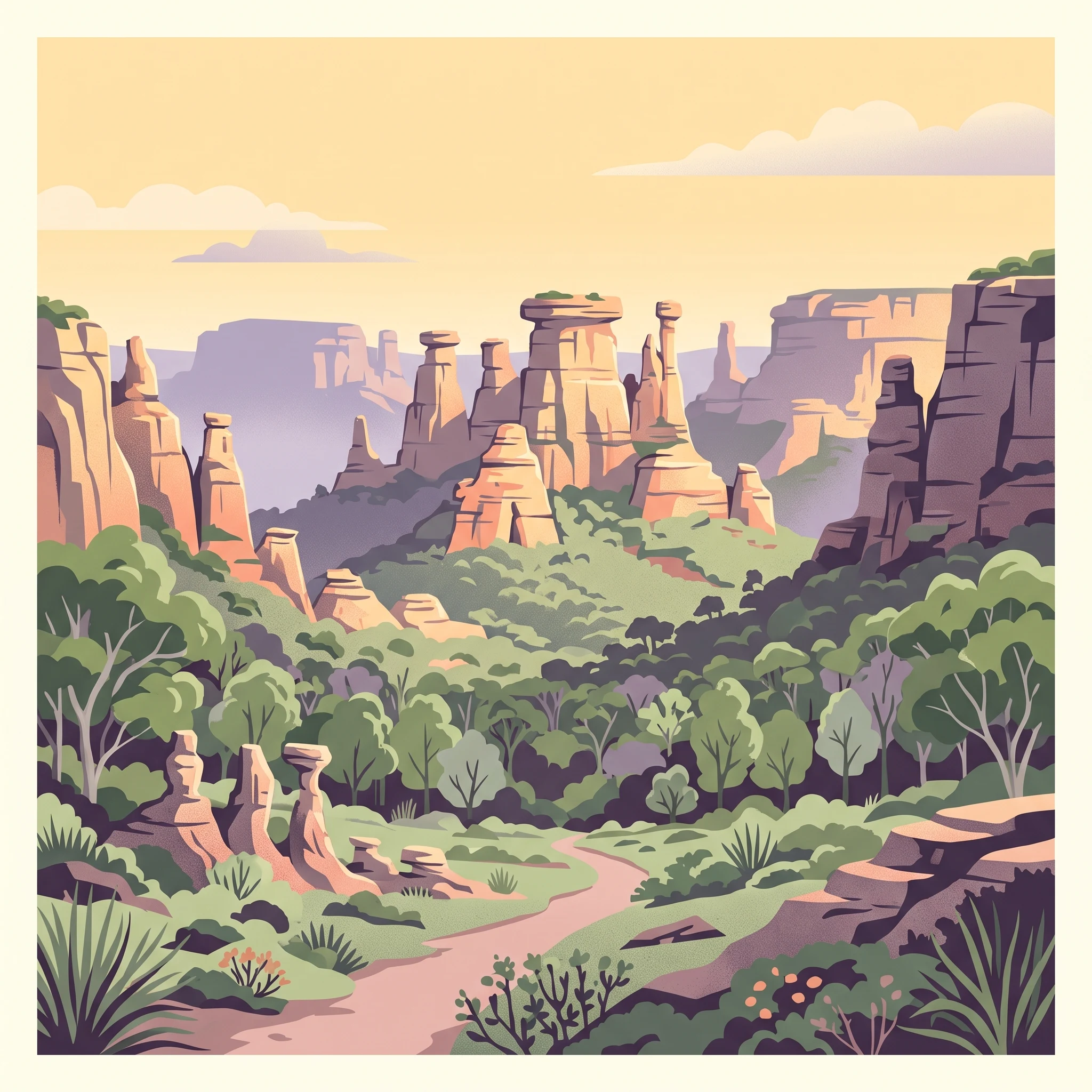
Gardens of Stone National Park protects a unique landscape of outstanding geological and ecological significance within the Greater Blue Mountains region. The park's defining features are the sandstone pagoda formations, which are remnants of ancient sandstone layers that have been sculpted by erosional forces over millions of years. These remarkable structures rise dramatically from the surrounding terrain, creating a landscape that resembles a mountain range of stone temples. Beyond the pagodas, the park encompasses diverse habitats including open eucalyptus forests and woodlands, heathlands, rocky cliff faces, and elevated swamp systems. The combination of geological diversity, protected wilderness, and its inclusion in the World Heritage-listed Greater Blue Mountains Area establishes Gardens of Stone as a significant conservation reserve in the Australian protected area network.

Location
Australia
Park type
National park
Established
1994
Area
150.8 km²
Gardens of Stone National Park Protected Area
MoriAtlas Explorer

Continue Exploring Gardens of Stone National Park's Geographic Identity and Mapped Landscape

Deepen your understanding of Gardens of Stone National Park by investigating its specific geographic features and protected area context. This is the starting point for detailed atlas exploration, allowing you to trace its mapped boundaries and comprehend its placement within the broader natural landscapes of New South Wales and Australia.