Mori Atlas logo
National parkGardens of Stone National Park

Mapping the protected boundaries and regional geography of this unique Australian national park.

Gardens of Stone National Park: National Park Protected Landscape & Geographic Context

Gardens of Stone National Park represents a significant protected area within New South Wales, Australia, offering valuable insights for geographic discovery. This canonical page serves as your atlas entry point, detailing the park's mapped boundaries and its place within the broader regional landscape. Explore the fundamental geographic identity of this national park, understanding its terrain and protected status as a key element in the continent's mapped natural areas.

Sandstone formationsWorld Heritage AreaEucalyptus woodlandGreater Blue MountainsGeological significancePagoda landscape

Gardens of Stone National Park

National park

Park overview

Structured park overview, official facts, and landscape profile for Gardens of Stone National Park

Gardens of Stone National Park park facts, protected area profile, and essential visitor context
Review the core facts for Gardens of Stone National Park, including designation, size, terrain, visitor scale, habitats, and operating context in one park-focused overview.

About Gardens of Stone National Park

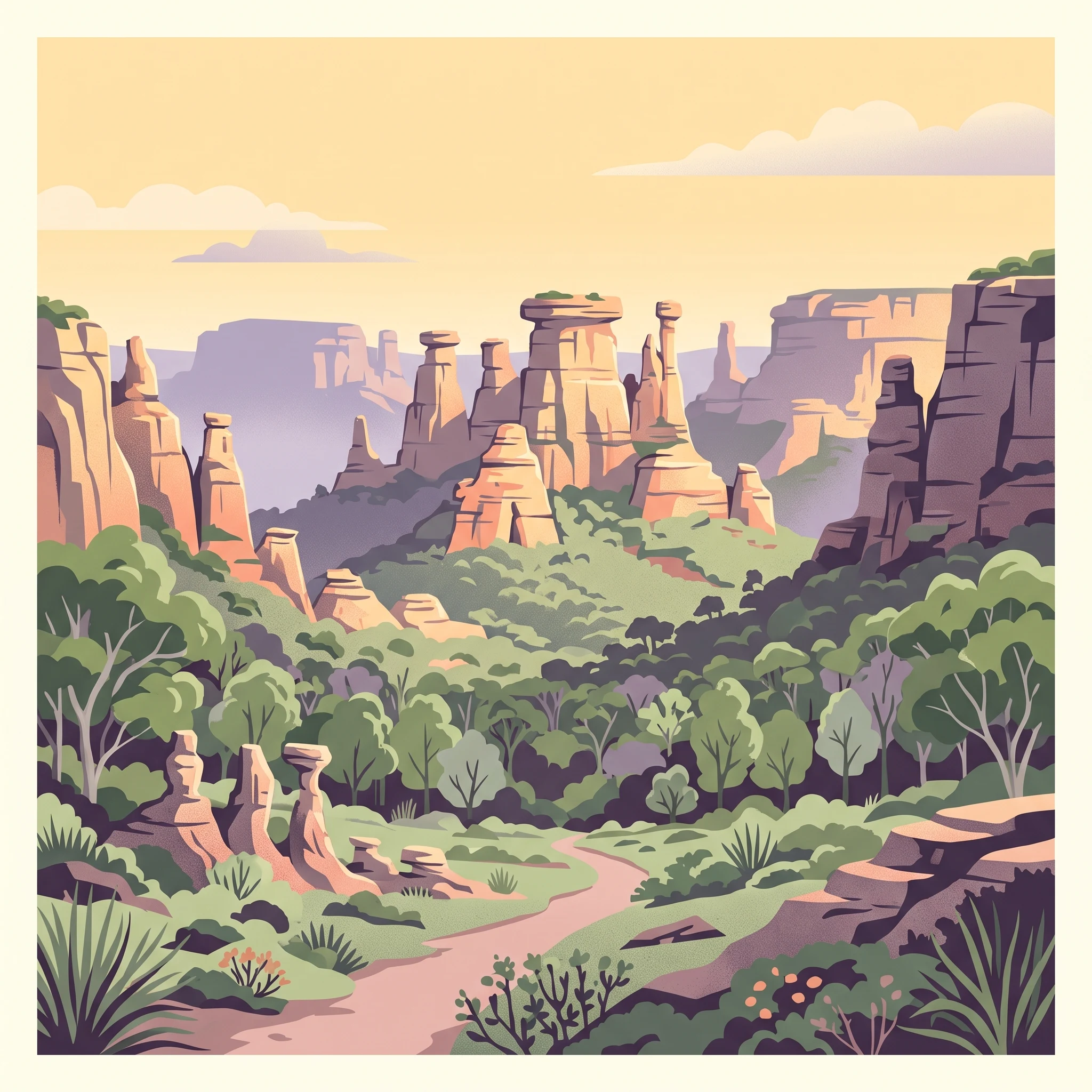
Gardens of Stone National Park protects a unique landscape of outstanding geological and ecological significance within the Greater Blue Mountains region. The park's defining features are the sandstone pagoda formations, which are remnants of ancient sandstone layers that have been sculpted by erosional forces over millions of years. These remarkable structures rise dramatically from the surrounding terrain, creating a landscape that resembles a mountain range of stone temples. Beyond the pagodas, the park encompasses diverse habitats including open eucalyptus forests and woodlands, heathlands, rocky cliff faces, and elevated swamp systems. The combination of geological diversity, protected wilderness, and its inclusion in the World Heritage-listed Greater Blue Mountains Area establishes Gardens of Stone as a significant conservation reserve in the Australian protected area network.

Quick facts and research context for Gardens of Stone National Park

Gardens of Stone National Park is situated in the Central Tablelands of New South Wales within the Great Dividing Range. The park was established in 1994 and encompasses 150.8 square kilometres of terrain characterized by spectacular sandstone pagoda formations, deep canyons, and cliff systems. It is one of eight protected areas that together comprise the Greater Blue Mountains World Heritage Area. The park is bordered by Wollemi National Park to the east, the Castlereagh Highway to the west, and lies adjacent to the Wolgan Valley and Newnes State Forest.

Park context

Deeper park guide and search-rich context for Gardens of Stone National Park

Gardens of Stone National Park history, landscape, wildlife, and travel context
Explore Gardens of Stone National Park through its history, landscape character, ecosystems, wildlife, conservation priorities, cultural context, and seasonal travel timing in a structured park guide built for atlas discovery and search intent.

Why Gardens of Stone National Park stands out

Gardens of Stone is best known for its extraordinary sandstone pagoda formations, which are among the most distinctive geological features in Australia's protected landscape. These ancient rock spires, with their characteristic flat tops and steep sides, create a visually spectacular landscape unlike anywhere else in the Blue Mountains region. The park also contains unusual limestone outcrops, karst systems, and elevated swamps that add to its ecological complexity. The pagoda formations support fragile plant and animal communities that are highly vulnerable to human disturbance, making conservation management particularly important.

Gardens of Stone National Park history and protected-area timeline

The conservation history of Gardens of Stone traces back to 1932 when the Newnes Plateau region was first proposed for protection as part of a Greater Blue Mountains National Park by the National Parks and Primitive Areas Council. After the establishment of Wollemi National Park in 1979, advocacy for protecting the Gardens of Stone area intensified. The National Parks Association proposed extending the protected area westward in 1984, which evolved into a detailed proposal for an 18,030-hectare park in 1993. The Gardens of Stone National Park was officially established in 1994, though the initial designation covered only 11,780 hectares, with areas containing coal deposits excluded from protection. The park was subsequently enlarged to its current extent of 15,080 hectares. Environmental groups continue to advocate for expanded protection of the surrounding landscape, which contains additional significant pagoda formations, canyons, heathland communities, and elevated swamps.

Gardens of Stone National Park landscape and geographic character

The landscape of Gardens of Stone National Park is defined by its extraordinary sandstone pagoda formations, which represent one of the most distinctive geological phenomena in eastern Australia. These pagodas are formed from hard sandstone layers that have resisted erosion while softer surrounding rock has weathered away, leaving behind tall, flat-topped spires with steep, often vertical sides. The park also contains dramatic cliff systems and deep canyons that have been carved by water erosion over geological time scales. Limestone outcrops occur in several areas, adding geological diversity to the predominantly sandstone terrain. Elevated swamps, locally known as hanging swamps, are found in the park, perched on sandstone platforms and representing rare wetland habitats in this upland environment. The terrain ranges from gentle slopes in the woodland areas to spectacular rocky cliffs and rock platforms throughout the pagoda landscapes.

Gardens of Stone National Park ecosystems, habitats, and plant life

The botanical diversity of Gardens of Stone is remarkable, with 423 native plant species recorded across 30 distinct plant communities. The majority of the park is covered in open forest and woodland dominated by various eucalypt species. In the western portions of the park, ironbark woodlands featuring Eucalyptus fibrosa and E. crebra grow on clay loam soils, alongside yellow box woodlands of Eucalyptus melliodora. The southwestern areas contain white box woodland of Eucalyptus albens, while the eastern borders support scribbly gum woodland of Eucalyptus rossii and E. sparsifolia. The pagoda formations themselves support specialized plant communities adapted to the harsh rocky conditions, with heathland vegetation often found on the plateau surfaces and cliff edges. The elevated swamp communities represent particularly significant ecological habitats within the park's mosaic of vegetation types.

Gardens of Stone National Park wildlife and species highlights

Gardens of Stone National Park provides habitat for several notable bird species, including the endangered regent honeyeater and the turquoise parrot, which inhabit the ironbark and yellow box woodlands in the western parts of the park. The diverse vegetation communities throughout the park support a variety of wildlife, though specific species details are limited in the source material. The plant and animal communities associated with the pagoda formations are recognized as particularly fragile and vulnerable to disturbance. Human activities such as collecting bush rocks for landscaping can significantly impact reptile habitats and other wildlife populations that depend on the rocky outcrops and surrounding vegetation. The varied habitats from forest to heathland to rocky cliffs support ecological diversity across the reserve.

Gardens of Stone National Park conservation status and protection priorities

Gardens of Stone National Park is part of the Greater Blue Mountains Area, which was inscribed as a UNESCO World Heritage Site in 2000 in recognition of its outstanding universal value. This international recognition underscores the global significance of the park's geological features, biodiversity, and ecosystem values. The park protects one of Australia's most unusual landscapes and the fragile communities associated with the pagoda formations require careful management to prevent irreversible damage from human activity. Conservation efforts focus on protecting the remaining intact ecosystems, managing visitor impacts in sensitive areas, and maintaining the ecological integrity of the World Heritage Area. Environmental advocacy groups continue to work toward expanding protection of surrounding areas that contain significant natural values including pagodas, canyons, heathland, and elevated swamps.

Gardens of Stone National Park cultural meaning and human context

While the source material does not provide detailed information about indigenous cultural connections to the Gardens of Stone landscape, the Greater Blue Mountains region has deep cultural significance for Aboriginal peoples. The local Gundungurra and Wiradjuri communities have traditional connections to the landscapes of the Central Tablelands. The dramatic rock formations, particularly the pagodas, would have held cultural and spiritual significance for Aboriginal peoples over many thousands of years, though detailed ethnographic information specific to this park is limited in the available sources.

Top sights and standout views in Gardens of Stone National Park

The extraordinary sandstone pagoda formations represent the park's most spectacular highlight, creating a landscape of stone spires and temples unlike anywhere else in Australia. The inclusion in the Greater Blue Mountains World Heritage Area confirms the park's international significance. The diversity of habitats from eucalyptus woodlands to heathlands to rocky cliffs and elevated swamps creates a complex ecological landscape. The presence of rare and endangered bird species such as the regent honeyeater adds conservation importance. The Capertee Valley views from Pearsons Lookout provide stunning panoramic perspectives of the pagoda-dominated landscape.

Best time to visit Gardens of Stone National Park

Gardens of Stone National Park can be visited throughout the year, with each season offering different experiences. The spring and autumn months typically provide comfortable temperatures for bushwalking and landscape photography, with wildflower displays occurring in spring. Summer months can bring hot conditions in the valley areas, while winter may offer cooler temperatures and potentially dramatic cloud formations around the pagoda peaks. The park's accessible location, approximately two hours' drive from Sydney, makes it suitable for both day visits and longer exploration, though visitors should check current conditions and park management advice before traveling.
Park location guide

Geography guide, regional context, and park location map for Gardens of Stone National Park

Gardens of Stone National Park park geography, regions, and map view in Australia
Understand where Gardens of Stone National Park sits in Australia through a broader geographic reading of the surrounding landscape, nearby location context, and its mapped position within the national park landscape.

How Gardens of Stone National Park fits into Australia

Australia is a constitutional monarchy and federal parliamentary democracy comprising six states and ten territories. With a population of nearly 28 million, it is one of the world's most urbanised countries, with most people concentrated on the eastern seaboard. The country has a high Human Development Index and is known for its cultural diversity, ancient Aboriginal heritage, and unique wildlife.

Wider geography shaping Gardens of Stone National Park in Australia

Australia occupies the entire Australian continent, the island of Tasmania, and numerous smaller islands. It is the world's flattest and driest inhabited continent, featuring vast deserts in the interior (the Outback), tropical rainforests along the eastern coast, and a coastline bordering the Indian and Pacific Oceans.

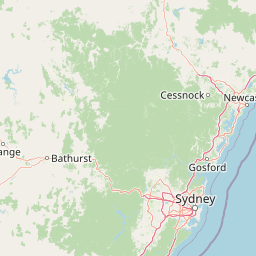
Map view of Gardens of Stone National Park

Use this park location map to pinpoint Gardens of Stone National Park in Australia, understand its exact geographic position, and read its mapped placement within the surrounding landscape more clearly.

Pigeon | © OpenStreetMap contributors

Location context for Gardens of Stone National Park

New South Wales
Park atlas

Discover the Regional Protected Landscapes and Atlas of Parks Surrounding Gardens of Stone National Park

Explore National Parks and Protected Areas Near Gardens of Stone National Park
Continue exploring Australia's protected areas by browsing other national parks and protected landscapes geographically near Gardens of Stone National Park in New South Wales. Compare diverse geological features and unique ecosystems across the Greater Blue Mountains region, gaining broader context on Australia's varied conservation landscapes.
National parkNew South Wales

Turon National Park National Park: Protected Landscape and Geographic Atlas Details

Mapped boundaries and regional context within New South Wales.

Turon National Park is a protected national park in New South Wales, Australia, offering a distinct geographic identity for atlas exploration. This entry focuses on its mapped boundaries, natural terrain, and its role as a conservation landscape. Users can discover its specific features and regional context, enhancing their understanding of Australia's protected areas.

Established
2002
IUCN
II
Relief
Mixed relief
Climate
Temperate
National parkNew South Wales

Wollemi National Park: Mapping Australia's Protected Natural Landscape in New South Wales

Detailed geographic context and protected area exploration.

Wollemi National Park is a critical component of New South Wales' protected natural areas, offering rich opportunities for geographic discovery. This national park provides a distinct focus for understanding the mapped terrain and regional landscape context of Australia. Explore its position within New South Wales, uncovering the details that define its unique protected status and natural geography for dedicated atlas exploration.

Area
5,017.03 km²
Established
1979
IUCN
Ib
Relief
Mountain
National parkNew South Wales

Yengo National Park: Protected Landscape Identity and Geographic Context

Explore its mapped terrain and wilderness character.

Yengo National Park in New South Wales, Australia, is a vast protected area known for its remote wilderness character and significant geographical landmarks such as Mount Yengo. As a vital part of the Greater Blue Mountains World Heritage Site, the park showcases rugged mountainous terrain and diverse natural landscapes. This entry focuses on its atlas-value, detailing the park's mapped boundaries, regional geography, and its identity as a significant protected landscape for nature exploration.

Area
1,543.28 km²
Established
1988
IUCN
Ib
Relief
Mountain
National parkNew South Wales

Kanangra-Boyd National Park: A Protected Landscape within New South Wales' Geography

Mapped boundaries and regional park context.

Kanangra-Boyd National Park represents a significant protected area, offering valuable insights into the natural landscapes and geographic context of New South Wales. As a national park, it provides a clear example of mapped terrain and protected land distribution, crucial for anyone exploring the atlas of Australian conservation areas. Understanding this park contributes to a broader appreciation of its regional geography and specific landscape identity.

Area
686.6 km²
Established
1969
IUCN
Ib
Relief
Mountain
National parkAustralia

Cattai National Park: Australia's Premier Colonial Heritage Protected Landscape

Mapped riverfront geography and historical Australian park context.

Cattai National Park represents a vital entry in Australia's atlas of protected areas, offering unparalleled insight into the nation's early colonial history alongside its natural riverine landscapes. The park's designation as a national park highlights its importance in preserving not only the unique geography of the Hawkesbury River floodplain but also significant historical sites like the Hope Farm Mill, Australia's oldest industrial site. Exploring Cattai National Park allows for a deep dive into mapped protected boundaries and the layered cultural and natural terrain of the Sydney region.

Area
4.24 km²
Established
1992
IUCN
II
Access
Easy access
National parkAustralia

Scheyville National Park: An Australian National Park's Mapped Protected Landscape and Regional Geography

Explore the protected boundaries and natural terrain of this park.

Scheyville National Park represents a vital protected area within Australia, offering a unique lens for geographic exploration. As a national park, its boundaries and landscape characteristics are essential for understanding its place in the regional geography. This content facilitates structured discovery of its natural terrain and mapped extent, providing foundational context for atlas-based learning about Australia's protected lands.

Area
9.2 km²
Established
1996
IUCN
V
Relief
Upland
National parkNew South Wales

Goulburn River National Park: New South Wales National Park with River Ecosystems and Heritage

Explore mapped protected lands and regional geography.

Goulburn River National Park offers a significant protected landscape within New South Wales, Australia, celebrated for its expansive Goulburn River frontage and diverse natural terrain. This national park is pivotal for understanding regional geography, featuring sandstone geological formations and serving as a critical habitat for endangered species, including the regent honeyeater. Its extensive river corridor also protects numerous Aboriginal heritage sites, contributing a rich layer of cultural significance to its conservation value. MoriAtlas helps users explore the mapped boundaries and environmental context of this vital protected area.

Area
722.96 km²
Established
1983
IUCN
II
Relief
Mixed relief
National parkSydney

Marramarra National Park: Sydney's Protected Landscape and National Park Atlas

Explore mapped boundaries and regional geography near Sydney.

Marramarra National Park stands as a key protected natural landscape near Sydney, Australia. This entry facilitates detailed atlas exploration, focusing on its geographic setting and identity as a national park. Understand the park's mapped borders, its regional context within the Sydney area, and the unique natural landscape it preserves. MoriAtlas provides structured data to comprehend Marramarra National Park's place in the Australian protected areas network and its distinct geographic characteristics.

Area
117.85 km²
Established
1979
IUCN
II
Relief
Upland

Common questions about visiting, size, designation, and location context for Gardens of Stone National Park

Gardens of Stone National Park FAQs for park facts, access, geography, and protected area context
Find quick answers about Gardens of Stone National Park, including protected-area facts, park geography, trail and visitor context, and how the park fits into its surrounding country and regional landscape.
MoriAtlas Explorer

Continue Your Protected Areas Search Across the Global Atlas

Deepen your exploration by continuing the structured search for national parks and protected areas worldwide. Utilize the comprehensive filtering capabilities to compare different conservation landscapes and refine your understanding of global park geography. Discover more about the distribution and characteristics of protected natural areas.

Global natural geography