Why Gardens of Stone National Park stands out
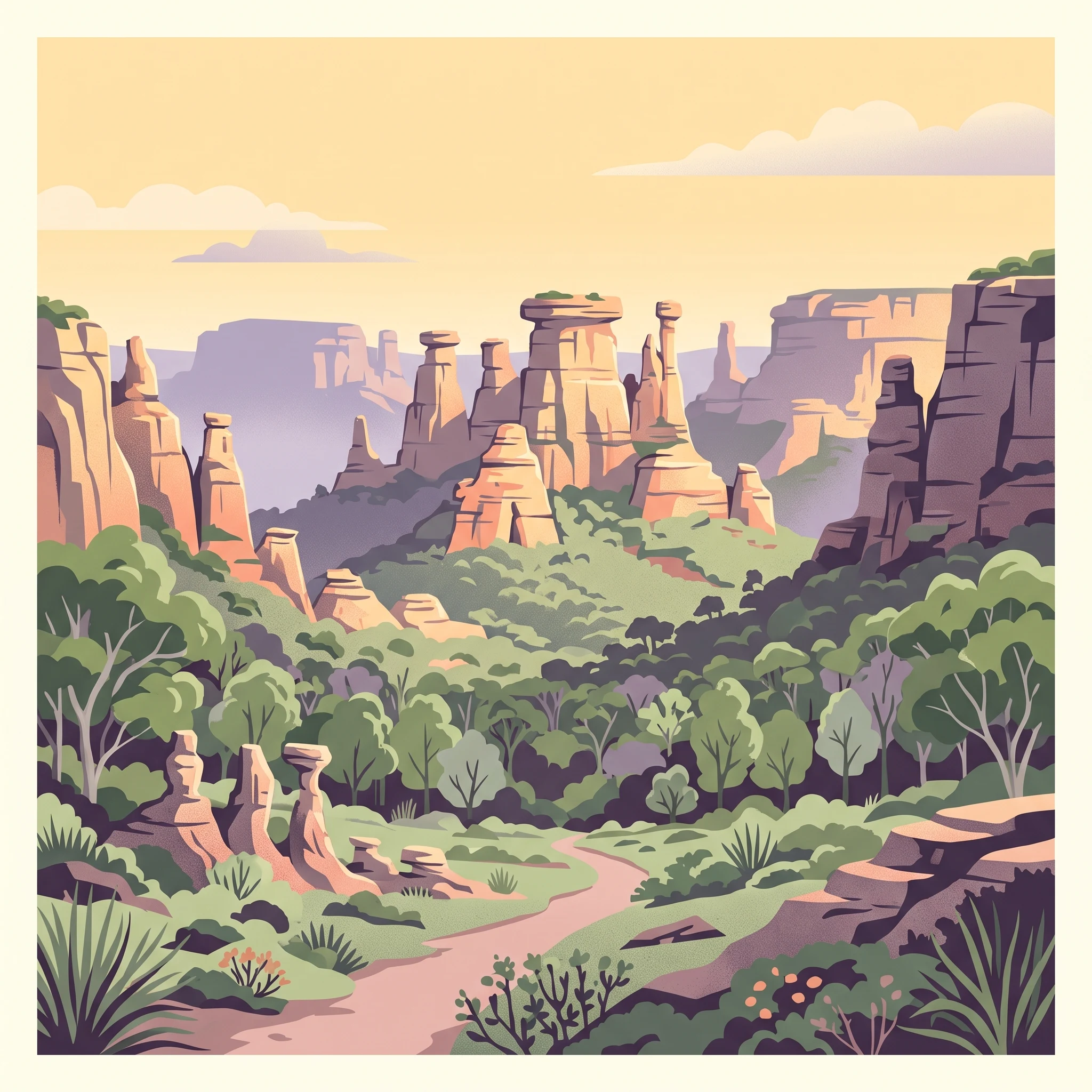
Gardens of Stone is best known for its extraordinary sandstone pagoda formations, which are among the most distinctive geological features in Australia's protected landscape. These ancient rock spires, with their characteristic flat tops and steep sides, create a visually spectacular landscape unlike anywhere else in the Blue Mountains region. The park also contains unusual limestone outcrops, karst systems, and elevated swamps that add to its ecological complexity. The pagoda formations support fragile plant and animal communities that are highly vulnerable to human disturbance, making conservation management particularly important.
Gardens of Stone National Park history and protected-area timeline
The conservation history of Gardens of Stone traces back to 1932 when the Newnes Plateau region was first proposed for protection as part of a Greater Blue Mountains National Park by the National Parks and Primitive Areas Council. After the establishment of Wollemi National Park in 1979, advocacy for protecting the Gardens of Stone area intensified. The National Parks Association proposed extending the protected area westward in 1984, which evolved into a detailed proposal for an 18,030-hectare park in 1993. The Gardens of Stone National Park was officially established in 1994, though the initial designation covered only 11,780 hectares, with areas containing coal deposits excluded from protection. The park was subsequently enlarged to its current extent of 15,080 hectares. Environmental groups continue to advocate for expanded protection of the surrounding landscape, which contains additional significant pagoda formations, canyons, heathland communities, and elevated swamps.
Gardens of Stone National Park landscape and geographic character
The landscape of Gardens of Stone National Park is defined by its extraordinary sandstone pagoda formations, which represent one of the most distinctive geological phenomena in eastern Australia. These pagodas are formed from hard sandstone layers that have resisted erosion while softer surrounding rock has weathered away, leaving behind tall, flat-topped spires with steep, often vertical sides. The park also contains dramatic cliff systems and deep canyons that have been carved by water erosion over geological time scales. Limestone outcrops occur in several areas, adding geological diversity to the predominantly sandstone terrain. Elevated swamps, locally known as hanging swamps, are found in the park, perched on sandstone platforms and representing rare wetland habitats in this upland environment. The terrain ranges from gentle slopes in the woodland areas to spectacular rocky cliffs and rock platforms throughout the pagoda landscapes.
Gardens of Stone National Park ecosystems, habitats, and plant life
The botanical diversity of Gardens of Stone is remarkable, with 423 native plant species recorded across 30 distinct plant communities. The majority of the park is covered in open forest and woodland dominated by various eucalypt species. In the western portions of the park, ironbark woodlands featuring Eucalyptus fibrosa and E. crebra grow on clay loam soils, alongside yellow box woodlands of Eucalyptus melliodora. The southwestern areas contain white box woodland of Eucalyptus albens, while the eastern borders support scribbly gum woodland of Eucalyptus rossii and E. sparsifolia. The pagoda formations themselves support specialized plant communities adapted to the harsh rocky conditions, with heathland vegetation often found on the plateau surfaces and cliff edges. The elevated swamp communities represent particularly significant ecological habitats within the park's mosaic of vegetation types.
Gardens of Stone National Park wildlife and species highlights
Gardens of Stone National Park provides habitat for several notable bird species, including the endangered regent honeyeater and the turquoise parrot, which inhabit the ironbark and yellow box woodlands in the western parts of the park. The diverse vegetation communities throughout the park support a variety of wildlife, though specific species details are limited in the source material. The plant and animal communities associated with the pagoda formations are recognized as particularly fragile and vulnerable to disturbance. Human activities such as collecting bush rocks for landscaping can significantly impact reptile habitats and other wildlife populations that depend on the rocky outcrops and surrounding vegetation. The varied habitats from forest to heathland to rocky cliffs support ecological diversity across the reserve.
Gardens of Stone National Park conservation status and protection priorities
Gardens of Stone National Park is part of the Greater Blue Mountains Area, which was inscribed as a UNESCO World Heritage Site in 2000 in recognition of its outstanding universal value. This international recognition underscores the global significance of the park's geological features, biodiversity, and ecosystem values. The park protects one of Australia's most unusual landscapes and the fragile communities associated with the pagoda formations require careful management to prevent irreversible damage from human activity. Conservation efforts focus on protecting the remaining intact ecosystems, managing visitor impacts in sensitive areas, and maintaining the ecological integrity of the World Heritage Area. Environmental advocacy groups continue to work toward expanding protection of surrounding areas that contain significant natural values including pagodas, canyons, heathland, and elevated swamps.
Gardens of Stone National Park cultural meaning and human context
While the source material does not provide detailed information about indigenous cultural connections to the Gardens of Stone landscape, the Greater Blue Mountains region has deep cultural significance for Aboriginal peoples. The local Gundungurra and Wiradjuri communities have traditional connections to the landscapes of the Central Tablelands. The dramatic rock formations, particularly the pagodas, would have held cultural and spiritual significance for Aboriginal peoples over many thousands of years, though detailed ethnographic information specific to this park is limited in the available sources.
Top sights and standout views in Gardens of Stone National Park
The extraordinary sandstone pagoda formations represent the park's most spectacular highlight, creating a landscape of stone spires and temples unlike anywhere else in Australia. The inclusion in the Greater Blue Mountains World Heritage Area confirms the park's international significance. The diversity of habitats from eucalyptus woodlands to heathlands to rocky cliffs and elevated swamps creates a complex ecological landscape. The presence of rare and endangered bird species such as the regent honeyeater adds conservation importance. The Capertee Valley views from Pearsons Lookout provide stunning panoramic perspectives of the pagoda-dominated landscape.
Best time to visit Gardens of Stone National Park
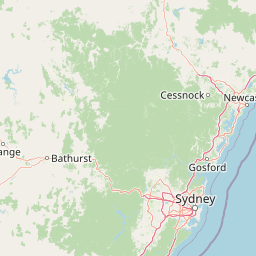
Gardens of Stone National Park can be visited throughout the year, with each season offering different experiences. The spring and autumn months typically provide comfortable temperatures for bushwalking and landscape photography, with wildflower displays occurring in spring. Summer months can bring hot conditions in the valley areas, while winter may offer cooler temperatures and potentially dramatic cloud formations around the pagoda peaks. The park's accessible location, approximately two hours' drive from Sydney, makes it suitable for both day visits and longer exploration, though visitors should check current conditions and park management advice before traveling.