
Mori Atlas logo
National parkGrebo-Krahn National Park

A vast, intact block of Upper Guinean forest sanctuary in Grand Gedeh and River Gee counties.

Grebo-Krahn National Park: Mapped Geography and Protected Rainforest Landscapes of Southeastern Liberia

Grebo-Krahn National Park preserves one of the most significant continuous forest ecosystems remaining in West Africa. Spanning a vast lowland terrain across Grand Gedeh and River Gee counties, this protected area features a dense, closed-canopy rainforest with over 99 percent cover. The park serves as a vital refuge for endangered primates and forest-dependent bird populations, offering a look at the natural landscape integrity that defines Liberia's southeastern interior.

Upper Guinean rainforesttropical forest reserveprimate habitatendangered species refugeImportant Bird Arealowland rainforest

Grebo-Krahn National Park

National park

Park overview

Structured park overview, official facts, and landscape profile for Grebo-Krahn National Park

Grebo-Krahn National Park park facts, protected area profile, and essential visitor context

Review the core facts for Grebo-Krahn National Park, including designation, size, terrain, visitor scale, habitats, and operating context in one park-focused overview.

About Grebo-Krahn National Park

Grebo-Krahn National Park is a flagship protected area in southeastern Liberia, anchored in the country's forested borderlands with Côte d'Ivoire. It spans parts of Grand Gedeh County and River Gee County and encompasses a very large block of Upper Guinean rainforest, an ecological zone that historically stretched across much of coastal West Africa but has been reduced to scattered fragments elsewhere in the region. The park therefore plays an unusually important role in representing what a relatively undisturbed West African rainforest can still look like at scale.

Established in October 2017, the park was created under the authority of Liberia's Forestry Development Authority and is classified as state-owned land. Its creation reflected a growing recognition of the Grebo forest landscape as one of Liberia's most valuable natural assets, both for biodiversity and for the ecological services intact rainforest provides. Conservation organizations, including Conservation International Liberia, have been active in the broader landscape, working alongside government efforts to strengthen protection, monitoring, and sustainable land use planning around the reserve.

Ecologically, Grebo-Krahn is defined by dense, closed-canopy tropical forest with very high forest cover. The recorded biodiversity is rich, with more than 300 animal species and over 270 plant species documented within the park. Particularly notable is the presence of threatened and endemic taxa, including western chimpanzees, Diana monkeys, king colobus monkeys, pygmy hippopotamuses, and giant pangolins, several of which have lost substantial portions of their historical range. The park also meets the criteria for an Important Bird Area, underscoring its significance for a wide range of forest birds.

For Liberia, Grebo-Krahn represents both a conservation milestone and a long-term opportunity. As one of the country's largest national parks, it anchors regional efforts to maintain ecological connectivity in the Upper Guinea forest belt and supports broader regional strategies for protecting the dwindling rainforest heritage of West Africa.

Quick facts and research context for Grebo-Krahn National Park

Grebo-Krahn National Park lies in southeastern Liberia across Grand Gedeh County and River Gee County, close to the Ivorian border. It protects an essentially unbroken Upper Guinean rainforest, with forest cover reported at well over 99% of the park land area. The park supports more than 300 recorded animal species and over 270 plant species, including several endangered and critically endangered primates and mammals. It has been formally recognized as an Important Bird Area by BirdLife International and is managed as a state-owned reserve by Liberia's Forestry Development Authority following its establishment on October 9, 2017.

Protection and recognition

Documented terrestrial protection facts and official designation records for Grebo-Krahn National Park.

Grebo-Krahn National Park Protection Status and Management Scope

Terrestrial protection status for Grebo-Krahn National Park is compiled alongside documented management scope and official designation records. Verified administrative details provide clear context for conservation boundaries without assuming external recognition sources.

Protection details

Protection scope
Terrestrial
Transboundary protection
No
Park context

Deeper park guide and search-rich context for Grebo-Krahn National Park

Grebo-Krahn National Park history, landscape, wildlife, and travel context

Explore Grebo-Krahn National Park through its history, landscape character, ecosystems, wildlife, conservation priorities, cultural context, and seasonal travel timing in a structured park guide built for atlas discovery and search intent.

Why Grebo-Krahn National Park stands out

Grebo-Krahn is best known as one of the last major stands of continuous Upper Guinean rainforest in West Africa, hosting significant populations of endangered primates such as the western chimpanzee, Diana monkey, and king colobus. The park is also recognized for its importance for forest-dependent birds, which led to its designation as an Important Bird Area by BirdLife International. Beyond single species, the reserve is valued for the sheer intactness of its forest cover and the size of its connected habitat, which together make it a critical stronghold for West African rainforest biodiversity.

Grebo-Krahn National Park history and protected-area timeline

Grebo-Krahn National Park was formally established on October 9, 2017, as a state-owned protected area under Liberia's Forestry Development Authority. Its designation marked a major step in the country's effort to safeguard the Grebo forest landscape, which had long been recognized for its ecological value but remained vulnerable to logging, hunting, and conversion pressures affecting forests elsewhere in the region.

The creation of the park built on earlier conservation engagement in the broader Grebo forest landscape by international organizations. Conservation International Liberia, among other groups, played a role in supporting scientific assessment, planning, and protection activities in the surrounding area, helping to lay groundwork for formal park status. By elevating a very large area of intact forest into a nationally protected reserve, Liberia solidified the Grebo forest block as a centerpiece of its protected-area system.

In the context of West Africa, the park's establishment came at a time when Upper Guinean forests were increasingly fragmented elsewhere across the region. As such, Grebo-Krahn is not only a national conservation achievement but also a significant regional milestone in preserving one of the more substantial remaining rainforest areas in coastal West Africa.

Grebo-Krahn National Park landscape and geographic character

Grebo-Krahn occupies a broad area of lowland terrain in southeastern Liberia, with elevations documented around 200 meters above sea level. The landscape is dominated by continuous, closed-canopy Upper Guinean rainforest, where the forest cover is reported at well above 99% of the park's official land area. This near-total canopy dominance gives the park a strongly forested character, with few or no large natural openings of non-forest habitat.

The terrain reflects the broader topography of Liberia's southeastern interior, where gently rolling forested hills and valleys give way to river systems flowing through dense woodland. While the elevation range is relatively modest, the scale and continuity of the forest produce a powerful sense of unbroken wilderness. Drainage networks, seasonal streams, and moist valley bottoms contribute to the ecological complexity of the area, supporting the moist tropical forest communities that define the park.

The visual identity of Grebo-Krahn is therefore less about dramatic relief and more about sheer extent: large swaths of primary-looking rainforest stretching toward the Ivorian border, with the structural integrity of an old-growth tropical forest ecosystem. In a region where forest fragmentation has become the norm, this continuity is itself a defining landscape feature.

Grebo-Krahn National Park ecosystems, habitats, and plant life

Grebo-Krahn protects a substantial example of Upper Guinean rainforest, one of the globally significant tropical forest ecosystems of West Africa. More than 270 plant species have been recorded within the park, reflecting the diversity typical of moist lowland tropical forest communities that occupy this ecological zone. The very high forest cover and continuous canopy create conditions favorable for sensitive interior-forest species that require large, undisturbed blocks of habitat.

The park's ecological value is closely tied to its size and integrity. Large, connected rainforest tracts support more viable populations of wide-ranging mammals, breeding bird communities, and plant populations than fragmented forest patches. The moist forest habitats of Grebo-Krahn include closed-canopy forest, riparian forest along streams and rivers, and variations in forest structure tied to topography and drainage, all of which contribute to the area's overall biodiversity.

As an Important Bird Area recognized by BirdLife International, the park also represents an important component of the regional birdlife network of West Africa. Forest-dependent bird species that require large tracts of intact woodland are particularly well served by the size and condition of the forest block within Grebo-Krahn, making the reserve ecologically significant well beyond its national borders.

Grebo-Krahn National Park wildlife and species highlights

Grebo-Krahn is home to more than 300 recorded animal species, with particular importance for several threatened primates and large mammals. Among the most notable residents is the western chimpanzee, a taxon of significant conservation concern that depends on large, undisturbed forest blocks. Diana monkeys and king colobus monkeys also inhabit the park, both forest-specialist primates that have been heavily impacted by hunting and habitat loss elsewhere in West Africa.

Beyond primates, the park supports pygmy hippopotamus, a secretive and range-restricted mammal associated with West African forests, and the giant pangolin, one of the most threatened mammals in the region. These species are emblematic of the kind of large, sensitive fauna that requires extensive, intact forest cover to persist, reinforcing the importance of Grebo-Krahn's scale and connectivity.

The park's recognition as an Important Bird Area by BirdLife International highlights the diversity and significance of its birdlife. Forest-interior birds, including species that have declined sharply across West Africa, depend on the continuous canopy and minimal disturbance within the reserve. Together, the mammal and bird communities make Grebo-Krahn one of the most ecologically meaningful protected areas in Liberia and an important refuge in the broader Upper Guinea region.

Grebo-Krahn National Park conservation status and protection priorities

Grebo-Krahn's conservation significance lies in its role as one of the largest and most intact remnants of Upper Guinean rainforest still standing in West Africa. The park's exceptionally high forest cover, combined with its size, gives it strong value as a refuge for forest-dependent species that have disappeared from more fragmented landscapes throughout the region. Its formal designation in 2017 brought a large, ecologically important block of forest under the protection of Liberia's Forestry Development Authority.

The reserve supports endangered and critically endangered species and subspecies, including the western chimpanzee, Diana monkey, king colobus, pygmy hippopotamus, and giant pangolin. The presence of these taxa elevates the park's importance beyond a national context, aligning it with regional and global priorities for biodiversity preservation. The Important Bird Area designation further signals its global relevance for avian conservation.

Conservation activity in the wider Grebo forest landscape, including work led by Conservation International Liberia, has complemented the park's protected status. These efforts have contributed to scientific assessment, planning, and management support for the area, helping to strengthen both the park itself and the broader forest network in which it sits. The combined effect is a protected area that functions not just as an isolated reserve but as a key node in West Africa's surviving Upper Guinean rainforest system.

Top sights and standout views in Grebo-Krahn National Park

Grebo-Krahn stands out for the remarkable intactness of its forest cover, with over 99% forest cover reported across its official land area. It hosts more than 300 animal species and over 270 plant species, including several globally threatened mammals. The park is also notable for its designation as an Important Bird Area, drawing attention to its role in supporting forest-dependent bird populations across the Upper Guinea region.

As a large, officially protected block of Upper Guinean rainforest under Liberia's Forestry Development Authority, Grebo-Krahn represents a key element in the regional effort to maintain ecological connectivity and preserve one of West Africa's most threatened ecosystems. Its combination of scale, integrity, and biodiversity gives it strong significance for both Liberian and West African conservation.
Monthly climate preview

Long-term representative temperature ranges and monthly precipitation cycles across the landscape

Grebo-Krahn National Park Climate Normals and Annual Weather Patterns

Representative coordinates record sustained annual warmth alongside distinct monthly precipitation variations across the protected terrain. Examining the complete twelve-month climatology profile reveals finer shifts in temperature and rainfall distribution.
Annual mean25 °C
24 °C26 °C
Jan26°
Feb26°
Mar26°
Apr26°
May26°
Jun25°
Jul24°
Aug24°
Sep24°
Oct25°
Nov25°
Dec25°
Warmest month
February

26.4 °C

Coolest month
August

23.8 °C

Wettest month
June

9.3 mm/day

Driest month
January

1.1 mm/day

Park location guide

Geography guide, regional context, and park location map for Grebo-Krahn National Park

Grebo-Krahn National Park park geography, regions, and map view in Liberia

Understand where Grebo-Krahn National Park sits in Liberia through a broader geographic reading of the surrounding landscape, nearby location context, and its mapped position within the national park landscape.

How Grebo-Krahn National Park fits into Liberia

Liberia is a West African country on the Atlantic coast, bordered by Sierra Leone, Guinea, and Ivory Coast. Founded as an American Colonization Society settlement in 1822, it became Africa's first independent republic in 1847. The country has a population of approximately 5.4 million and uses both the US dollar and Liberian dollar as currency.

Wider geography shaping Grebo-Krahn National Park in Liberia

Liberia occupies the West African Atlantic coast, stretching from Sierra Leone in the northwest to Ivory Coast in the east. The country features a coastal plain that rises to a rolling plateau and mountainous regions in the northeast. Several rivers, including the Mano and St. John rivers, flow across the territory. The climate is tropical with distinct wet and dry seasons.

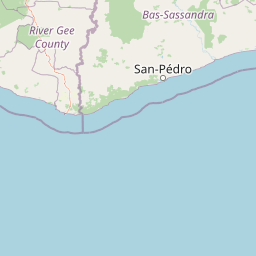
Map view of Grebo-Krahn National Park

Use this park location map to pinpoint Grebo-Krahn National Park in Liberia, understand its exact geographic position, and read its mapped placement within the surrounding landscape more clearly.

Pigeon | © OpenStreetMap contributors

Location context for Grebo-Krahn National Park

Grand Gedeh CountyRiver Gee County
Park atlas

Compare regional rainforest reserves and connected habitats across the surrounding territory.

Other Parks Near Grebo-Krahn National Park and Surrounding Protected Landscapes

Browse national parks and protected areas located near Grebo-Krahn National Park to evaluate broader regional conservation networks. Comparing these adjacent forest ecosystems reveals the scale and continuity of West African lowland wilderness.
Protected areaLiberia
Mapped park locations coincide#1 closest

Grebo National Forest: Protected Area Map and Regional Geography Exploration

Discover mapped boundaries and landscape context in Liberia.

Grebo National Forest is a designated protected area contributing to the Guinean forest ecosystem of Liberia and West Africa. This detail page provides an atlas-centered view, emphasizing the park's geographic placement, its mapped protected boundaries, and its significance within the broader regional landscape. Users can explore the specific terrain and geographic context that define Grebo National Forest as a conservation area.

IUCN
VI
A watercolor painting depicting a soft-focus landscape with rolling green hills in the distance and a band of trees in the middle ground.
National parkDistrict des Montagnes
About 37 km away#2 closest

Northeast

Parc national de Taï: Primary Rainforest and Protected Terrain in District des Montagnes

Mapping intact forest corridors and major drainage systems

Parc national de Taï encompasses a vast, primary evergreen rainforest landscape that anchors the Upper Guinea forest block. This protected area features a complex topography of hills, plateaus, and permanent rivers, providing a vital habitat and a major site for scientific research in Côte d'Ivoire.

Area
4,540 km²
Established
1973
IUCN
II
Relief
Lowland
National parkIvory Coast
About 37 km away#3 closest

Northeast

Taï National Park: A Primary Rainforest Protected Area in Ivory Coast

Explore mapped boundaries and critical primate habitats in West Africa.

Taï National Park in Ivory Coast stands as a monumental protected landscape, comprising the largest contiguous area of primary rainforest remaining in West Africa. Its designation as a national park highlights its critical role in preserving biodiversity and unique geographic features. Users exploring this destination can delve into its mapped terrain, understand its regional landscape context within Ivory Coast, and appreciate its significance as a vital habitat for endangered species and an integral part of the Upper Guinean forest ecosystem.

Area
3,300 km²
Established
1972
IUCN
II
Relief
Upland
National parkSinoe County
About 89 km away#4 closest

West

Sapo National Park: Explore Its Protected Landscape and Geographic Identity in Sinoe County

Discover mapped park boundaries and regional context.

Delve into the protected landscape of Sapo National Park, a key national park located in Sinoe County, Liberia. This page provides essential context for understanding its geographic setting, mapped park boundaries, and its significance as a protected natural area. It serves as a foundational entry for exploring Liberia's protected lands within the broader atlas, focusing on landscape identity and regional geographic features.

Area
1,804 km²
Established
1983
IUCN
II
Relief
Mixed relief
Nature reserveIvory Coast
About 157 km away#5 closest

East

Forêt classée de Niégré: Mapping the Protected Forest Landscape of Southwestern Ivory Coast

A regional study of forest fragments and Guinean moist forest ecology

Forêt classée de Niégré serves as a focal point for understanding the interplay between protected-area boundaries and agrarian expansion in southwestern Ivory Coast. This geographic profile examines the massif as a remnant of Guinean moist evergreen forest, mapping its transformation from a closed canopy system into a fragmented mosaic that reflects broader regional shifts in land-use and environmental management policy.

Area
925 km²
Established
1937
Relief
Lowland
Climate
Subtropical
Protected areaNimba County
About 161 km away#6 closest

Northwest

Gibi National Forest: Protected Tropical Forest in Nimba County, Liberia

Mapped landscape and regional geography of this key conservation area.

Gibi National Forest, a protected tropical forest spanning 607 square kilometers in Nimba County, Liberia, plays a crucial role in the preservation of the Upper Guinea forest ecosystem. Established in 1960, its landscape features tropical forest terrain near the mountainous Nimba Range. This protected area contributes significantly to regional conservation strategies, offering a vital habitat within a biodiversity hotspot that faces considerable pressure.

Area
607 km²
Established
1960
IUCN
VI
Climate
Tropical
National parkMontagnes
About 169 km away#7 closest

North

Parc national du Mont Péko: Mountain Rainforest and Granite Inselberg Geography

Protected mountain massif and watershed within the Montagnes District

Discover the unique mountain landscape of Parc national du Mont Péko. This protected area features dense primary forests, iconic granite inselbergs, and steep terrain that rises above the surrounding Ivorian plains. Use this mapped overview to understand its role in regional conservation and the watershed dynamics of the Sassandra River.

Area
340 km²
Established
1968
IUCN
II
National parkIvory Coast
About 171 km away#8 closest

North

Mont Péko National Park: Ivory Coast National Park with Mapped Boundaries

Explore its protected landscape and regional geography.

Delve into Mont Péko National Park, a designated national park within Ivory Coast, to understand its unique protected landscape. This entry facilitates detailed atlas exploration, focusing on its geographic placement, mapped boundaries, and contribution to the regional natural terrain. Discover the essence of this protected area through its mapped geography and landscape identity.

Area
340 km²
Established
1968
IUCN
II
Relief
Mountain

Common questions about visiting, size, designation, and location context for Grebo-Krahn National Park

Grebo-Krahn National Park FAQs for park facts, access, geography, and protected area context

Find quick answers about Grebo-Krahn National Park, including protected-area facts, park geography, trail and visitor context, and how the park fits into its surrounding country and regional landscape.
MoriAtlas Explorer

Continue Your Protected Areas Search Across the Global Atlas

Deepen your exploration by continuing the structured search for national parks and protected areas worldwide. Utilize the comprehensive filtering capabilities to compare different conservation landscapes and refine your understanding of global park geography. Discover more about the distribution and characteristics of protected natural areas.

Global natural geography