Why Ibengarten Nature Reserve stands out
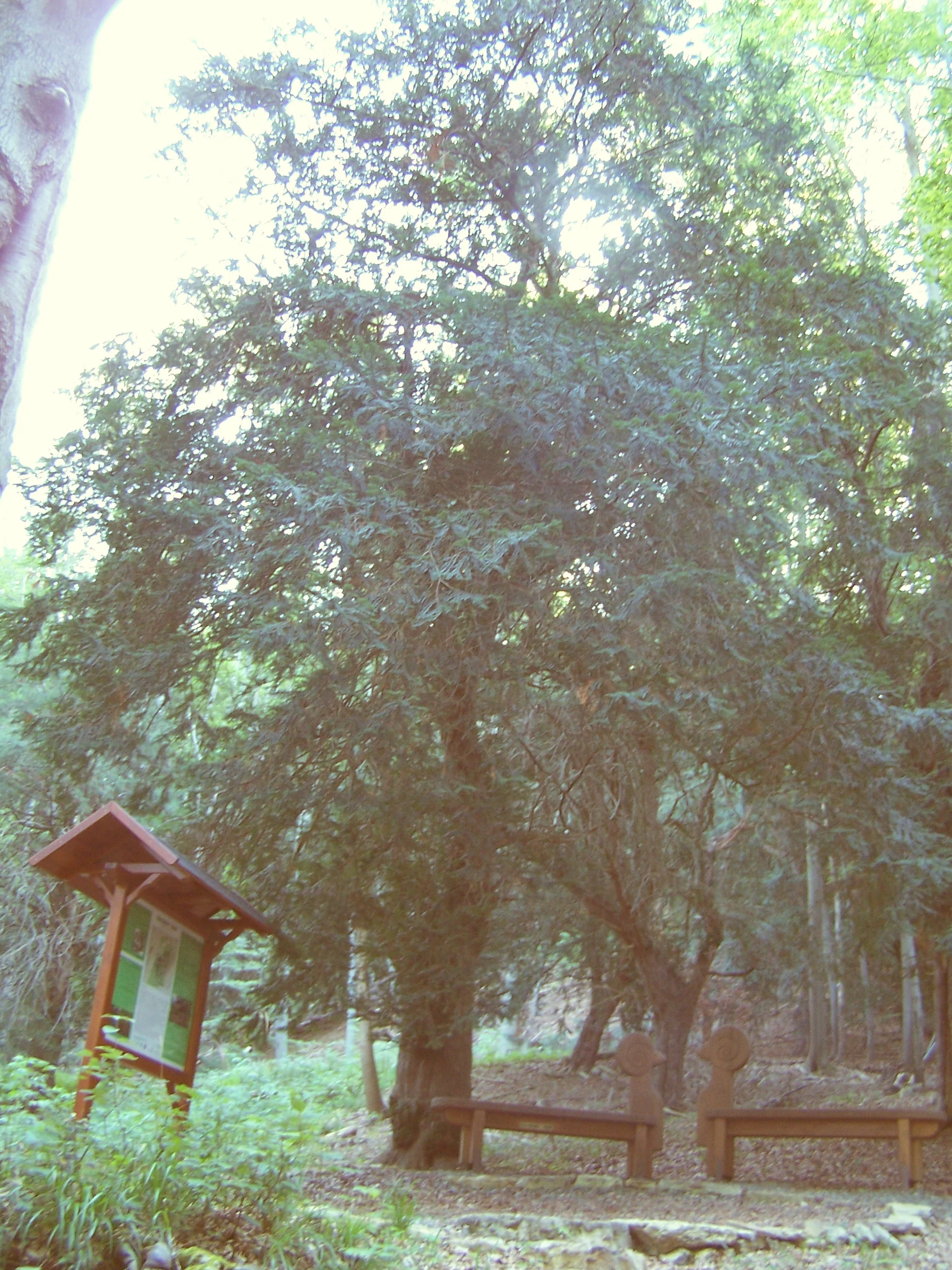
Ibengarten is best known for its ancient wild population of European yew trees, including many individuals over 500 years old. Among these, the so-called Staudt yew at the rest area is counted among the oldest specimens in the reserve and serves as a symbol of the site's long ecological continuity. The reserve stands out in Germany as one of the most important wild yew forests and is recognized for its role in preserving Taxus baccata outside of cultivation.
Ibengarten Nature Reserve history and protected-area timeline
The protection of Ibengarten is closely tied to the early Thuringian conservation movement of the 20th century. Between 1920 and 1936, the Dermbach forester Otto Staudt recognized the exceptional natural value of the yew grove on the Neuberg and worked to gain official support for its preservation. He persuaded the relevant authorities of the importance of this wild yew population, laying the groundwork for formal legal protection.
As a result of Staudt's efforts, the area was officially placed under nature conservation on 24 January 1938, making it the largest wild yew population in Thuringia at the time of designation. The legal basis was the Reich Nature Conservation Law of 26 June 1935, one of the earliest national frameworks for nature protection in Germany. With this designation, Ibengarten became one of the oldest nature reserves in Thuringia and, later, was recognized as the oldest nature reserve within the Rhön Biosphere Reserve following the establishment of that larger protected landscape.
Scholarly attention to the reserve continued in the following decades, with publications such as A. Schubert's 1993 monograph on the Ibengarten and V. Trauboth's 1981 study on the management of forest protection areas, which used Ibengarten as a key example. Together with its long, continuous protection history, this body of work has made the reserve a reference site for understanding both yew conservation and the development of forest protected-area management in central Germany.
Ibengarten Nature Reserve landscape and geographic character
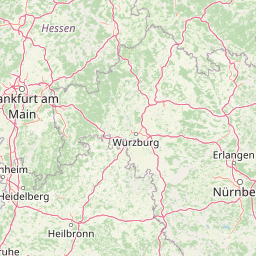
Ibengarten occupies the northwest slope of the Neuberg hill in the Thuringian Rhön, a rolling low-mountain landscape shaped by basalt geology, gentle ridges, and mixed forest cover. The reserve lies at elevations of up to approximately 530 meters above sea level, with terrain that combines sloping woodland, sheltered draws, and small forest clearings typical of the Rhön's upland scenery. The dominant ground pattern is forested, with occasional trails and rest points crossing the reserve.
The northwest-facing aspect is central to the character of the site. It provides cooler temperatures, higher humidity, and reduced direct sunlight compared to south-facing slopes in the same region. Together with the surrounding mixed mountain forest, this microclimate produces the sheltered woodland environment that has allowed ancient yew trees to persist here for centuries. Within the broader Rhön landscape, marked by open meadows, basalt hills, and traditional rural land use, the Ibengarten reserve represents one of the few places where dense, undisturbed old-forest conditions remain intact.
Ibengarten Nature Reserve ecosystems, habitats, and plant life
The ecological identity of Ibengarten is defined almost entirely by its yew-dominated forest, a habitat type that has become extremely rare in central Europe. The reserve's 368 wild European yews, including around 50 specimens older than 500 years, form the core of its conservation value. These trees represent a continuously wild population rather than a planted grove, which gives the site particular botanical and genetic importance.
The yews are embedded within a mixed mountain forest typical of the Thuringian Rhön. The surrounding woodland includes broadleaved species such as beech and oak alongside conifers, producing a multilayered canopy structure with a shaded understory. This habitat mosaic supports a stable, shaded microclimate and contributes to the soil conditions that favor yew regeneration, although successful reproduction of yew in such forests is generally slow and dependent on specific local conditions. The overall ecological character is that of an old, structurally diverse, largely undisturbed upland forest.
Because the reserve's value is so closely tied to its yew population, the surrounding forest mosaic, and its protected status as the oldest reserve within the Rhön Biosphere Reserve, Ibengarten functions less as a broad biodiverse habitat and more as a focused conservation site for a single, nationally significant tree species and the forest environment that sustains it.
Ibengarten Nature Reserve wildlife and species highlights
The wildlife profile of Ibengarten is shaped primarily by its character as a dense, shaded, old-growth yew forest rather than by wide species lists. The continuous canopy and multi-layered structure of the woodland provide habitat for typical central European forest fauna, including woodland birds, small mammals, and invertebrates associated with mature deciduous and mixed forests. The cool, humid microclimate maintained beneath the yew canopy also supports a quieter, more stable environment than the surrounding agricultural and meadow landscapes of the Rhön.
Because the source material emphasizes the yew population rather than fauna, broader wildlife information about the reserve is limited. The reserve's ecological significance is best understood through its role in preserving an ancient native tree species and the forest habitat it creates, rather than through any documented concentration of charismatic mammals or bird species. The site's wildlife value should therefore be read in the context of old-forest ecological processes, including tree regeneration, deadwood habitat, and the long-term persistence of forest interior conditions.
Ibengarten Nature Reserve conservation status and protection priorities
Ibengarten is one of the most important wild yew conservation sites in Thuringia and one of the most significant in Germany. Its 368 wild-growing European yews, with around 50 individuals older than 500 years, represent a rare example of a large, continuous, naturally occurring Taxus baccata population outside of cultivation. Because European yew has been heavily reduced across much of central Europe through historical pressures, protected populations like Ibengarten carry substantial national conservation value.
The reserve's importance is reinforced by its protection age and its position within larger conservation frameworks. Designated on 24 January 1938 under the early Reich Nature Conservation Law, it is recognized as the oldest nature reserve within the Rhön Biosphere Reserve, a UNESCO-designated landscape spanning Thuringia, Bavaria, and Hesse. The site is also classified as an IUCN Category IV Habitat/Species Management Area, underscoring its targeted role in protecting a specific habitat and species assemblage. Together, these attributes establish Ibengarten as both a locally foundational and regionally significant conservation site.
Ibengarten Nature Reserve cultural meaning and human context
The cultural dimension of Ibengarten is closely tied to the early history of nature conservation in Thuringia. The reserve's protection was driven by the forester Otto Staudt, who served in Dermbach from 1920 to 1936 and became a pioneer of the Thuringian conservation movement. His recognition of the value of the yew grove and his efforts to secure its official protection reflect the early 20th-century shift in central European forestry toward valuing natural forest remnants rather than solely managing forests for timber production.
Beyond conservation history, the reserve also reflects the broader rural and forest-based land-use traditions of the Rhön, a region defined by small villages, mixed land use, and a long history of interaction with its forested uplands. The Neuberg area around Glattbach and Dermbach has traditionally been part of this locally managed forest landscape, and the survival of the ancient yew grove within it reflects both the ecological character of the Rhön and the local cultural decision to protect a piece of that landscape for its own sake.
Top sights and standout views in Ibengarten Nature Reserve
Ibengarten's standout features are its 368 wild European yew trees, its 50 specimens believed to be more than 500 years old, and its status as the oldest nature reserve within the Rhön Biosphere Reserve. The reserve is also notable as one of the oldest protected natural areas in Thuringia and a key component of Germany's small network of dedicated wild yew forests, alongside sites in Bavaria and Lower Saxony. The combination of legal protection age, ecological focus, and biosphere-reserve context gives the site a distinctive profile among central German forest reserves.
Best time to visit Ibengarten Nature Reserve
As an ancient yew forest in a low-mountain landscape, Ibengarten is most atmospheric during the warmer months, when the mixed mountain forest canopy is fully leafed and shaded walking conditions are most pleasant. Late spring and early summer typically bring the richest green tones to the woodland and the best conditions for appreciating the contrasts between ancient yews and surrounding broadleaved species. Autumn adds seasonal color to the broader Rhön landscape and may provide clearer views along trails crossing the reserve.
Because the reserve protects a sensitive ancient forest, visitors should treat seasonal timing as a matter of experience rather than access. The site's defining features, including veteran yews and old-growth forest structure, are best appreciated in calm weather when the woodland atmosphere can be observed without disturbance, though the source material does not provide detailed information about seasonal access or visitor operations.